
BuddhistCatholicContemplativeEvangelicalGeneral ChristianHinduJewishLatter-day SaintMuslimNew VisionsProgressive Christian
Beliefs
- Buddhist
- Catholic
- Contemplative
- Evangelical
- General Christian
- Hindu
- Jewish
- Latter-day Saint
- More Voices
- Muslim
- New Visions
- Pagan
- Progressive Christian
Topics
- Religion News
- Food and Religion
- Sports and Religion
- Religious Art
- Religious Music and Entertainment
- Religious Events
- History and Religion
- Style and Religion
- Politics and Religion
- Women in Religion
- Recreation Outdoors and Religion
- Business Finance and Religion
- Careers Workplace and Religion
- Education and Religion
- Family Parenting and Religion
- Health Fitness and Religion
- Home and Religion
- Relationships and Religion
- Technology and Religion
- Travel and Religion
Columnists
- Buddhist Columnists
- Business Finance and Religion Columnists
- Careers Workplace and Religion Columnists
- Catholic Columnists
- Contemplative Columnists
- Education and Religion Columnists
- Evangelists Columnists
- Family Parenting and Religion Columnists
- General Christian Columnists
- Health Fitness and Religion Columnists
- Hindu Columnists
- History and Religion Columnists
- Home and Religion Columnists
- Jewish Columnists
- More Voices Columnists
- Latter Day Columnists
- Muslim Columnists
- New Visions Columnists
- Nonreligious Columnists
- Pagan Columnists
- Politics and Religion Columnists
- Progressive Columnists
- Recreation Outdoors and Religion Columnists
- Relationships and Religion Columnists
- Religion News Columnists
- Religious Art Columnists
- Religious Events Columnists
- Religious Music and Entertainment Columnists
- Sports and Religion Columnists
- Style and Religion Columnists
- Technology and Religion Columnists
- Travel and Religion Columnists
- Women in Religion Columnists
Resource Library
- 2026 Calendar
- Library of World Religions
- The 100 Most Holy Places on Earth
- Patheos Answers
- Podcasts
- Videos
- Faith Leaders Database
- Anglican Episcopalian
- Bahai
- Baptist
- Buddhism
- Christianity
- Confucianism
- Eastern Orthodoxy
- Hinduism
- Holiness and Pentecostal
- ISKCON
- Islam
- Judaism
- Lutheran
- Methodist
- The Church of Jesus Christ of Latter-day Saints
- New Age
- Paganism
- Presbytarian and Reformed
- Protestantism
- Religion Behind the Scenes
- Roman Catholic
- Scientology
- Shia Islam
- Sikhism
- Sufism
- Sunni Islam
- Taoism
- Zen
- See all religions
Research Tools
 Ad-Free & Subscriber Log-In Subscription Support
Ad-Free & Subscriber Log-In Subscription Support
Follow Patheos 

- Trending:
- Forgiveness
- |
- Marriage
- |
- Consciousness
- |
- Death Penalty
- |
- Election
- |
- Halloween
 Cosmos The In Lost
- Home
- Catholic
- Ocean Symphony, Breeze, & a Liturgy: Sam Rocha’s Folk Interview
Ocean Symphony, Breeze, & a Liturgy: Sam Rocha’s Folk Interview
Last updated on: October 15, 2015 at 5:33 am by Artur Rosman
Ocean Symphony, Breeze, & a Liturgy: Sam Rocha’s Folk Interview 2015-10-15T03:52:56-07:00 Artur Rosman
Patheos Explore the world's faith through different perspectives on religion and spirituality! Patheos has the views of the prevalent religions and spiritualities of the world.

Rocha, in his natural habitat.
AR: You bring up the issue of study in your answer. I know that education plays a large part in this book and your previous writings like A Primer for Philosophy and Education. What is the connection between doing art and philosophy in a folk way and educational method? Where does education lead, what should it pursue (If I may pun on the etymology of method)?
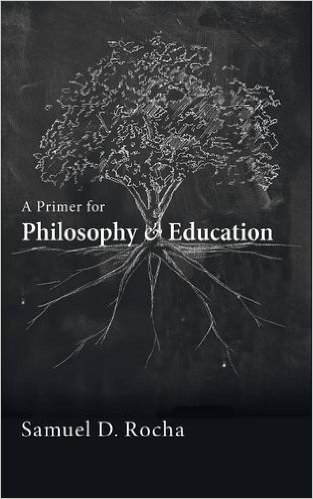
The primer gets at the roots without tearing them apart.
SR: In all my work I insist that we must distinguish between education and schooling ― in this book I end by imagining “education after the death of school.” That hard distinction would significantly adjust what “educational method” is, since so much of the talk of method in relation to education is obsessed with schooling. In your careful phrasing, it would lead in two directions: inwards through study and towards the human person and outwards beyond the mystery of education, in pursuit of love. This is why my book relies on a folky rendition of eros as a fundamental concept (the motor behind the claim about art). But perhaps the questions of method are, again, more properly situated within phenomenology than in education, which serves (along with study and the human person) as a case study for the book’s phenomenological framework. What may be original to this book’s notion of education proper is that it treats education as a contextual entity, with an analogy to Being, instead of as a psychological, political, or institutional one. What I mean is that education does not lead in the same sense of leading nor in the same direction as the more schooled entities we usually assume it (education) to be.
AR: The language you’ve used in this interview does not seem folky to me. Is that because my prejudices confuse folky with something for mindless simpletons (like a VW Beetle from circa 1938)? Is your ratcheting up of the technical language (some of it would make Husserl blush) in this interview intentional, an invitation to just about anyone who might happen upon it to engage the phenomenological tradition? Come to think of it: Is this interview for Every(wo)man? Should Every(wo)man read your book, Folk Phenomenology?
SR: Well, I didn’t title the book “Folky Phenomenology” or “Folkish Phenomenology,” but you are right, of course, that I am speaking in a stuffy, philosophical prose here. But rather than break into something more stylish or Dylanesque, I think that my usage of technical words and a priggish philosophical manner is probably a way to understand the book’s philosophical relationship to phenomenology. Its relationship to folk art and music is perhaps best put a different way.
Last night I saw a great show at a shitty old Anglican Church in Kitsilano sponsored by the Rogue Folk society. It was packed with nostalgic types and hipsters drinking beer in pews and buying transparent red vinyl. The headliner was Don Ross, the most established fingerstyle guitarist not named Tony Emmanuel. I saw him almost a decade ago at the Cedar Hall in Minneapolis, MN (there is a footnote about this in the book, he shared the bill that night with Michael Manring). Ross has played for this Vancouver folk music society 25 times, but last night he mentioned that he doesn’t fancy himself a “folk” musician. But then he reversed himself. Ross cited Louis Armstrong who, when asked to describe his music, said, “I play folk music, music for folks.” This aroused a chuckle in the room, but I think it also describes a tension in my work and its relation to the “folk” in your questions.
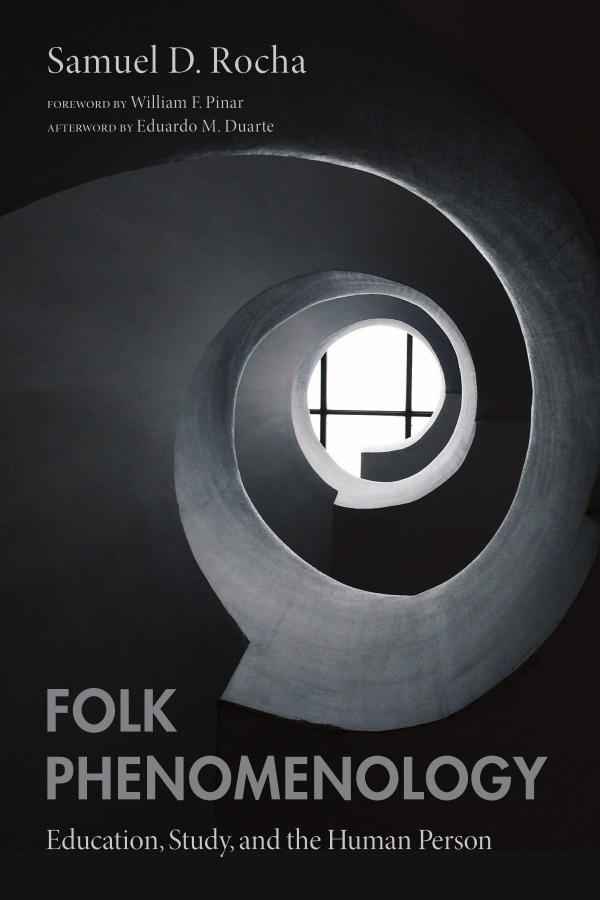
Philosophy should be simple, yet moving in complex ways.
Most folk music is like the parables of Christ; folk tales are seemingly simple, but enigmatic, aphoristic, and difficult. This might be why folk music cannot simply be “learned” ― it requires being lived in its cultural and spiritual home. Now, this “home” may seems accessible and downright popular if you see it in its natural state, and it invites imitation and popularisation (think of Nashville country these days) but often it evades popularity in its own home. I’m not going to give you an easy idea of the folk anymore than I could commandeer a clear portrait of phenomenology or that we can really understand what the parable of the sower was all about, even after it got explained twice. Part of this is intentional but most of it is simply because of what Jean-Luc Marion calls the excess of the things in question.
I’m not sure there are books out there for everyone, especially since everyone cannot read, but I am certain this book is not for many people simply because of the line it toes between philosophy and art and, more importantly, the frustrating ways it communicates. I mean, the book makes many direct references to my children, to the Disney cartoon adaptation of Robin Hood, to Five Guys Burgers and Fries, and to a baby gorilla at the Columbus zoo, and to Segovia; it also discusses Heidegger, William James, Marion, Charles Taylor, Thomism and Orthodoxy. In between all of that is a lot of tedious discussion and analog photography of mixed media graphics and line drawings. To put it technically, it’s a fucking mess ― and that strikes me as being for any and everyone.
AR: Since it is the central claim of your book . . . In five sentences or less, with as much street language as you can muster, what does it mean to claim “Art precedes metaphysics”?
SR: The language of the street, the words of the beggar, the wild-eyed gestures of the crazy person, the cooing and screaming of the infant, the silence of God: all of this points to something deeper than a smart formula. Indeed, there is something dumber and more true about reality, something so stupid and idiotic that it can hardly be mentioned anymore in the efficient causation of the modern day-to-day. This is art and it ain’t smart.
AR: Thanks for Being-there for this interview . . .
You’ll also want to take a look at my review of Sam’s last album. Don’t miss my TOP10 List of Catholic-interest Wipf & Stock books. They are the publishers of Folk Phenomenology.
Continuing this blog is a gift that depends on your gifts through the donation button on my homepage . . . Much obliged.
Previous Post

October 14, 2015
Theology Between Art and the Body Lecture Tomorrow
Next Post

October 16, 2015 Family Synod Conflict Is Not What You Think It Is . . .
Browse Our Archives
Select a Category #WhyRemainCatholic Abortion Advent Anti-Catholicism Arts Atheism Beauty Benedict XVI Bible Book Review Catholic Cinema Comedy Cosmos: A Space-Time Odyssey Czesław Miłosz Dariusz Karłowicz Devil Easter Eastern Orthodoxy Economics Environment Family Famous Atheists Who Weren't Atheists Guest Post Hans Urs von Balthasar HHS Mandate History Imagination Interview Islam Jean-Luc Marion John Paul II Judaism Just War Lent Literature Little Sisters of the Poor Liturgy Martyrdom Music News Paganism Patristics Phenomenology Philosophy Pierre Hadot Poetry Poland Pop Culture Pope Francis Poverty Prayer Protestantism Rabelais Race Remi Brague Rene Girard Russia Sam Rocha Science & Religion SCOTUS Secularization Sexual Abuse Sexuality Silence Solidarity Stratford Caldecott Synod14 Terrorism Top 10 Uncategorized Walker Percy War Weakened Edition World War II World Youth Day WYD Krakow
Select a Month July 2017 June 2017 May 2017 April 2017 March 2017 February 2017 January 2017 December 2016 October 2016 September 2016 August 2016 July 2016 June 2016 May 2016 April 2016 March 2016 February 2016 January 2016 December 2015 November 2015 October 2015 September 2015 August 2015 July 2015 June 2015 May 2015 April 2015 March 2015 February 2015 January 2015 December 2014 November 2014 October 2014 September 2014 August 2014 July 2014 May 2014 April 2014 March 2014 February 2014 January 2014 December 2013 November 2013 October 2013 September 2013 August 2013 July 2013 June 2013 May 2013
Follow Us!
TAKE THE
Religious Wisdom Quiz
True or False: Nehemiah rebuilt the walls of Jerusalem in 52 days.
Select your answer to see how you score.
FALSE TRUE
Related posts from Cosmos The In Lost

Where Does the Body of Christ Go After...

How is Classical Philosophy is Like War?

Why Does the World's Leading Philosopher Remain a...

Post-Execution Church: Rise Up from the Electric Chair!
TRENDING AT PATHEOS Catholic

Creation, Preservation, and Teleology in Catholic Theology
As I write this, it is very early Monday morning. Like millions...

The Parable Of The Sower And The Word...
One of Christ’s most famous parables is that of the sower who...

Rejecting Doom: Christian Hope And Human Action
Christianity is a religion of hope. We are to have hope and...

Why I Choose the Eucharist Over the Sermon
Choose the Eucharist, Not the Sermon What are we supposed to get...

5 Design Elements Found in Spiritually Rooted Homes
Putting Spirituality Into Home Decor Our homes are more than our living...

Credo: A Story of God Told with the...
About 10 years ago, I began to imagine a personal "Credo" that...
view all Catholic blogs
Ad-Free & Subscriber Log-In Subscription Support
- About Us
- 2026 Calendar
- Videos
- Podcasts
- Library of World Religions
- Faith In Media Tracker
- Advertise With Us
- Write for Us
- Privacy Policy
- Terms of Service
- Do Not Sell My Data
- Contact Us
- Radiant Digital
- Manage Newsletter Subscriptions
- Unsubscribe From Notifications
- Sitemap
Copyright 2008-2026, Patheos. All rights reserved.
Subscription Support Ad-Free & Subscriber Log-In
Follow Patheos