
BuddhistCatholicContemplativeEvangelicalGeneral ChristianHinduJewishLatter-day SaintMuslimNew VisionsProgressive Christian
Beliefs
- Buddhist
- Catholic
- Contemplative
- Evangelical
- General Christian
- Hindu
- Jewish
- Latter-day Saint
- More Voices
- Muslim
- New Visions
- Pagan
- Progressive Christian
Topics
- Religion News
- Food and Religion
- Sports and Religion
- Religious Art
- Religious Music and Entertainment
- Religious Events
- History and Religion
- Style and Religion
- Politics and Religion
- Women in Religion
- Recreation Outdoors and Religion
- Business Finance and Religion
- Careers Workplace and Religion
- Education and Religion
- Family Parenting and Religion
- Health Fitness and Religion
- Home and Religion
- Relationships and Religion
- Technology and Religion
- Travel and Religion
Columnists
- Buddhist Columnists
- Business Finance and Religion Columnists
- Careers Workplace and Religion Columnists
- Catholic Columnists
- Contemplative Columnists
- Education and Religion Columnists
- Evangelists Columnists
- Family Parenting and Religion Columnists
- General Christian Columnists
- Health Fitness and Religion Columnists
- Hindu Columnists
- History and Religion Columnists
- Home and Religion Columnists
- Jewish Columnists
- More Voices Columnists
- Latter Day Columnists
- Muslim Columnists
- New Visions Columnists
- Nonreligious Columnists
- Pagan Columnists
- Politics and Religion Columnists
- Progressive Columnists
- Recreation Outdoors and Religion Columnists
- Relationships and Religion Columnists
- Religion News Columnists
- Religious Art Columnists
- Religious Events Columnists
- Religious Music and Entertainment Columnists
- Sports and Religion Columnists
- Style and Religion Columnists
- Technology and Religion Columnists
- Travel and Religion Columnists
- Women in Religion Columnists
Resource Library
- 2026 Calendar
- Library of World Religions
- The 100 Most Holy Places on Earth
- Patheos Answers
- Podcasts
- Videos
- Faith Leaders Database
- Anglican Episcopalian
- Bahai
- Baptist
- Buddhism
- Christianity
- Confucianism
- Eastern Orthodoxy
- Hinduism
- Holiness and Pentecostal
- ISKCON
- Islam
- Judaism
- Lutheran
- Methodist
- The Church of Jesus Christ of Latter-day Saints
- New Age
- Paganism
- Presbytarian and Reformed
- Protestantism
- Religion Behind the Scenes
- Roman Catholic
- Scientology
- Shia Islam
- Sikhism
- Sufism
- Sunni Islam
- Taoism
- Zen
- See all religions
Research Tools
 Ad-Free & Subscriber Log-In Subscription Support
Ad-Free & Subscriber Log-In Subscription Support
Follow Patheos 

- Trending:
- Forgiveness
- |
- Marriage
- |
- Consciousness
- |
- Death Penalty
- |
- Election
- |
- Halloween
 Cosmos The In Lost
- Home
- Catholic
- Francis’s Integral Ecology: A Bonaventuran Methadone For Our Technocratic Addictions
Francis’s Integral Ecology: A Bonaventuran Methadone For Our Technocratic Addictions
Last updated on: July 3, 2015 at 7:08 pm by Artur Rosman
Francis’s Integral Ecology: A Bonaventuran Methadone For Our Technocratic Addictions 2015-07-03T19:08:40-07:00 Artur Rosman
Patheos Explore the world's faith through different perspectives on religion and spirituality! Patheos has the views of the prevalent religions and spiritualities of the world.
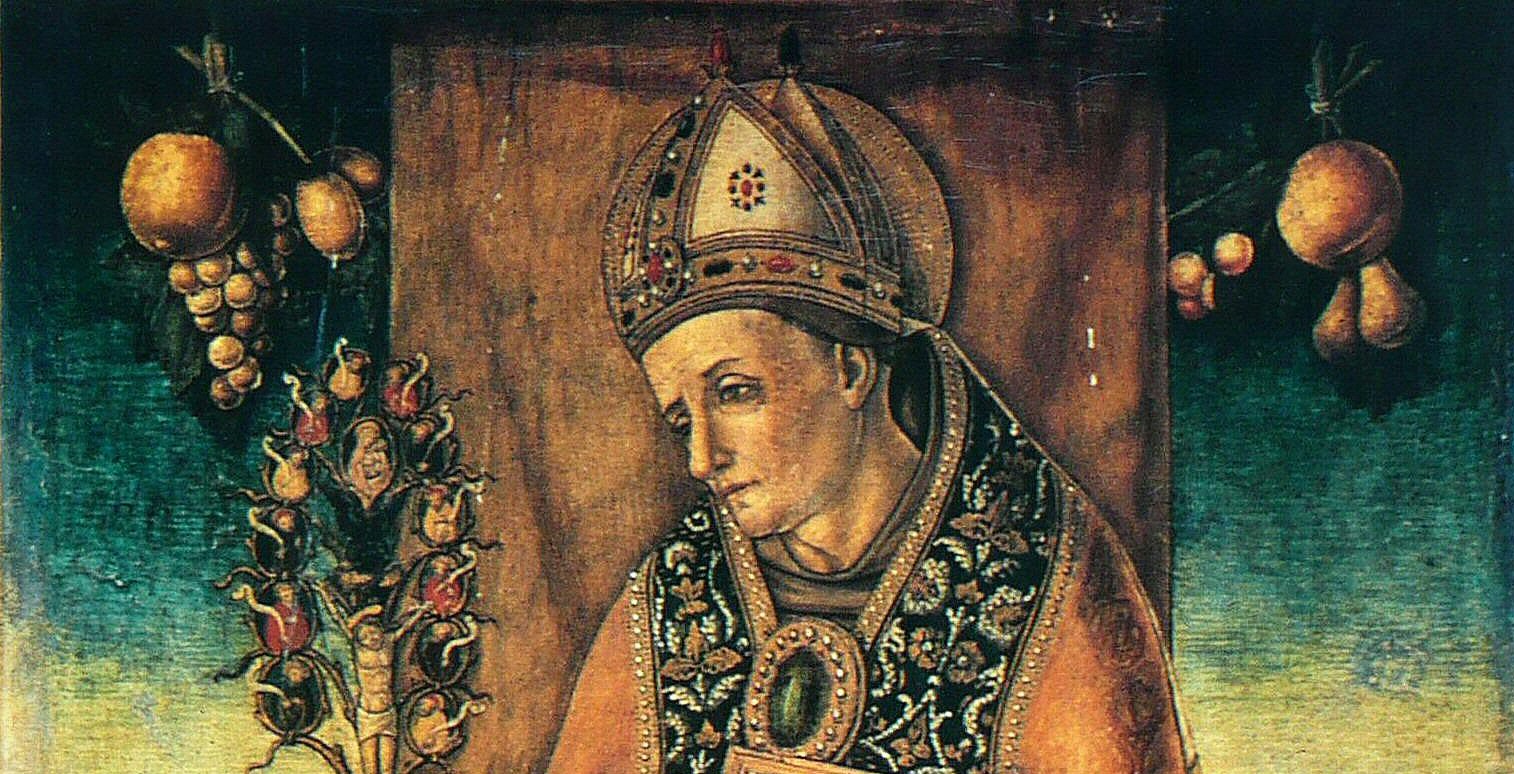
Divine Ecology (Vittore Crivelli, Saint Bonaventure Holding the Tree of Life, 15th c.; Source: Wikimedia Commons, PD-Old-100).
Kevin L. Hughes is Chair of the Humanities Department at Villanova University. He is the author of Constructing Antichrist: Paul, Biblical Commentary, and the Development of Doctrine in the Early Middle Ages and Church History: Faith Handed On, along with articles appearing in journals such as Modern Theology, Theological Studies, Franciscan Studies, and the Heythrop Journal. His recent work on Henri de Lubac will appear in Reading Scripture as a Political Act and the T&T Clark Companion to Henri de Lubac, and he is working on a book on Saint Bonaventure. He lives in Media, PA with his wife Bridget, a ceramic artist, and their three daughters.
This is a guest post.
===============================================================================
Some critics have claimed that Laudato Si is long on criticism and short on answers. In a recent critique, Rusty Reno pines for “teaching, not just exhortation and denunciation.” For Reno, Francis’s encyclical is yet another instance in post-Vatican II Catholicism where “the need to advocate has often overwhelmed the need for patient, disciplined reflection.” Laudato Si may not offer Reno the kind of didactic instruction he craves, but if he thinks it only has “exhortation and denunciation,” then I fear he’s missing the heart and soul of the teaching it offers.
Laudato Si may be the first encyclical ever to cite Saint Bonaventure more than Saint Thomas Aquinas. So few people, even among theologians, know much of anything about Bonaventure, although some of us are working on addressing that issue. Granted, the citations for each aren’t abundant, but Bonaventure is quoted at key points in document, giving shape to the Pope’s reflection on Saint Francis of Assisi and to his broader theological vision. For Pope Francis, the little poor man of Assisi is “the example par excellence of care for the vulnerable and of an integral ecology lived out joyfully and authentically.” Saint Francis’s integral ecology grew out of his deep sense of fraternal relation to all creatures, because “[his] disciple Saint Bonaventure tells us that, “from a reflection on the primary source of all things, filled with even more abundant piety, he would call creatures, no matter how small, by the name of ‘brother’ or ‘sister’”. It continues: “The poverty and austerity of Saint Francis were no mere veneer of asceticism but something more radical: a refusal to turn reality into an object simply to be used and controlled.” (11)
It may be too subtle for the metaphysically nervous, but these few sentences give a glimpse not only into the central place of Saint Francis in the encyclical but also into the theological heart of Pope Francis’s teaching. Saint Francis, he says, moved “from a reflection on the primary source of all things” to a new kind of relationship to the rest of creation. Bonaventure sees in his spiritual father a perfect model of his own mode of theology, which he calls reductio. We usually translate this as “reduction,” but in a post-Cartesian world, it’s almost impossible to understand it rightly. For Bonaventure, reductio is a re-ducere, a “leading-back” from our experience of creatures to their deepest root and identity in the Creator. For Bonaventure, to contemplate any created being is, potentially, to be led on an itinerarium mentis in Deum, a journey of the mind into God. And the example of Francis shows that this is not a one-way trip: to follow all things to God is to change our way of seeing all things; it is to see God praised in, and through, and by “Brother Sun,” “Sister Moon,” and all creatures.
With reductio in mind, it’s easier to see the kind of teaching that Pope Francis offers. After introducing the central issues in the first chapter, the Pope gives a rich and nuanced theology of creation, of the harmonious ordering of created being, continuously sustained in existence by the loving gift of the Father. “The best way to restore men and women to their rightful place, putting an end to their claim to absolute dominion over the earth, is to speak once more of the figure of a Father who creates and who alone owns the world. Otherwise, human beings will always try to impose their own laws and interests on reality.” (75) Later chapters do contain recommendations for policy initiatives, and policy wonks on the left and right have focused their adulation or anxiety about them, but the real teaching is here, in the theological foundations, and in the spiritual counsel given to all the faithful in the last chapter. Laudato Si almost literally reframes our approach to environmental issues by placing them in the frame of a renewed theology and spirituality of creation.
Previous Post
July 2, 2015
Is Christianity Secularization's Best Hope?
Next Post
July 4, 2015 5 Leads for Celebrating Dependence Day (An Alternative Holiday)
Browse Our Archives
Select a Category #WhyRemainCatholic Abortion Advent Anti-Catholicism Arts Atheism Beauty Benedict XVI Bible Book Review Catholic Cinema Comedy Cosmos: A Space-Time Odyssey Czesław Miłosz Dariusz Karłowicz Devil Easter Eastern Orthodoxy Economics Environment Family Famous Atheists Who Weren't Atheists Guest Post Hans Urs von Balthasar HHS Mandate History Imagination Interview Islam Jean-Luc Marion John Paul II Judaism Just War Lent Literature Little Sisters of the Poor Liturgy Martyrdom Music News Paganism Patristics Phenomenology Philosophy Pierre Hadot Poetry Poland Pop Culture Pope Francis Poverty Prayer Protestantism Rabelais Race Remi Brague Rene Girard Russia Sam Rocha Science & Religion SCOTUS Secularization Sexual Abuse Sexuality Silence Solidarity Stratford Caldecott Synod14 Terrorism Top 10 Uncategorized Walker Percy War Weakened Edition World War II World Youth Day WYD Krakow
Select a Month July 2017 June 2017 May 2017 April 2017 March 2017 February 2017 January 2017 December 2016 October 2016 September 2016 August 2016 July 2016 June 2016 May 2016 April 2016 March 2016 February 2016 January 2016 December 2015 November 2015 October 2015 September 2015 August 2015 July 2015 June 2015 May 2015 April 2015 March 2015 February 2015 January 2015 December 2014 November 2014 October 2014 September 2014 August 2014 July 2014 May 2014 April 2014 March 2014 February 2014 January 2014 December 2013 November 2013 October 2013 September 2013 August 2013 July 2013 June 2013 May 2013
Follow Us!
TAKE THE
Religious Wisdom Quiz
Which prophet had a vision of a rebuilt Temple with flowing water?
Select your answer to see how you score.
Daniel Joel Ezekiel Micah
Related posts from Cosmos The In Lost

The Surprising Anti-Capitalist Logic Behind the Catholic Church's...


How is Classical Philosophy is Like War?

Why Does the World's Leading Philosopher Remain a...
TRENDING AT PATHEOS Catholic

Creation, Preservation, and Teleology in Catholic Theology
As I write this, it is very early Monday morning. Like millions...

The Parable Of The Sower And The Word...
One of Christ’s most famous parables is that of the sower who...

Rejecting Doom: Christian Hope And Human Action
Christianity is a religion of hope. We are to have hope and...

Why I Choose the Eucharist Over the Sermon
Choose the Eucharist, Not the Sermon What are we supposed to get...

5 Design Elements Found in Spiritually Rooted Homes
Putting Spirituality Into Home Decor Our homes are more than our living...

Credo: A Story of God Told with the...
About 10 years ago, I began to imagine a personal "Credo" that...
view all Catholic blogs
Ad-Free & Subscriber Log-In Subscription Support
- About Us
- 2026 Calendar
- Videos
- Podcasts
- Library of World Religions
- Faith In Media Tracker
- Advertise With Us
- Write for Us
- Privacy Policy
- Terms of Service
- Do Not Sell My Data
- Contact Us
- Radiant Digital
- Manage Newsletter Subscriptions
- Unsubscribe From Notifications
- Sitemap
Copyright 2008-2026, Patheos. All rights reserved.
Subscription Support Ad-Free & Subscriber Log-In
Follow Patheos