
BuddhistCatholicContemplativeEvangelicalGeneral ChristianHinduJewishLatter-day SaintMuslimNew VisionsProgressive Christian
Beliefs
- Buddhist
- Catholic
- Contemplative
- Evangelical
- General Christian
- Hindu
- Jewish
- Latter-day Saint
- More Voices
- Muslim
- New Visions
- Pagan
- Progressive Christian
Topics
- Religion News
- Food and Religion
- Sports and Religion
- Religious Art
- Religious Music and Entertainment
- Religious Events
- History and Religion
- Style and Religion
- Politics and Religion
- Women in Religion
- Recreation Outdoors and Religion
- Business Finance and Religion
- Careers Workplace and Religion
- Education and Religion
- Family Parenting and Religion
- Health Fitness and Religion
- Home and Religion
- Relationships and Religion
- Technology and Religion
- Travel and Religion
Columnists
- Buddhist Columnists
- Business Finance and Religion Columnists
- Careers Workplace and Religion Columnists
- Catholic Columnists
- Contemplative Columnists
- Education and Religion Columnists
- Evangelists Columnists
- Family Parenting and Religion Columnists
- General Christian Columnists
- Health Fitness and Religion Columnists
- Hindu Columnists
- History and Religion Columnists
- Home and Religion Columnists
- Jewish Columnists
- More Voices Columnists
- Latter Day Columnists
- Muslim Columnists
- New Visions Columnists
- Nonreligious Columnists
- Pagan Columnists
- Politics and Religion Columnists
- Progressive Columnists
- Recreation Outdoors and Religion Columnists
- Relationships and Religion Columnists
- Religion News Columnists
- Religious Art Columnists
- Religious Events Columnists
- Religious Music and Entertainment Columnists
- Sports and Religion Columnists
- Style and Religion Columnists
- Technology and Religion Columnists
- Travel and Religion Columnists
- Women in Religion Columnists
Resource Library
- 2026 Calendar
- Library of World Religions
- The 100 Most Holy Places on Earth
- Patheos Answers
- Podcasts
- Videos
- Faith Leaders Database
- Anglican Episcopalian
- Bahai
- Baptist
- Buddhism
- Christianity
- Confucianism
- Eastern Orthodoxy
- Hinduism
- Holiness and Pentecostal
- ISKCON
- Islam
- Judaism
- Lutheran
- Methodist
- The Church of Jesus Christ of Latter-day Saints
- New Age
- Paganism
- Presbytarian and Reformed
- Protestantism
- Religion Behind the Scenes
- Roman Catholic
- Scientology
- Shia Islam
- Sikhism
- Sufism
- Sunni Islam
- Taoism
- Zen
- See all religions
Research Tools
 Ad-Free & Subscriber Log-In Subscription Support
Ad-Free & Subscriber Log-In Subscription Support
Follow Patheos 

- Trending:
- Forgiveness
- |
- Marriage
- |
- Consciousness
- |
- Death Penalty
- |
- Election
- |
- Halloween
 Cosmos The In Lost
- Home
- Catholic
- Holly Taylor Coolman on Remaining a Catholic
Holly Taylor Coolman on Remaining a Catholic
Last updated on: April 25, 2018 at 7:33 am by Artur Rosman
Holly Taylor Coolman on Remaining a Catholic 2018-04-25T07:33:43-07:00 Artur Rosman
Patheos Explore the world's faith through different perspectives on religion and spirituality! Patheos has the views of the prevalent religions and spiritualities of the world.
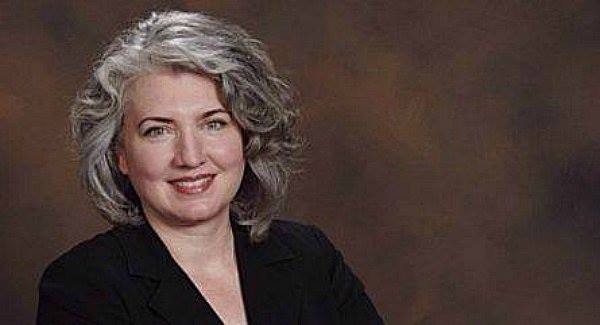
Holly Taylor Coolman teaches theology at Providence College.
This is a guest post.
==========================================
I remember quite clearly, a number of years ago, reading R.R.Reno’s description of his experience of becoming Catholic. “It felt,” he said, “like being submerged into the ocean.” (And the ocean, he went on to note, “needs no justification.”) What I myself felt upon reading the these lines was being mad as hell. I was an Episcopalian, as Reno had been just prior to this ecclesial plunge. It seemed clear to me that what the Episcopal Church needed at that moment–as it faced serious challenges–was for every single one of us to put a shoulder to the wheel. (Or maybe, pick up a paddle and row.). So, in my head, I began writing a letter to the editor, in response to Reno’s piece. “If Professor Reno is longing for the feeling of being submerged, I’ll be happy to take him deep-sea fishing. I can push him off the edge of the boat, and leave him for awhile. Then I’ll reel him back in and we can continue to do the important work that needs to be done.”
It’s probably good that I never sent that letter, since, in the intervening years, I myself somewhat unexpectedly became Catholic, too. What could have possibly led from there to here? Reno himself recently offered a helpful list of things that might lead people to go to Rome: universality, beauty, the saints, etc. In my case, though, it was none of these. I had all of that, and I believed I had everything I wanted. Then, suddenly, I came to feel there was something more.
There was trouble brewing for Episcopalians–and for the whole Anglican Communion–after 2003, when an ordination in the U.S. violated a prior Lambeth resolution against “ordaining those in same gender unions.” Suddenly, diverging opinions on the issue came into direct conflict. What I was focused on was how this was all worked out. Bishops and archbishops gathered and issued a warning that the actions of the U.S. church threatened to “tear the fabric of our Communion at its deepest level.”A “Commission on Communion” was appointed, and they published a report with a similar tone the following year. It was the response of various voices in the U.S. to that report that caught me up short. I, too, had been worried about tearing apart of communion, but many insisted that this was actually an overblown concern. The Anglican Communion, they said, had never been connected by obligation to one another, and certainly not by any need to submit to the whole. The connections between various groups of Anglicans were really best described as “bonds of affection.” And bonds of affection, I was seeing, could be broken–or simply ignored.
But that was not how I had come to understand “church.” Church, I thought, meant a oneness of indissolubility. The same action that made us one with Christ was what made us one with one another, and I thought it had the same strength and permanence. I tried some ecclesiological jujitsu to see if I could allay what was surely–what had to be–a naive concern. I recall a distinct, physical sensation of falling.
When Artur Rosman invited me to make a contribution in this series, he joked, given a little blog post I wrote recently, that I should explain “Why I Remain a Non-Polarized Catholic.” But that title actually reveals the heart of the matter. Especially when it involves finding one’s identity in an ideological camp, and allows dismissal of those in the opposite camp, “polarization” seems to me to be the precise opposite of “church.” This is what made me, and keeps me, Catholic.
There are some philosophical and theological edges to all this. The only context in which conflict makes any sense, I‘d argue, is shared commitment. The only context in which conflict can be called “Christian” includes a commitment precisely to those we oppose. In Catholicism, there is an old-fashioned doctrine of the “treasury of merit,” which, as far as I can tell, means that even our hope of salvation is an immediately and profoundly communal matter, that even the good we do can benefit others not only as recipients, but as if they themselves had acted. In the mysterious calculus of the divine economy, it allows the possibility that it is precisely the love, the goodness, even of someone with whom I am at odds at the moment, brings me to God.
Previous Post

June 29, 2015
Difference, Disharmony, and Drama Are the Essence of Marriage
Next Post

July 1, 2015 God Provides the Justification: Jean-François Garneau on #WhyRemainCatholic
Browse Our Archives
Select a Category #WhyRemainCatholic Abortion Advent Anti-Catholicism Arts Atheism Beauty Benedict XVI Bible Book Review Catholic Cinema Comedy Cosmos: A Space-Time Odyssey Czesław Miłosz Dariusz Karłowicz Devil Easter Eastern Orthodoxy Economics Environment Family Famous Atheists Who Weren't Atheists Guest Post Hans Urs von Balthasar HHS Mandate History Imagination Interview Islam Jean-Luc Marion John Paul II Judaism Just War Lent Literature Little Sisters of the Poor Liturgy Martyrdom Music News Paganism Patristics Phenomenology Philosophy Pierre Hadot Poetry Poland Pop Culture Pope Francis Poverty Prayer Protestantism Rabelais Race Remi Brague Rene Girard Russia Sam Rocha Science & Religion SCOTUS Secularization Sexual Abuse Sexuality Silence Solidarity Stratford Caldecott Synod14 Terrorism Top 10 Uncategorized Walker Percy War Weakened Edition World War II World Youth Day WYD Krakow
Select a Month July 2017 June 2017 May 2017 April 2017 March 2017 February 2017 January 2017 December 2016 October 2016 September 2016 August 2016 July 2016 June 2016 May 2016 April 2016 March 2016 February 2016 January 2016 December 2015 November 2015 October 2015 September 2015 August 2015 July 2015 June 2015 May 2015 April 2015 March 2015 February 2015 January 2015 December 2014 November 2014 October 2014 September 2014 August 2014 July 2014 May 2014 April 2014 March 2014 February 2014 January 2014 December 2013 November 2013 October 2013 September 2013 August 2013 July 2013 June 2013 May 2013
Follow Us!
TAKE THE
Religious Wisdom Quiz
What mountain did Jesus ascend from into heaven?
Select your answer to see how you score.
Mount of Olives Mount Zion Mount Carmel Mount Sinai
Related posts from Cosmos The In Lost

Where Does the Body of Christ Go After...

Why Does the World's Leading Philosopher Remain a...

Is There a Way to Get Beyond Making...
What Do Sex, Lent, UFO's, Evolution, and the...
TRENDING AT PATHEOS Catholic

Rejecting Doom: Christian Hope And Human Action
Christianity is a religion of hope. We are to have hope and...

It’s What Comes From Within Which Matters
One of the most difficult things for us to understand is why...

Why I Choose the Eucharist Over the Sermon
Choose the Eucharist, Not the Sermon What are we supposed to get...

5 Design Elements Found in Spiritually Rooted Homes
Putting Spirituality Into Home Decor Our homes are more than our living...

Credo: A Story of God Told with the...
About 10 years ago, I began to imagine a personal "Credo" that...

The Anatomy of Divine Revelation in Catholic Thought
The claim that God has made Himself known to human beings is...
view all Catholic blogs
Ad-Free & Subscriber Log-In Subscription Support
- About Us
- 2026 Calendar
- Videos
- Podcasts
- Library of World Religions
- Faith In Media Tracker
- Advertise With Us
- Write for Us
- Privacy Policy
- Terms of Service
- Do Not Sell My Data
- Contact Us
- Radiant Digital
- Manage Newsletter Subscriptions
- Unsubscribe From Notifications
- Sitemap
Copyright 2008-2026, Patheos. All rights reserved.
Subscription Support Ad-Free & Subscriber Log-In
Follow Patheos