
BuddhistCatholicContemplativeEvangelicalGeneral ChristianHinduJewishLatter-day SaintMuslimNew VisionsProgressive Christian
Beliefs
- Buddhist
- Catholic
- Contemplative
- Evangelical
- General Christian
- Hindu
- Jewish
- Latter-day Saint
- More Voices
- Muslim
- New Visions
- Pagan
- Progressive Christian
Topics
- Religion News
- Food and Religion
- Sports and Religion
- Religious Art
- Religious Music and Entertainment
- Religious Events
- History and Religion
- Style and Religion
- Politics and Religion
- Women in Religion
- Recreation Outdoors and Religion
- Business Finance and Religion
- Careers Workplace and Religion
- Education and Religion
- Family Parenting and Religion
- Health Fitness and Religion
- Home and Religion
- Relationships and Religion
- Technology and Religion
- Travel and Religion
Columnists
- Buddhist Columnists
- Business Finance and Religion Columnists
- Careers Workplace and Religion Columnists
- Catholic Columnists
- Contemplative Columnists
- Education and Religion Columnists
- Evangelists Columnists
- Family Parenting and Religion Columnists
- General Christian Columnists
- Health Fitness and Religion Columnists
- Hindu Columnists
- History and Religion Columnists
- Home and Religion Columnists
- Jewish Columnists
- More Voices Columnists
- Latter Day Columnists
- Muslim Columnists
- New Visions Columnists
- Nonreligious Columnists
- Pagan Columnists
- Politics and Religion Columnists
- Progressive Columnists
- Recreation Outdoors and Religion Columnists
- Relationships and Religion Columnists
- Religion News Columnists
- Religious Art Columnists
- Religious Events Columnists
- Religious Music and Entertainment Columnists
- Sports and Religion Columnists
- Style and Religion Columnists
- Technology and Religion Columnists
- Travel and Religion Columnists
- Women in Religion Columnists
Resource Library
- 2026 Calendar
- Library of World Religions
- The 100 Most Holy Places on Earth
- Patheos Answers
- Podcasts
- Videos
- Faith Leaders Database
- Anglican Episcopalian
- Bahai
- Baptist
- Buddhism
- Christianity
- Confucianism
- Eastern Orthodoxy
- Hinduism
- Holiness and Pentecostal
- ISKCON
- Islam
- Judaism
- Lutheran
- Methodist
- The Church of Jesus Christ of Latter-day Saints
- New Age
- Paganism
- Presbytarian and Reformed
- Protestantism
- Religion Behind the Scenes
- Roman Catholic
- Scientology
- Shia Islam
- Sikhism
- Sufism
- Sunni Islam
- Taoism
- Zen
- See all religions
Research Tools
 Ad-Free & Subscriber Log-In Subscription Support
Ad-Free & Subscriber Log-In Subscription Support
Follow Patheos 

- Trending:
- Forgiveness
- |
- Marriage
- |
- Consciousness
- |
- Death Penalty
- |
- Election
- |
- Halloween
 Cosmos The In Lost
- Home
- Catholic
- Get 2 Know a Catholic Publisher: TOP10 Angelico Press Titles
Get 2 Know a Catholic Publisher: TOP10 Angelico Press Titles
Last updated on: June 4, 2015 at 1:34 pm by Artur Rosman
Get 2 Know a Catholic Publisher: TOP10 Angelico Press Titles 2015-06-04T13:34:31-07:00 Artur Rosman
Patheos Explore the world's faith through different perspectives on religion and spirituality! Patheos has the views of the prevalent religions and spiritualities of the world.
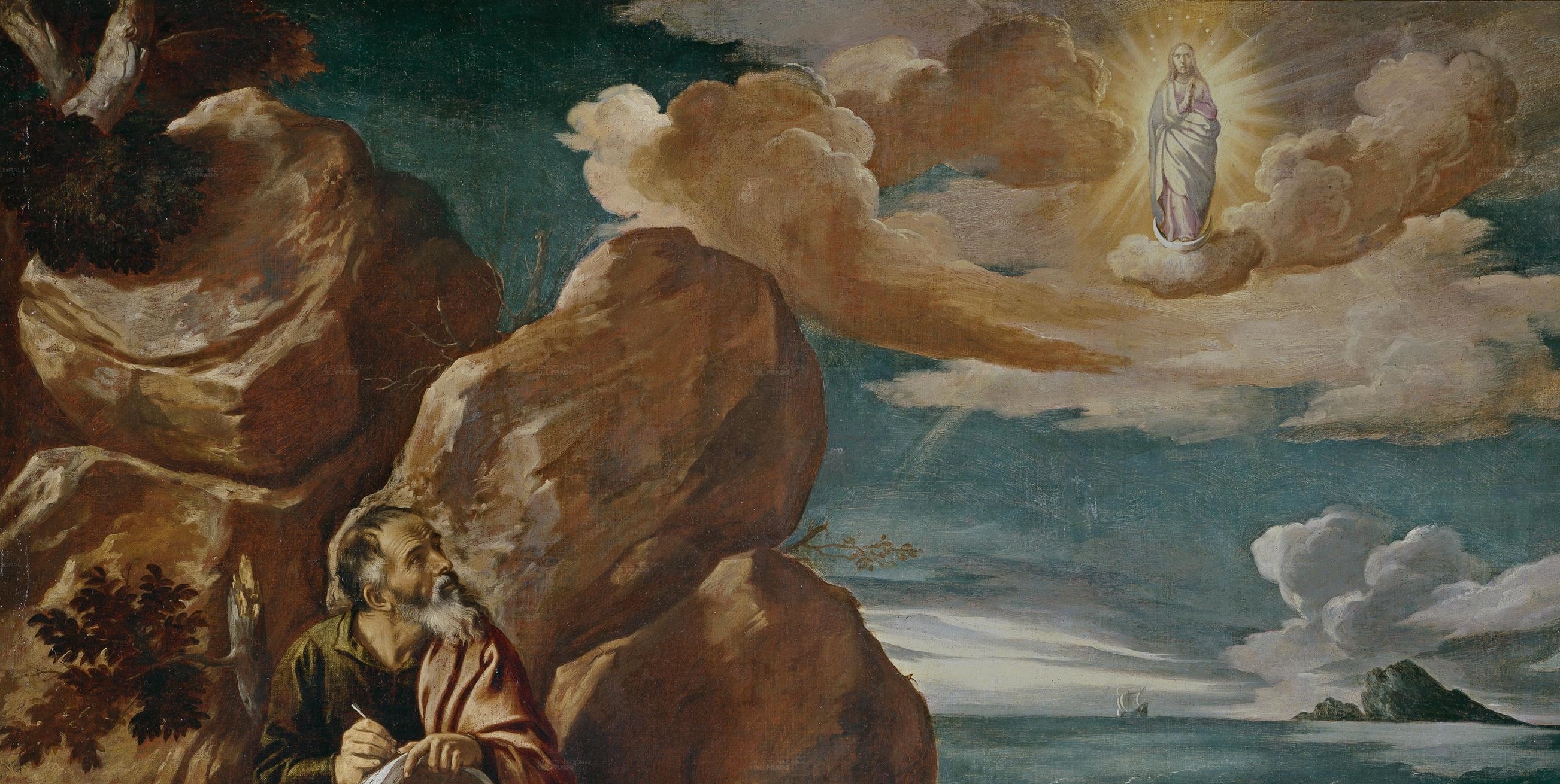
The 20th century’s most influential theologian, Hans Urs von Balthasar, once called for a “kneeling theology.” A kneeling theology is one that integrates theological reflection with spirituality.
According to von Balthasar the Church Fathers practiced such a theology; it ought to be theology’s natural environment.
The kneeling theology was taken for granted in Western Christendom until the scholastic period when, starting with Abelard, the practice of writing disputations that concentrated upon answering mostly abstract questions divorced theology from the spiritual life.
Spiritual theology became its own separate domain apart from answering questions about doctrinal matters. You see this beginning in the 14th century with the Rhineland mystics such as Henry Suso and Johannes Tauler. By the 16th and 17th centuries the divorce is almost complete as Michel de Certeau argues in his Mystic Fable (volume 2 is coming soon).
I have previously talked about the excellent Catholic titles available from University of Chicago Press and Wipf & Stock, so I thought it would be interesting to extend this budding tradition.
Angelico Press was founded fairly recently, but that hasn’t stopped them from becoming a kneeling theology powerhouse very quickly.
As you can see from what I consider ten of their best books below: Healing the rift between theology and spirituality seems to be especially dear to them. Their books also do much toward healing the ruptures between East and West Christianity, and between the Greek and Christian heritages.
I only hope they can keep up the very strong presence they have managed to create.
It won’t be easy to follow up on titles like these:
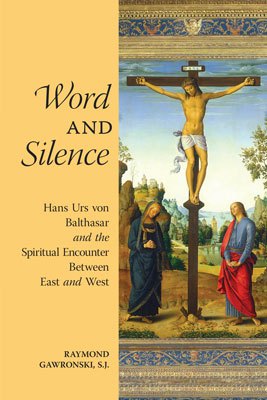
Word and Silence: Hans Urs von Balthasar and the Spiritual Encounter Between East and West by Raymond Gawronski
Speechless.
Asked about the dialogue between Asian and Christian mysticisms, Hans Urs von Balthasar wrote: “The dialogue is possible. The question is: ‘does selflessness mean emptiness, or (trinitarian) love.'” Word and Silence is an ascent to the fullness of the Christian vision, from the depths of natural and Christian wisdom and under the guidance of this great master of contemplative theology of our time. It offers an overview of the human condition, and then broadens to explore the fullness of God’s revelation, which overflows the deepest longings of the human heart, fully embracing the human as human, and leading it into the heart of God.
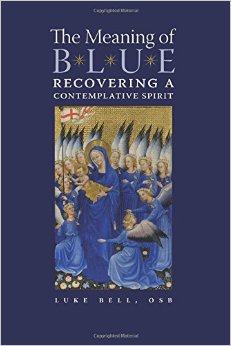
The Meaning of Blue: Recovering a Contemplative Spirit by Luke Bell, OSB
More than just the blues.
In his first Apostolic Exhortation, Pope Francis wrote: “We need to recover a contemplative spirit.” The Meaning of Blue is about just such a recovery. Blue is the color of heaven, of purity and truth. Its rarity in naturally occurring substances on earth and its abundance shining in the sky speak of the same thing: a celestial light to which our culture is increasingly blind. With examples drawn from both the inspired ambiguity of poetry and the depths of the Bible, Fr. Luke Bell shows the reader a way of knowing creation and language as manifesting divine truth, and then leads further–into the mystical tradition of direct contemplation of God.
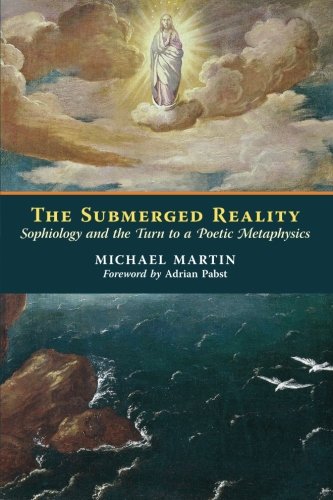
The Submerged Reality: Sophiology and the Turn to a Poetic Metaphysics by Michael Martin
Dive deeper into poetics.
In The Submerged Reality: Sophiology and the Turn to a Poetic Metaphysics, Michael Martin challenges us to reimagine theology, philosophy, and poetics through the lens of sophiology. Sophiology, as this book shows, is not a rogue theology, but a way of perceiving that which shines through the cosmos: a way that can return metaphysics to postmodern thought and facilitate a (re)union of religion, science, and art.
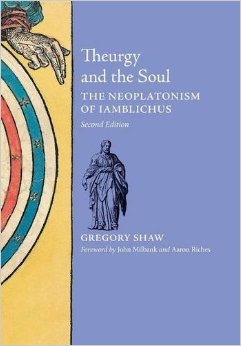
Theurgy and the Soul: The Neoplatonism of Iamblichus by Gregory Shaw
The game is all about participation.
Iamblichus was a seminal Platonic philosopher whose views on the soul and the importance of ritual profoundly influenced subsequent thinkers such as Proclus, Damascius, and Dionysius the Areopagite. Iamblichus’s vision of a hierarchical cosmos united by divine ritual became the dominant worldview for the entire medieval world, and played an important role in the Renaissance Platonism of Marsilio Ficino. Ralph Waldo Emerson wrote that he expected a reading of Iamblichus to cause a “revival in the churches.” Yet, until recently, modern scholars have dismissed him, seeing theurgy as ritual magic or an attempt to manipulate the gods. Shaw, however, shows that theurgy was a subtle and intellectually sophisticated attempt to apply Platonic and Pythagorean teachings to the full expression of human existence in the material world. This new edition includes a foreword by John Milbank and Aaron Riches showing the Christian sacramental implications of Iamblichean theurgy, and a new preface from the author.
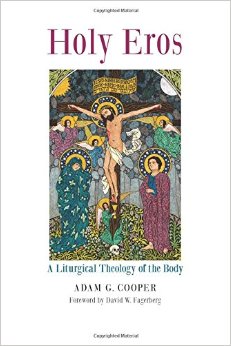
Holy Eros: A Liturgical Theology of the Body by Adam G. Cooper
Theology, spiritual, and the body must be integrated.
IN JOHN PAUL II’S Theology of the Body, the sexed human body speaks a language revealing God’s creative design and heralding humanity’s ultimate goal in the nuptial union of Christ and the Church. In a similar way, the Church, the body of Christ, anticipates her future nuptial union with Christ here and now through the “body language” of her public worship. Holy Eros combines insights from the great Pope’s theology of the body with traditional and contemporary liturgical studies, allowing each to shed light on the other. It shows how the various rituals of the Church, and the “shape” proper to the liturgical gathering, engage us as performative, physical enactments which actuate the spiritual and divine realities they signify, making heavenly marriage real on earth.
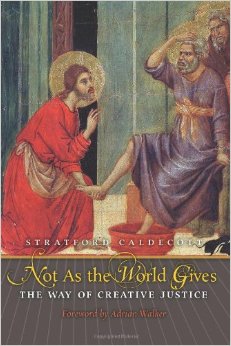
Not as the World Gives: The Way of Creative Justice by Stratford Caldecott
Rethinking the gifts of God.
There is no peace without justice, but neither can there be justice without love. Far from being an impractical dream, Catholic social doctrine can transform the way we work, the way we govern, and the way we treat the natural world. What emerges from this sequel to the author’s The Radiance of Being is a vision of integration and wholeness, a society both divine and human, and a “humanism open to the absolute.”
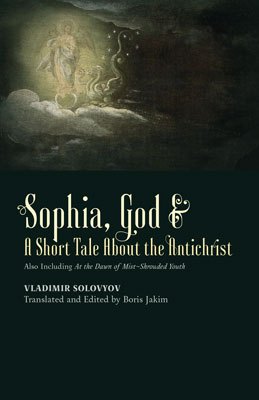
Sophia, God & A Short Tale About the Antichrist by Vladimir Solovyov
Solovyov, Dostoevsky’s spiritual mentor, first pioneered the modern meeting between East and West Christianity.
This volume contains several late works of Vladimir Solovyov, representing his final speculations about matters crucial to the destiny of humanity and of the world. As Solovyov’s life was coming to an end at the close of the 19th century, his thoughts were turned toward three things: the end of the world (the Antichrist), the beauty and wisdom of the world (Sophia), and the nature of God. A completely new translation of the famous “Short Tale About the Antichrist” is presented here, along with revised versions of “At the Dawn of Mist-Shrouded Youth,” “Three Meetings,” and “The Concept of God.”
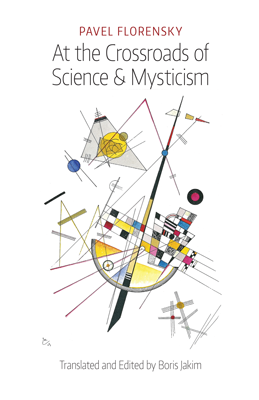
At the Crossroads of Science & Mysticism: On the Culturo-Historical Place and Premises of the Christian World‑Understanding by Pavel Florensky
Meet you at tha crossroads.
The present volume represents the most substantial theological contribution in Pavel Florensky’s great multi-volume “anthropidicy,” At the Watersheds of Thought: The Elements of a Concrete Metaphysics. Florensky argues that his epoch (the early 20th century) bore witness to a spiritual shift in the direction of a revitalized Christian world-understanding. In modern times, the Renaissance world-understanding, which is anti-Christian in nature and whose treasure lies in man, had replaced the Medieval world-understanding, which is Christian in nature and whose treasure lies in God. But the rationalistic Renaissance culture was now coming to an end, to be replaced by a new Middle Ages, a coming period to be characterized by the fusion of science and mystical faith—an epoch of discontinuity, of abrupt leaps into reality rooted in the life of the spirit, destined to replace the former mechanistic world-view. This change, Florensky maintains, will touch on every aspect of life and every discipline of knowledge. A revitalized Christianity will emerge which will find its experiential validation both in mysticism and in scientific inquiry.
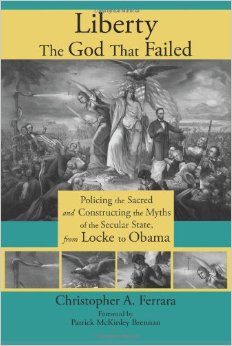
Liberty, the God That Failed: Policing the Sacred and Constructing the Myths of the Secular State, from Locke to Obama by Christopher Ferrara
Everything you know is wrong.
What has gone wrong with the grand American experiment in “ordered liberty”? The liberal’s answer is that America has failed to live up to its full promise of inclusiveness and equality—likely the result of corporate greed and white male ruling elites. The mainstream conservative or libertarian’s reply points to the Warren Court, the 1960’s, a denial of “states’ rights”, or a loss of Constitutional rectitude. Christopher Ferrara, in Liberty, the God That Failed, offers an entirely different answer. In a counter-narrative of unique power and scope, he unmasks the order promised as a sham; the liberty guaranteed, a chimera. In his telling, the false god of a new political order—Liberty—was born in thought long before America’s founding, and gained increasing devotion as it slowly amassed power during the first two centuries of the nation’s existence. Today it reveals its full might, as we bear the weight of its oppressive decrees, and experience the emptiness of the secular order it imposes upon us.
There Must Be More Than This: Identity & Spiritual Renewal in the Kingdom of “Whatever” by Daniel Schwindt
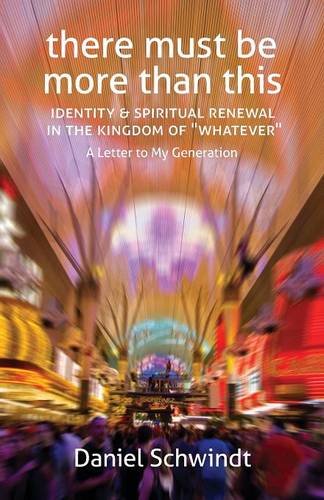
Charles Taylor meets Roxy Music?
As millennials we stand accused–of aimlessness, entitlement, indifference, lack of gratitude–merely for existing under the wrong conditions, for illustrating simply by that fact the wrongness of those conditions. This book offers an apologia for an entire generation. It is not so much a solution to our problems as an orientation allowing us to face them. It provides a way of understanding ourselves, leading us to see what our increasingly economic mode of being has lopped off and discarded. We have inherited a deformed anthropology, an inane status quo, for which we have been told we ought to be thankful. We need to rediscover meaning in a world that has become a matter of indifference to us. It will take work, it won’t be easy, and it will have to start with our generation.
Please remember to donate through the PayPal button on the upper right hand corner of this blog’s homepage. Blogging is not a lucrative enterprise despite all of its indubitable glamor and accolades. We have a car to fix, rent to pay, and I’m chronically underemployed.
Previous Post
June 3, 2015
Why am I Still a Catholic? What Else is There?
Next Post
June 5, 2015 The Sacramental Imagination: Why Emily Edmondson Remains Catholic
Browse Our Archives
Select a Category #WhyRemainCatholic Abortion Advent Anti-Catholicism Arts Atheism Beauty Benedict XVI Bible Book Review Catholic Cinema Comedy Cosmos: A Space-Time Odyssey Czesław Miłosz Dariusz Karłowicz Devil Easter Eastern Orthodoxy Economics Environment Family Famous Atheists Who Weren't Atheists Guest Post Hans Urs von Balthasar HHS Mandate History Imagination Interview Islam Jean-Luc Marion John Paul II Judaism Just War Lent Literature Little Sisters of the Poor Liturgy Martyrdom Music News Paganism Patristics Phenomenology Philosophy Pierre Hadot Poetry Poland Pop Culture Pope Francis Poverty Prayer Protestantism Rabelais Race Remi Brague Rene Girard Russia Sam Rocha Science & Religion SCOTUS Secularization Sexual Abuse Sexuality Silence Solidarity Stratford Caldecott Synod14 Terrorism Top 10 Uncategorized Walker Percy War Weakened Edition World War II World Youth Day WYD Krakow
Select a Month July 2017 June 2017 May 2017 April 2017 March 2017 February 2017 January 2017 December 2016 October 2016 September 2016 August 2016 July 2016 June 2016 May 2016 April 2016 March 2016 February 2016 January 2016 December 2015 November 2015 October 2015 September 2015 August 2015 July 2015 June 2015 May 2015 April 2015 March 2015 February 2015 January 2015 December 2014 November 2014 October 2014 September 2014 August 2014 July 2014 May 2014 April 2014 March 2014 February 2014 January 2014 December 2013 November 2013 October 2013 September 2013 August 2013 July 2013 June 2013 May 2013
Follow Us!
TAKE THE
Religious Wisdom Quiz
Who wrote the most books in the New Testament?
Select your answer to see how you score.
Peter Luke Paul John
Related posts from Cosmos The In Lost

The Surprising Anti-Capitalist Logic Behind the Catholic Church's...

How is Classical Philosophy is Like War?

Why Does the World's Leading Philosopher Remain a...

Biblical Authority After Babel Cannot Be Built Upon...
TRENDING AT PATHEOS Catholic

Creation, Preservation, and Teleology in Catholic Theology
As I write this, it is very early Monday morning. Like millions...

The Parable Of The Sower And The Word...
One of Christ’s most famous parables is that of the sower who...

Rejecting Doom: Christian Hope And Human Action
Christianity is a religion of hope. We are to have hope and...

Why I Choose the Eucharist Over the Sermon
Choose the Eucharist, Not the Sermon What are we supposed to get...

5 Design Elements Found in Spiritually Rooted Homes
Putting Spirituality Into Home Decor Our homes are more than our living...

Credo: A Story of God Told with the...
About 10 years ago, I began to imagine a personal "Credo" that...
view all Catholic blogs
Ad-Free & Subscriber Log-In Subscription Support
- About Us
- 2026 Calendar
- Videos
- Podcasts
- Library of World Religions
- Faith In Media Tracker
- Advertise With Us
- Write for Us
- Privacy Policy
- Terms of Service
- Do Not Sell My Data
- Contact Us
- Radiant Digital
- Manage Newsletter Subscriptions
- Unsubscribe From Notifications
- Sitemap
Copyright 2008-2026, Patheos. All rights reserved.
Subscription Support Ad-Free & Subscriber Log-In
Follow Patheos