
BuddhistCatholicContemplativeEvangelicalGeneral ChristianHinduJewishLatter-day SaintMuslimNew VisionsProgressive Christian
Beliefs
- Buddhist
- Catholic
- Contemplative
- Evangelical
- General Christian
- Hindu
- Jewish
- Latter-day Saint
- More Voices
- Muslim
- New Visions
- Pagan
- Progressive Christian
Topics
- Religion News
- Food and Religion
- Sports and Religion
- Religious Art
- Religious Music and Entertainment
- Religious Events
- History and Religion
- Style and Religion
- Politics and Religion
- Women in Religion
- Recreation Outdoors and Religion
- Business Finance and Religion
- Careers Workplace and Religion
- Education and Religion
- Family Parenting and Religion
- Health Fitness and Religion
- Home and Religion
- Relationships and Religion
- Technology and Religion
- Travel and Religion
Columnists
- Buddhist Columnists
- Business Finance and Religion Columnists
- Careers Workplace and Religion Columnists
- Catholic Columnists
- Contemplative Columnists
- Education and Religion Columnists
- Evangelists Columnists
- Family Parenting and Religion Columnists
- General Christian Columnists
- Health Fitness and Religion Columnists
- Hindu Columnists
- History and Religion Columnists
- Home and Religion Columnists
- Jewish Columnists
- More Voices Columnists
- Latter Day Columnists
- Muslim Columnists
- New Visions Columnists
- Nonreligious Columnists
- Pagan Columnists
- Politics and Religion Columnists
- Progressive Columnists
- Recreation Outdoors and Religion Columnists
- Relationships and Religion Columnists
- Religion News Columnists
- Religious Art Columnists
- Religious Events Columnists
- Religious Music and Entertainment Columnists
- Sports and Religion Columnists
- Style and Religion Columnists
- Technology and Religion Columnists
- Travel and Religion Columnists
- Women in Religion Columnists
Resource Library
- 2026 Calendar
- Library of World Religions
- The 100 Most Holy Places on Earth
- Patheos Answers
- Podcasts
- Videos
- Faith Leaders Database
- Anglican Episcopalian
- Bahai
- Baptist
- Buddhism
- Christianity
- Confucianism
- Eastern Orthodoxy
- Hinduism
- Holiness and Pentecostal
- ISKCON
- Islam
- Judaism
- Lutheran
- Methodist
- The Church of Jesus Christ of Latter-day Saints
- New Age
- Paganism
- Presbytarian and Reformed
- Protestantism
- Religion Behind the Scenes
- Roman Catholic
- Scientology
- Shia Islam
- Sikhism
- Sufism
- Sunni Islam
- Taoism
- Zen
- See all religions
Research Tools
 Ad-Free & Subscriber Log-In Subscription Support
Ad-Free & Subscriber Log-In Subscription Support
Follow Patheos 

- Trending:
- Forgiveness
- |
- Marriage
- |
- Consciousness
- |
- Death Penalty
- |
- Election
- |
- Halloween
 Cosmos The In Lost
- Home
- Catholic
- Does Anyone Still Remember the Einstein vs. Bergson Thrilla in Paris?
Does Anyone Still Remember the Einstein vs. Bergson Thrilla in Paris?
Last updated on: May 25, 2015 at 12:34 pm by Artur Rosman
Does Anyone Still Remember the Einstein vs. Bergson Thrilla in Paris? 2015-05-25T12:34:16-07:00 Artur Rosman
Patheos Explore the world's faith through different perspectives on religion and spirituality! Patheos has the views of the prevalent religions and spiritualities of the world.
Let’s take an askew view of Memorial Day by recalling a long forgotten piece of intellectual history.
Some of you might vaguely known Henri Bergson through readings of Deleuze imposed upon you by college professors. Bergson, at the start of the 20th century, was once the world’s most famous intellectual. Everybody knows Einstein.
I know Bergson vaguely through his writings on religion. I’m pretty sure Maritain was a former student of his, but then so was everybody (including T.S. Eliot). Maritain’s first book was a critique of Bergson’s philosophy.
Bergson felt the pull of early 20th century Catholicism and considered (or even went through with) converting. You can sense his increasingly sersious preoccupation with religion in his The Two Sources of Morality and Religion.
When they occupied France the Nazis offered to exempt Bergson, because of his great renown, from their anti-Semitic laws. Bergson refused. He also refused to publicly convert to Catholicism. Some say he converted in secret. Catholic prayers were said at Bergson’s funeral at his own request by a priest.
This great tenaciousness is something that has always appealed to me about the man. I did not know that Bergson was also tenacious enough to take on Einstein in a public debate when the physicist’s fame was on a meteoric rise while the French philosopher’s influence was starting to wane. Apparently everybody in Paris thought Bergson was an old fool for taking on the young intellectual.
Princeton University Press was kind enough to send me Human Nature and Jewish Thought: Judaism’s Case for Why Persons Matter out of the blue. I never asked for it. The blurb sure makes it sound like a promising book:
This book explores one of the great questions of our time: How can we preserve our sense of what it means to be a person while at the same time accepting what science tells us to be true—namely, that human nature is continuous with the rest of nature? What, in other words, does it mean to be a person in a world of things? Alan Mittleman shows how the Jewish tradition provides rich ways of understanding human nature and personhood that preserve human dignity and distinction in a world of neuroscience, evolutionary biology, biotechnology, and pervasive scientism. These ancient resources can speak to Jewish, non-Jewish, and secular readers alike.
Science may tell us what we are, Mittleman says, but it cannot tell us who we are, how we should live, or why we matter. Traditional Jewish thought, in open-minded dialogue with contemporary scientific perspectives, can help us answer these questions. Mittleman shows how, using sources ranging across the Jewish tradition, from the Hebrew Bible and the Talmud to more than a millennium of Jewish philosophy. Among the many subjects the book addresses are sexuality, birth and death, violence and evil, moral agency, and politics and economics. Throughout, Mittleman demonstrates how Jewish tradition brings new perspectives to—and challenges many current assumptions about—these central aspects of human nature.
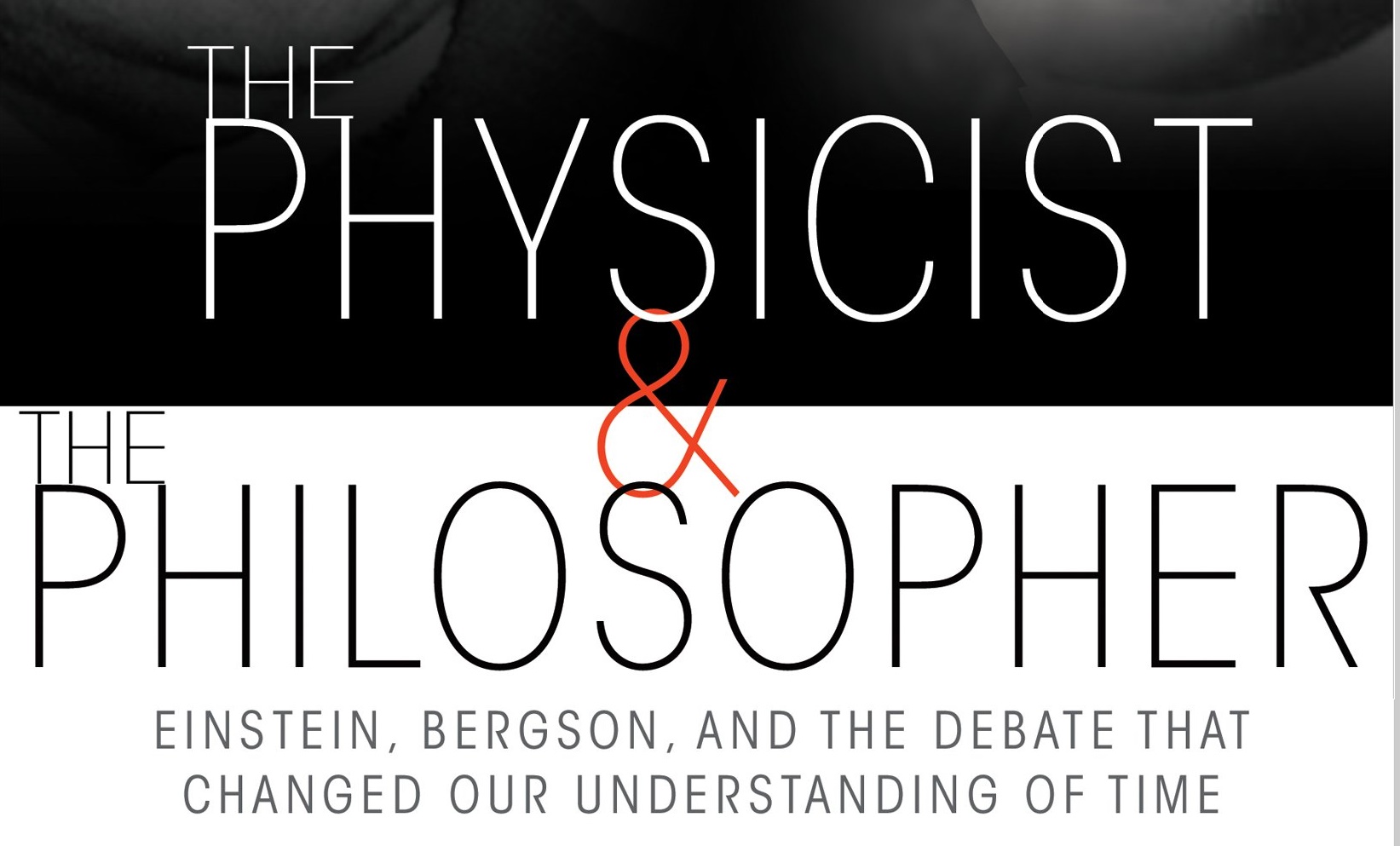
When I looked at their press homepage after receiving their generous gift I noticed something else I’d like to read: The Physicist and the Philosopher: Einstein, Bergson, and the Debate That Changed Our Understanding of Time by Jimena Canales. Here’s the setup:
On April 6, 1922, in Paris, Albert Einstein and Henri Bergson publicly debated the nature of time. Einstein considered Bergson’s theory of time to be a soft, psychological notion, irreconcilable with the quantitative realities of physics. Bergson, who gained fame as a philosopher by arguing that time should not be understood exclusively through the lens of science, criticized Einstein’s theory of time for being a metaphysics grafted on to science, one that ignored the intuitive aspects of time. The Physicist and the Philosopher tells the remarkable story of how this explosive debate transformed our understanding of time and drove a rift between science and the humanities that persists today.
Jimena Canales introduces readers to the revolutionary ideas of Einstein and Bergson, describes how they dramatically collided in Paris, and traces how this clash of worldviews reverberated across the twentieth century. She shows how it provoked responses from figures such as Bertrand Russell and Martin Heidegger, and carried repercussions for American pragmatism, logical positivism, phenomenology, and quantum mechanics. Canales explains how the new technologies of the period—such as wristwatches, radio, and film—helped to shape people’s conceptions of time and further polarized the public debate. She also discusses how Bergson and Einstein, toward the end of their lives, each reflected on his rival’s legacy—Bergson during the Nazi occupation of Paris and Einstein in the context of the first hydrogen bomb explosion.
Doesn’t this sound like an intellectual adventure? Can’t wait to see.
You should also check out the great little enigmatic film Jimena Canales made with a student all about the contours of this great controversy:
Read my interview with TheWeek.com’s Damon Linker for another story tangentially related to Judaism.
The Physicist and the Philosopher
Previous Post

May 24, 2015
What Are the 7 Essential Poems for Pentecost? +Pantheon Surprise

Browse Our Archives
Select a Category #WhyRemainCatholic Abortion Advent Anti-Catholicism Arts Atheism Beauty Benedict XVI Bible Book Review Catholic Cinema Comedy Cosmos: A Space-Time Odyssey Czesław Miłosz Dariusz Karłowicz Devil Easter Eastern Orthodoxy Economics Environment Family Famous Atheists Who Weren't Atheists Guest Post Hans Urs von Balthasar HHS Mandate History Imagination Interview Islam Jean-Luc Marion John Paul II Judaism Just War Lent Literature Little Sisters of the Poor Liturgy Martyrdom Music News Paganism Patristics Phenomenology Philosophy Pierre Hadot Poetry Poland Pop Culture Pope Francis Poverty Prayer Protestantism Rabelais Race Remi Brague Rene Girard Russia Sam Rocha Science & Religion SCOTUS Secularization Sexual Abuse Sexuality Silence Solidarity Stratford Caldecott Synod14 Terrorism Top 10 Uncategorized Walker Percy War Weakened Edition World War II World Youth Day WYD Krakow
Select a Month July 2017 June 2017 May 2017 April 2017 March 2017 February 2017 January 2017 December 2016 October 2016 September 2016 August 2016 July 2016 June 2016 May 2016 April 2016 March 2016 February 2016 January 2016 December 2015 November 2015 October 2015 September 2015 August 2015 July 2015 June 2015 May 2015 April 2015 March 2015 February 2015 January 2015 December 2014 November 2014 October 2014 September 2014 August 2014 July 2014 May 2014 April 2014 March 2014 February 2014 January 2014 December 2013 November 2013 October 2013 September 2013 August 2013 July 2013 June 2013 May 2013
Follow Us!
TAKE THE
Religious Wisdom Quiz
True or False: David committed adultery with Bathsheba and arranged for her husband Uriah to be killed.
Select your answer to see how you score.
TRUE FALSE
Related posts from Cosmos The In Lost

The Surprising Anti-Capitalist Logic Behind the Catholic Church's...

The Holy Family as an Icon of World...

How is Classical Philosophy is Like War?

Why Does the World's Leading Philosopher Remain a...
TRENDING AT PATHEOS Catholic

Rejecting Doom: Christian Hope And Human Action
Christianity is a religion of hope. We are to have hope and...

It’s What Comes From Within Which Matters
One of the most difficult things for us to understand is why...

Why I Choose the Eucharist Over the Sermon
Choose the Eucharist, Not the Sermon What are we supposed to get...

5 Design Elements Found in Spiritually Rooted Homes
Putting Spirituality Into Home Decor Our homes are more than our living...

Credo: A Story of God Told with the...
About 10 years ago, I began to imagine a personal "Credo" that...

The Anatomy of Divine Revelation in Catholic Thought
The claim that God has made Himself known to human beings is...
view all Catholic blogs
Ad-Free & Subscriber Log-In Subscription Support
- About Us
- 2026 Calendar
- Videos
- Podcasts
- Library of World Religions
- Faith In Media Tracker
- Advertise With Us
- Write for Us
- Privacy Policy
- Terms of Service
- Do Not Sell My Data
- Contact Us
- Radiant Digital
- Manage Newsletter Subscriptions
- Unsubscribe From Notifications
- Sitemap
Copyright 2008-2026, Patheos. All rights reserved.
Subscription Support Ad-Free & Subscriber Log-In
Follow Patheos