
BuddhistCatholicContemplativeEvangelicalGeneral ChristianHinduJewishLatter-day SaintMuslimNew VisionsProgressive Christian
Beliefs
- Buddhist
- Catholic
- Contemplative
- Evangelical
- General Christian
- Hindu
- Jewish
- Latter-day Saint
- More Voices
- Muslim
- New Visions
- Pagan
- Progressive Christian
Topics
- Religion News
- Food and Religion
- Sports and Religion
- Religious Art
- Religious Music and Entertainment
- Religious Events
- History and Religion
- Style and Religion
- Politics and Religion
- Women in Religion
- Recreation Outdoors and Religion
- Business Finance and Religion
- Careers Workplace and Religion
- Education and Religion
- Family Parenting and Religion
- Health Fitness and Religion
- Home and Religion
- Relationships and Religion
- Technology and Religion
- Travel and Religion
Columnists
- Buddhist Columnists
- Business Finance and Religion Columnists
- Careers Workplace and Religion Columnists
- Catholic Columnists
- Contemplative Columnists
- Education and Religion Columnists
- Evangelists Columnists
- Family Parenting and Religion Columnists
- General Christian Columnists
- Health Fitness and Religion Columnists
- Hindu Columnists
- History and Religion Columnists
- Home and Religion Columnists
- Jewish Columnists
- More Voices Columnists
- Latter Day Columnists
- Muslim Columnists
- New Visions Columnists
- Nonreligious Columnists
- Pagan Columnists
- Politics and Religion Columnists
- Progressive Columnists
- Recreation Outdoors and Religion Columnists
- Relationships and Religion Columnists
- Religion News Columnists
- Religious Art Columnists
- Religious Events Columnists
- Religious Music and Entertainment Columnists
- Sports and Religion Columnists
- Style and Religion Columnists
- Technology and Religion Columnists
- Travel and Religion Columnists
- Women in Religion Columnists
Resource Library
- 2026 Calendar
- Library of World Religions
- The 100 Most Holy Places on Earth
- Patheos Answers
- Podcasts
- Videos
- Faith Leaders Database
- Anglican Episcopalian
- Bahai
- Baptist
- Buddhism
- Christianity
- Confucianism
- Eastern Orthodoxy
- Hinduism
- Holiness and Pentecostal
- ISKCON
- Islam
- Judaism
- Lutheran
- Methodist
- The Church of Jesus Christ of Latter-day Saints
- New Age
- Paganism
- Presbytarian and Reformed
- Protestantism
- Religion Behind the Scenes
- Roman Catholic
- Scientology
- Shia Islam
- Sikhism
- Sufism
- Sunni Islam
- Taoism
- Zen
- See all religions
Research Tools
 Ad-Free & Subscriber Log-In Subscription Support
Ad-Free & Subscriber Log-In Subscription Support
Follow Patheos 

- Trending:
- Forgiveness
- |
- Marriage
- |
- Consciousness
- |
- Death Penalty
- |
- Election
- |
- Halloween
 Cosmos The In Lost
- Home
- Catholic
- Identity-Protective Cognition: Science Finally Discovers Original Sin?!
Identity-Protective Cognition: Science Finally Discovers Original Sin?!
Last updated on: May 20, 2015 at 1:05 am by Artur Rosman
Identity-Protective Cognition: Science Finally Discovers Original Sin?! 2015-05-20T01:05:52-07:00 Artur Rosman
Patheos Explore the world's faith through different perspectives on religion and spirituality! Patheos has the views of the prevalent religions and spiritualities of the world.
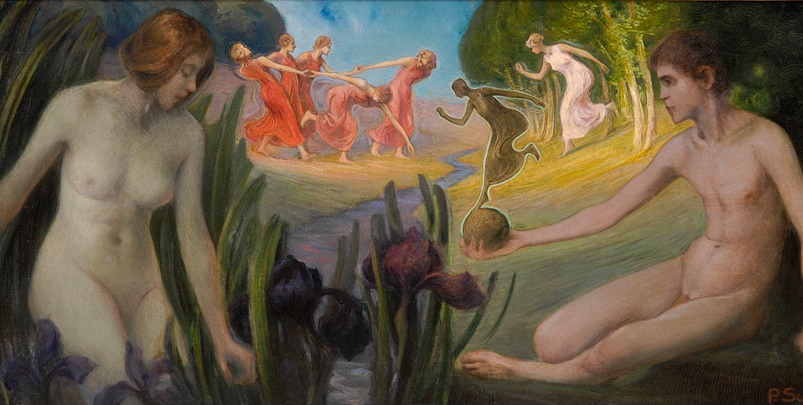
Discord in background to follow on the picnic in the foreground (Paul Schad-Rossa, Paradise, circa 1900; Wikimedia Commons, PD).
Aquinas said something to this effect many times in his copious publications:
All that Aquinas wanted you to know in about 300 pages.
The eternal Father’s Word, comprehending all things in his immensity, in order to recall human beings weakened by sin to the height of divine glory, willed to become small by taking on our smallness, not by laying aside his majesty. He compressed the teaching on human salvation in a brief summary for the sake of those who are busy.
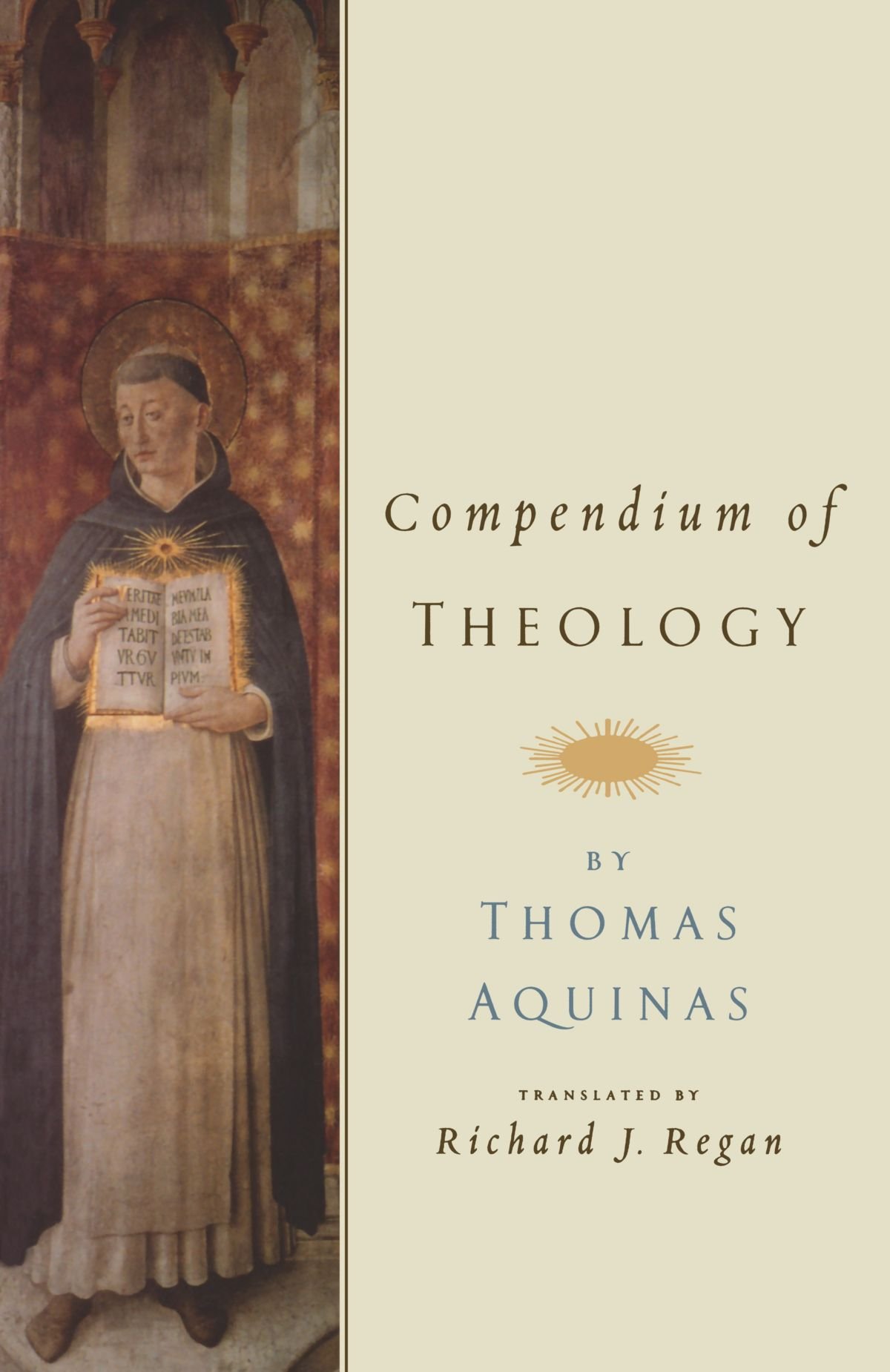
Conveniently enough, this passage comes from his Compendium on Theology, which is a book he composed on pretty much his deathbed for those who punted via TL;DR on his Summa (YOU CAN’T stop Aquinas, you can only hope to contain him). In turn, he presents the life of Jesus as the Father’s guide for living for those who TL;DR’ed the endless philosophical debates on how to live their lives. You know, for those of us, pretty much all of us, who cannot afford but be busy with living our lives right now without being able to philosophically bracket them off.
Augustine’s development of Original Sin from St. Paul’s theology is one of those convenient shortcuts for life. Human fallibility, especially your own, is sure to impinge upon relationships and throw them into turmoil. It is one of the most fundamental experiential facts of human life, which is why Leszek Kolakowski is fundamentally right about being wrong when he says in his Religion: If There is No God…on God, the Devil, Sin and Other Worries of the So-Called Philosophy of Religion, that is, if my fallible memory serves me right:
I can understand people who do not believe in God, but the fact that there are people who do not believe in the devil is beyond my comprehension.
Something like Kolakowski’s argument from sin and imperfection.
You’d have to be totally deaf to the reality around you not to hear the demonically atonal music all around you. Science has finally gone on to study the cognitive dissonance of Original Sin (without knowing it). I first ran across “Identity-Protective Cognition” in an article with the best troll title ever, “The Most Depressing Discovery About the Brain, Ever.” Here’s how the scientists themselves summarize their findings, again without using the theological shortcut, “Original Sin,” to identify them:
Why does public conflict over societal risks persist in the face of compelling and widely accessible scientific evidence? We conducted an experiment to probe two alternative answers: the “Science Comprehension Thesis” (SCT), which identifies defects in the public’s knowledge and reasoning capacities as the source of such controversies; and the “Identity-protective Cognition Thesis” (ICT) which treats cultural conflict as disabling the faculties that members of the public use to make sense of decision-relevant science. In our experiment, we presented subjects with a difficult problem that turned on their ability to draw valid causal inferences from empirical data. As expected, subjects highest in Numeracy — a measure of the ability and disposition to make use of quantitative information — did substantially better than less numerate ones when the data were presented as results from a study of a new skin-rash treatment. Also as expected, subjects’ responses became politically polarized — and even less accurate — when the same data were presented as results from the study of a gun-control ban. But contrary to the prediction of SCT, such polarization did not abate among subjects highest in Numeracy; instead, it increased. This outcome supported ICT, which predicted that more Numerate subjects would use their quantitative-reasoning capacity selectively to conform their interpretation of the data to the result most consistent with their political outlooks. We discuss the theoretical and practical significance of these findings.
It turns out that, contrary to Yeats, the best are full of passionate conviction. Of course, the most ordinary peasant believers from the Dark Ages could’ve told you this. They knew it from experience and Original Sin was a place-marker for identifying the core of this experience.
Alison and I know you’ll probably even overreact to this post.
In turn, the sorts of practices of prayerful silence that Kevin M. Johnson talks about in his Cosmos the in Lost interview were designed to short-circuit these very real human tendencies. The Girardian theologian James Alison even talks about Original Sin in terms of The Joy of Being Wrong, because being aware of it opens up the possibility of deconstructing our biased, self-centered, and in-group protecting cognition by reinforcing humility through practices of repentance.
Yes, spirituality and theology are really that mundane and practical. They are shortcuts to the essentials for the sake of those who are busy (busy trolling, for example).
Goodness, it took science long to figure something this simple out. Science was so late on this that it must be drunk on Identity-Protective Cognition, wanting to look all purely rational and stuff.
Come on scientists, get your act together! (Granted, that exhortation might just be my IPC talking).
Read some theologians for Insight and shortcuts.
The two disciplines aren’t competitors. You might not know it, because of your own identity-protective cognition, they frequently work together.
You might also be interested in reading my piece on a related topic: confirmation bias and the fate of the pastor who stopped going to church for a year, and, it comes as no surprise, became an atheist.
Previous Post

May 15, 2015
B.B. and Franz: Drinking To Two Kings Who Died Yesterday
Next Post

May 20, 2015 Exposé: The Culture of Deathly Desire Behind Capitalist Anorexia
Browse Our Archives
Select a Category #WhyRemainCatholic Abortion Advent Anti-Catholicism Arts Atheism Beauty Benedict XVI Bible Book Review Catholic Cinema Comedy Cosmos: A Space-Time Odyssey Czesław Miłosz Dariusz Karłowicz Devil Easter Eastern Orthodoxy Economics Environment Family Famous Atheists Who Weren't Atheists Guest Post Hans Urs von Balthasar HHS Mandate History Imagination Interview Islam Jean-Luc Marion John Paul II Judaism Just War Lent Literature Little Sisters of the Poor Liturgy Martyrdom Music News Paganism Patristics Phenomenology Philosophy Pierre Hadot Poetry Poland Pop Culture Pope Francis Poverty Prayer Protestantism Rabelais Race Remi Brague Rene Girard Russia Sam Rocha Science & Religion SCOTUS Secularization Sexual Abuse Sexuality Silence Solidarity Stratford Caldecott Synod14 Terrorism Top 10 Uncategorized Walker Percy War Weakened Edition World War II World Youth Day WYD Krakow
Select a Month July 2017 June 2017 May 2017 April 2017 March 2017 February 2017 January 2017 December 2016 October 2016 September 2016 August 2016 July 2016 June 2016 May 2016 April 2016 March 2016 February 2016 January 2016 December 2015 November 2015 October 2015 September 2015 August 2015 July 2015 June 2015 May 2015 April 2015 March 2015 February 2015 January 2015 December 2014 November 2014 October 2014 September 2014 August 2014 July 2014 May 2014 April 2014 March 2014 February 2014 January 2014 December 2013 November 2013 October 2013 September 2013 August 2013 July 2013 June 2013 May 2013
Follow Us!
TAKE THE
Religious Wisdom Quiz
What character trait is praised in the Parable of the Good Samaritan?
Select your answer to see how you score.
Compassion Deceit Selfishness Pride
Related posts from Cosmos The In Lost

The Surprising Anti-Capitalist Logic Behind the Catholic Church's...

What is the Source of Our Culture of...

Biblical Authority After Babel Cannot Be Built Upon...

2 Reasons Why the March for Science is...
TRENDING AT PATHEOS Catholic

Rejecting Doom: Christian Hope And Human Action
Christianity is a religion of hope. We are to have hope and...

It’s What Comes From Within Which Matters
One of the most difficult things for us to understand is why...

Why I Choose the Eucharist Over the Sermon
Choose the Eucharist, Not the Sermon What are we supposed to get...

5 Design Elements Found in Spiritually Rooted Homes
Putting Spirituality Into Home Decor Our homes are more than our living...

Credo: A Story of God Told with the...
About 10 years ago, I began to imagine a personal "Credo" that...

The Anatomy of Divine Revelation in Catholic Thought
The claim that God has made Himself known to human beings is...
view all Catholic blogs
Ad-Free & Subscriber Log-In Subscription Support
- About Us
- 2026 Calendar
- Videos
- Podcasts
- Library of World Religions
- Faith In Media Tracker
- Advertise With Us
- Write for Us
- Privacy Policy
- Terms of Service
- Do Not Sell My Data
- Contact Us
- Radiant Digital
- Manage Newsletter Subscriptions
- Unsubscribe From Notifications
- Sitemap
Copyright 2008-2026, Patheos. All rights reserved.
Subscription Support Ad-Free & Subscriber Log-In
Follow Patheos