
BuddhistCatholicContemplativeEvangelicalGeneral ChristianHinduJewishLatter-day SaintMuslimNew VisionsProgressive Christian
Beliefs
- Buddhist
- Catholic
- Contemplative
- Evangelical
- General Christian
- Hindu
- Jewish
- Latter-day Saint
- More Voices
- Muslim
- New Visions
- Pagan
- Progressive Christian
Topics
- Religion News
- Food and Religion
- Sports and Religion
- Religious Art
- Religious Music and Entertainment
- Religious Events
- History and Religion
- Style and Religion
- Politics and Religion
- Women in Religion
- Recreation Outdoors and Religion
- Business Finance and Religion
- Careers Workplace and Religion
- Education and Religion
- Family Parenting and Religion
- Health Fitness and Religion
- Home and Religion
- Relationships and Religion
- Technology and Religion
- Travel and Religion
Columnists
- Buddhist Columnists
- Business Finance and Religion Columnists
- Careers Workplace and Religion Columnists
- Catholic Columnists
- Contemplative Columnists
- Education and Religion Columnists
- Evangelists Columnists
- Family Parenting and Religion Columnists
- General Christian Columnists
- Health Fitness and Religion Columnists
- Hindu Columnists
- History and Religion Columnists
- Home and Religion Columnists
- Jewish Columnists
- More Voices Columnists
- Latter Day Columnists
- Muslim Columnists
- New Visions Columnists
- Nonreligious Columnists
- Pagan Columnists
- Politics and Religion Columnists
- Progressive Columnists
- Recreation Outdoors and Religion Columnists
- Relationships and Religion Columnists
- Religion News Columnists
- Religious Art Columnists
- Religious Events Columnists
- Religious Music and Entertainment Columnists
- Sports and Religion Columnists
- Style and Religion Columnists
- Technology and Religion Columnists
- Travel and Religion Columnists
- Women in Religion Columnists
Resource Library
- 2026 Calendar
- Library of World Religions
- The 100 Most Holy Places on Earth
- Patheos Answers
- Podcasts
- Videos
- Faith Leaders Database
- Anglican Episcopalian
- Bahai
- Baptist
- Buddhism
- Christianity
- Confucianism
- Eastern Orthodoxy
- Hinduism
- Holiness and Pentecostal
- ISKCON
- Islam
- Judaism
- Lutheran
- Methodist
- The Church of Jesus Christ of Latter-day Saints
- New Age
- Paganism
- Presbytarian and Reformed
- Protestantism
- Religion Behind the Scenes
- Roman Catholic
- Scientology
- Shia Islam
- Sikhism
- Sufism
- Sunni Islam
- Taoism
- Zen
- See all religions
Research Tools
 Ad-Free & Subscriber Log-In Subscription Support
Ad-Free & Subscriber Log-In Subscription Support
Follow Patheos 

- Trending:
- Forgiveness
- |
- Marriage
- |
- Consciousness
- |
- Death Penalty
- |
- Election
- |
- Halloween
 Cosmos The In Lost
- Home
- Catholic
- B.B. and Franz: Drinking To Two Kings Who Died Yesterday
B.B. and Franz: Drinking To Two Kings Who Died Yesterday
Last updated on: May 15, 2015 at 1:41 pm by Artur Rosman
B.B. and Franz: Drinking To Two Kings Who Died Yesterday 2015-05-15T13:41:07-07:00 Artur Rosman
Patheos Explore the world's faith through different perspectives on religion and spirituality! Patheos has the views of the prevalent religions and spiritualities of the world.
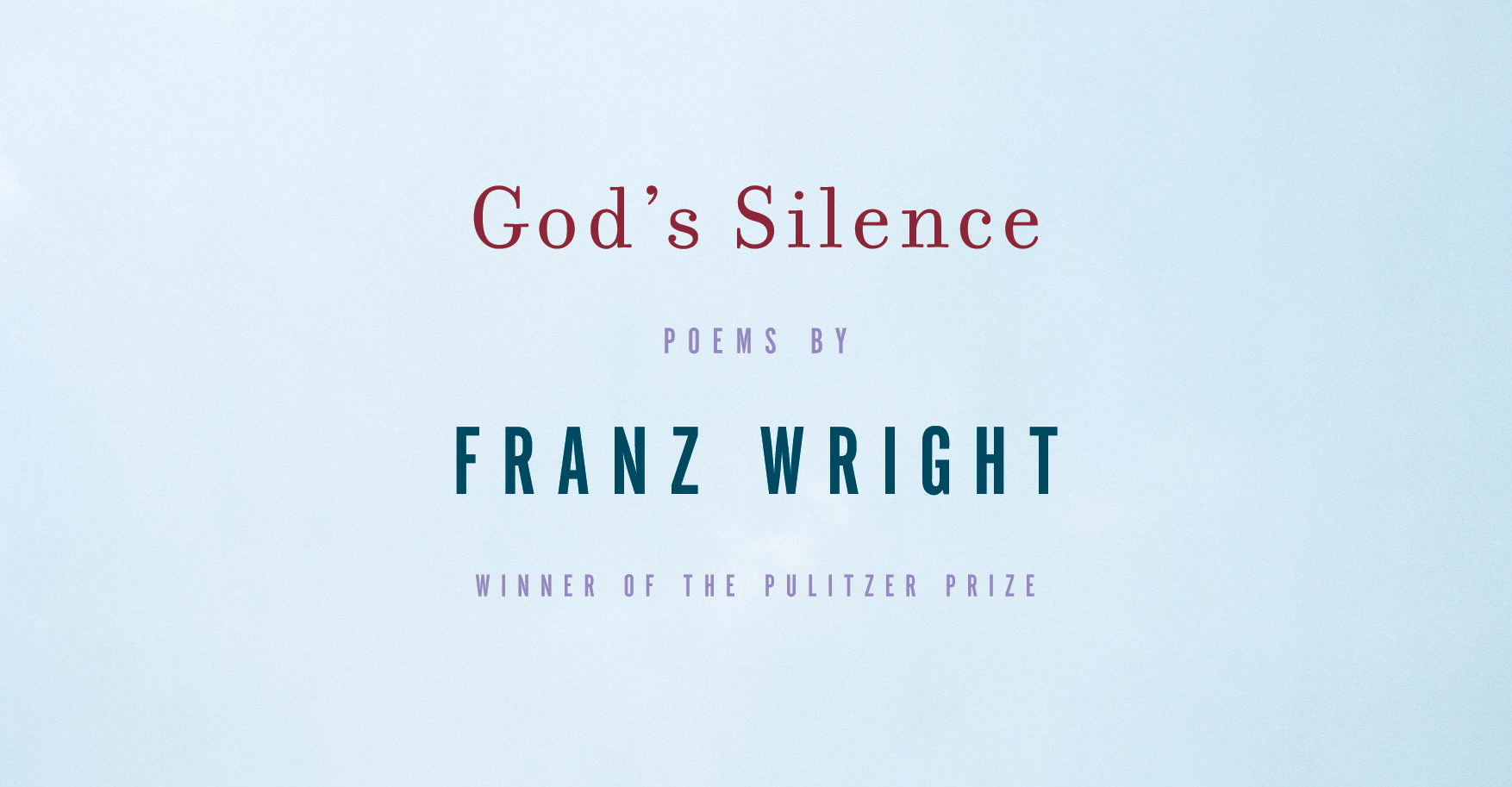
Everybody probably knows by now about B.B. King’s death. Fewer of you might be aware that another member of our artistic royalty passed away on the same day: the Catholic poet Franz Wright.
Franz too knew the blues. He paints them with Catholic imagery in such a way that it makes you see Catholicism in a new way. It also makes you look at your failings (or are they victories in weakness?) in a new way.
His poetry is “complete community of fate with the lost,” made all the more difficult because the poet not infrequently saw himself as one of the lost.
The following poem demonstrates his brave use of tradition Catholic imagery. It features one of the formative images of my childhood: a statue of the Virgin stomping down a serpent’s head.
My grandmother had one of these statues on her bed-stand. I spent many a moment staring at the curious scene at Mary’s feet, speculating what it meant. I was saddened to see the statue in a dilapidated state the last time I was in Poland. It was a sign some part of my past irrevocably passing, touched by decomposition.
“Transformation”
by Franz Wright
from the collection God’s Silence
It gets late early now
This is
when I like to visit
you at the top of your hidden
still green stairway, holy
Mother with the downcast
eyes as a girl of sixteen
almost unnoticed the right bare foot pinning
the serpent with the one-
leafed little apple in its jaws
poor thing, one is tempted
to say, so transformed
by its contact with you
is everything–
Decomposition in the form of addiction, perhaps also madness too (holy?), haunted Wright throughout his life.
This is why his poems resonated with me. Aristotle says human beings are addictive (imitative) animals through and through. God knows I have discovered myself as possibly the most addictive human being of them all. But I’ve learned this is not entirely a bad thing, not irredeemable, in part thanks to Franz.
The borderline between decay and revelation is always thin in his poems–as it it in life. The way down is frequently the way up as our mangled desires quietly, yet somehow also violently, gesticulate towards something else, toward their real aim, as in “The Walk,” also from God’s Silence:
More malicious and frightening behavior
on the part of inanimate objectsI walked outside today, and the void was shining
Immortal and infinite
word
And I have heard
God’s silence
like the sunFor the last time I stumbled
into a church
where no one was home, silently
screamingHelp me: I can’t live
without You I don’t want to live
I came in the midst of the world
and in the flesh I appeared to you
(I seemed to hear this, originless)
and I found you all
drunk and no one
did I find among you
thirstingStaggered out again and took a look around
and suddenly noticed the others
each wearing that identical
expression, What is wrong with me –What’s going to happen
to me
And I heard again
the faceless voice
saying, How can you expect energy from above
when you continue to receive it
from below
and are content?I Am Not Content!
These blues approach the “unholy holiness” mentioned in yesterday’s post. Addictions, like monastic practice, can strip one of all illusions of grandeur.
What remains is a hollowed out space of silence, often complete and even frightening, where you might–but you might not, since you’re not in control, or, you are out of control–hear The Voice calling from the rock bottom of your poverty.
Cheers:
I think these two deaths give a new edge to my interview with Kevin M. Johnson on the topic of practicing silence. Do take a look at it. I think it’s one of the most important things I’ve posted on this blog.
Franz Wright remains on my TOP10 list of living religious poets along with Tomas Transtromer. It seems too soon and too impious to remove them too quickly.
Previous Post
May 14, 2015
The Unholy Holiness of the Church Scandalizes Expectations of Purity
Next Post
May 19, 2015 Identity-Protective Cognition: Science Finally Discovers Original Sin?!
Browse Our Archives
Select a Category #WhyRemainCatholic Abortion Advent Anti-Catholicism Arts Atheism Beauty Benedict XVI Bible Book Review Catholic Cinema Comedy Cosmos: A Space-Time Odyssey Czesław Miłosz Dariusz Karłowicz Devil Easter Eastern Orthodoxy Economics Environment Family Famous Atheists Who Weren't Atheists Guest Post Hans Urs von Balthasar HHS Mandate History Imagination Interview Islam Jean-Luc Marion John Paul II Judaism Just War Lent Literature Little Sisters of the Poor Liturgy Martyrdom Music News Paganism Patristics Phenomenology Philosophy Pierre Hadot Poetry Poland Pop Culture Pope Francis Poverty Prayer Protestantism Rabelais Race Remi Brague Rene Girard Russia Sam Rocha Science & Religion SCOTUS Secularization Sexual Abuse Sexuality Silence Solidarity Stratford Caldecott Synod14 Terrorism Top 10 Uncategorized Walker Percy War Weakened Edition World War II World Youth Day WYD Krakow
Select a Month July 2017 June 2017 May 2017 April 2017 March 2017 February 2017 January 2017 December 2016 October 2016 September 2016 August 2016 July 2016 June 2016 May 2016 April 2016 March 2016 February 2016 January 2016 December 2015 November 2015 October 2015 September 2015 August 2015 July 2015 June 2015 May 2015 April 2015 March 2015 February 2015 January 2015 December 2014 November 2014 October 2014 September 2014 August 2014 July 2014 May 2014 April 2014 March 2014 February 2014 January 2014 December 2013 November 2013 October 2013 September 2013 August 2013 July 2013 June 2013 May 2013
Follow Us!
TAKE THE
Religious Wisdom Quiz
What is the ecumenical council where Roman Catholicism addressed modernization in the 1960s?
Select your answer to see how you score.
Vatican II Council of Nicaea Trent Ephesus
Related posts from Cosmos The In Lost

The Surprising Anti-Capitalist Logic Behind the Catholic Church's...

How is Classical Philosophy is Like War?

Why Does the World's Leading Philosopher Remain a...

It's a Good Friday to Leave Calypso's Island
TRENDING AT PATHEOS Catholic

Creation, Preservation, and Teleology in Catholic Theology
As I write this, it is very early Monday morning. Like millions...

The Parable Of The Sower And The Word...
One of Christ’s most famous parables is that of the sower who...

Rejecting Doom: Christian Hope And Human Action
Christianity is a religion of hope. We are to have hope and...

Why I Choose the Eucharist Over the Sermon
Choose the Eucharist, Not the Sermon What are we supposed to get...

5 Design Elements Found in Spiritually Rooted Homes
Putting Spirituality Into Home Decor Our homes are more than our living...

Credo: A Story of God Told with the...
About 10 years ago, I began to imagine a personal "Credo" that...
view all Catholic blogs
Ad-Free & Subscriber Log-In Subscription Support
- About Us
- 2026 Calendar
- Videos
- Podcasts
- Library of World Religions
- Faith In Media Tracker
- Advertise With Us
- Write for Us
- Privacy Policy
- Terms of Service
- Do Not Sell My Data
- Contact Us
- Radiant Digital
- Manage Newsletter Subscriptions
- Unsubscribe From Notifications
- Sitemap
Copyright 2008-2026, Patheos. All rights reserved.
Subscription Support Ad-Free & Subscriber Log-In
Follow Patheos