
BuddhistCatholicContemplativeEvangelicalGeneral ChristianHinduJewishLatter-day SaintMuslimNew VisionsProgressive Christian
Beliefs
- Buddhist
- Catholic
- Contemplative
- Evangelical
- General Christian
- Hindu
- Jewish
- Latter-day Saint
- More Voices
- Muslim
- New Visions
- Pagan
- Progressive Christian
Topics
- Religion News
- Food and Religion
- Sports and Religion
- Religious Art
- Religious Music and Entertainment
- Religious Events
- History and Religion
- Style and Religion
- Politics and Religion
- Women in Religion
- Recreation Outdoors and Religion
- Business Finance and Religion
- Careers Workplace and Religion
- Education and Religion
- Family Parenting and Religion
- Health Fitness and Religion
- Home and Religion
- Relationships and Religion
- Technology and Religion
- Travel and Religion
Columnists
- Buddhist Columnists
- Business Finance and Religion Columnists
- Careers Workplace and Religion Columnists
- Catholic Columnists
- Contemplative Columnists
- Education and Religion Columnists
- Evangelists Columnists
- Family Parenting and Religion Columnists
- General Christian Columnists
- Health Fitness and Religion Columnists
- Hindu Columnists
- History and Religion Columnists
- Home and Religion Columnists
- Jewish Columnists
- More Voices Columnists
- Latter Day Columnists
- Muslim Columnists
- New Visions Columnists
- Nonreligious Columnists
- Pagan Columnists
- Politics and Religion Columnists
- Progressive Columnists
- Recreation Outdoors and Religion Columnists
- Relationships and Religion Columnists
- Religion News Columnists
- Religious Art Columnists
- Religious Events Columnists
- Religious Music and Entertainment Columnists
- Sports and Religion Columnists
- Style and Religion Columnists
- Technology and Religion Columnists
- Travel and Religion Columnists
- Women in Religion Columnists
Resource Library
- 2026 Calendar
- Library of World Religions
- The 100 Most Holy Places on Earth
- Patheos Answers
- Podcasts
- Videos
- Faith Leaders Database
- Anglican Episcopalian
- Bahai
- Baptist
- Buddhism
- Christianity
- Confucianism
- Eastern Orthodoxy
- Hinduism
- Holiness and Pentecostal
- ISKCON
- Islam
- Judaism
- Lutheran
- Methodist
- The Church of Jesus Christ of Latter-day Saints
- New Age
- Paganism
- Presbytarian and Reformed
- Protestantism
- Religion Behind the Scenes
- Roman Catholic
- Scientology
- Shia Islam
- Sikhism
- Sufism
- Sunni Islam
- Taoism
- Zen
- See all religions
Research Tools
 Ad-Free & Subscriber Log-In Subscription Support
Ad-Free & Subscriber Log-In Subscription Support
Follow Patheos 

- Trending:
- Forgiveness
- |
- Marriage
- |
- Consciousness
- |
- Death Penalty
- |
- Election
- |
- Halloween
 Cosmos The In Lost
- Home
- Catholic
- Greatest Generation? Russia Is Right, VE Day Was No Simple American Victory
Greatest Generation? Russia Is Right, VE Day Was No Simple American Victory
Last updated on: May 8, 2015 at 1:13 pm by Artur Rosman
Greatest Generation? Russia Is Right, VE Day Was No Simple American Victory 2015-05-08T13:13:26-07:00 Artur Rosman
Patheos Explore the world's faith through different perspectives on religion and spirituality! Patheos has the views of the prevalent religions and spiritualities of the world.
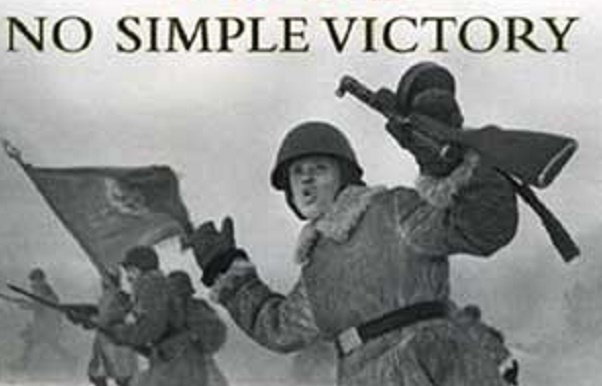
Taken from the cover of Norman Davies, Europe at War 1939-1945: No Simple Victory.
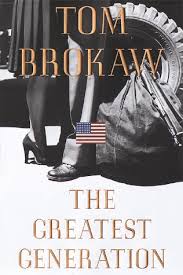
Tom Brokaw’s great myth-building volume, The Great Generation, seeped into the American consciousness a couple of decades ago. The book is an implicit indictment of the American present by comparison to the disinterested and unequivocally heroic efforts of the World War II generation.
Everything in America has to be the greatest, so it’s no surprise this book sold so well and then colored American perception of the past ever since. In classically American Evangelical fashion Brokaw describes his writing process as a Great Awakening, a personal conversion experience:
Yet another Romantic-American myth? The Russians have theirs too.
In the spring of 1984, I went to the northwest of France, to Normandy, to prepare an NBC documentary on the fortieth anniversary of D-Day, the massive and daring Allied invasion of Europe that marked the beginning of the end of Adolf Hitler’s Third Reich. There, I underwent a life-changing experience. As I walked the beaches with the American veterans who had returned for this anniversary, men in their sixties and seventies, and listened to their stories, I was deeply moved and profoundly grateful for all they had done. Ten years later, I returned to Normandy for the fiftieth anniversary of the invasion, and by then I had come to understand what this generation of Americans meant to history. It is, I believe, the greatest generation any society has ever produced.
There’s nothing wrong with conversions, but sometimes certain historical facts, as my extended interview with Damon Linker shows, can and should shake our naive belief. Such a process can lead to a deeper and more profound faith.
The Washington Post piece “Don’t forget how the Soviet Union saved the world from Hitler” is a necessary prophylactic to naive American belief, self-glorification, colonization of history:
War is hell. Victory is a bad metaphor for describing what happens afterwards.
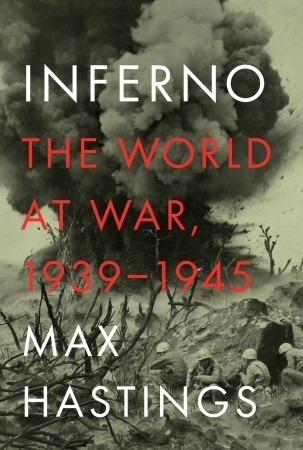
The Red Army was “the main engine of Nazism’s destruction,” writes British historian and journalist Max Hastings in Inferno: The World at War, 1939-1945. The Soviet Union paid the harshest price: though the numbers are not exact, an estimated 26 million Soviet citizens died during World War II, including as many as 11 million soldiers. At the same time, the Germans suffered three-quarters of their wartime losses fighting the Red Army.
“It was the Western Allies’ extreme good fortune that the Russians, and not themselves, paid almost the entire ‘butcher’s bill’ for [defeating Nazi Germany], accepting 95 per cent of the military casualties of the three major powers of the Grand Alliance,” writes Hastings.
Oxford historian Norman Davies draws the unattractive conclusions out of these facts in his Europe at War 1939-1945: No Simple Victory. This is how he describes the hard-hitting and straightforward premises of his book on his website:
Myths die hard. I’m sure most of you will keep on believing your grandparents “won.”
Europe’s two main combatant powers, the Third Reich and the Soviet Union were both mass-murdering tyrannies that were, by their nature, incapable of bringing freedom to anyone . In the first part of the war, 1939-41, they were partners; in the second part, 1941-45, they were mortal enemies, engaged in a colossal struggle on the Eastern Front that greatly exceeded any other campaigns of the war.
The Western Powers, in contrast, were all but knocked out in 1940; and the entry of the Americans made an impact that came too late to be decisive. Berlin was stormed by the Red Army alone. These truths are obvious to anyone who saw the war in the great expanses between Germany and Russia which Tim Snyder has recently called the Bloodlands. But they are not popular among the public in Britain and America which still believe that “We won the war.”
In the end there was no war of good guys vs. bad guys.
Now for some other forgotten facts:
If there was a greatest generation then it was Soviet minorities–ethnic, religious, political, class, and so on–who were mercilessly shipped to the front-lines as cannon-fodder. For the Russians it was a Great Patriotic War (Stalin) only in the most cynical sense–a kind of de facto ethnic cleansing. Let’s not also forget the Soviets raped their way to Berlin. They also helped to ethnically cleanse what is now Western Poland of Germans with the approval of the Brits and Americans (This, I believe, to this day remains the largest ethnic cleansing in history).
To put the cherry on top:
The Soviets later sent many of the soldiers who liberated Berlin to the Gulags for fear they picked up the sorts of Western liberal ideas (let’s not forget they’re firmly based in Christian theology) Putin is now “combating.”
I nearly forgot:
Eastern Europe was cynically abandoned to Stalin’s sphere of influence by Churchill and Roosevelt at Yalta, because the price of peace and “freedom” was high, and the Allies were not Hollywood good guys by any stretch of the imagination.
If anything, beyond any sides claiming victory for themselves, or something as silly as a greatest generation, all of this should remind us that, according to Christian theology (and it frequently forgets this too), a bloody corpse lies at the crossroads of history.
You might also be interested in reading about the 5 facts World War II and Holocaust commemorations nearly always forget.
Previous Post

May 6, 2015
Just Another Atheist Jewish Catholic: An Interview With Damon Linker
Next Post
May 11, 2015 Where in the Continent is the Heart of Europe?
Browse Our Archives
Select a Category #WhyRemainCatholic Abortion Advent Anti-Catholicism Arts Atheism Beauty Benedict XVI Bible Book Review Catholic Cinema Comedy Cosmos: A Space-Time Odyssey Czesław Miłosz Dariusz Karłowicz Devil Easter Eastern Orthodoxy Economics Environment Family Famous Atheists Who Weren't Atheists Guest Post Hans Urs von Balthasar HHS Mandate History Imagination Interview Islam Jean-Luc Marion John Paul II Judaism Just War Lent Literature Little Sisters of the Poor Liturgy Martyrdom Music News Paganism Patristics Phenomenology Philosophy Pierre Hadot Poetry Poland Pop Culture Pope Francis Poverty Prayer Protestantism Rabelais Race Remi Brague Rene Girard Russia Sam Rocha Science & Religion SCOTUS Secularization Sexual Abuse Sexuality Silence Solidarity Stratford Caldecott Synod14 Terrorism Top 10 Uncategorized Walker Percy War Weakened Edition World War II World Youth Day WYD Krakow
Select a Month July 2017 June 2017 May 2017 April 2017 March 2017 February 2017 January 2017 December 2016 October 2016 September 2016 August 2016 July 2016 June 2016 May 2016 April 2016 March 2016 February 2016 January 2016 December 2015 November 2015 October 2015 September 2015 August 2015 July 2015 June 2015 May 2015 April 2015 March 2015 February 2015 January 2015 December 2014 November 2014 October 2014 September 2014 August 2014 July 2014 May 2014 April 2014 March 2014 February 2014 January 2014 December 2013 November 2013 October 2013 September 2013 August 2013 July 2013 June 2013 May 2013
Follow Us!
TAKE THE
Religious Wisdom Quiz
Who was Saul's son?
Select your answer to see how you score.
Jonathan Absalom Samuel David
Related posts from Cosmos The In Lost

The Surprising Anti-Capitalist Logic Behind the Catholic Church's...

The Holy Family as an Icon of World...

Biblical Authority After Babel Cannot Be Built Upon...

Western Civ Doesn't Need Tenured Radicals to Ruin...
TRENDING AT PATHEOS Catholic

Creation, Preservation, and Teleology in Catholic Theology
As I write this, it is very early Monday morning. Like millions...

The Parable Of The Sower And The Word...
One of Christ’s most famous parables is that of the sower who...

Rejecting Doom: Christian Hope And Human Action
Christianity is a religion of hope. We are to have hope and...

Why I Choose the Eucharist Over the Sermon
Choose the Eucharist, Not the Sermon What are we supposed to get...

5 Design Elements Found in Spiritually Rooted Homes
Putting Spirituality Into Home Decor Our homes are more than our living...

Credo: A Story of God Told with the...
About 10 years ago, I began to imagine a personal "Credo" that...
view all Catholic blogs
Ad-Free & Subscriber Log-In Subscription Support
- About Us
- 2026 Calendar
- Videos
- Podcasts
- Library of World Religions
- Faith In Media Tracker
- Advertise With Us
- Write for Us
- Privacy Policy
- Terms of Service
- Do Not Sell My Data
- Contact Us
- Radiant Digital
- Manage Newsletter Subscriptions
- Unsubscribe From Notifications
- Sitemap
Copyright 2008-2026, Patheos. All rights reserved.
Subscription Support Ad-Free & Subscriber Log-In
Follow Patheos