
BuddhistCatholicContemplativeEvangelicalGeneral ChristianHinduJewishLatter-day SaintMuslimNew VisionsProgressive Christian
Beliefs
- Buddhist
- Catholic
- Contemplative
- Evangelical
- General Christian
- Hindu
- Jewish
- Latter-day Saint
- More Voices
- Muslim
- New Visions
- Pagan
- Progressive Christian
Topics
- Religion News
- Food and Religion
- Sports and Religion
- Religious Art
- Religious Music and Entertainment
- Religious Events
- History and Religion
- Style and Religion
- Politics and Religion
- Women in Religion
- Recreation Outdoors and Religion
- Business Finance and Religion
- Careers Workplace and Religion
- Education and Religion
- Family Parenting and Religion
- Health Fitness and Religion
- Home and Religion
- Relationships and Religion
- Technology and Religion
- Travel and Religion
Columnists
- Buddhist Columnists
- Business Finance and Religion Columnists
- Careers Workplace and Religion Columnists
- Catholic Columnists
- Contemplative Columnists
- Education and Religion Columnists
- Evangelists Columnists
- Family Parenting and Religion Columnists
- General Christian Columnists
- Health Fitness and Religion Columnists
- Hindu Columnists
- History and Religion Columnists
- Home and Religion Columnists
- Jewish Columnists
- More Voices Columnists
- Latter Day Columnists
- Muslim Columnists
- New Visions Columnists
- Nonreligious Columnists
- Pagan Columnists
- Politics and Religion Columnists
- Progressive Columnists
- Recreation Outdoors and Religion Columnists
- Relationships and Religion Columnists
- Religion News Columnists
- Religious Art Columnists
- Religious Events Columnists
- Religious Music and Entertainment Columnists
- Sports and Religion Columnists
- Style and Religion Columnists
- Technology and Religion Columnists
- Travel and Religion Columnists
- Women in Religion Columnists
Resource Library
- 2026 Calendar
- Library of World Religions
- The 100 Most Holy Places on Earth
- Patheos Answers
- Podcasts
- Videos
- Faith Leaders Database
- Anglican Episcopalian
- Bahai
- Baptist
- Buddhism
- Christianity
- Confucianism
- Eastern Orthodoxy
- Hinduism
- Holiness and Pentecostal
- ISKCON
- Islam
- Judaism
- Lutheran
- Methodist
- The Church of Jesus Christ of Latter-day Saints
- New Age
- Paganism
- Presbytarian and Reformed
- Protestantism
- Religion Behind the Scenes
- Roman Catholic
- Scientology
- Shia Islam
- Sikhism
- Sufism
- Sunni Islam
- Taoism
- Zen
- See all religions
Research Tools
 Ad-Free & Subscriber Log-In Subscription Support
Ad-Free & Subscriber Log-In Subscription Support
Follow Patheos 

- Trending:
- Forgiveness
- |
- Marriage
- |
- Consciousness
- |
- Death Penalty
- |
- Election
- |
- Halloween
 Cosmos The In Lost
- Home
- Catholic
- Just Another Atheist Jewish Catholic: An Interview With Damon Linker
Just Another Atheist Jewish Catholic: An Interview With Damon Linker
Last updated on: May 7, 2015 at 12:44 pm by Artur Rosman
Just Another Atheist Jewish Catholic: An Interview With Damon Linker 2015-05-07T12:44:27-07:00 Artur Rosman
Patheos Explore the world's faith through different perspectives on religion and spirituality! Patheos has the views of the prevalent religions and spiritualities of the world.
Rosman: What then attracted you to convert to the consummately anti-modern Catholic tradition instead of any of the many modernity-embracing Protestant traditions? Was there a political element to your conversion, or was it driven by something else?
Linker: You had to go personal on me, huh? I don’t know if I’ve ever talked or written publicly about my conversion and its aftermath. Oh well, I guess there’s a first for everything.
The only way even to attempt to make sense of it is by telling a story. I was raised as a secular Jew in New York City. (No religious education at all, no Bar Mitzvah, etc.) In my undergraduate and graduate education, I learned a lot about Christian theology and always found it impressive as a system of ideas, though I never entertained the thought of converting. That began to change when I taught at Brigham Young University for two years in the late 1990s. I found the Mormon students and faculty there to be extremely impressive — morally and intellectually serious. When I left the university (my non-tenured visiting position came to an end), I felt a loss, like something spiritual had been stirred up inside me that now lacked an outlet. I looked into my native Judaism, but by that point it seemed more foreign to me than Christianity, and especially Catholicism. (My wife is a cradle Catholic.) So I somewhat impulsively decided to convert. I was received into the church during the Easter Vigil Mass in 2001 at lovely St. Mary’s in New Haven, CT. (The long, involved homilies by the Dominicans at that parish spoiled me. I’ve never encountered anything remotely that engaging in the years since.)
To answer one of your questions, politics had nothing at all to do with my conversion — though it’s also true that I applied for and landed a job as associate editor of First Things magazine very soon after I began my RCIA classes, so for a time I wondered if there might be something providential going on there. That was especially tempting for the nine months or so after the September 11 attacks. It seemed like every aspect of my life and identity was related, connected, harmonized: Catholic convert, Richard John Neuhaus protege, ambitious intellectual, Republican, American — and Evil Doers to smite. What could be better?
That’s one of the great Catholic promises, isn’t it? Both/And? Unlike the either/or Protestants, let alone the neither/nor secular liberals, Catholics are supposed to pull it all together, show how it All Makes Sense — or at least how it once did make sense, during the Middle Ages, the high point of Christian civilization, a time of unity and synthesis. Until Occam’s nominalism shattered the great social-intellectual whole, that is. One guy denies the reality of universals and before you know it, you’ve got the Reformation and liberalism and pluralism and After Virtue.
I’m being glib, but I sometimes feel like working for First Things during the religious right’s moment of maximal influence in Washington might have been the worst possible thing I could have done to nurture my nascent faith. I never really had any, but I wanted it very much around the time of my conversion. It began to take tentative root in the months after 9/11. But then it pretty much died. Faith was always going to be fraught for me. I’m too skeptical, irreverent, too much in the habit of doubting authority, culturally too much of a secular New York Jew, to settle in easily to faith, let alone faith in a visible church. But add on priests endorsing military invasions and whispering in the ears of princes? Widespread child rape by priests and its active cover-up by the hierarchy? By the time I quit First Things in a huff in early 2005, I wanted nothing more to do with the church at all.
Feels right, but could use more concrete details.
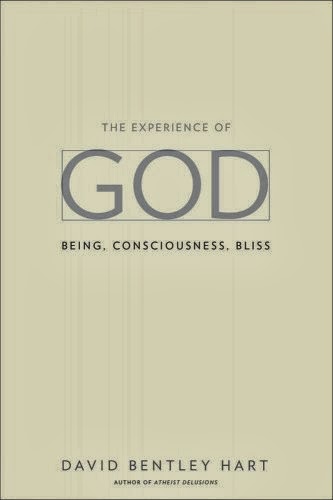
That proved too hasty. Unlike my friend Rod Dreher, who left Catholicism for Eastern Orthodoxy in aftermath of the sex-abuse scandal, I stayed put. I slowly returned to the church over the next few years, and we eventually resolved to raise our kids in the church as well — though it’s been a challenge at times. Neuhaus liked to say that the Catholic Church is “the Church of Jesus Christ most fully and rightly ordered through time.” That sounds nice, doesn’t it? I can’t even begin to imagine how someone could believe that. When I read a book like David Bentley Hart’s The Experience of God, I think: this sounds right to me. I guess that means I’m some kind of classical theist. (Except for the days when I think that classical theism is probably just a self-deceptive game of “as if” in which our minds tell us exactly what we want to hear.) But note that Hart’s book says nothing about revelation, nothing about scripture, nothing about the God of Abraham, Isaac, Joseph, and Jesus. It’s the God of the philosophers slightly refined beyond the theological hypotheses that come down to us from Plato and Aristotle. There’s an enormous lacuna separating that God, who transcends the universe absolutely, and the God-man who supposedly walked among us in Judea 2,000 years ago. I find believing in the latter a constant struggle. But that’s a piece of cake compared to believing that of all the variants of Christianity in the world, the Roman Catholic Church alone is the church Christ founded, uniquely protected from the gates of hell prevailing against it, and so forth.
I have indeed been tempted by forms of Protestantism on occasion, though I don’t think because those churches are more harmonious with modernity. I’ve also been tempted by Eastern Orthodoxy. (On just about every matter that separates the West and East, I think the East has the better part of the argument. Except for the national churches thing, which seems bizarre to me. And yes, that applies to the Anglicans, too.) So I’m staying in Rome for now. If the church is a mansion, you’ll find me in the upstairs hall linen closet. That’s where they keep the tortured former atheist-Jewish converts.
================================================================================
The conclusion to this interview reminds me of this clip from the classic Hannah and Her Sisters. The priest even looks a little bit like Fr. Neuhaus:
You might also want to see how and why Catholic and Evangelical sex scandals are structurally different.
Look here for an account of Heidegger’s fraught relationship with Catholicism.
Next Post

May 8, 2015 Greatest Generation? Russia Is Right, VE Day Was No Simple American Victory
Browse Our Archives
Select a Category #WhyRemainCatholic Abortion Advent Anti-Catholicism Arts Atheism Beauty Benedict XVI Bible Book Review Catholic Cinema Comedy Cosmos: A Space-Time Odyssey Czesław Miłosz Dariusz Karłowicz Devil Easter Eastern Orthodoxy Economics Environment Family Famous Atheists Who Weren't Atheists Guest Post Hans Urs von Balthasar HHS Mandate History Imagination Interview Islam Jean-Luc Marion John Paul II Judaism Just War Lent Literature Little Sisters of the Poor Liturgy Martyrdom Music News Paganism Patristics Phenomenology Philosophy Pierre Hadot Poetry Poland Pop Culture Pope Francis Poverty Prayer Protestantism Rabelais Race Remi Brague Rene Girard Russia Sam Rocha Science & Religion SCOTUS Secularization Sexual Abuse Sexuality Silence Solidarity Stratford Caldecott Synod14 Terrorism Top 10 Uncategorized Walker Percy War Weakened Edition World War II World Youth Day WYD Krakow
Select a Month July 2017 June 2017 May 2017 April 2017 March 2017 February 2017 January 2017 December 2016 October 2016 September 2016 August 2016 July 2016 June 2016 May 2016 April 2016 March 2016 February 2016 January 2016 December 2015 November 2015 October 2015 September 2015 August 2015 July 2015 June 2015 May 2015 April 2015 March 2015 February 2015 January 2015 December 2014 November 2014 October 2014 September 2014 August 2014 July 2014 May 2014 April 2014 March 2014 February 2014 January 2014 December 2013 November 2013 October 2013 September 2013 August 2013 July 2013 June 2013 May 2013
Follow Us!
TAKE THE
Religious Wisdom Quiz
I am a donkey that spoke to rebuke my master, a prophet. What am I?
Select your answer to see how you score.
A prophet's beast A talking animal Balaam's donkey A miracle donkey
Related posts from Cosmos The In Lost

The Surprising Anti-Capitalist Logic Behind the Catholic Church's...

The Holy Family as an Icon of World...

Where Does the Body of Christ Go After...

How is Classical Philosophy is Like War?
TRENDING AT PATHEOS Catholic

Rejecting Doom: Christian Hope And Human Action
Christianity is a religion of hope. We are to have hope and...

It’s What Comes From Within Which Matters
One of the most difficult things for us to understand is why...

Why I Choose the Eucharist Over the Sermon
Choose the Eucharist, Not the Sermon What are we supposed to get...

5 Design Elements Found in Spiritually Rooted Homes
Putting Spirituality Into Home Decor Our homes are more than our living...

Credo: A Story of God Told with the...
About 10 years ago, I began to imagine a personal "Credo" that...

The Anatomy of Divine Revelation in Catholic Thought
The claim that God has made Himself known to human beings is...
view all Catholic blogs
Ad-Free & Subscriber Log-In Subscription Support
- About Us
- 2026 Calendar
- Videos
- Podcasts
- Library of World Religions
- Faith In Media Tracker
- Advertise With Us
- Write for Us
- Privacy Policy
- Terms of Service
- Do Not Sell My Data
- Contact Us
- Radiant Digital
- Manage Newsletter Subscriptions
- Unsubscribe From Notifications
- Sitemap
Copyright 2008-2026, Patheos. All rights reserved.
Subscription Support Ad-Free & Subscriber Log-In
Follow Patheos