
BuddhistCatholicContemplativeEvangelicalGeneral ChristianHinduJewishLatter-day SaintMuslimNew VisionsProgressive Christian
Beliefs
- Buddhist
- Catholic
- Contemplative
- Evangelical
- General Christian
- Hindu
- Jewish
- Latter-day Saint
- More Voices
- Muslim
- New Visions
- Pagan
- Progressive Christian
Topics
- Religion News
- Food and Religion
- Sports and Religion
- Religious Art
- Religious Music and Entertainment
- Religious Events
- History and Religion
- Style and Religion
- Politics and Religion
- Women in Religion
- Recreation Outdoors and Religion
- Business Finance and Religion
- Careers Workplace and Religion
- Education and Religion
- Family Parenting and Religion
- Health Fitness and Religion
- Home and Religion
- Relationships and Religion
- Technology and Religion
- Travel and Religion
Columnists
- Buddhist Columnists
- Business Finance and Religion Columnists
- Careers Workplace and Religion Columnists
- Catholic Columnists
- Contemplative Columnists
- Education and Religion Columnists
- Evangelists Columnists
- Family Parenting and Religion Columnists
- General Christian Columnists
- Health Fitness and Religion Columnists
- Hindu Columnists
- History and Religion Columnists
- Home and Religion Columnists
- Jewish Columnists
- More Voices Columnists
- Latter Day Columnists
- Muslim Columnists
- New Visions Columnists
- Nonreligious Columnists
- Pagan Columnists
- Politics and Religion Columnists
- Progressive Columnists
- Recreation Outdoors and Religion Columnists
- Relationships and Religion Columnists
- Religion News Columnists
- Religious Art Columnists
- Religious Events Columnists
- Religious Music and Entertainment Columnists
- Sports and Religion Columnists
- Style and Religion Columnists
- Technology and Religion Columnists
- Travel and Religion Columnists
- Women in Religion Columnists
Resource Library
- 2026 Calendar
- Library of World Religions
- The 100 Most Holy Places on Earth
- Patheos Answers
- Podcasts
- Videos
- Faith Leaders Database
- Anglican Episcopalian
- Bahai
- Baptist
- Buddhism
- Christianity
- Confucianism
- Eastern Orthodoxy
- Hinduism
- Holiness and Pentecostal
- ISKCON
- Islam
- Judaism
- Lutheran
- Methodist
- The Church of Jesus Christ of Latter-day Saints
- New Age
- Paganism
- Presbytarian and Reformed
- Protestantism
- Religion Behind the Scenes
- Roman Catholic
- Scientology
- Shia Islam
- Sikhism
- Sufism
- Sunni Islam
- Taoism
- Zen
- See all religions
Research Tools
 Ad-Free & Subscriber Log-In Subscription Support
Ad-Free & Subscriber Log-In Subscription Support
Follow Patheos 

- Trending:
- Forgiveness
- |
- Marriage
- |
- Consciousness
- |
- Death Penalty
- |
- Election
- |
- Halloween
 Cosmos The In Lost
- Home
- Catholic
- Religion is at Once Theoretical and Practical
Religion is at Once Theoretical and Practical
Last updated on: April 7, 2015 at 12:43 pm by Artur Rosman
Religion is at Once Theoretical and Practical 2015-04-07T12:43:33-07:00 Artur Rosman
Patheos Explore the world's faith through different perspectives on religion and spirituality! Patheos has the views of the prevalent religions and spiritualities of the world.
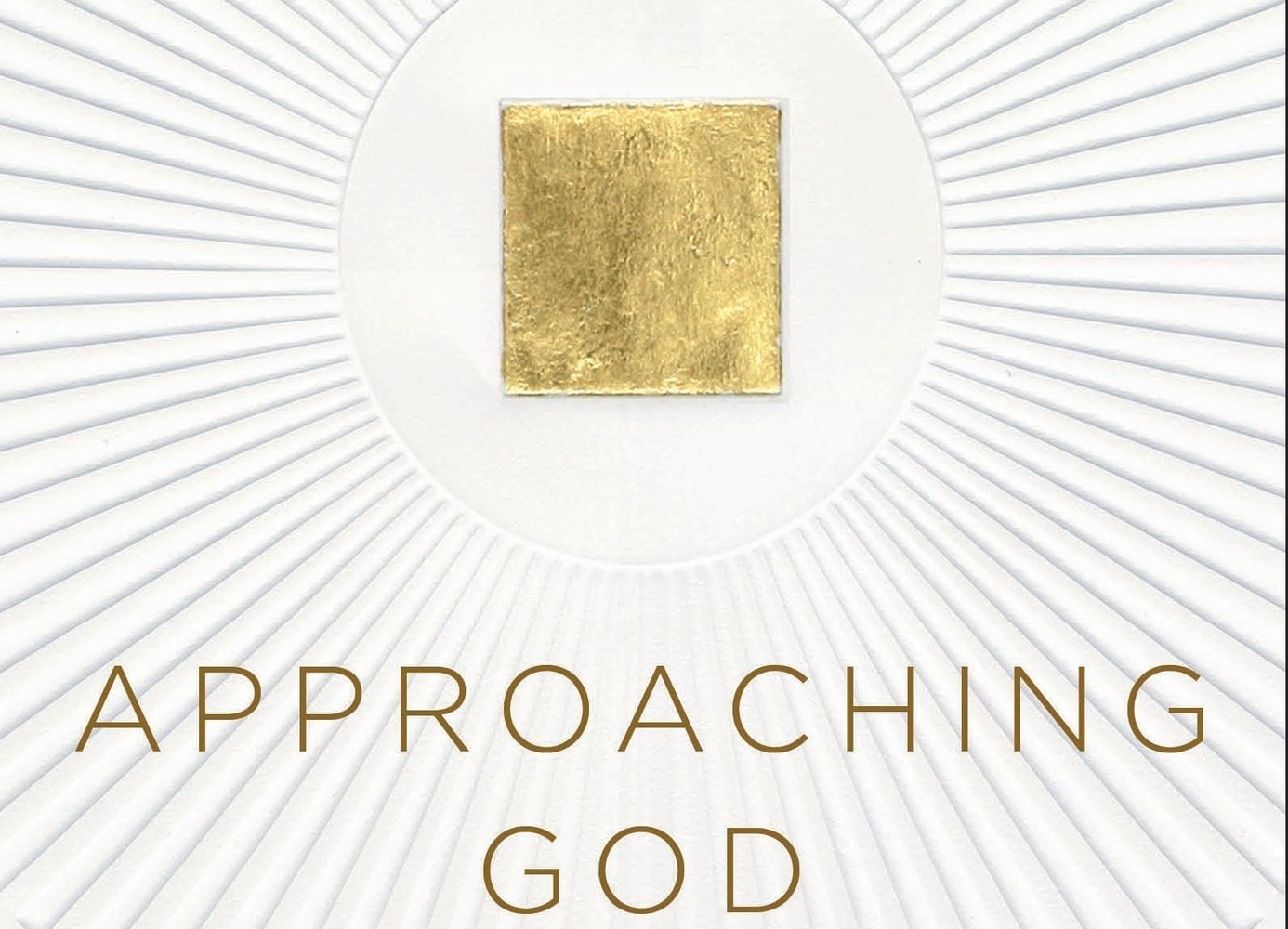
Did you notice how ambiguous the phrase Approaching God is?
The difference between theory and practice is fairly clear. It is like the difference between playing baseball and playing fantasy baseball. The fantasy baseball might approach levels of virtuosity in their ability to judge the potential performance of a player on any given day, but nobody expects them to hit a 95MPH fastball. On the other hand, the baseball player is not only (usually) able to hit that fastball, but also has a theoretical knowledge of the game. For example, they know in what situations to expect a fastball they can drive rather than an unhittable curveball in the dirt.
This important difference is frequently missed by those who would talk about religion from an outsider perspective. Terry Eagleton has a neat summary of this misapplication of methods in his review essay of Richard Dawkins’ The God Delusion “Lunging, Flailing, Mispunching” which he later expanded into a book, Reason, Faith, and Revolution:
Imagine someone holding forth on biology whose only knowledge of the subject is the Book of British Birds, and you have a rough idea of what it feels like to read Richard Dawkins on theology. Card-carrying rationalists like Dawkins, who is the nearest thing to a professional atheist we have had since Bertrand Russell, are in one sense the least well-equipped to understand what they castigate, since they don’t believe there is anything there to be understood, or at least anything worth understanding. This is why they invariably come up with vulgar caricatures of religious faith that would make a first-year theology student wince. The more they detest religion, the more ill-informed their criticisms of it tend to be. If they were asked to pass judgment on phenomenology or the geopolitics of South Asia, they would no doubt bone up on the question as assiduously as they could. When it comes to theology, however, any shoddy old travesty will pass muster. These days, theology is the queen of the sciences in a rather less august sense of the word than in its medieval heyday.
I’ve been effectively using Karen Kilby’s excellent A Brief Introduction to Karl Rahner to help me fall asleep after all the excitement of both moving in and taking in Major League Baseball’s Opening Day. I’ve been looking forward to seeing how Rahner’s concept of an anonymous Christianity fits into the context of his thought. His thinking owes a lot to Heidegger’s (a favorite bad Catholic of mine) and Husserl’s phenomenology, which in turn owe most of their foundations to medieval scholasticism (the circle closes).
But it was not to be last night, I couldn’t find the godforsaken book. So I picked up Patrick Masterson’s Approaching God: Between Phenomenology and Theology, because, being the instinctive Balthasarian that I am, I think the cover is stunningly beautiful and attractive. The book is billed by none other than Denys Turner as:
The phenomenology of Marion, the metaphysics of Thomas Aquinas, the fideism of Barth: often enough any two of them are brought into positive conversation with one another, but rarely, as in Masterson’s new book, all three together, and even less commonly with so constructive and nuanced an outcome. A remarkable achievement.
The first page of Masterson’s book did not disappoint:
Religion is at once theoretical and practical, a life of belief and practical engagement which nourish each other. It is profoundly self-involving–no mere detached assertion of a factual state of affairs. In professing my belief That I possess my being from God, I profess my radical dependence upon him. The God of religion is worshipped rather than just affirmed–a God of pre-philosophically culturally conditioned belief, conviction and worship, rather than a philosophically derived conclusion. As Henry Dumery remarks: “We should not speak of a God peculiar to philosophers, but of a God that that religion worships and that philosophy must take into consideration as it does any other value.” And again: “One pretends to believe that the idea of God is the property of philosophy, whereas it is borrowed from the religious life.” The terms in which the religious relationships between man and God can be expressed vary greatly as is obvious from the rich variety of historical religions and religious experience. This situation creates the possibility of a comparative study of religions–a fascinating undertaking but not one for this work. What interests us primarily here, in this chapter at least, is to outline a particular philosophical understanding of the most basic feature of any religion, namely, that it distinctively concerns the close self-involving relationship alleged to obtain between human beings and God.
It gladdens me to see a mention of Dumery’s The Problem of God in Philosophy of Religion, because he is an insightful phenomenological thinker whose thought has been ignored for far too long. The conclusion Masterson draws from Dumery is interesting because it implicitly suggests the breakdown of an overarching category called “religion.” Each and every religion has its own telos and is not merely the example of the more comprehensive genus “religion.” For example, the thought of living eternally in heaven might sound like hell to someone who is hoping to escape from the cycle of life and karma into oblivion (one could multiply these examples ad infinitum). What’s more, an atheist going to heaven would be hell for the atheist, because their worldview(s) is/are predicated upon rejecting living in a self-involving relationship with God, In other words, from a religious standpoint, they already live in hell in this life, because hell is traditionally understood as separation from God.
Incidentally, this is also the reason why Christians who speak of atheism as a single unified phenomenon strike out looking, since perhaps only this rejection of self-involvement is what all atheists share. Ultimately, the different beliefs atheists and believers hold (either implicitly or explicitly–it doesn’t matter as Rahner might say) about the ultimate furniture of reality influence their practices and vice-versa as I pointed out in an earlier post about the real-life story of how a pastor became an atheist.
Speaking of strikeouts . . .
For more on phenomenology see the following: On Jacques Derrida and Catholic theology; Praying to a French God; and an account of the Central European and social roots of the philosophical movement.
Previous Post

April 4, 2015
Death as an Object of Faith II: To Live Facing Holy Saturday
Next Post
April 8, 2015 Worstward Ho(pe): Christ and Apollo and Moving!
Browse Our Archives
Select a Category #WhyRemainCatholic Abortion Advent Anti-Catholicism Arts Atheism Beauty Benedict XVI Bible Book Review Catholic Cinema Comedy Cosmos: A Space-Time Odyssey Czesław Miłosz Dariusz Karłowicz Devil Easter Eastern Orthodoxy Economics Environment Family Famous Atheists Who Weren't Atheists Guest Post Hans Urs von Balthasar HHS Mandate History Imagination Interview Islam Jean-Luc Marion John Paul II Judaism Just War Lent Literature Little Sisters of the Poor Liturgy Martyrdom Music News Paganism Patristics Phenomenology Philosophy Pierre Hadot Poetry Poland Pop Culture Pope Francis Poverty Prayer Protestantism Rabelais Race Remi Brague Rene Girard Russia Sam Rocha Science & Religion SCOTUS Secularization Sexual Abuse Sexuality Silence Solidarity Stratford Caldecott Synod14 Terrorism Top 10 Uncategorized Walker Percy War Weakened Edition World War II World Youth Day WYD Krakow
Select a Month July 2017 June 2017 May 2017 April 2017 March 2017 February 2017 January 2017 December 2016 October 2016 September 2016 August 2016 July 2016 June 2016 May 2016 April 2016 March 2016 February 2016 January 2016 December 2015 November 2015 October 2015 September 2015 August 2015 July 2015 June 2015 May 2015 April 2015 March 2015 February 2015 January 2015 December 2014 November 2014 October 2014 September 2014 August 2014 July 2014 May 2014 April 2014 March 2014 February 2014 January 2014 December 2013 November 2013 October 2013 September 2013 August 2013 July 2013 June 2013 May 2013
Follow Us!
TAKE THE
Religious Wisdom Quiz
According to Hebrews, Jesus is the same yesterday, today, and when?
Select your answer to see how you score.
Throughout all generations Until the end of the age In all eternity past Forever
Related posts from Cosmos The In Lost

The Surprising Anti-Capitalist Logic Behind the Catholic Church's...

Where Does the Body of Christ Go After...

How is Classical Philosophy is Like War?

Why Does the World's Leading Philosopher Remain a...
TRENDING AT PATHEOS Catholic

Rejecting Doom: Christian Hope And Human Action
Christianity is a religion of hope. We are to have hope and...

It’s What Comes From Within Which Matters
One of the most difficult things for us to understand is why...

Why I Choose the Eucharist Over the Sermon
Choose the Eucharist, Not the Sermon What are we supposed to get...

5 Design Elements Found in Spiritually Rooted Homes
Putting Spirituality Into Home Decor Our homes are more than our living...

Credo: A Story of God Told with the...
About 10 years ago, I began to imagine a personal "Credo" that...

The Anatomy of Divine Revelation in Catholic Thought
The claim that God has made Himself known to human beings is...
view all Catholic blogs
Ad-Free & Subscriber Log-In Subscription Support
- About Us
- 2026 Calendar
- Videos
- Podcasts
- Library of World Religions
- Faith In Media Tracker
- Advertise With Us
- Write for Us
- Privacy Policy
- Terms of Service
- Do Not Sell My Data
- Contact Us
- Radiant Digital
- Manage Newsletter Subscriptions
- Unsubscribe From Notifications
- Sitemap
Copyright 2008-2026, Patheos. All rights reserved.
Subscription Support Ad-Free & Subscriber Log-In
Follow Patheos