
BuddhistCatholicContemplativeEvangelicalGeneral ChristianHinduJewishLatter-day SaintMuslimNew VisionsProgressive Christian
Beliefs
- Buddhist
- Catholic
- Contemplative
- Evangelical
- General Christian
- Hindu
- Jewish
- Latter-day Saint
- More Voices
- Muslim
- New Visions
- Pagan
- Progressive Christian
Topics
- Religion News
- Food and Religion
- Sports and Religion
- Religious Art
- Religious Music and Entertainment
- Religious Events
- History and Religion
- Style and Religion
- Politics and Religion
- Women in Religion
- Recreation Outdoors and Religion
- Business Finance and Religion
- Careers Workplace and Religion
- Education and Religion
- Family Parenting and Religion
- Health Fitness and Religion
- Home and Religion
- Relationships and Religion
- Technology and Religion
- Travel and Religion
Columnists
- Buddhist Columnists
- Business Finance and Religion Columnists
- Careers Workplace and Religion Columnists
- Catholic Columnists
- Contemplative Columnists
- Education and Religion Columnists
- Evangelists Columnists
- Family Parenting and Religion Columnists
- General Christian Columnists
- Health Fitness and Religion Columnists
- Hindu Columnists
- History and Religion Columnists
- Home and Religion Columnists
- Jewish Columnists
- More Voices Columnists
- Latter Day Columnists
- Muslim Columnists
- New Visions Columnists
- Nonreligious Columnists
- Pagan Columnists
- Politics and Religion Columnists
- Progressive Columnists
- Recreation Outdoors and Religion Columnists
- Relationships and Religion Columnists
- Religion News Columnists
- Religious Art Columnists
- Religious Events Columnists
- Religious Music and Entertainment Columnists
- Sports and Religion Columnists
- Style and Religion Columnists
- Technology and Religion Columnists
- Travel and Religion Columnists
- Women in Religion Columnists
Resource Library
- 2026 Calendar
- Library of World Religions
- The 100 Most Holy Places on Earth
- Patheos Answers
- Podcasts
- Videos
- Faith Leaders Database
- Anglican Episcopalian
- Bahai
- Baptist
- Buddhism
- Christianity
- Confucianism
- Eastern Orthodoxy
- Hinduism
- Holiness and Pentecostal
- ISKCON
- Islam
- Judaism
- Lutheran
- Methodist
- The Church of Jesus Christ of Latter-day Saints
- New Age
- Paganism
- Presbytarian and Reformed
- Protestantism
- Religion Behind the Scenes
- Roman Catholic
- Scientology
- Shia Islam
- Sikhism
- Sufism
- Sunni Islam
- Taoism
- Zen
- See all religions
Research Tools
 Ad-Free & Subscriber Log-In Subscription Support
Ad-Free & Subscriber Log-In Subscription Support
Follow Patheos 

- Trending:
- Forgiveness
- |
- Marriage
- |
- Consciousness
- |
- Death Penalty
- |
- Election
- |
- Halloween
 Cosmos The In Lost
- Home
- Catholic
- On Lent and the Martyred Copts: Can Water, Silence, and Desert Coincide?
On Lent and the Martyred Copts: Can Water, Silence, and Desert Coincide?
Last updated on: February 26, 2015 at 2:28 pm by Artur Rosman
On Lent and the Martyred Copts: Can Water, Silence, and Desert Coincide? 2015-02-26T14:28:05-07:00 Artur Rosman
Patheos Explore the world's faith through different perspectives on religion and spirituality! Patheos has the views of the prevalent religions and spiritualities of the world.
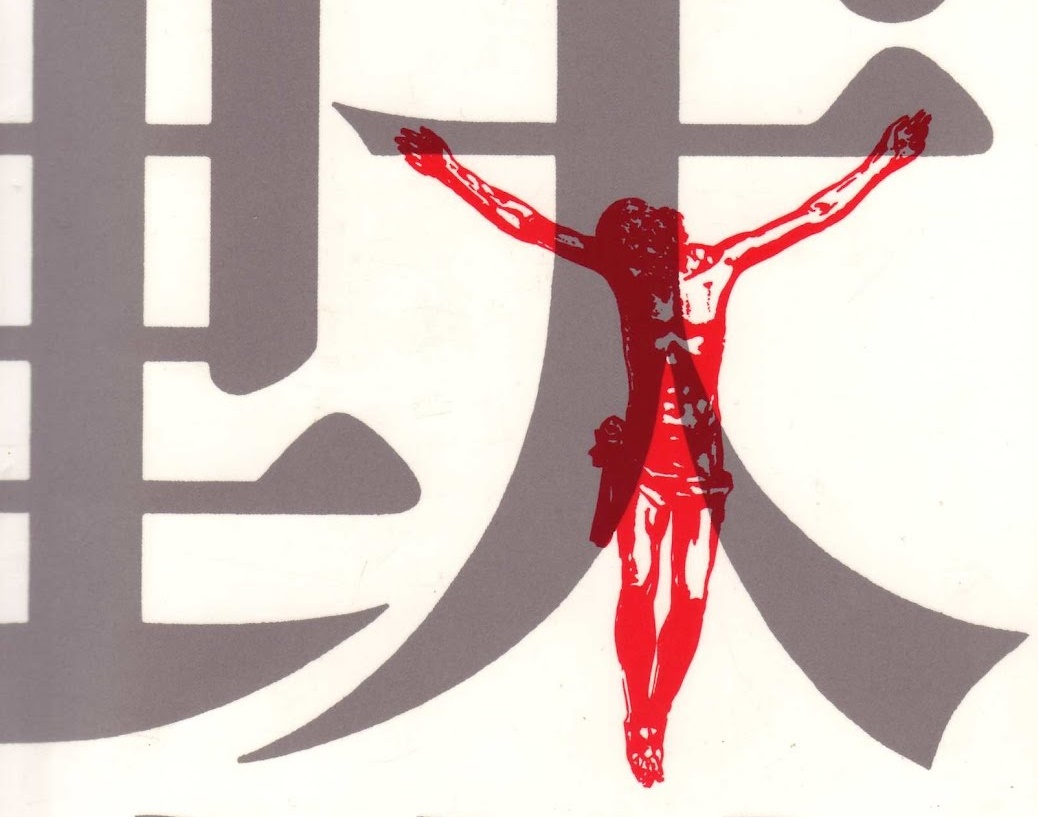
Do contemporary Christians fear martyrdom as much as they fear silence?
Lent is the seasons of going off into the desert and facing temptation. In the Gospel reading for the First Sunday of Lent (MK 1:12-1) the Spirit drives Jesus after his baptism into the dry wastes for forty days where he faces off against the Devil. Jesus resists the temptations of the desert by not becoming drunk with the power the Devil offers him.
The early eremitic monastics saw this episode as the key to Christian life. They left the busy cities with their bureaucracies behind them and combated their devils in the desert where everything is a little clearer, if a bit harsher, drier. Rowan Williams captures the counter-cultural spirit of this movement in a chapter from his The Wound of Knowledge.
The disappearance of the sacred canopy and the descaralization of public life has not, as Peter Berger once argued, destroyed Christianity’s natural environment. It has paradoxically created a desert of meaning right in the middle of the secular city’s desert. The mid-century mystic and social activist Madeleine Delbrel talks about it in We, The Ordinary People of the Streets where she says:
In the street, crushed by the crowd, we make our souls into so many caves of silence wherein the Word of God can dwell and resound.
In those crowds marked by the sins of hatred, lust, and drunkenness, we find a desert of silence, and we recollect ourselves here with great ease, so that God can ring out his name: “Vox clamans in deserto.”
But we must admit this condition has borne strange fruits.
Most Christians do not realize that the last century produced more Christian martyrs than any before it, perhaps more than in all the previous centuries combined. If Tertullian was right when he said that, “the blood of the martyrs is the seed of the Church,” then this should bear much fruit. The strange thing is that it has led to a kind of martyrophobia.
Shusaku Endo’s disturbing novel Silence is about one such episode of martyrophobia. Its plot revolves around Portuguese priests coming to Japan to minister to the local Christians and hearten them as they faced martyrdom. Something snaps when they see the local Christian peasants go down in a watery martyrdom:
Arriving at the shore, the officials ordered a fire to be lighted so that Ichizo and Mokichi could warm their bodies drenched by the rain. And then (as I have been told) with an unwonted sense of pity, someone gave them a cup of sake to drink. When I heard this I could not help thinking of how one of the soldiers gave to the dying Christ some vinegar on a sponge.
Two trees, made into the form of a cross, were set at the water’s edge. Ichizo and Mokichi were fastened to them. When it was night and the tide came in, their bodies would be immersed in the sea up to the chin. They would not die at once, but after two or even three days of utter physical and mental exhaustion they would cease to breathe. The plan of the authorities was to let the people of the village of Tomogi as well as the other peasants get a good view of this prolonged suffering so that they would never again approach the Christian faith. It was already past noon when Mokichi and Ichizo were fastened to the trees and the officials, leaving four guards to watch, withdrew on horseback. The onlookers also, who had at first came in great numbers to watch the spectacle, now gradually departed.
The narrator of the novel, Fr. Rodrigues, SJ summarizes his reaction to the spectacle in less than edifying terms:
What do I want to say? I myself do not quite understand. Only that today, when for the glory of God Mokichi and Ichizo moaned, suffered and died, I cannot bear the monotonous sound of the dark sea gnawing at the shore. Behind the depressing silence of the sea, the silence of God . . . the feeling that while men raise their voices in anguish God remains with folded arms, silent.
===============
Connect with Ethika Politika’s Rabelaisian Catholicism later tonight (around 7PM EST) to read the conclusion to this essay.
For more on the relationship between world politics, religion and violence see my TOP10 list on the topic.
Previous Post

February 25, 2015
Ida and Avoiding Silence at Any Cost
Next Post
February 27, 2015 The West Was Never Western: Creative Plagiarism, Rome, Tracing
Browse Our Archives
Select a Category #WhyRemainCatholic Abortion Advent Anti-Catholicism Arts Atheism Beauty Benedict XVI Bible Book Review Catholic Cinema Comedy Cosmos: A Space-Time Odyssey Czesław Miłosz Dariusz Karłowicz Devil Easter Eastern Orthodoxy Economics Environment Family Famous Atheists Who Weren't Atheists Guest Post Hans Urs von Balthasar HHS Mandate History Imagination Interview Islam Jean-Luc Marion John Paul II Judaism Just War Lent Literature Little Sisters of the Poor Liturgy Martyrdom Music News Paganism Patristics Phenomenology Philosophy Pierre Hadot Poetry Poland Pop Culture Pope Francis Poverty Prayer Protestantism Rabelais Race Remi Brague Rene Girard Russia Sam Rocha Science & Religion SCOTUS Secularization Sexual Abuse Sexuality Silence Solidarity Stratford Caldecott Synod14 Terrorism Top 10 Uncategorized Walker Percy War Weakened Edition World War II World Youth Day WYD Krakow
Select a Month July 2017 June 2017 May 2017 April 2017 March 2017 February 2017 January 2017 December 2016 October 2016 September 2016 August 2016 July 2016 June 2016 May 2016 April 2016 March 2016 February 2016 January 2016 December 2015 November 2015 October 2015 September 2015 August 2015 July 2015 June 2015 May 2015 April 2015 March 2015 February 2015 January 2015 December 2014 November 2014 October 2014 September 2014 August 2014 July 2014 May 2014 April 2014 March 2014 February 2014 January 2014 December 2013 November 2013 October 2013 September 2013 August 2013 July 2013 June 2013 May 2013
Follow Us!
TAKE THE
Religious Wisdom Quiz
What did Jesus say about judging people?
Select your answer to see how you score.
Judge fairly Judge not Judge justly Judge yourself only
Related posts from Cosmos The In Lost

The Surprising Anti-Capitalist Logic Behind the Catholic Church's...

Biblical Authority After Babel Cannot Be Built Upon...
Liberal Theologian's Lenient Easter Sermon Makes a Mockery...
What is the History of the Coptic Christian...
TRENDING AT PATHEOS Catholic

Creation, Preservation, and Teleology in Catholic Theology
As I write this, it is very early Monday morning. Like millions...

The Parable Of The Sower And The Word...
One of Christ’s most famous parables is that of the sower who...

Rejecting Doom: Christian Hope And Human Action
Christianity is a religion of hope. We are to have hope and...

Why I Choose the Eucharist Over the Sermon
Choose the Eucharist, Not the Sermon What are we supposed to get...

5 Design Elements Found in Spiritually Rooted Homes
Putting Spirituality Into Home Decor Our homes are more than our living...

Credo: A Story of God Told with the...
About 10 years ago, I began to imagine a personal "Credo" that...
view all Catholic blogs
Ad-Free & Subscriber Log-In Subscription Support
- About Us
- 2026 Calendar
- Videos
- Podcasts
- Library of World Religions
- Faith In Media Tracker
- Advertise With Us
- Write for Us
- Privacy Policy
- Terms of Service
- Do Not Sell My Data
- Contact Us
- Radiant Digital
- Manage Newsletter Subscriptions
- Unsubscribe From Notifications
- Sitemap
Copyright 2008-2026, Patheos. All rights reserved.
Subscription Support Ad-Free & Subscriber Log-In
Follow Patheos