
BuddhistCatholicContemplativeEvangelicalGeneral ChristianHinduJewishLatter-day SaintMuslimNew VisionsProgressive Christian
Beliefs
- Buddhist
- Catholic
- Contemplative
- Evangelical
- General Christian
- Hindu
- Jewish
- Latter-day Saint
- More Voices
- Muslim
- New Visions
- Pagan
- Progressive Christian
Topics
- Religion News
- Food and Religion
- Sports and Religion
- Religious Art
- Religious Music and Entertainment
- Religious Events
- History and Religion
- Style and Religion
- Politics and Religion
- Women in Religion
- Recreation Outdoors and Religion
- Business Finance and Religion
- Careers Workplace and Religion
- Education and Religion
- Family Parenting and Religion
- Health Fitness and Religion
- Home and Religion
- Relationships and Religion
- Technology and Religion
- Travel and Religion
Columnists
- Buddhist Columnists
- Business Finance and Religion Columnists
- Careers Workplace and Religion Columnists
- Catholic Columnists
- Contemplative Columnists
- Education and Religion Columnists
- Evangelists Columnists
- Family Parenting and Religion Columnists
- General Christian Columnists
- Health Fitness and Religion Columnists
- Hindu Columnists
- History and Religion Columnists
- Home and Religion Columnists
- Jewish Columnists
- More Voices Columnists
- Latter Day Columnists
- Muslim Columnists
- New Visions Columnists
- Nonreligious Columnists
- Pagan Columnists
- Politics and Religion Columnists
- Progressive Columnists
- Recreation Outdoors and Religion Columnists
- Relationships and Religion Columnists
- Religion News Columnists
- Religious Art Columnists
- Religious Events Columnists
- Religious Music and Entertainment Columnists
- Sports and Religion Columnists
- Style and Religion Columnists
- Technology and Religion Columnists
- Travel and Religion Columnists
- Women in Religion Columnists
Resource Library
- 2026 Calendar
- Library of World Religions
- The 100 Most Holy Places on Earth
- Patheos Answers
- Podcasts
- Videos
- Faith Leaders Database
- Anglican Episcopalian
- Bahai
- Baptist
- Buddhism
- Christianity
- Confucianism
- Eastern Orthodoxy
- Hinduism
- Holiness and Pentecostal
- ISKCON
- Islam
- Judaism
- Lutheran
- Methodist
- The Church of Jesus Christ of Latter-day Saints
- New Age
- Paganism
- Presbytarian and Reformed
- Protestantism
- Religion Behind the Scenes
- Roman Catholic
- Scientology
- Shia Islam
- Sikhism
- Sufism
- Sunni Islam
- Taoism
- Zen
- See all religions
Research Tools
 Ad-Free & Subscriber Log-In Subscription Support
Ad-Free & Subscriber Log-In Subscription Support
Follow Patheos 

- Trending:
- Forgiveness
- |
- Marriage
- |
- Consciousness
- |
- Death Penalty
- |
- Election
- |
- Halloween
 Cosmos The In Lost
- Home
- Catholic
- Valentine Love Songs: Romero & Opus Dei, Carr & Faith, Troubadours & Twerks, Bloy & Bloy
Valentine Love Songs: Romero & Opus Dei, Carr & Faith, Troubadours & Twerks, Bloy & Bloy
Last updated on: February 14, 2015 at 10:37 am by Artur Rosman
Valentine Love Songs: Romero & Opus Dei, Carr & Faith, Troubadours & Twerks, Bloy & Bloy 2015-02-14T10:37:42-07:00 Artur Rosman
Patheos Explore the world's faith through different perspectives on religion and spirituality! Patheos has the views of the prevalent religions and spiritualities of the world.

Love loves to hide.
I was elected the education director of the University of Washington Newman Center in the early or mid aughts. This took place not long after I reverted to Catholicism thanks to the European history, comparative religion, and art history classes I took at a secular state university.
The Birkenstocked priest in charge of Newman had never formally introduced himself to me until that point. After my appointment was officially announced at a meeting of some sort he finally came up to me. The strong smell coming from his mouth hit me first. Before I could recover he dumped the following question on me: “Are you Opus Dei?”
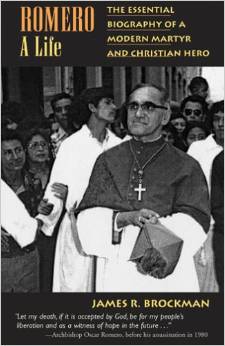
The standard Romero biography confirms his “friendly relations” with Opus Dei.
This litmus test was our introduction, the beginning of our odd pairing. The message was clear: as a vaguely Neo-Conservative Catholic (I’m glad it passed, but no thanks to him) I was not welcome.
The priest spent the rest of the school year passively-aggressively scheduling all of my speakers before holidays, midterms, and finals. He wanted me to feel like a failure. And I did.
Archbishop Romero was predictably one of the heroes of this priest and he assumed that Opus Dei must be his polar opposite.
Imagine my perverse Rabelaisian pleasure upon discovering the following:
“I met Archbishop Romero,” the Prelate of Opus Dei said, “during one of his visits to Saint Josemaria, in 1970. He was a pious person, detached from his own interests and dedicated to his people. His struggle for sanctity was palpable. Archbishop Romero was one of the first bishops who, following the death of Saint Josemaria in 1975, wrote to Paul VI asking that his cause of canonization be opened. I am certain that now, from Heaven, he continues interceding with his good friend Saint Josemaria for this portion of the People of God that is Opus Dei.”
Here’s an excerpt from Abp. Oscar Romero’s letter:
Most Blessed Father, I regard the still-recent day of the death of Monsignor Josemaria Escriva de Balaguer as contributing to the greater glory of God and to the well-being of souls, and I am requesting of Your Holiness the quick opening of the cause for beatification and canonization of such an eminent priest.
The recently deceased David Carr and Catholicism is yet another odd pairing. I’ve only seen Carr here and there and didn’t know much about his biography. It was fascinating, given his endearing history of addiction and dissolution, to read the following comments about his messy relationship with faith in the Washington Post:
David’s got a gun!
“My father is a man who swears frequently goes to church every day, and lives his towering faith,” Carr wrote. “I am a man who swears frequently, goes to church every Sunday, and lives in search of faith. He is a man who believes that I am not dead because nuns prayed for me. I am a man who believes that is as good an explanation as any.”

Ted Gioia’s interview about his recently published Love Songs: The Hidden History surprisingly paris Miley Cyrus and Troubadour love songs:
My history of the love song starts with ancient Mesopotamia, where the love song is part of a fertility ritual. The songs are very erotic. In fact, they are so erotic that many scholars will complain that they are not really love songs. Well, surprise-surprise, the same thing is happening today. People see Miley Cyrus twerking while she’s singing and say, “This song isn’t really about love; it’s all about sex.” We’ve come full circle. Women have become this powerful symbol and emblem, and music is returning to kind of biological roots. At the very beginning I have a long section on “Was Darwin Right?” Darwin believed that all music was originally love music, and that this music emerged to preserve the species, and that the sexual element was the underpinning of love. The exact same thing jumps out at you when you look at today’s videos or hit songs.
You see? Twerking is part of the history of civilization (much baser than we usually suppose) rather than a sign the end is nigh.
Finally, the works of Leon Bloy, admired by Pope Francis and Raissa Maritain, have either been untranslated or out of print. This will be remedied soon enough with the publishing of his Disagreeable Tales, which are billed as:
How often do you find onanism in the blurbs for a Catholic book?
Thirty tales of theft, onanism, incest, murder and a host of other forms of perversion and cruelty from the “ungrateful beggar” and “pilgrim of the absolute,” Léon Bloy. Disagreeable Tales, first published in French in 1894, collects Bloy’s narrative sermons from the depths: a cauldron of frightful anecdotes and inspired misanthropy that represents a high point of the French Decadent movement and the most emblematic entry into the library of the “Cruel Tale” christened by Villiers de l’Isle-Adam . . .
. . . Léon Bloy (1846-1917) is among the best known but least translated of the French Decadent writers. Nourishing antireligious sentiments in his youth, his outlook changed radically when he moved to Paris and came under the influence of Barbey d’Aurevilly, the unconventionally religious novelist best known for Les Diaboliques. He earned the dual nicknames of “The Pilgrim of the Absolute” through his unorthodox devotion to the Catholic Church, and “The Ungrateful Beggar” through his endless reliance on the charity of friends to support him and his family.

Here’s a sampler of Bloy’s ungratefulness toward liberalism:
Bourgeois are by nature people who hate and destroy heavens. When they see a beautiful site, they have no more pressing dream than to cut the trees, dry up the springs, build streets, shops and urinals. They call this ceasing a business opportunity.
The odd pairing here is a bit onanistic. It comes from the news that another Bloy book is coming soon. It is a reissue of The Woman Who Was Poor by St. Augustine’s Press, which you can sample here through Dappled Things (something about “reeking of God“).
There you go.
Love is strange, a struggle, and, I believe, an opus Dei.
If you’re looking to explore love in contemporary philosophy then look no further than some of the books on this list and Eagleton’s blistering attack upon the ideology of scientism.
Previous Post
February 13, 2015
Carnival is Getting off the Ground: Stoop Down & Meet St. Puke!
Next Post
February 16, 2015 Forget the Classics: What New Theology Books Ought You Read This Lent?
Browse Our Archives
Select a Category #WhyRemainCatholic Abortion Advent Anti-Catholicism Arts Atheism Beauty Benedict XVI Bible Book Review Catholic Cinema Comedy Cosmos: A Space-Time Odyssey Czesław Miłosz Dariusz Karłowicz Devil Easter Eastern Orthodoxy Economics Environment Family Famous Atheists Who Weren't Atheists Guest Post Hans Urs von Balthasar HHS Mandate History Imagination Interview Islam Jean-Luc Marion John Paul II Judaism Just War Lent Literature Little Sisters of the Poor Liturgy Martyrdom Music News Paganism Patristics Phenomenology Philosophy Pierre Hadot Poetry Poland Pop Culture Pope Francis Poverty Prayer Protestantism Rabelais Race Remi Brague Rene Girard Russia Sam Rocha Science & Religion SCOTUS Secularization Sexual Abuse Sexuality Silence Solidarity Stratford Caldecott Synod14 Terrorism Top 10 Uncategorized Walker Percy War Weakened Edition World War II World Youth Day WYD Krakow
Select a Month July 2017 June 2017 May 2017 April 2017 March 2017 February 2017 January 2017 December 2016 October 2016 September 2016 August 2016 July 2016 June 2016 May 2016 April 2016 March 2016 February 2016 January 2016 December 2015 November 2015 October 2015 September 2015 August 2015 July 2015 June 2015 May 2015 April 2015 March 2015 February 2015 January 2015 December 2014 November 2014 October 2014 September 2014 August 2014 July 2014 May 2014 April 2014 March 2014 February 2014 January 2014 December 2013 November 2013 October 2013 September 2013 August 2013 July 2013 June 2013 May 2013
Follow Us!
TAKE THE
Religious Wisdom Quiz
I took a census that displeased God, resulting in a plague that killed 70,000 men. Who am I?
Select your answer to see how you score.
Saul Solomon David Joab
Related posts from Cosmos The In Lost

The Surprising Anti-Capitalist Logic Behind the Catholic Church's...

How is Classical Philosophy is Like War?

Why Does the World's Leading Philosopher Remain a...

It's a Good Friday to Leave Calypso's Island
TRENDING AT PATHEOS Catholic

Rejecting Doom: Christian Hope And Human Action
Christianity is a religion of hope. We are to have hope and...

It’s What Comes From Within Which Matters
One of the most difficult things for us to understand is why...

Why I Choose the Eucharist Over the Sermon
Choose the Eucharist, Not the Sermon What are we supposed to get...

5 Design Elements Found in Spiritually Rooted Homes
Putting Spirituality Into Home Decor Our homes are more than our living...

Credo: A Story of God Told with the...
About 10 years ago, I began to imagine a personal "Credo" that...

The Anatomy of Divine Revelation in Catholic Thought
The claim that God has made Himself known to human beings is...
view all Catholic blogs
Ad-Free & Subscriber Log-In Subscription Support
- About Us
- 2026 Calendar
- Videos
- Podcasts
- Library of World Religions
- Faith In Media Tracker
- Advertise With Us
- Write for Us
- Privacy Policy
- Terms of Service
- Do Not Sell My Data
- Contact Us
- Radiant Digital
- Manage Newsletter Subscriptions
- Unsubscribe From Notifications
- Sitemap
Copyright 2008-2026, Patheos. All rights reserved.
Subscription Support Ad-Free & Subscriber Log-In
Follow Patheos