
BuddhistCatholicContemplativeEvangelicalGeneral ChristianHinduJewishLatter-day SaintMuslimNew VisionsProgressive Christian
Beliefs
- Buddhist
- Catholic
- Contemplative
- Evangelical
- General Christian
- Hindu
- Jewish
- Latter-day Saint
- More Voices
- Muslim
- New Visions
- Pagan
- Progressive Christian
Topics
- Religion News
- Food and Religion
- Sports and Religion
- Religious Art
- Religious Music and Entertainment
- Religious Events
- History and Religion
- Style and Religion
- Politics and Religion
- Women in Religion
- Recreation Outdoors and Religion
- Business Finance and Religion
- Careers Workplace and Religion
- Education and Religion
- Family Parenting and Religion
- Health Fitness and Religion
- Home and Religion
- Relationships and Religion
- Technology and Religion
- Travel and Religion
Columnists
- Buddhist Columnists
- Business Finance and Religion Columnists
- Careers Workplace and Religion Columnists
- Catholic Columnists
- Contemplative Columnists
- Education and Religion Columnists
- Evangelists Columnists
- Family Parenting and Religion Columnists
- General Christian Columnists
- Health Fitness and Religion Columnists
- Hindu Columnists
- History and Religion Columnists
- Home and Religion Columnists
- Jewish Columnists
- More Voices Columnists
- Latter Day Columnists
- Muslim Columnists
- New Visions Columnists
- Nonreligious Columnists
- Pagan Columnists
- Politics and Religion Columnists
- Progressive Columnists
- Recreation Outdoors and Religion Columnists
- Relationships and Religion Columnists
- Religion News Columnists
- Religious Art Columnists
- Religious Events Columnists
- Religious Music and Entertainment Columnists
- Sports and Religion Columnists
- Style and Religion Columnists
- Technology and Religion Columnists
- Travel and Religion Columnists
- Women in Religion Columnists
Resource Library
- 2026 Calendar
- Library of World Religions
- The 100 Most Holy Places on Earth
- Patheos Answers
- Podcasts
- Videos
- Faith Leaders Database
- Anglican Episcopalian
- Bahai
- Baptist
- Buddhism
- Christianity
- Confucianism
- Eastern Orthodoxy
- Hinduism
- Holiness and Pentecostal
- ISKCON
- Islam
- Judaism
- Lutheran
- Methodist
- The Church of Jesus Christ of Latter-day Saints
- New Age
- Paganism
- Presbytarian and Reformed
- Protestantism
- Religion Behind the Scenes
- Roman Catholic
- Scientology
- Shia Islam
- Sikhism
- Sufism
- Sunni Islam
- Taoism
- Zen
- See all religions
Research Tools
 Ad-Free & Subscriber Log-In Subscription Support
Follow Patheos 

- Trending:
- Advent
- |
- Forgiveness
- |
- Thanksgiving
- |
- Election
- |
- Seasonal Holidays
- |
- Marriage
 Cosmos The In Lost
- Home
- Catholic
- Did Darwin Kill God? Conor Cunningham and Benedict XVI Answer
Did Darwin Kill God? Conor Cunningham and Benedict XVI Answer
Last updated on: March 12, 2017 at 3:33 pm by Artur Rosman
Did Darwin Kill God? Conor Cunningham and Benedict XVI Answer 2017-03-12T15:33:37-07:00 Artur Rosman
Patheos Explore the world's faith through different perspectives on religion and spirituality! Patheos has the views of the prevalent religions and spiritualities of the world.
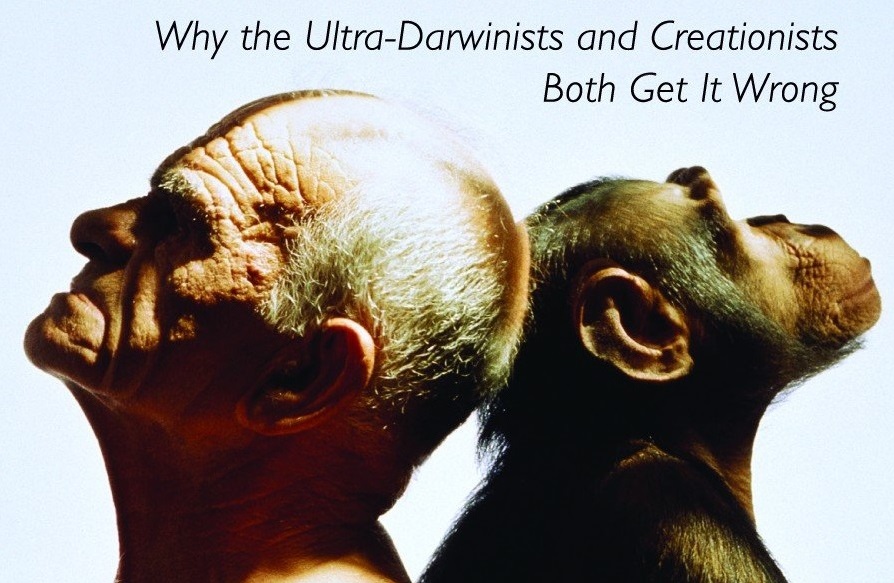
On the other hand, despite what you might think, Catholics never had problems with Darwin’s pious idea.
That’s one heck of a question, isn’t it?
The BBC documentary at the bottom of this post answers in the affirmative.
The video succinctly summarizes Conor Cunningham’s Darwin’s Pious Idea: Why the Ultra-Darwinists and Creationists Both Get It Wrong, which is one of my TOP10 Books of the Last 10 Years.
Before you go to the video read the following excerpt from an interview with Cunningham, because it gives you a sense why the two groups in the title are both wrong:
It’s never been traditional to deny evolution.
Pope Benedict put it well: “Creation should be thought of, not according to the model of a craftsman who makes all sorts of objects, but rather in the manner in which thought is creative.” Moreover, with regard to special creation, which is a very dubious notion, to say the least, let us take the example of painting. When we paint, we use the same materials, generally speaking, as does, say, Paul Cézanne, but while no one wants to buy our attempts, we certainly want to buy his, and we do so precisely because he uses the same materials; that’s what makes his paintings special. Indeed, if he did use different materials, we would no doubt be a bit suspicious, for the implication would be that it was the materials that were responsible for the uniqueness of the painting, and if we too were in possession of them, maybe our efforts would not be so awful. Similarly, it is the what of man that is special because the how is secondary. Of course, the how plays a role, but only a subordinate one. Take football as another analogy: we can only identify coaching geniuses because they use the same ball, and not some special ball; hence, it is the what rather than the how that matters most, but then the how comes to the fore when we realize that the football genius has been able to use the same object in a new way. Looking at it this way preserves the idea of uniqueness in a much richer fashion. Thus, it is all the more special, so to speak, that God used the same materials to fashion man, what Genesis calls “dust.”
Again, it seems best to quote Pope Benedict: “If creation means dependence of being, then special creation is nothing other than special dependence of being. The statement that man is created in a more specific, more direct way by God than other things in nature, when expressed somewhat less metaphorical, means simply this: that man is willed by God in a specific way, not merely as a being that “is there,” but as a being that knows him; not only as a construct that he thought up, but as an existence that can think about him in return [. . . man] is the being who is supposed to Thou to God in eternity.”
After all, this is why there are two accounts of creation in Genesis. Quite simply, with the advent of Homo sapiens, the Rubicon of anthropogenesis has been crossed, whether we like it or not.

For more on science and religion see my omnibus list of books on the topic, my interview with theologian Larry Chapp (Christianity is the Most Worldly Religion of All), and Walker Percy’s rebuttal of Neil deGrasse Tyson.
Previous Post

February 5, 2015
Jean-Luc Marion: Does Silencing Love Mean Philosophy is a Misnomer?
Next Post

February 9, 2015 Tournier & McCabe on Keeping Theology Grubby
Browse Our Archives
Select a Category #WhyRemainCatholic Abortion Advent Anti-Catholicism Arts Atheism Beauty Benedict XVI Bible Book Review Catholic Cinema Comedy Cosmos: A Space-Time Odyssey Czesław Miłosz Dariusz Karłowicz Devil Easter Eastern Orthodoxy Economics Environment Family Famous Atheists Who Weren't Atheists Guest Post Hans Urs von Balthasar HHS Mandate History Imagination Interview Islam Jean-Luc Marion John Paul II Judaism Just War Lent Literature Little Sisters of the Poor Liturgy Martyrdom Music News Paganism Patristics Phenomenology Philosophy Pierre Hadot Poetry Poland Pop Culture Pope Francis Poverty Prayer Protestantism Rabelais Race Remi Brague Rene Girard Russia Sam Rocha Science & Religion SCOTUS Secularization Sexual Abuse Sexuality Silence Solidarity Stratford Caldecott Synod14 Terrorism Top 10 Uncategorized Walker Percy War Weakened Edition World War II World Youth Day WYD Krakow
Select a Month July 2017 June 2017 May 2017 April 2017 March 2017 February 2017 January 2017 December 2016 October 2016 September 2016 August 2016 July 2016 June 2016 May 2016 April 2016 March 2016 February 2016 January 2016 December 2015 November 2015 October 2015 September 2015 August 2015 July 2015 June 2015 May 2015 April 2015 March 2015 February 2015 January 2015 December 2014 November 2014 October 2014 September 2014 August 2014 July 2014 May 2014 April 2014 March 2014 February 2014 January 2014 December 2013 November 2013 October 2013 September 2013 August 2013 July 2013 June 2013 May 2013
Follow Us!
TAKE THE
Religious Wisdom Quiz
Where did Elisha cure Naaman?
Select your answer to see how you score.
Jordan River Sea of Galilee Dead Sea Mediterranean Sea
Related posts from Cosmos The In Lost
The Surprising Anti-Capitalist Logic Behind the Catholic Church's...
The Holy Family as an Icon of World...
Biblical Authority After Babel Cannot Be Built Upon...

2 Reasons Why the March for Science is...
TRENDING AT PATHEOS Catholic

The Kingdom Of God In Ordinary Life And...
The kingdom of God is all around us; it is in us...

How Discretion Guides Us Away From Extremes
Prudence is an important virtue for all of us. While we should...

If Baptism Washes Away Sin, Why Do Catholics...
The seven sacraments stand as the foundation of Catholic ecclesial life. The...

The Power of Setting a Good Example
Remember last August when the Chicago White Sox hosted a "Pope Hat...

A Catholic Critique of Biblical Unitarianism
If the statistics are to be believed, Unitarianism is rising worldwide. Although...

How Grandma Tourism Helps Grandparents Live Their Vocation
Grandma, The New Travel Influencer What started as a nostalgia-inspired social media...
view all Catholic blogs
Ad-Free & Subscriber Log-In Subscription Support
- About Us
- 2026 Calendar
- Videos
- Podcasts
- Library of World Religions
- Faith In Media Tracker
- Advertise With Us
- Write for Us
- Privacy Policy
- Terms of Service
- Do Not Sell My Data
- Contact Us
- Radiant Digital
- Manage Newsletter Subscriptions
- Unsubscribe From Notifications
- Sitemap
Copyright 2008-2026, Patheos, part of the Radiant Digital network of media brands. All rights reserved.
Subscription Support Ad-Free & Subscriber Log-In
Follow Patheos