
BuddhistCatholicContemplativeEvangelicalGeneral ChristianHinduJewishLatter-day SaintMuslimNew VisionsProgressive Christian
Beliefs
- Buddhist
- Catholic
- Contemplative
- Evangelical
- General Christian
- Hindu
- Jewish
- Latter-day Saint
- More Voices
- Muslim
- New Visions
- Pagan
- Progressive Christian
Topics
- Religion News
- Food and Religion
- Sports and Religion
- Religious Art
- Religious Music and Entertainment
- Religious Events
- History and Religion
- Style and Religion
- Politics and Religion
- Women in Religion
- Recreation Outdoors and Religion
- Business Finance and Religion
- Careers Workplace and Religion
- Education and Religion
- Family Parenting and Religion
- Health Fitness and Religion
- Home and Religion
- Relationships and Religion
- Technology and Religion
- Travel and Religion
Columnists
- Buddhist Columnists
- Business Finance and Religion Columnists
- Careers Workplace and Religion Columnists
- Catholic Columnists
- Contemplative Columnists
- Education and Religion Columnists
- Evangelists Columnists
- Family Parenting and Religion Columnists
- General Christian Columnists
- Health Fitness and Religion Columnists
- Hindu Columnists
- History and Religion Columnists
- Home and Religion Columnists
- Jewish Columnists
- More Voices Columnists
- Latter Day Columnists
- Muslim Columnists
- New Visions Columnists
- Nonreligious Columnists
- Pagan Columnists
- Politics and Religion Columnists
- Progressive Columnists
- Recreation Outdoors and Religion Columnists
- Relationships and Religion Columnists
- Religion News Columnists
- Religious Art Columnists
- Religious Events Columnists
- Religious Music and Entertainment Columnists
- Sports and Religion Columnists
- Style and Religion Columnists
- Technology and Religion Columnists
- Travel and Religion Columnists
- Women in Religion Columnists
Resource Library
- 2026 Calendar
- Library of World Religions
- The 100 Most Holy Places on Earth
- Patheos Answers
- Podcasts
- Videos
- Faith Leaders Database
- Anglican Episcopalian
- Bahai
- Baptist
- Buddhism
- Christianity
- Confucianism
- Eastern Orthodoxy
- Hinduism
- Holiness and Pentecostal
- ISKCON
- Islam
- Judaism
- Lutheran
- Methodist
- The Church of Jesus Christ of Latter-day Saints
- New Age
- Paganism
- Presbytarian and Reformed
- Protestantism
- Religion Behind the Scenes
- Roman Catholic
- Scientology
- Shia Islam
- Sikhism
- Sufism
- Sunni Islam
- Taoism
- Zen
- See all religions
Research Tools
 Ad-Free & Subscriber Log-In Subscription Support
Ad-Free & Subscriber Log-In Subscription Support
Follow Patheos 

- Trending:
- Forgiveness
- |
- Marriage
- |
- Consciousness
- |
- Death Penalty
- |
- Election
- |
- Halloween
 Cosmos The In Lost
- Home
- Catholic
- St. Socrates: Philosophy’s Permanent Ties to Theology
St. Socrates: Philosophy’s Permanent Ties to Theology
Last updated on: February 9, 2017 at 3:51 pm by Artur Rosman
St. Socrates: Philosophy’s Permanent Ties to Theology 2017-02-09T15:51:21-07:00 Artur Rosman
Patheos Explore the world's faith through different perspectives on religion and spirituality! Patheos has the views of the prevalent religions and spiritualities of the world.
Philosophy and theology have always been more than buddy-buddy.
Dominique Janicaud has spent the great part of his academic career attempting to somewhat belligerently keep phenomenology (the main current of continental philosophy) pure from contamination by theology.
Trends in contemporary French phenomenology suggest he has completely failed.
It was a gallant, but all too quixotic, battle.
Janicaud should have been more Rabelaisian in his approach. He was always stuck rowing against the current of phenomenology’s founding ties to theology.
Not even the seemingly methodologically atheist Heidegger was immune. The proof will continue to pile up with the forthcoming book Heidegger’s Confessions exposing his not so secret borrowings from Augustine.
The close ties go much further than this. They go back to the roots of philosophy in religious practices, which were in turn later grafted successfully onto Christian theology by the Ante-Nicene Fathers.
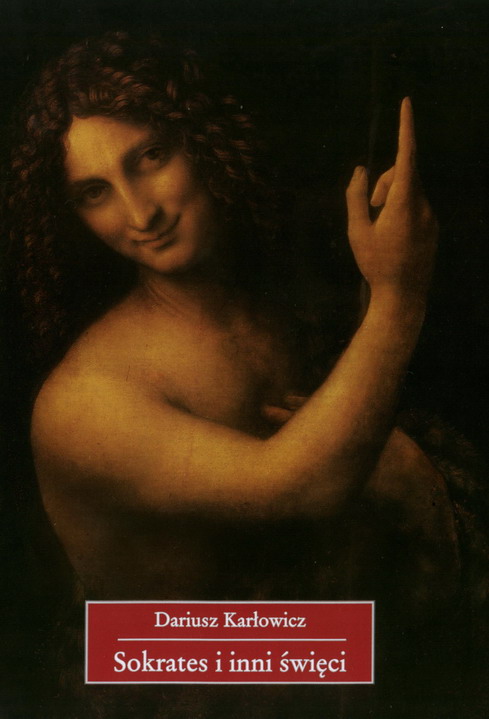
A year or two ago I finished translating the book Socrates and Other Saints: Early Christian Understandings of Reason and Philosophy by Dariusz Karłowicz (available now: see links). This book gets its title from the Colloquies of Erasmus where the Renaissance humanist has one of his characters say this prayer: “Sancte Socrates, ora pro nobis [Saint Socrates, pray for us].”
Karlowicz admits praying to Socrates for intercession might be a bit much. However, his book is devoted to demonstrating how Christian techniques of prayer (and not only) have their roots in strategic borrowings from Greek and Roman philosophical practices.
I do say “might” because Socrates and Other Saints does cite many passages from Justin Martyr like the following:
Philosophy as spiritual exercise is starting to make a bit of a splash in recent literature.
Those who lived in accordance with the Logos are Christians, even though they were called godless, such as, among the Greeks, Socrates and Heraclitus and others like them…. Those who lived by the Logos [before Christ came], and those who live so now, are Christians, fearless and unperturbed.
Karlowicz’s book is a mainstay on this blog. It was featured prominently in posts such as Athens AND Jerusalem: Philosophy as a Way of Life, What Damon Linker Got Wrong About Philosophy, and somewhat more controversially in Constantine, Socrates, and Other Saints. What follows below is the conclusion of Karlowicz’s book.
The story Socrates and Other Saints tells sullies any hope for both a pure Christianity and a pure philosophy:
Conclusion
Satan hasn’t stolen our world. The world wasn’t created by an evil demon. Even if it seems to be broken, Genesis demands we remember it was created “good” by God. The Christians (unlike those who succumb to Manichean temptations) cannot simply wipe out the world, which obviously does not mean the world is perfect, because, after all, a disposition toward the good and its actualization are two different things. Even if the world contains so much luster, even if it promises a compromise, we should still not forget that we are in conflict with it. The conflict is life or death. We can admire the world, learn about it, we can use it, but we should know its dangers, and that it needs to be saved. Above all: it needs to be saved!
This is what the Apologists can teach us about the world, culture, and philosophy. The pendulum steadily swings between contempt and wonder. The aim is not compromise between these stances, rather we need both the extremes of the swing simultaneously. Each extreme taken on its own is too confined for Christian teaching, and so: neither unconditional rejection, nor unconditional embrace. After all, we are on the way like Odysseus to Ithaca. We find ourselves here for a short moment, being here is like finding ourselves strangers in a strange land. As guests and passersby we must take care of what’s been entrusted to us; we should use it sensibly, but we should not make ourselves too much at home, because we ought not forget where we are heading.
If we are on the way, said Augustine many years after the Apologists in his treatise De doctrina christiana, if we are wayfarers who want to return home, then we must see the world as a means of transportation (terestibus vel marinis vehiculis) and always remember to distinguish the means and ends. The metaphor of returning home serves to demonstrate the order of goods and so the right attitude toward earthly goods. Augustine enjoyed this homely comparison greatly. It served him during his youth (when he was a Marinist) as an image of the path to happiness. In his maturity it returned as an image of the path to salvation, “So in this mortal life we are like travelers away from our Lord [2 Cor 5:6]: if we wish to return to the homeland where we can be happy we must use (utendum) this world, not enjoy (fruendum) it . . .”
We all know Augustine also heavily borrowed from the philosophers of his time.
The Latin “uti” and “frui” are not easily translated into Polish or other languages without losing meaning. In the hierarchical world of Augustine the formula uti-frui allows us to distinguish three categories of being. The first category is composed of what we must feast upon (frui), rejoice over, when we posses it, or rather our clinging to it (how helpless language is here!) makes us happy. This is the Truine God. The second category is composed of all those things which aid in the attainment of the goods that make us happy. The work of philosophy is surely among them. The third category is composed of beings somewhere between those of the previous categories. They are not ultimate ends, but they reward us with a happiness that is a foretaste of perfection, they are a signal that we are headed in the right direction (another human being is such a good, when we can rejoice about them in God and when they direct us toward God. We ourselves are such a good and so are the holy angels). This obviously is the proper order of love. When it reigns within man it becomes the capacity to love things in proportion to their good. This is the love which sets us free.
The metaphor of a “means of transportation” helps to reveal the absurdity of giving autonomy to particular instruments, the ineptness of exchanging means for ends. Augustine writes, “. . . but if we choose to enjoy things that are to be used, our advance is impeded and sometimes even diverted, and we are held back, even put off, from attaining things which are to be enjoyed . . .” In relation to philosophy, the wonderfully flexible formula uti-frui confirms the teaching of the Apologists. These concepts are crucial for analyzing Greek wisdom and practice, in its capacity to help us die to the world and liken ourselves to the truth. Philosophy as a goal in itself and for itself can only lead to death.
This is an important element of the legacy left behind by the Fathers. It can be observed in their openness, which is not naive. These are people who only read the Bible on their knees. They are aware of the similarities, but they can see the differences, and they are not afraid to clearly define the boundaries of orthodoxy and the boundaries of inquiry. They are brave in entering the dispute, but, above all, they are courageous—this is difficult to define, but it is obviously noticeable upon every page written by them—they do not retreat into the catacombs. They posses the boldness and aggressiveness of people who through imitating their Lord want to transform their world. They neither want to justify it, nor do they want to condemn it—they want to save it.
This book will completely transform your understanding of philosophy.
The latter tradition also confirmed the distaste of the Apologists for fideism. Both the Augustinian “faith seeking understanding,” and the philosophy of Aquinas grow out of the perspective of the Fathers upon this matter. Mind you, this is not some linguistic manipulation, which confuses contemporary philosophical standards with rationality. What’s at stake is an attempt to measure up to the task laid down for philosophy by academic skepticism. It is a difficult trial, which from the start eliminates the pre-Pyrrhic dogmatic naivete as an option for Christian philosophy. The Apologists take up this task going arm in arm with the representatives of philosophical schools, and they willingly borrow their best achievements. The following are the most important fruits of these undertakings: the cosmological argument, Tertullian’s testimony of the soul, the apodeiksis of the witnesses, Justin’s doctrine of the Logos, the original understanding of pistis as the initial axiom for a systematic knowledge of God. They cannot be circumvented, no matter what we think of them. It is also impossible, without using anachronistic criteria, to place them safely within the confines of faith, or place them in opposition to the philosophical standards of the time. The stance of the Apologists on reason is one of the most important stories in the testimony they leave behind. From the beginning this testimony excluded gnostic fables from the Christian heritage and it fused the question of reason with the living tradition of the Church permanently. Christian philosophy discovered its tone in the controversies against Pyrrhonism and fideism. It did not change its principles, but, it learned its lessons. Pyrrhonism became a vaccine of humility against the dogmatic naivete of reason, while gnosticism became a warning against faith celebrating its irrationality.
The last crucial matter in the testimony of the Apologists taken over from philosophy—or more precisely, developed thanks to it—is the idea of spiritual development and the spiritual exercises. The Execrcitia spiritualia best confirm the lasting connection between Christian spirituality with ancient philosophical ascesis. There is no need to describe the further history of this connection in order to imagine how different Christian life would be if we were to deprive it of the techniques of spiritual conversion it borrowed from philosophy. Of course there are difficulties in adopting this tradition. One of them is the holiness of ordinary believers, not only of interest to Clement’s gnostic, but also for Tertullian’s artisan who has ordered his life with a severe discipline of philosophical exercises. We have already discussed the problems associated with intellectual and/or ascetic elitism. We should remind ourselves that individual spiritual work invites Pelagianism into the Church through the back door, which ends up questioning the meaning and need for the sacrifice of Christ. The teaching on grace is the cure for both ascetic elitism and for Pelagianism. We should remember how the elderly man put emphasis upon this teaching in his conversation with Justin the Platonist. This emphasis did not let up over time. It became the topic of great controversies and schisms. The balance sheet between the necessity of spiritual effort and the consciousness of how evanescent our efforts are will no doubt remain one of the most important traits of the spiritual culture of the Christian world.
See? They go together: philosophy is permanently tied to theology, or is it the other way around? You can’t tell. That’s how it should be.
If you want to look even further back in history, over a wider geographical area, then look no further than Walter Burkert’s The Orientalizing Revolution: Near Eastern Influence on Greek Culture in the Early Archaic Age and Robert Bellah’s Religion in Human Evolution: From the Paleolithic to the Axial Age. For those looking closer to home Churchmen and Philosophers: From Jonathan Edwards to John Dewey unearths the roots of American philosophy in theology.
Take a look at my TOP10 Philosophy and TOP10 Theology lists if you want to see how clearly philosophy and theology mix in my own reading. I sometimes like to throw science into the mix as well because that really confuses the heck out out everybody.
Previous Post

January 22, 2015
#Roe42: Abortion, Cognitive Bias & the Problem of Representation
Next Post

January 27, 2015 Why Study Philosophy as a Spiritual Exercise?
Browse Our Archives
Select a Category #WhyRemainCatholic Abortion Advent Anti-Catholicism Arts Atheism Beauty Benedict XVI Bible Book Review Catholic Cinema Comedy Cosmos: A Space-Time Odyssey Czesław Miłosz Dariusz Karłowicz Devil Easter Eastern Orthodoxy Economics Environment Family Famous Atheists Who Weren't Atheists Guest Post Hans Urs von Balthasar HHS Mandate History Imagination Interview Islam Jean-Luc Marion John Paul II Judaism Just War Lent Literature Little Sisters of the Poor Liturgy Martyrdom Music News Paganism Patristics Phenomenology Philosophy Pierre Hadot Poetry Poland Pop Culture Pope Francis Poverty Prayer Protestantism Rabelais Race Remi Brague Rene Girard Russia Sam Rocha Science & Religion SCOTUS Secularization Sexual Abuse Sexuality Silence Solidarity Stratford Caldecott Synod14 Terrorism Top 10 Uncategorized Walker Percy War Weakened Edition World War II World Youth Day WYD Krakow
Select a Month July 2017 June 2017 May 2017 April 2017 March 2017 February 2017 January 2017 December 2016 October 2016 September 2016 August 2016 July 2016 June 2016 May 2016 April 2016 March 2016 February 2016 January 2016 December 2015 November 2015 October 2015 September 2015 August 2015 July 2015 June 2015 May 2015 April 2015 March 2015 February 2015 January 2015 December 2014 November 2014 October 2014 September 2014 August 2014 July 2014 May 2014 April 2014 March 2014 February 2014 January 2014 December 2013 November 2013 October 2013 September 2013 August 2013 July 2013 June 2013 May 2013
Follow Us!
TAKE THE
Religious Wisdom Quiz
How long were the Jews in Babylonian captivity?
Select your answer to see how you score.
80 years 60 years 50 years 70 years
Related posts from Cosmos The In Lost

The Surprising Anti-Capitalist Logic Behind the Catholic Church's...

The Holy Family as an Icon of World...

How is Classical Philosophy is Like War?

Why Does the World's Leading Philosopher Remain a...
TRENDING AT PATHEOS Catholic

Rejecting Doom: Christian Hope And Human Action
Christianity is a religion of hope. We are to have hope and...

It’s What Comes From Within Which Matters
One of the most difficult things for us to understand is why...

Why I Choose the Eucharist Over the Sermon
Choose the Eucharist, Not the Sermon What are we supposed to get...

5 Design Elements Found in Spiritually Rooted Homes
Putting Spirituality Into Home Decor Our homes are more than our living...

Credo: A Story of God Told with the...
About 10 years ago, I began to imagine a personal "Credo" that...

The Anatomy of Divine Revelation in Catholic Thought
The claim that God has made Himself known to human beings is...
view all Catholic blogs
Ad-Free & Subscriber Log-In Subscription Support
- About Us
- 2026 Calendar
- Videos
- Podcasts
- Library of World Religions
- Faith In Media Tracker
- Advertise With Us
- Write for Us
- Privacy Policy
- Terms of Service
- Do Not Sell My Data
- Contact Us
- Radiant Digital
- Manage Newsletter Subscriptions
- Unsubscribe From Notifications
- Sitemap
Copyright 2008-2026, Patheos. All rights reserved.
Subscription Support Ad-Free & Subscriber Log-In
Follow Patheos