
BuddhistCatholicContemplativeEvangelicalGeneral ChristianHinduJewishLatter-day SaintMuslimNew VisionsProgressive Christian
Beliefs
- Buddhist
- Catholic
- Contemplative
- Evangelical
- General Christian
- Hindu
- Jewish
- Latter-day Saint
- More Voices
- Muslim
- New Visions
- Pagan
- Progressive Christian
Topics
- Religion News
- Food and Religion
- Sports and Religion
- Religious Art
- Religious Music and Entertainment
- Religious Events
- History and Religion
- Style and Religion
- Politics and Religion
- Women in Religion
- Recreation Outdoors and Religion
- Business Finance and Religion
- Careers Workplace and Religion
- Education and Religion
- Family Parenting and Religion
- Health Fitness and Religion
- Home and Religion
- Relationships and Religion
- Technology and Religion
- Travel and Religion
Columnists
- Buddhist Columnists
- Business Finance and Religion Columnists
- Careers Workplace and Religion Columnists
- Catholic Columnists
- Contemplative Columnists
- Education and Religion Columnists
- Evangelists Columnists
- Family Parenting and Religion Columnists
- General Christian Columnists
- Health Fitness and Religion Columnists
- Hindu Columnists
- History and Religion Columnists
- Home and Religion Columnists
- Jewish Columnists
- More Voices Columnists
- Latter Day Columnists
- Muslim Columnists
- New Visions Columnists
- Nonreligious Columnists
- Pagan Columnists
- Politics and Religion Columnists
- Progressive Columnists
- Recreation Outdoors and Religion Columnists
- Relationships and Religion Columnists
- Religion News Columnists
- Religious Art Columnists
- Religious Events Columnists
- Religious Music and Entertainment Columnists
- Sports and Religion Columnists
- Style and Religion Columnists
- Technology and Religion Columnists
- Travel and Religion Columnists
- Women in Religion Columnists
Resource Library
- 2026 Calendar
- Library of World Religions
- The 100 Most Holy Places on Earth
- Patheos Answers
- Podcasts
- Videos
- Faith Leaders Database
- Anglican Episcopalian
- Bahai
- Baptist
- Buddhism
- Christianity
- Confucianism
- Eastern Orthodoxy
- Hinduism
- Holiness and Pentecostal
- ISKCON
- Islam
- Judaism
- Lutheran
- Methodist
- The Church of Jesus Christ of Latter-day Saints
- New Age
- Paganism
- Presbytarian and Reformed
- Protestantism
- Religion Behind the Scenes
- Roman Catholic
- Scientology
- Shia Islam
- Sikhism
- Sufism
- Sunni Islam
- Taoism
- Zen
- See all religions
Research Tools
 Ad-Free & Subscriber Log-In Subscription Support
Ad-Free & Subscriber Log-In Subscription Support
Follow Patheos 

- Trending:
- Forgiveness
- |
- Marriage
- |
- Consciousness
- |
- Death Penalty
- |
- Election
- |
- Halloween
 Cosmos The In Lost
- Home
- Catholic
- #Roe42: Abortion, Cognitive Bias & the Problem of Representation
#Roe42: Abortion, Cognitive Bias & the Problem of Representation
Last updated on: January 22, 2015 at 3:07 pm by Artur Rosman
#Roe42: Abortion, Cognitive Bias & the Problem of Representation 2015-01-22T15:07:49-07:00 Artur Rosman
Patheos Explore the world's faith through different perspectives on religion and spirituality! Patheos has the views of the prevalent religions and spiritualities of the world.
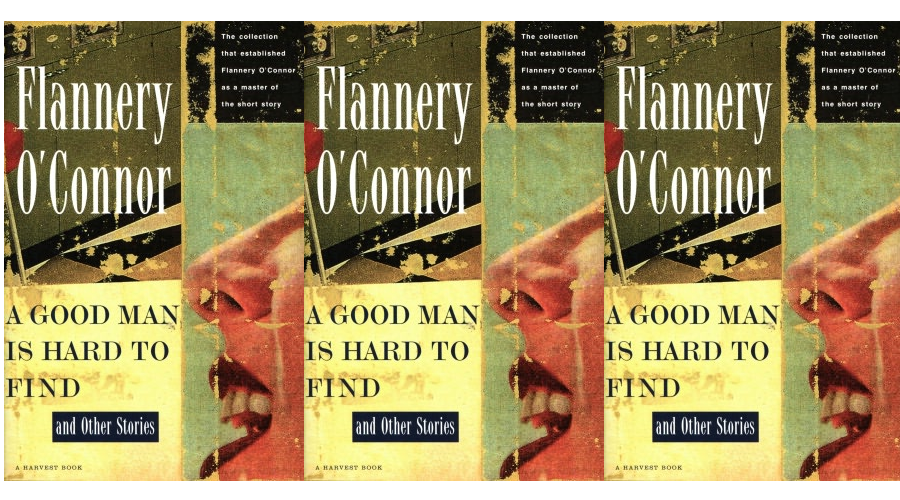
She liked shouting. But did that make her any easier to hear?
The problem of representation is one of the key issues of modern philosophy. It ranges all the way from the question of what can be represented all the way to what by definition cannot be represented. In fact, Descartes’ search for ways to represent clearly and distinctly launched the modern philosophical project. Yet, by the 20th century Descartes’ own French philosophical tradition was wholesale denigrating visual representation.
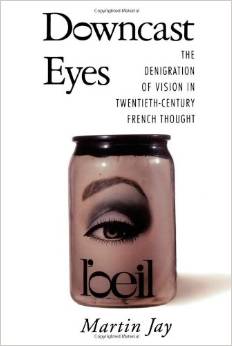
Don’t look here.
I’m in the process of interviewing David Griffith, the author of A Good War is Hard to Find. His book uses the fiction of Flannery O’Connor to critique the representations of Abu Ghraib, recent American wars, and related issues of depicting and unmasking violence.
Yet, what might this Catholic mid-century writer–whose monumental work ironically obscures the visibility of contemporary writers–have to do with all this fairly mundane stuff of our headlines? In response David Griffith asks the following questions:
Will Christians in America see the images of prison abuse at Abu Ghraib as O’Connor would, as evidence of spiritual struggle within all human beings, or as the Professor of English would, as a deviant fantasy dreamed up by desperate characters? What is the cost of treating these events as the result of abnormal psychology? At what cost do we demand to see ourselves as redeemers–the judgers of Good and Evil?

It’s hard not to look at some things.
I decided to run an experiment in representation and cognitive bias when I first noticed that the #Roe42 hashtag was trending today. On the 42nd anniversary of Roe v. Wade the social media (and what I’ve seen on television) has overwhelmingly put a happy face on the whole matter. The posts mostly feature younger white women with smiling faces who look like they are enjoying their financial success. Even the statistics, meant to scare you into belief by multiplying scary counterfactuals, have a decidedly sunny disposition to them with their pastel colors. There are, as usual, abstracts slogans about freedom and economic security.
In short, all these things represent the Roe v. Wade decision as redemptive. Heck, even the Republicans have doubts about rocking the boat on this issue, because they are more worried about looking like villains rather than redeemers.
When we take all of these things into consideration, two things are decidedly missing:
On the left: frank representation of the whole violent process of abortion.
On the right: frank representation of how abortion is related to a whole set of other issues, because these other issues are related to the sacrosanct institution of the market.
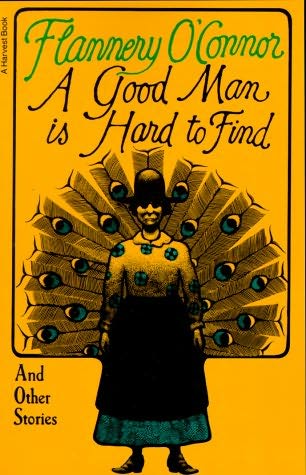
Is it possible to whisper, not yell, about controversial issues?
But are visual representations powerful enough to change anything? Does yelling louder get anything done? Would putting mangled children up for everyone to see change anything? Or would it only make people turn away in disgust at a manifestations of abnormal psychology? Would tying abortion to wider societal concerns make everyone see a bigger pattern, or only more of the same old mess?
This ambivalence of representation is something David Griffiths highlights with the epigraph he chose for A Good War is Hard to Find. It comes from the last story, “The Displaced Person,” in Flannery’s collection, A Good Man is Hard to Find:
Mrs. Shortley recalled a newsreel she had seen once of a small room piled high with bodies of dead naked people all in a heap, their arms and legs tangled together, a head thrust in here, a head there, a foot, a knee, a part that should have been covered up sticking out, a hand raised clutching nothing. Before you could realize that it was real and take it into your head, the picture changed and a hollow-sounding voice was saying, “Time marches on!”
What is the right approach to highlighting the human waste at the bottom of this debate? Or are the cognitive biases too strong? Future generations will evaluate our present discourse with criteria we know nothing about.
All aboard? The problem will not sail away.
For an earlier discussion of abortion within its historical context see my “Abortion, Natural Law, and Antisemitism?“
Next Post
January 25, 2015 St. Socrates: Philosophy's Permanent Ties to Theology
Browse Our Archives
Select a Category #WhyRemainCatholic Abortion Advent Anti-Catholicism Arts Atheism Beauty Benedict XVI Bible Book Review Catholic Cinema Comedy Cosmos: A Space-Time Odyssey Czesław Miłosz Dariusz Karłowicz Devil Easter Eastern Orthodoxy Economics Environment Family Famous Atheists Who Weren't Atheists Guest Post Hans Urs von Balthasar HHS Mandate History Imagination Interview Islam Jean-Luc Marion John Paul II Judaism Just War Lent Literature Little Sisters of the Poor Liturgy Martyrdom Music News Paganism Patristics Phenomenology Philosophy Pierre Hadot Poetry Poland Pop Culture Pope Francis Poverty Prayer Protestantism Rabelais Race Remi Brague Rene Girard Russia Sam Rocha Science & Religion SCOTUS Secularization Sexual Abuse Sexuality Silence Solidarity Stratford Caldecott Synod14 Terrorism Top 10 Uncategorized Walker Percy War Weakened Edition World War II World Youth Day WYD Krakow
Select a Month July 2017 June 2017 May 2017 April 2017 March 2017 February 2017 January 2017 December 2016 October 2016 September 2016 August 2016 July 2016 June 2016 May 2016 April 2016 March 2016 February 2016 January 2016 December 2015 November 2015 October 2015 September 2015 August 2015 July 2015 June 2015 May 2015 April 2015 March 2015 February 2015 January 2015 December 2014 November 2014 October 2014 September 2014 August 2014 July 2014 May 2014 April 2014 March 2014 February 2014 January 2014 December 2013 November 2013 October 2013 September 2013 August 2013 July 2013 June 2013 May 2013
Follow Us!
TAKE THE
Religious Wisdom Quiz
What did God tell Moses from the burning bush?
Select your answer to see how you score.
That he would be king of Israel That he would lead Israel out of Egypt That he would become Pharaoh That he would build the temple
Related posts from Cosmos The In Lost
Publicity Campaign Freudian Slip: Planned Parenthood Wants You...
What Do Sex, Lent, UFO's, Evolution, and the...

Will Priests For Life Pull Its $445,000 Out...
Benedict XVI Admits to Being an Early Critic...
TRENDING AT PATHEOS Catholic

Creation, Preservation, and Teleology in Catholic Theology
As I write this, it is very early Monday morning. Like millions...

The Parable Of The Sower And The Word...
One of Christ’s most famous parables is that of the sower who...

Rejecting Doom: Christian Hope And Human Action
Christianity is a religion of hope. We are to have hope and...

Why I Choose the Eucharist Over the Sermon
Choose the Eucharist, Not the Sermon What are we supposed to get...

5 Design Elements Found in Spiritually Rooted Homes
Putting Spirituality Into Home Decor Our homes are more than our living...

Credo: A Story of God Told with the...
About 10 years ago, I began to imagine a personal "Credo" that...
view all Catholic blogs
Ad-Free & Subscriber Log-In Subscription Support
- About Us
- 2026 Calendar
- Videos
- Podcasts
- Library of World Religions
- Faith In Media Tracker
- Advertise With Us
- Write for Us
- Privacy Policy
- Terms of Service
- Do Not Sell My Data
- Contact Us
- Radiant Digital
- Manage Newsletter Subscriptions
- Unsubscribe From Notifications
- Sitemap
Copyright 2008-2026, Patheos. All rights reserved.
Subscription Support Ad-Free & Subscriber Log-In
Follow Patheos