
BuddhistCatholicContemplativeEvangelicalGeneral ChristianHinduJewishLatter-day SaintMuslimNew VisionsProgressive Christian
Beliefs
- Buddhist
- Catholic
- Contemplative
- Evangelical
- General Christian
- Hindu
- Jewish
- Latter-day Saint
- More Voices
- Muslim
- New Visions
- Pagan
- Progressive Christian
Topics
- Religion News
- Food and Religion
- Sports and Religion
- Religious Art
- Religious Music and Entertainment
- Religious Events
- History and Religion
- Style and Religion
- Politics and Religion
- Women in Religion
- Recreation Outdoors and Religion
- Business Finance and Religion
- Careers Workplace and Religion
- Education and Religion
- Family Parenting and Religion
- Health Fitness and Religion
- Home and Religion
- Relationships and Religion
- Technology and Religion
- Travel and Religion
Columnists
- Buddhist Columnists
- Business Finance and Religion Columnists
- Careers Workplace and Religion Columnists
- Catholic Columnists
- Contemplative Columnists
- Education and Religion Columnists
- Evangelists Columnists
- Family Parenting and Religion Columnists
- General Christian Columnists
- Health Fitness and Religion Columnists
- Hindu Columnists
- History and Religion Columnists
- Home and Religion Columnists
- Jewish Columnists
- More Voices Columnists
- Latter Day Columnists
- Muslim Columnists
- New Visions Columnists
- Nonreligious Columnists
- Pagan Columnists
- Politics and Religion Columnists
- Progressive Columnists
- Recreation Outdoors and Religion Columnists
- Relationships and Religion Columnists
- Religion News Columnists
- Religious Art Columnists
- Religious Events Columnists
- Religious Music and Entertainment Columnists
- Sports and Religion Columnists
- Style and Religion Columnists
- Technology and Religion Columnists
- Travel and Religion Columnists
- Women in Religion Columnists
Resource Library
- 2026 Calendar
- Library of World Religions
- The 100 Most Holy Places on Earth
- Patheos Answers
- Podcasts
- Videos
- Faith Leaders Database
- Anglican Episcopalian
- Bahai
- Baptist
- Buddhism
- Christianity
- Confucianism
- Eastern Orthodoxy
- Hinduism
- Holiness and Pentecostal
- ISKCON
- Islam
- Judaism
- Lutheran
- Methodist
- The Church of Jesus Christ of Latter-day Saints
- New Age
- Paganism
- Presbytarian and Reformed
- Protestantism
- Religion Behind the Scenes
- Roman Catholic
- Scientology
- Shia Islam
- Sikhism
- Sufism
- Sunni Islam
- Taoism
- Zen
- See all religions
Research Tools
 Ad-Free & Subscriber Log-In Subscription Support
Ad-Free & Subscriber Log-In Subscription Support
Follow Patheos 

- Trending:
- Forgiveness
- |
- Marriage
- |
- Consciousness
- |
- Death Penalty
- |
- Election
- |
- Halloween
 Cosmos The In Lost
- Home
- Catholic
- Beauty, Postmodernism, and Vodka: Gregory Wolfe Interview Preview
Beauty, Postmodernism, and Vodka: Gregory Wolfe Interview Preview
Last updated on: January 20, 2015 at 11:56 am by Artur Rosman
Beauty, Postmodernism, and Vodka: Gregory Wolfe Interview Preview 2015-01-20T11:56:12-07:00 Artur Rosman
Patheos Explore the world's faith through different perspectives on religion and spirituality! Patheos has the views of the prevalent religions and spiritualities of the world.
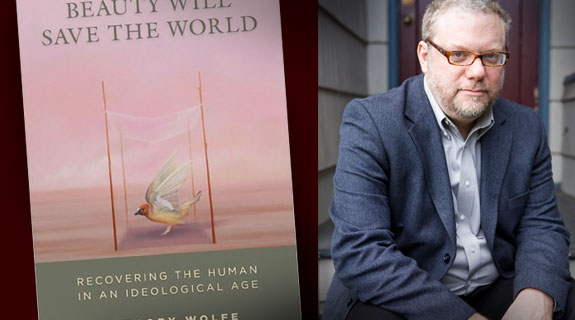
Gregory Wolfe has spent half a lifetime saying “Beauty will save the world.” Czeslaw Milosz once said “Heaven is the third vodka.”
==============================================================
UPDATE: The complete Gregory Wolfe interview is now available on Ethika Politika!
==============================================================
See how these two things come together below.
Cosmos the in Lost and its evil twin Rabelaisian Catholicism have frequently waded into the waters of the Catholic Literature debate. Even more, they have ventured into appraising the state of Catholic cultural production overall.
See my posts on the following topics to get a better sense of how much is going on: Catholic studies, living religious novelists, living religious poets, Catholic philosophy in France, the Catholic critic Paul Elie, and last, but not least (unless you ask the writers), Catholic literary criticism.
Last week I did a rundown of my encounter with Paul Elie and novelist William Giraldi literary whom I encountered as a participant at the Villanova Christianity and Culture and Criticism and . . . Conference. In the same post I announced I will concentrate upon writing about literature for Ethika Politika.
Next week I deliver on this promise with an extended interview with Gregory Wolfe, editor-in-chief of IMAGE Journal, and one of the leading participants in the Catholic literature debate.
What follows below is an extended sneak peak at the interview.
Cosmos: It’s very ironic your paleo-friends were so stuck on literary modernism, which, more often than not, was anti-religious. Yet, would it be fair to say you’re something of a postmodernist? Is postmodernity, as a historical moment, more open to religion than modernism, or, is it only open to religion differently than modernism?
Gregory Wolfe: Well, if you ask me, they’re not paying enough attention to even perceive the relationship between literary modernism and the writers of faith writing during that period. I mean, Evelyn Waugh constantly praised James Joyce (and considered him a major influence) but Waugh is held up by conservatives as some sort of neo-Victorian, which is just nuts.
As far as my own relationship to these movements of thought—I’m a both/and sorta guy, definitely not either/or. For one thing, philosophy is over my pay grade. I’m a dabbler at best. For another, I’m just convinced that there’s truth to be found in both.
What makes me want to drink vodka out of a cat dish (to steal a phrase from Anne Lamott) is the type of critic who expects the art of her time to be made according to the model of a past time. Lamenting the art of your own era is intellectual laziness at best and a serious dereliction of duty when it comes to engaging the world around you at worst. If it’s all bad, then you have no motivation to get involved with the nurturing of new work. So writers starve in garrets.
There are dimensions of postmodernism that dovetail nicely with someone who, like myself, has religious concerns. I’m thinking of things like the suspicion of master narratives, the sense that our knowledge is limited and contingent, that we must always be scrutinizing and purifying our motives.
The same goes for the sort of postmodern literature and art that are imbued with this sensibility. This goes back to my point about contemporary writing that hears God in the “still, small voice.” One might say that the best writers of faith today—the ones whose faith is so deeply woven into their vision that there’s nothing obvious in the work that “shouts”—are practicing a deeply incarnational understanding—one in which grace comes to us through nature.
Who knows what literary styles and forms will be prevalent in 2035? All I know is that if I live that long I won’t be wishing they were the same as 2015…or 1955.
The full interview is now available here.
You can find out more about contemporary poets, novelists, publishing houses, and Gregory Wolfe’s recommendations here, here, here, and here.
There’s also the post that started it all “A Fish Rots From the Head Down” on Paul Elie and rumors of secularization in the arts.
Previous Post
January 15, 2015
What Christian Group Says It Worships Same God as Muslims?
Next Post

January 17, 2015 I'm Not Well—The Voices are Back
Browse Our Archives
Select a Category #WhyRemainCatholic Abortion Advent Anti-Catholicism Arts Atheism Beauty Benedict XVI Bible Book Review Catholic Cinema Comedy Cosmos: A Space-Time Odyssey Czesław Miłosz Dariusz Karłowicz Devil Easter Eastern Orthodoxy Economics Environment Family Famous Atheists Who Weren't Atheists Guest Post Hans Urs von Balthasar HHS Mandate History Imagination Interview Islam Jean-Luc Marion John Paul II Judaism Just War Lent Literature Little Sisters of the Poor Liturgy Martyrdom Music News Paganism Patristics Phenomenology Philosophy Pierre Hadot Poetry Poland Pop Culture Pope Francis Poverty Prayer Protestantism Rabelais Race Remi Brague Rene Girard Russia Sam Rocha Science & Religion SCOTUS Secularization Sexual Abuse Sexuality Silence Solidarity Stratford Caldecott Synod14 Terrorism Top 10 Uncategorized Walker Percy War Weakened Edition World War II World Youth Day WYD Krakow
Select a Month July 2017 June 2017 May 2017 April 2017 March 2017 February 2017 January 2017 December 2016 October 2016 September 2016 August 2016 July 2016 June 2016 May 2016 April 2016 March 2016 February 2016 January 2016 December 2015 November 2015 October 2015 September 2015 August 2015 July 2015 June 2015 May 2015 April 2015 March 2015 February 2015 January 2015 December 2014 November 2014 October 2014 September 2014 August 2014 July 2014 May 2014 April 2014 March 2014 February 2014 January 2014 December 2013 November 2013 October 2013 September 2013 August 2013 July 2013 June 2013 May 2013
Follow Us!
TAKE THE
Religious Wisdom Quiz
What Christian group is known for large-scale evangelistic crusades?
Select your answer to see how you score.
Orthodox Quakers Evangelicals Methodists
Related posts from Cosmos The In Lost

The Surprising Anti-Capitalist Logic Behind the Catholic Church's...

How is Classical Philosophy is Like War?

Why Does the World's Leading Philosopher Remain a...

Post-Execution Church: Rise Up from the Electric Chair!
TRENDING AT PATHEOS Catholic

Rejecting Doom: Christian Hope And Human Action
Christianity is a religion of hope. We are to have hope and...

It’s What Comes From Within Which Matters
One of the most difficult things for us to understand is why...

Why I Choose the Eucharist Over the Sermon
Choose the Eucharist, Not the Sermon What are we supposed to get...

5 Design Elements Found in Spiritually Rooted Homes
Putting Spirituality Into Home Decor Our homes are more than our living...

Credo: A Story of God Told with the...
About 10 years ago, I began to imagine a personal "Credo" that...

The Anatomy of Divine Revelation in Catholic Thought
The claim that God has made Himself known to human beings is...
view all Catholic blogs
Ad-Free & Subscriber Log-In Subscription Support
- About Us
- 2026 Calendar
- Videos
- Podcasts
- Library of World Religions
- Faith In Media Tracker
- Advertise With Us
- Write for Us
- Privacy Policy
- Terms of Service
- Do Not Sell My Data
- Contact Us
- Radiant Digital
- Manage Newsletter Subscriptions
- Unsubscribe From Notifications
- Sitemap
Copyright 2008-2026, Patheos. All rights reserved.
Subscription Support Ad-Free & Subscriber Log-In
Follow Patheos