
BuddhistCatholicContemplativeEvangelicalGeneral ChristianHinduJewishLatter-day SaintMuslimNew VisionsProgressive Christian
Beliefs
- Buddhist
- Catholic
- Contemplative
- Evangelical
- General Christian
- Hindu
- Jewish
- Latter-day Saint
- More Voices
- Muslim
- New Visions
- Pagan
- Progressive Christian
Topics
- Religion News
- Food and Religion
- Sports and Religion
- Religious Art
- Religious Music and Entertainment
- Religious Events
- History and Religion
- Style and Religion
- Politics and Religion
- Women in Religion
- Recreation Outdoors and Religion
- Business Finance and Religion
- Careers Workplace and Religion
- Education and Religion
- Family Parenting and Religion
- Health Fitness and Religion
- Home and Religion
- Relationships and Religion
- Technology and Religion
- Travel and Religion
Columnists
- Buddhist Columnists
- Business Finance and Religion Columnists
- Careers Workplace and Religion Columnists
- Catholic Columnists
- Contemplative Columnists
- Education and Religion Columnists
- Evangelists Columnists
- Family Parenting and Religion Columnists
- General Christian Columnists
- Health Fitness and Religion Columnists
- Hindu Columnists
- History and Religion Columnists
- Home and Religion Columnists
- Jewish Columnists
- More Voices Columnists
- Latter Day Columnists
- Muslim Columnists
- New Visions Columnists
- Nonreligious Columnists
- Pagan Columnists
- Politics and Religion Columnists
- Progressive Columnists
- Recreation Outdoors and Religion Columnists
- Relationships and Religion Columnists
- Religion News Columnists
- Religious Art Columnists
- Religious Events Columnists
- Religious Music and Entertainment Columnists
- Sports and Religion Columnists
- Style and Religion Columnists
- Technology and Religion Columnists
- Travel and Religion Columnists
- Women in Religion Columnists
Resource Library
- 2026 Calendar
- Library of World Religions
- The 100 Most Holy Places on Earth
- Patheos Answers
- Podcasts
- Videos
- Faith Leaders Database
- Anglican Episcopalian
- Bahai
- Baptist
- Buddhism
- Christianity
- Confucianism
- Eastern Orthodoxy
- Hinduism
- Holiness and Pentecostal
- ISKCON
- Islam
- Judaism
- Lutheran
- Methodist
- The Church of Jesus Christ of Latter-day Saints
- New Age
- Paganism
- Presbytarian and Reformed
- Protestantism
- Religion Behind the Scenes
- Roman Catholic
- Scientology
- Shia Islam
- Sikhism
- Sufism
- Sunni Islam
- Taoism
- Zen
- See all religions
Research Tools
 Ad-Free & Subscriber Log-In Subscription Support
Ad-Free & Subscriber Log-In Subscription Support
Follow Patheos 

- Trending:
- Forgiveness
- |
- Marriage
- |
- Consciousness
- |
- Death Penalty
- |
- Election
- |
- Halloween
 Cosmos The In Lost
- Home
- Catholic
- Reenchantment: Atheist PZ Myers Attempts to Confess Bias, FAILS
Reenchantment: Atheist PZ Myers Attempts to Confess Bias, FAILS
Last updated on: January 6, 2015 at 3:16 pm by Artur Rosman
Reenchantment: Atheist PZ Myers Attempts to Confess Bias, FAILS 2015-01-06T15:16:06-07:00 Artur Rosman
Patheos Explore the world's faith through different perspectives on religion and spirituality! Patheos has the views of the prevalent religions and spiritualities of the world.
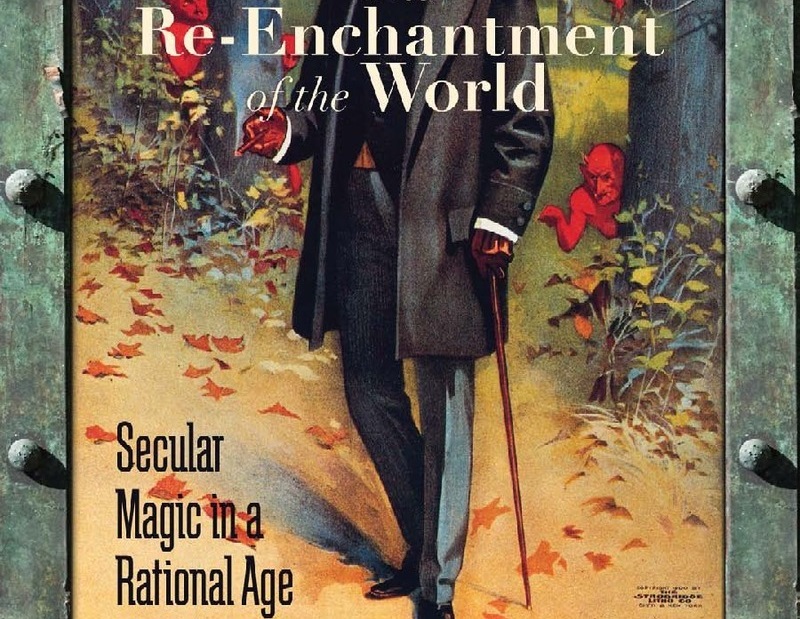
Do you believe in magic? Your head is where your heart is.
If you didn’t notice Saturday evening I ran a confirmation bias experiment on my coreligionists (many, if not most, did not notice). The experiment consisted of running a variation upon my favorite pastime of quoting Rerum Novarum passages and attributing them to Marx on social media. The results were almost as amusing as seeing the distinguished professor Robert P. George (“Four Things to Remember About the Pope’s Environment Letter“) dogmatically urging skepticism about the ideologically divisive contents of a yet, as far as I know, unwritten encyclical. It is true he urges moderation at first, but that only masks what follows. What follows these urgings has more shibboleths than I can enunciate.
One would hope there might be more honesty in other climes. Take for example the following aching confession (“The Atheist Disillusionment“) from professional atheist propagandist PZ Myers:
The name of atheism has been burdened with unfair and inaccurate stigma for a great many years, and we’re now drifting into an era in which atheism will be burdened with a totally fair and accurate stigma.
Unless we change.
I don’t know that we can.
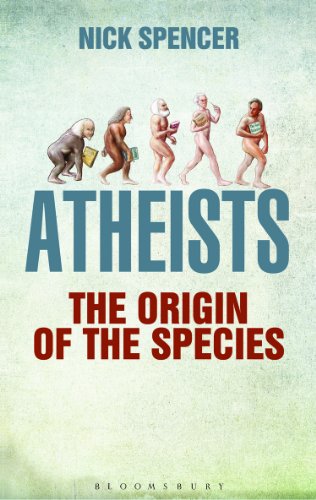
There is more variety to the atheist experience than a simple progress from darkness into the light.
Don’t these sentiments make you think of the brutal honesty of Augustine’s wet dream prayer? “Oh, Lord make me chaste, but not yet.” Myers knows these errors will be difficult to rectify. In my post yesterday Robert Calasso suggests just how difficult this might be.
But the semblance of brutal honesty is undercut even in that statement by the tall tale of an atheist Golden Age. Between the lines you read that all atheists were decent human beings until the fall somewhere in the late 90’s or oughts. Secular myths of the fall are not without consequences. They require a scapegoat. One is usually supplied by religion painted with the wide brush of the myth of religious violence and intolerance. If that fails, then atheism needs another generic foil, something vague like “culture,” to talk about the real potential of atheism:
I’ve been writing about atheism for about 10 years now. What has driven me is a combination of awe at the amazing insights produced by science, so much deeper and more substantial than any collection of myths, and a furious rage at the lies and injustice and corruption of humanity by religion. For a while there, in the middle, there was also an ebullience at the growing success of atheism, and hope that someday we would be able to cast aside the follies of faith. The awe is still here, the rage is still burning, but the optimism is fading and is being consumed by a new anger at the incompetence and betrayal of the self-appointed atheist leadership.
Too many atheists turn out to be just as shallow as the fervent faithful I rail against. Too many see atheism as another useless difference they can use to excuse discrimination against others they are already prejudiced against. I used to have this illusion that an atheist society would be more tolerant, that under it government and education would be secular, but the churches would still exist, if people wanted to attend them — a sort of Scandinavian ideal. But no, what I’m fast learning is that tolerance isn’t automatically a property of abandoning the false tribe of religion, but is more a reflection of the greater culture it is embedded in. Atheists can still hold a “kill the wogs” mentality while babbling about the wonders of science; people who regard women as servile appliances for their gratification don’t seem to become suddenly enlightened once the scales of faith fall from their eyes.
Note the religious metaphor at end the the prophetic tone of the passages. Yet, how could he have been foolish enough to believe all this? Is there any orthodox Christian who would be this foolish? What’s worse, the Myers solution to the problem, even though it condemns his own former naivete is equally naive:
That was a surprise to my naive self. But I could still see value in discarding religion — it is one factor that contributes heavily to world-wide ignorance — and simply saw that the struggle was going to be harder than I had hoped. We’re not only going to have to inspire and inform everyone about the beauty of the natural mechanisms that drive our world, and the error of seeking shortcuts in the falsehoods of antique traditions, but we’re also going to have to educate everyone about the Darwinian concepts of unity and diversity, that there is no higher or lower, that cooperation is as important (I’d say more important) component of our evolution as competition. The absence of a god has profound implications that seem not to be immediately obvious to everyone, so it’s going to take some serious effort to help everyone think through that meaning…and that the most important implication of it all, that we’re all alone with each other and need to develop values base on human meaning, rather than divine revelation, says we need to broaden our reach and open the doors wider. It’s not about wealthy white man meaning, after all, but something more universal.
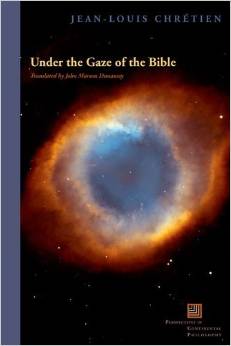
Can you see what I’m saying?
It is pure Gnosticism (Pelagianism, what have you) to think that more information will unleash the inherent goodness in human beings when it hasn’t done so before. Furthermore, there is a strong confirmation bias for atheism here; it must produce automatically good people no matter what the evidence says.
Jean-Louis Chretien’s Under the Gaze of the Bible is much more realistic in its mapping of human intentions, especially when we profess self-culpability like Myers. While commenting on Kierkegaard’s For Self-Examination, he says:
Kierkegaard clearly distinguishes this refusal of evil in us [caused by engaging in Lectio Divina] from the unhealthy tendency to ‘see oneself, through a mania for self-torture, as a demon.’ The mirror of the Word challenges all the illusory self-images I had formed (by revealing their source, the old man), those that make me believe myself better than I am as well as those that make me see myself as worse. Moreover, it is a common experience that the imaginary faults of which we accuse ourselves form the best and surest alibi for our real culpability. We are egocentric even in our self-contempt, and we do not like others to accuse us of shortcomings other than those we accuse ourselves of.
Now this is a complex and realistic picture of human intentions. The question remains what the alibis of Robert P. George and PZ Myers hide… Until you figure it out, don’t let yourself be enchanted by the magic tricks of confirmation bias:
Previous Post
January 5, 2015
I Have Met Many Secular Bigots (Calasso on Sacrifice)
Next Post

January 7, 2015 If You Practice It, You'll Become: How the Pastor Became an Atheist
Browse Our Archives
Select a Category #WhyRemainCatholic Abortion Advent Anti-Catholicism Arts Atheism Beauty Benedict XVI Bible Book Review Catholic Cinema Comedy Cosmos: A Space-Time Odyssey Czesław Miłosz Dariusz Karłowicz Devil Easter Eastern Orthodoxy Economics Environment Family Famous Atheists Who Weren't Atheists Guest Post Hans Urs von Balthasar HHS Mandate History Imagination Interview Islam Jean-Luc Marion John Paul II Judaism Just War Lent Literature Little Sisters of the Poor Liturgy Martyrdom Music News Paganism Patristics Phenomenology Philosophy Pierre Hadot Poetry Poland Pop Culture Pope Francis Poverty Prayer Protestantism Rabelais Race Remi Brague Rene Girard Russia Sam Rocha Science & Religion SCOTUS Secularization Sexual Abuse Sexuality Silence Solidarity Stratford Caldecott Synod14 Terrorism Top 10 Uncategorized Walker Percy War Weakened Edition World War II World Youth Day WYD Krakow
Select a Month July 2017 June 2017 May 2017 April 2017 March 2017 February 2017 January 2017 December 2016 October 2016 September 2016 August 2016 July 2016 June 2016 May 2016 April 2016 March 2016 February 2016 January 2016 December 2015 November 2015 October 2015 September 2015 August 2015 July 2015 June 2015 May 2015 April 2015 March 2015 February 2015 January 2015 December 2014 November 2014 October 2014 September 2014 August 2014 July 2014 May 2014 April 2014 March 2014 February 2014 January 2014 December 2013 November 2013 October 2013 September 2013 August 2013 July 2013 June 2013 May 2013
Follow Us!
TAKE THE
Religious Wisdom Quiz
What happened to the first stone tablets of the Ten Commandments?
Select your answer to see how you score.
They were placed in the Ark They were lost in battle Moses broke them Pharaoh destroyed them
Related posts from Cosmos The In Lost

How is Classical Philosophy is Like War?

Why Does the World's Leading Philosopher Remain a...

Atheists Have "National Day of Reason," But American...

TRENDING AT PATHEOS Catholic

Rejecting Doom: Christian Hope And Human Action
Christianity is a religion of hope. We are to have hope and...

It’s What Comes From Within Which Matters
One of the most difficult things for us to understand is why...

Why I Choose the Eucharist Over the Sermon
Choose the Eucharist, Not the Sermon What are we supposed to get...

5 Design Elements Found in Spiritually Rooted Homes
Putting Spirituality Into Home Decor Our homes are more than our living...

Credo: A Story of God Told with the...
About 10 years ago, I began to imagine a personal "Credo" that...

The Anatomy of Divine Revelation in Catholic Thought
The claim that God has made Himself known to human beings is...
view all Catholic blogs
Ad-Free & Subscriber Log-In Subscription Support
- About Us
- 2026 Calendar
- Videos
- Podcasts
- Library of World Religions
- Faith In Media Tracker
- Advertise With Us
- Write for Us
- Privacy Policy
- Terms of Service
- Do Not Sell My Data
- Contact Us
- Radiant Digital
- Manage Newsletter Subscriptions
- Unsubscribe From Notifications
- Sitemap
Copyright 2008-2026, Patheos. All rights reserved.
Subscription Support Ad-Free & Subscriber Log-In
Follow Patheos