
BuddhistCatholicContemplativeEvangelicalGeneral ChristianHinduJewishLatter-day SaintMuslimNew VisionsProgressive Christian
Beliefs
- Buddhist
- Catholic
- Contemplative
- Evangelical
- General Christian
- Hindu
- Jewish
- Latter-day Saint
- More Voices
- Muslim
- New Visions
- Pagan
- Progressive Christian
Topics
- Religion News
- Food and Religion
- Sports and Religion
- Religious Art
- Religious Music and Entertainment
- Religious Events
- History and Religion
- Style and Religion
- Politics and Religion
- Women in Religion
- Recreation Outdoors and Religion
- Business Finance and Religion
- Careers Workplace and Religion
- Education and Religion
- Family Parenting and Religion
- Health Fitness and Religion
- Home and Religion
- Relationships and Religion
- Technology and Religion
- Travel and Religion
Columnists
- Buddhist Columnists
- Business Finance and Religion Columnists
- Careers Workplace and Religion Columnists
- Catholic Columnists
- Contemplative Columnists
- Education and Religion Columnists
- Evangelists Columnists
- Family Parenting and Religion Columnists
- General Christian Columnists
- Health Fitness and Religion Columnists
- Hindu Columnists
- History and Religion Columnists
- Home and Religion Columnists
- Jewish Columnists
- More Voices Columnists
- Latter Day Columnists
- Muslim Columnists
- New Visions Columnists
- Nonreligious Columnists
- Pagan Columnists
- Politics and Religion Columnists
- Progressive Columnists
- Recreation Outdoors and Religion Columnists
- Relationships and Religion Columnists
- Religion News Columnists
- Religious Art Columnists
- Religious Events Columnists
- Religious Music and Entertainment Columnists
- Sports and Religion Columnists
- Style and Religion Columnists
- Technology and Religion Columnists
- Travel and Religion Columnists
- Women in Religion Columnists
Resource Library
- 2026 Calendar
- Library of World Religions
- The 100 Most Holy Places on Earth
- Patheos Answers
- Podcasts
- Videos
- Faith Leaders Database
- Anglican Episcopalian
- Bahai
- Baptist
- Buddhism
- Christianity
- Confucianism
- Eastern Orthodoxy
- Hinduism
- Holiness and Pentecostal
- ISKCON
- Islam
- Judaism
- Lutheran
- Methodist
- The Church of Jesus Christ of Latter-day Saints
- New Age
- Paganism
- Presbytarian and Reformed
- Protestantism
- Religion Behind the Scenes
- Roman Catholic
- Scientology
- Shia Islam
- Sikhism
- Sufism
- Sunni Islam
- Taoism
- Zen
- See all religions
Research Tools
 Ad-Free & Subscriber Log-In Subscription Support
Ad-Free & Subscriber Log-In Subscription Support
Follow Patheos 

- Trending:
- Forgiveness
- |
- Marriage
- |
- Consciousness
- |
- Death Penalty
- |
- Election
- |
- Halloween
 Cosmos The In Lost
- Home
- Catholic
- A Feast of Circumfession: TOP10 Reading Standouts From 2014
A Feast of Circumfession: TOP10 Reading Standouts From 2014
Last updated on: January 2, 2015 at 1:10 am by Artur Rosman
A Feast of Circumfession: TOP10 Reading Standouts From 2014 2015-01-02T01:10:31-07:00 Artur Rosman
Patheos Explore the world's faith through different perspectives on religion and spirituality! Patheos has the views of the prevalent religions and spiritualities of the world.
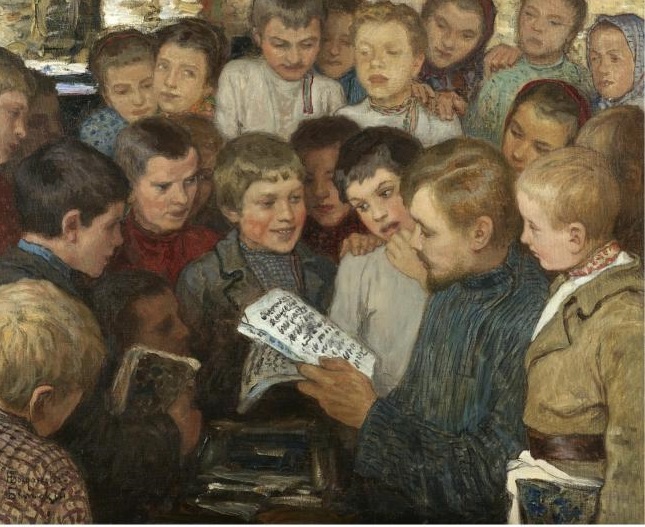
I confess you don’t have to be czarist peasant to enjoy the books I list below. (Photo: Bogdanov-Belsky, Rural School, 1890, Wikimedia Commons, PD-old-100)
Today was formerly known as the Feast of the Circumcision. Due to sleep deprivation I can think of no better way to celebrate than staring down my best reading experiences of 2014. (But feel free to peek at my posts on Christ’s genitalia and his circumcision while you’re at it). I’m a picky reader so it was very hard to limit myself to the following standouts. Anyway, isn’t it great to participate in a faith so incarnational it allows you so many double entendres?
The notion of circumfession comes from Derrida confessing his problems with his circumcision. There was a whole conference about it at Villanova. That’s a lot of ink spilled talking about, you know. . . I mainly bring this word up to [make some more bad puns] let you know I’ll do a writeup for Ethika Politika early next week of the exciting Villanova conference I attended in November.
Before I get even more distracted, what follows is my best of 2014 list in no particular order with publisher blurbs and links:
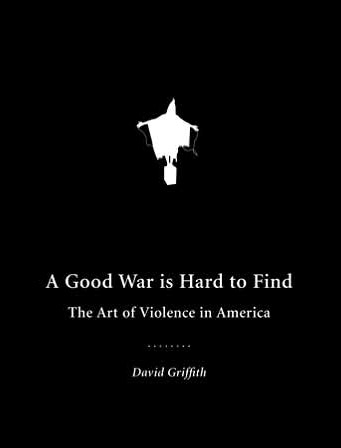
A map of Babylon replete with graphic pictures.
1) A Good War is Hard to Find by David Griffith
“In the wake of Abu Ghraib, Americans have struggled to understand what happened in the notorious prison and why. In this elegant series of essays, inflected with a radical Catholic philosophy, David Griffith contends that society’s shift from language to image has changed the way people think about violence and cruelty, and that a disconnect exists between images and reality. Griffith meditates on images and literature, finding potent insight into what went wrong at the prison in the works of Susan Sontag, Anthony Burgess, and especially Flannery O’Connor, who often explored the gulf between proclamations of faith and the capacity for evil. Accompanying the essays are illustrated facts about torture, lists of torture methods and their long-term effects, and graphics such as the schematics of the ‘pain pathways’ in the human body. Together, the images and essays endow the human being with the complexity images alone deny.”

A surprisingly profound and funny meditation on the Incarnation.
2) The Four Wise Men by Michel Tournier
“Displaying his characteristic penchant for the macabre, the tender and the comic, Michael Tournier presents the traditional Magi describing their personal odysseys to Bethlehem—and audaciously imagines a fourth, ‘the eternal latecomer’ whose story of hardship and redemption is the most moving and instructive of all. Prince of Mangalore and son of an Indian maharajah, Taor has tasted an exquisite confection, rachat loukoum, and is so taken by the flavor that he sets out to recover the recipe. His quest takes him across Western Asia and finally lands him in Sodom, where he is imprisoned in a salt mine. There, this fourth wise man learns the recipe from a fellow prisoner, and learns of the existence and meaning of Jesus.”
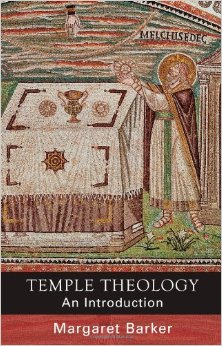
More than history: a detective novel.
3) Temple Theology by Margaret Barker
“How was it early Christian reflection on Jesus emerged so rapidly and with such a high degree of definition? What patterns of interpretation, already in known in late second temple Palestine, crystallized around the person of Jesus Christ and his work? Margaret Barker believes that Christian theology matured quickly because it was the return to a far older faith. Those who perserved the ancient tradition rejected the second temple, and longed for the restoration of the original, true temple and the faith of Abraham and Melchizedek, the first priest-king. In this fascinating discussion, the author refutes the scholarly assumption that crucial Christian concepts, such as the Trinty, the earth as a reflection of heaven, and the cosmic nature of the atonement, are informed by Greek culture. Rather, she argues, they are drawn from the eclipsed faith of the first temple.”
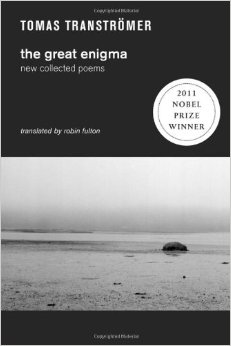
More than meets the eye.
4) The Great Enigma by Tomas Transtromer
“Translated into fifty languages, the poetry of Tomas Transtromer has had a profound influence around the world, an influence that has steadily grown and has now attained a prominence comparable to that of Pablo Neruda’s during his lifetime. But if Neruda is blazing fire, Transtromer is expanding ice. The Great Enigma: New Collected Poems gathers all the poems Tomas Transtromer has published, from his distinctive first collection in 1954, 17 Poems, through his epic poem Baltics (“my most consistent attempt to write music’), and The Sad Gondola, published six years after he suffered a debilitating stroke in 1990 (‘I am carried in my shadow / like a violin / in its black case.’), to his most recent slim book, The Great Enigma, published in Sweden in 2004. Also included is his prose-memoir Memories Look at Me, containing keys into his intensely spiritual, metaphysical poetry (like the brief passage of insect collecting on Runmaro Island when he was a teenager). Firmly rooted in the natural world, his work falls between dream and dream; it probes ‘the great unsolved love’ with the opening up, through subtle modulations, of ‘concrete words.'”
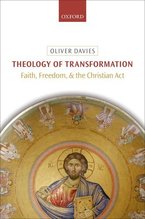
Davies is onto something important here.
5) Theology of Transformation by Oliver Davies
“Significant advances in science bring new understandings of the human as a unity of mind, body, and world and calls into question the deep-seated dualistic presuppositions of modern theology. Oliver Davies argues that the changing framework allows a return to the defining question of the Easter Church: ‘Where is Jesus Christ?’ This is a question which can bring about a fundamental reorientation of theology, since it gives space for the theological reception of the disruptive presence of the living Christ as the present material as well as formal object of theology in the world. At the centre of this study therefore is a new theology of the doctrine of the exaltation of Christ, based upon St. Paul’s encounter with the exalted or commissioning Christ on the road to Damascus. This places calling and commissioning at the center of systematic theology. It provides the ground for a new understanding of theology as transcending the Academy-Church division as well as the divide between systematic and practical theology.”
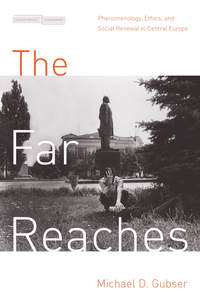
Gubser reaches deep as well.
6) The Far Reaches: Phenomenology, Ethics, and Social Renewal by Michael Gubser
“Despite this legacy, phenomenology continues to be largely discounted as esoteric and solipsistic, the last gasp of a Cartesian dream to base knowledge on the isolated rational mind. Intellectual histories tend to cite Husserl’s epistemological influence on philosophies like existentialism and deconstruction without considering his social or ethical imprint. And while a few recent scholars have begun to note phenomenology’s wider ethical resonance, especially in French social thought, its image as stubbornly academic continues to hold sway. The Far Reaches challenges that image by tracing the first history of phenomenological ethics and social thought in Central Europe, from its founders Franz Brentano and Edmund Husserl through its reception in East Central Europe by dissident thinkers such as Jan Patocka, Karol Wojtyla (Pope John Paul II), and Václav Havel.”
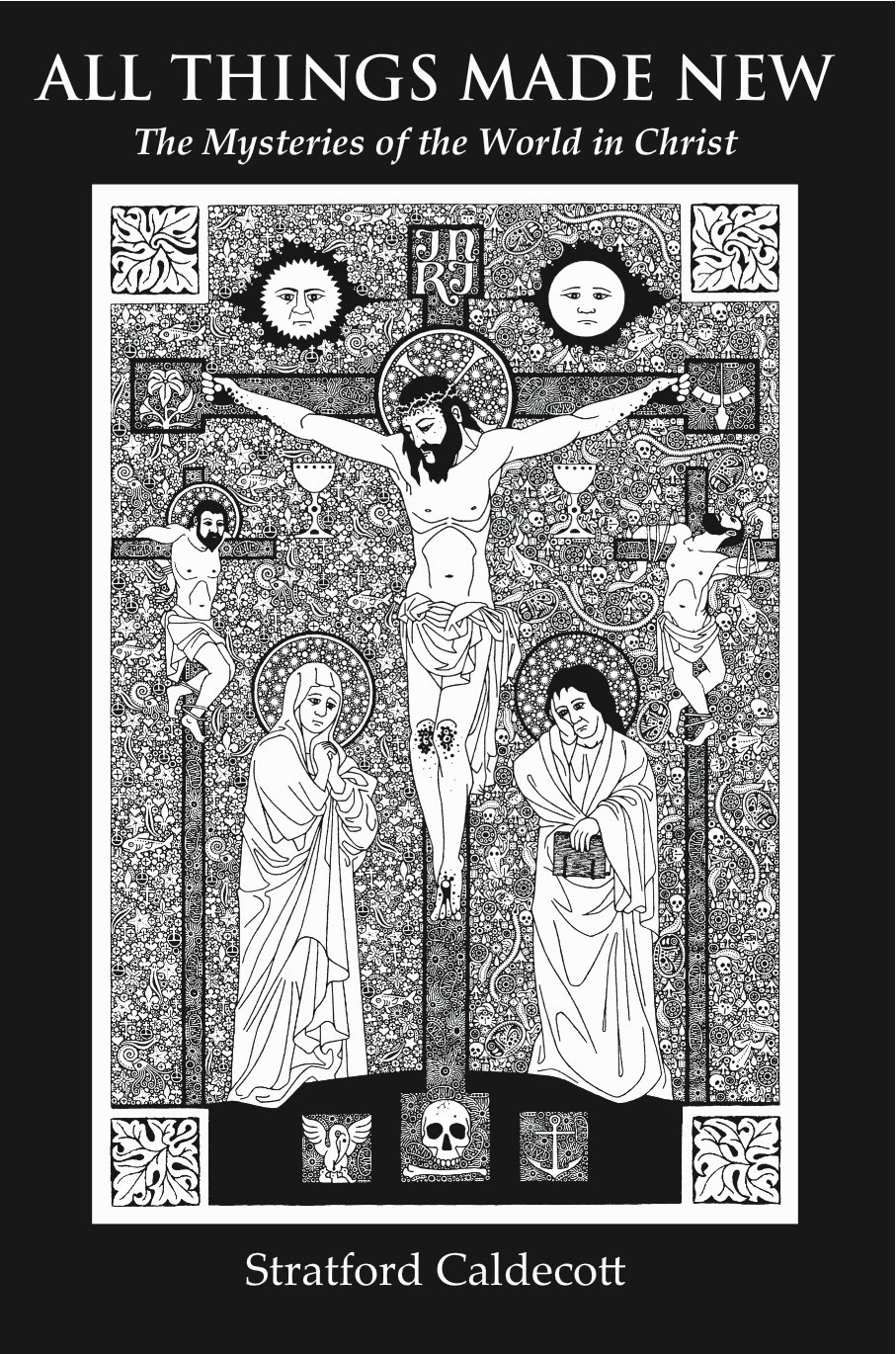
Note how God’s creation forms the busy background of the Daniel Mitsui illustration on the front cover of Strat’s book.
7) All Things Made New by Stratford Caldecott
All Things Made New explores the Christian mysteries in the tradition of St. John the Evangelist, and Mary, the Mother of Jesus, by studying the symbolism, cosmology, and meaning of the Book of Revelation, as well as the prayers and meditations of the Rosary, including the Apostles’ Creed and the Our Father. These reflections lead us step by step to the foot of the Cross, and to the Wedding Feast of the Lamb, where all things are made new.

Last but not least.
8) Selected and Last Poems by Czeslaw Milosz
“Commemorating the centenary year of Nobel Laureate Czeslaw Milosz, Selected and Last Poems 1934 – 2004 is a sterling collection of some of the finest works of one the most revered poets of our time—including more than forty later poems new to this edition and never before published in English.Selected and Last Poems is a perfect introduction for poetry readers who might still be unfamiliar with this literary giant’s monumental body of work.”
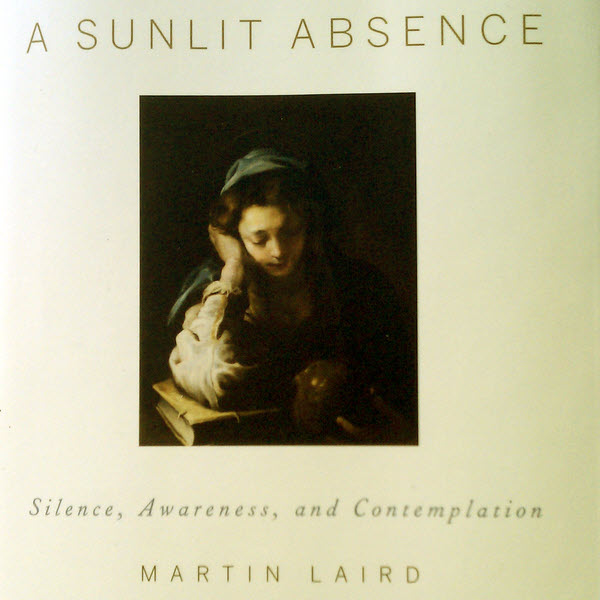
Not as boring as the guy on the cover.
9) A Sunlit Absence by Martin Laird
“In this companion volume to his bestselling Into the Silent Land, Laird focuses on a quality often overlooked by books on Christian meditation: a vast and flowing spaciousness that embraces both silence and sound, and transcends all subject/object dualisms. Drawing on the wisdom of great contemplatives from St. Augustine and St. Teresa of Avila to St. Hesychios, Simone Weil, and many others, Laird shows how we can uncover the deeper levels of awareness that rest within us like buried treasure waiting to be found. The key insight of the book is that as our practice matures, so will our experience of life’s ordeals, sorrows, and joys expand into generous, receptive maturity. We learn to see whatever difficulties we experience in meditation–boredom, lethargy, arrogance, depression, grief, anxiety–not as obstacles to be overcome but as opportunities to practice surrender to what is. With clarity and grace Laird shows how we can move away from identifying with our turbulent, ever-changing thoughts and emotions to the cultivation of a ‘sunlit absence’–the luminous awareness in which God’s presence can most profoundly be felt.”
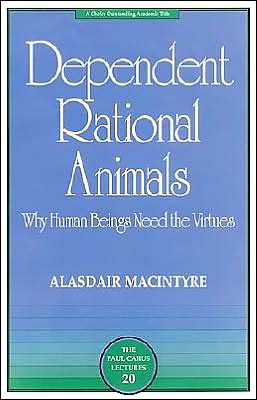
The plain cover of this book reveals nothing of its groundbreaking argument.
10) Dependent Rational Animals by Alasdair MacIntyre
“In Dependent Rational Animals, Alasdair MacIntyre compares humans to other intelligent animals, ultimately drawing remarkable conclusions about human social life and our treatment of those whom he argues we should no longer call ‘disabled.’ MacIntyre argues that human beings are independent, practical reasoners, but they are also dependent animals who must learn from each other in order to remain largely independent. To flourish, humans must acknowledge the importance of dependence and independence, both of which are developed in and through social relationships. This requires the development of a local community in which individuals discover their own “goods” through the discovery of a common Good.'”
And a few outstanding books I’ve started but haven’t yet finished: Under the Gaze of the Bible by Jean-Louis Chretien, Minding the Modern by Thomas Pfau, Maternal Thinking by Sara Ruddick, Underworld by Don DeLillo, and The Radiance of Being by Stratford Caldecott (2015 promises to be a Strat-reading year for me).
Enjoy these and get happy this New Year:
Other Cosmos TOP10 lists can be found here.
Previous Post
December 31, 2014
Christianity Does Not Endeavor to Save Christianity
Next Post
January 3, 2015 BREAKING — Pope Says We Are All Responsible for Climate Change
Browse Our Archives
Select a Category #WhyRemainCatholic Abortion Advent Anti-Catholicism Arts Atheism Beauty Benedict XVI Bible Book Review Catholic Cinema Comedy Cosmos: A Space-Time Odyssey Czesław Miłosz Dariusz Karłowicz Devil Easter Eastern Orthodoxy Economics Environment Family Famous Atheists Who Weren't Atheists Guest Post Hans Urs von Balthasar HHS Mandate History Imagination Interview Islam Jean-Luc Marion John Paul II Judaism Just War Lent Literature Little Sisters of the Poor Liturgy Martyrdom Music News Paganism Patristics Phenomenology Philosophy Pierre Hadot Poetry Poland Pop Culture Pope Francis Poverty Prayer Protestantism Rabelais Race Remi Brague Rene Girard Russia Sam Rocha Science & Religion SCOTUS Secularization Sexual Abuse Sexuality Silence Solidarity Stratford Caldecott Synod14 Terrorism Top 10 Uncategorized Walker Percy War Weakened Edition World War II World Youth Day WYD Krakow
Select a Month July 2017 June 2017 May 2017 April 2017 March 2017 February 2017 January 2017 December 2016 October 2016 September 2016 August 2016 July 2016 June 2016 May 2016 April 2016 March 2016 February 2016 January 2016 December 2015 November 2015 October 2015 September 2015 August 2015 July 2015 June 2015 May 2015 April 2015 March 2015 February 2015 January 2015 December 2014 November 2014 October 2014 September 2014 August 2014 July 2014 May 2014 April 2014 March 2014 February 2014 January 2014 December 2013 November 2013 October 2013 September 2013 August 2013 July 2013 June 2013 May 2013
Follow Us!
TAKE THE
Religious Wisdom Quiz
What book contains the shortest chapter in the Bible?
Select your answer to see how you score.
Haggai Obadiah Proverbs Psalms
Related posts from Cosmos The In Lost

The Surprising Anti-Capitalist Logic Behind the Catholic Church's...

How is Classical Philosophy is Like War?

Why Does the World's Leading Philosopher Remain a...

Biblical Authority After Babel Cannot Be Built Upon...
TRENDING AT PATHEOS Catholic

Creation, Preservation, and Teleology in Catholic Theology
As I write this, it is very early Monday morning. Like millions...

The Parable Of The Sower And The Word...
One of Christ’s most famous parables is that of the sower who...

Rejecting Doom: Christian Hope And Human Action
Christianity is a religion of hope. We are to have hope and...

Why I Choose the Eucharist Over the Sermon
Choose the Eucharist, Not the Sermon What are we supposed to get...

5 Design Elements Found in Spiritually Rooted Homes
Putting Spirituality Into Home Decor Our homes are more than our living...

Credo: A Story of God Told with the...
About 10 years ago, I began to imagine a personal "Credo" that...
view all Catholic blogs
Ad-Free & Subscriber Log-In Subscription Support
- About Us
- 2026 Calendar
- Videos
- Podcasts
- Library of World Religions
- Faith In Media Tracker
- Advertise With Us
- Write for Us
- Privacy Policy
- Terms of Service
- Do Not Sell My Data
- Contact Us
- Radiant Digital
- Manage Newsletter Subscriptions
- Unsubscribe From Notifications
- Sitemap
Copyright 2008-2026, Patheos. All rights reserved.
Subscription Support Ad-Free & Subscriber Log-In
Follow Patheos