
BuddhistCatholicContemplativeEvangelicalGeneral ChristianHinduJewishLatter-day SaintMuslimNew VisionsProgressive Christian
Beliefs
- Buddhist
- Catholic
- Contemplative
- Evangelical
- General Christian
- Hindu
- Jewish
- Latter-day Saint
- More Voices
- Muslim
- New Visions
- Pagan
- Progressive Christian
Topics
- Religion News
- Food and Religion
- Sports and Religion
- Religious Art
- Religious Music and Entertainment
- Religious Events
- History and Religion
- Style and Religion
- Politics and Religion
- Women in Religion
- Recreation Outdoors and Religion
- Business Finance and Religion
- Careers Workplace and Religion
- Education and Religion
- Family Parenting and Religion
- Health Fitness and Religion
- Home and Religion
- Relationships and Religion
- Technology and Religion
- Travel and Religion
Columnists
- Buddhist Columnists
- Business Finance and Religion Columnists
- Careers Workplace and Religion Columnists
- Catholic Columnists
- Contemplative Columnists
- Education and Religion Columnists
- Evangelists Columnists
- Family Parenting and Religion Columnists
- General Christian Columnists
- Health Fitness and Religion Columnists
- Hindu Columnists
- History and Religion Columnists
- Home and Religion Columnists
- Jewish Columnists
- More Voices Columnists
- Latter Day Columnists
- Muslim Columnists
- New Visions Columnists
- Nonreligious Columnists
- Pagan Columnists
- Politics and Religion Columnists
- Progressive Columnists
- Recreation Outdoors and Religion Columnists
- Relationships and Religion Columnists
- Religion News Columnists
- Religious Art Columnists
- Religious Events Columnists
- Religious Music and Entertainment Columnists
- Sports and Religion Columnists
- Style and Religion Columnists
- Technology and Religion Columnists
- Travel and Religion Columnists
- Women in Religion Columnists
Resource Library
- 2026 Calendar
- Library of World Religions
- The 100 Most Holy Places on Earth
- Patheos Answers
- Podcasts
- Videos
- Faith Leaders Database
- Anglican Episcopalian
- Bahai
- Baptist
- Buddhism
- Christianity
- Confucianism
- Eastern Orthodoxy
- Hinduism
- Holiness and Pentecostal
- ISKCON
- Islam
- Judaism
- Lutheran
- Methodist
- The Church of Jesus Christ of Latter-day Saints
- New Age
- Paganism
- Presbytarian and Reformed
- Protestantism
- Religion Behind the Scenes
- Roman Catholic
- Scientology
- Shia Islam
- Sikhism
- Sufism
- Sunni Islam
- Taoism
- Zen
- See all religions
Research Tools
 Ad-Free & Subscriber Log-In Subscription Support
Ad-Free & Subscriber Log-In Subscription Support
Follow Patheos 

- Trending:
- Forgiveness
- |
- Marriage
- |
- Consciousness
- |
- Death Penalty
- |
- Election
- |
- Halloween
 Cosmos The In Lost
- Home
- Catholic
- Two Nativities? Can You Divine the Original Christmas Story?
Two Nativities? Can You Divine the Original Christmas Story?
Last updated on: December 2, 2015 at 12:21 pm by Artur Rosman
Two Nativities? Can You Divine the Original Christmas Story? 2015-12-02T12:21:16-07:00 Artur Rosman
Patheos Explore the world's faith through different perspectives on religion and spirituality! Patheos has the views of the prevalent religions and spiritualities of the world.
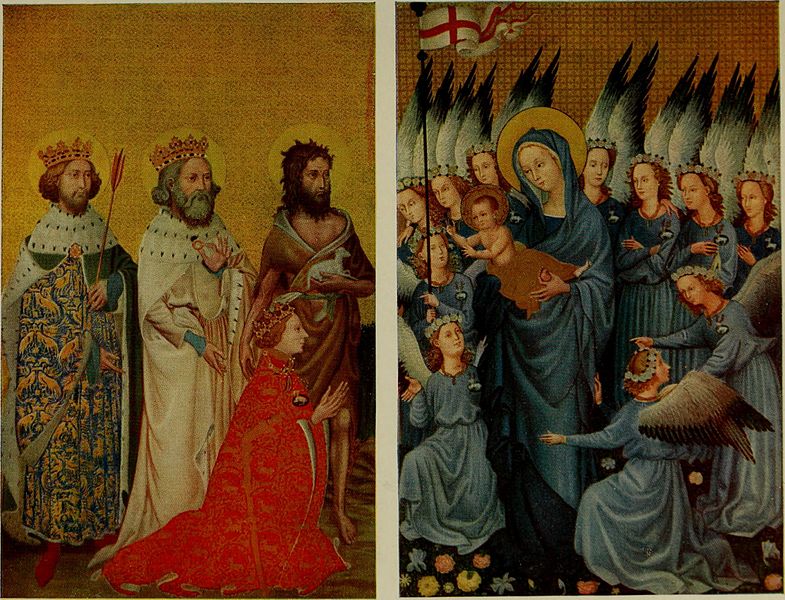
Here’s one of them.(Reproduction from Children’s Book of Art, 1909; Source: Wiki Commons, PD-Old-100).
Margaret Barker sure knows how to set up an argument. She goes all out in introduction to Christmas: Original Story. Bump, set, spike, Barker:
The Christmas stories are not only beautiful; their meaning is at the heart of the Christian faith, and they show how the first generations expressed their understanding of Jesus as both God and man. The creeds are later statements of Christian belief, summarizing the essentials. The first to be set out formally was the Apostles’ Creed, the declaration made before baptism in the Western churches which was in use in Rome at the beginning of the third century. It says nothing about the life of Jesus as depicted in the four Gospels, nothing about his parables and miracles, about debates with the Jews of his time, or about his disciples. It records his birth, and then his death and resurrection: Christmas and Easter. The events in Bethlehem and Jerusalem were recognized as the essentials of the faith. Of Christmas the Apostles’ Creed says: “Jesus Christ His only Son our Lord, who was conceived by the Holy Ghost, born of the Virgin Mary.”
Barker promises you the OS w/o BS.
The other creed most familiar to Christians is the Nicene Creed, recited at the Eucharist in churches of both Eastern and Western traditions. It was probably developed from a baptismal creed used in Palestine, was adopted by the Council of Nicaea in 325 CE, and expanded by the Council of Constantinople in 381 CE. The precise history of its development is complex. Like the Apostles’ Creed, it lists as essentials of the faith only the teachings about the birth and death of Jesus. Of Christmas it says: “One Lord Jesus Christ, the only-begotten Son of God, begotten of His Father before all worlds, God of God, Light of Light, Very God of very God, Begotten not made, Being of one substance with the Father, By whom all things were made: Who for us men and our salvation came down from heaven, And was incarnate by the Holy Ghost of the Virgin Mary, And was made man …’. This is the theology of the Christmas story, but it is in two stages. There is the only-begotten Son of God, begotten of his Father before all worlds, and there is the Son of God who became incarnate of the Virgin Mary.
Christians have always been careful to remember and distinguish the ‘two births’. The Orthodox Church calls Christmas ‘the Nativity according to the flesh’, a constant reminder of the ‘other’ birth. Augustine, who died in 430 CE, summarized this in a Christmas sermon:
“Our LORD Jesus Christ, the Son of Man as well as the Son of God, born of the Father without a Mother, created all days. By his birth from a Mother without a Father, he consecrated this day. In his divine birth he was invisible; in his human birth, visible; in both births, awe-inspiring.”
Both births are found in the New Testament: the Son of God was born in eternity, beyond our understanding, as John wrote in the prologue to his Gospel: “In the beginning was the Word …” (John 1.1). The Son of God became incarnate with the Bethlehem birth – the Virgin birth, and of this birth John wrote: “the Word became flesh and dwelt among us” (John 1.14). The Christmas story does not describe the birth of the Son of God; it describes the incarnation of the Son of God who was “born” in eternity. Throughout any exploration of the Christmas story there is the problem of words with a special meaning that differs from their normal use. If this mystical element is not recognized, the result can be a literalism that, far from being faithful to the fundamentals of the story, in fact distorts it.
At the heart of Jerusalem today is the Muslim shrine of the Dome of the Rock, erected on what is popularly believed to be the site of the ancient temple of Solomon. The first Muslim structure there had been the simple wooden building erected when Omar conquered the city in 637 CE, but this was replaced in 691 CE by the magnificent shrine familiar today. Two domes then dominated Jerusalem: the dome of the great Church of the Resurrection, built by Constantine over the site of Jesus’ tomb, and the Dome of the Rock. On the inner and outer faces of the octagonal arcade of the Muslim shrine there is a huge inscription, some 240 metres long: excerpts from the Qur’an are set amidst invocations and other pious words.
The first quotation on the outer face is an early Meccan surah:
“Say: He is Allah, the One and Only: Allah the Eternal, Absolute; He begetteth not, Nor is he begotten; And there is none like unto Him’ (Surah 112, ‘Purity of Faith’). An explanatory note adds here: ‘This is to negative the Christian idea of the godhead, the Father, the only-begotten Son etc.”
The inscription continues with: “Praise to Allah who begets no son and has no partner in (His) dominion …” (Surah 17, ‘The Night Journey’, 111). The explanatory note says: “A first step towards the understanding of Allah’s nature is to clear our mind of superstitions, such as that Allah begot a son.”
On the inner face of the arcade there is:
“O people of the Book!/ Commit no excesses/ In your religion: nor say/ Of Allah aught but the truth./ Christ Jesus the son of Mary/ Was (no more than)/ A Messenger of Allah,/ and His Word,/ Which He bestowed on Mary,/ And a Spirit proceeding/ From Him: so believe/ In Allah and His messengers.” (Surah 4, ‘The Women’, 171–2)
The explanatory note says: “Here the Christian attitude is condemned, which raises Jesus to an equality with Allah; in some cases venerates Mary almost to idolatry; and attributes a physical son to Allah.” The next piece is a third-person form of words attributed to Jesus himself in Surah 19.33–5:
With Barker you can always be sure the answer will have something to do with Temple mystical Theology, First Temple.
“Peace is on him, on the day of birth, on the day of death and on the day he is raised up again. This is Jesus son of Mary. It is a word of truth in which they doubt. It is not for God to take a son. Glory be to him when he decrees a thing. He only says ‘be’ and it is.”
Notes to this text explain:
“The disputations about the nature of Christ were vain, but also persistent and sanguinary. The modern Christian churches have thrown them into the background, but they would do well to abandon irrational dogmas altogether. Begetting a son is a physical act, depending on the needs of men’s animal nature. Allah Most High is independent of all needs, and it is derogatory to Him to attribute such an act to Him. It is merely a relic of pagan and anthropomorphic materialist superstitions.”
Here is the heart of the matter – the meaning of the Christmas stories. The inscription with its extracts from the Qur’an makes clear that the point at issue is the meaning of Sonship. Was it a question of physical begetting, or was there another meaning of ‘sonship’? In what sense was Jesus the Son of God, and how did the earliest Christian traditions record their beliefs? What was the original Christmas story?
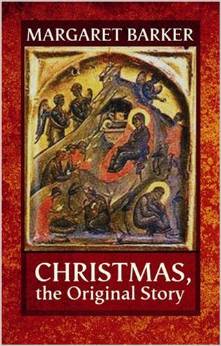
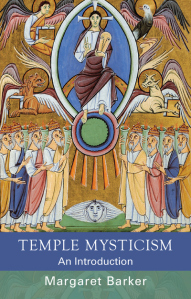
You can be sure, from what I’ve said in a previous post, the answer will involve Jewish-Christians claiming to recover the liturgical roots of Judaism (plus interesting connections with Islam)…

Next Post

December 25, 2014 Culture of Waste: Thesis → Antithesis → Santhasis
Browse Our Archives
Select a Category #WhyRemainCatholic Abortion Advent Anti-Catholicism Arts Atheism Beauty Benedict XVI Bible Book Review Catholic Cinema Comedy Cosmos: A Space-Time Odyssey Czesław Miłosz Dariusz Karłowicz Devil Easter Eastern Orthodoxy Economics Environment Family Famous Atheists Who Weren't Atheists Guest Post Hans Urs von Balthasar HHS Mandate History Imagination Interview Islam Jean-Luc Marion John Paul II Judaism Just War Lent Literature Little Sisters of the Poor Liturgy Martyrdom Music News Paganism Patristics Phenomenology Philosophy Pierre Hadot Poetry Poland Pop Culture Pope Francis Poverty Prayer Protestantism Rabelais Race Remi Brague Rene Girard Russia Sam Rocha Science & Religion SCOTUS Secularization Sexual Abuse Sexuality Silence Solidarity Stratford Caldecott Synod14 Terrorism Top 10 Uncategorized Walker Percy War Weakened Edition World War II World Youth Day WYD Krakow
Select a Month July 2017 June 2017 May 2017 April 2017 March 2017 February 2017 January 2017 December 2016 October 2016 September 2016 August 2016 July 2016 June 2016 May 2016 April 2016 March 2016 February 2016 January 2016 December 2015 November 2015 October 2015 September 2015 August 2015 July 2015 June 2015 May 2015 April 2015 March 2015 February 2015 January 2015 December 2014 November 2014 October 2014 September 2014 August 2014 July 2014 May 2014 April 2014 March 2014 February 2014 January 2014 December 2013 November 2013 October 2013 September 2013 August 2013 July 2013 June 2013 May 2013
Follow Us!
TAKE THE
Religious Wisdom Quiz
What does Jesus teach about serving others?
Select your answer to see how you score.
Whoever wants to be great must be a servant Only serve the rich Serve only family Never serve
Related posts from Cosmos The In Lost

The Surprising Anti-Capitalist Logic Behind the Catholic Church's...

The Holy Family as an Icon of World...

Biblical Authority After Babel Cannot Be Built Upon...
Western Civ Doesn't Need Tenured Radicals to Ruin...
TRENDING AT PATHEOS Catholic

Rejecting Doom: Christian Hope And Human Action
Christianity is a religion of hope. We are to have hope and...

It’s What Comes From Within Which Matters
One of the most difficult things for us to understand is why...

Why I Choose the Eucharist Over the Sermon
Choose the Eucharist, Not the Sermon What are we supposed to get...

5 Design Elements Found in Spiritually Rooted Homes
Putting Spirituality Into Home Decor Our homes are more than our living...

Credo: A Story of God Told with the...
About 10 years ago, I began to imagine a personal "Credo" that...

The Anatomy of Divine Revelation in Catholic Thought
The claim that God has made Himself known to human beings is...
view all Catholic blogs
Ad-Free & Subscriber Log-In Subscription Support
- About Us
- 2026 Calendar
- Videos
- Podcasts
- Library of World Religions
- Faith In Media Tracker
- Advertise With Us
- Write for Us
- Privacy Policy
- Terms of Service
- Do Not Sell My Data
- Contact Us
- Radiant Digital
- Manage Newsletter Subscriptions
- Unsubscribe From Notifications
- Sitemap
Copyright 2008-2026, Patheos. All rights reserved.
Subscription Support Ad-Free & Subscriber Log-In
Follow Patheos