
BuddhistCatholicContemplativeEvangelicalGeneral ChristianHinduJewishLatter-day SaintMuslimNew VisionsProgressive Christian
Beliefs
- Buddhist
- Catholic
- Contemplative
- Evangelical
- General Christian
- Hindu
- Jewish
- Latter-day Saint
- More Voices
- Muslim
- New Visions
- Pagan
- Progressive Christian
Topics
- Religion News
- Food and Religion
- Sports and Religion
- Religious Art
- Religious Music and Entertainment
- Religious Events
- History and Religion
- Style and Religion
- Politics and Religion
- Women in Religion
- Recreation Outdoors and Religion
- Business Finance and Religion
- Careers Workplace and Religion
- Education and Religion
- Family Parenting and Religion
- Health Fitness and Religion
- Home and Religion
- Relationships and Religion
- Technology and Religion
- Travel and Religion
Columnists
- Buddhist Columnists
- Business Finance and Religion Columnists
- Careers Workplace and Religion Columnists
- Catholic Columnists
- Contemplative Columnists
- Education and Religion Columnists
- Evangelists Columnists
- Family Parenting and Religion Columnists
- General Christian Columnists
- Health Fitness and Religion Columnists
- Hindu Columnists
- History and Religion Columnists
- Home and Religion Columnists
- Jewish Columnists
- More Voices Columnists
- Latter Day Columnists
- Muslim Columnists
- New Visions Columnists
- Nonreligious Columnists
- Pagan Columnists
- Politics and Religion Columnists
- Progressive Columnists
- Recreation Outdoors and Religion Columnists
- Relationships and Religion Columnists
- Religion News Columnists
- Religious Art Columnists
- Religious Events Columnists
- Religious Music and Entertainment Columnists
- Sports and Religion Columnists
- Style and Religion Columnists
- Technology and Religion Columnists
- Travel and Religion Columnists
- Women in Religion Columnists
Resource Library
- 2026 Calendar
- Library of World Religions
- The 100 Most Holy Places on Earth
- Patheos Answers
- Podcasts
- Videos
- Faith Leaders Database
- Anglican Episcopalian
- Bahai
- Baptist
- Buddhism
- Christianity
- Confucianism
- Eastern Orthodoxy
- Hinduism
- Holiness and Pentecostal
- ISKCON
- Islam
- Judaism
- Lutheran
- Methodist
- The Church of Jesus Christ of Latter-day Saints
- New Age
- Paganism
- Presbytarian and Reformed
- Protestantism
- Religion Behind the Scenes
- Roman Catholic
- Scientology
- Shia Islam
- Sikhism
- Sufism
- Sunni Islam
- Taoism
- Zen
- See all religions
Research Tools
 Ad-Free & Subscriber Log-In Subscription Support
Ad-Free & Subscriber Log-In Subscription Support
Follow Patheos 

- Trending:
- Forgiveness
- |
- Marriage
- |
- Consciousness
- |
- Death Penalty
- |
- Election
- |
- Halloween
 Cosmos The In Lost
- Home
- Catholic
- Doubt Douthat’s Donatist Precipice
Doubt Douthat’s Donatist Precipice
Last updated on: January 17, 2015 at 12:15 am by Artur Rosman
Doubt Douthat’s Donatist Precipice 2015-01-17T00:15:31-07:00 Artur Rosman
Patheos Explore the world's faith through different perspectives on religion and spirituality! Patheos has the views of the prevalent religions and spiritualities of the world.
Ross Douthat’s “The Pope and Precipice” has received plenty of attention of late. Rod Dreher presents it as an insightful piece and even invents a pithy Galatians 2 tag for it: resisting the pope to his face (while ignoring how Paul got into Peter’s face to argue for doctrinal development, or, even a break with the past practice of excluding Gentiles).
What I see in Douthat’s article instead is the specter of a shapeless, because baseless, fear.
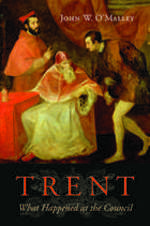
Trent: innovative, combative, and modern.
First of all, nothing was decided at the Synod. What we see is the sausage being made up close in ways that weren’t possible before social media. Vatican I was a sausage factory, as I’ve mentioned elsewhere. But so was Paul opposing Cephas. The early Christians were probably not as heroic as we think of them and possibly doctored their accounts of martyrdom. Constantine adopting Christianity was its own mess, as was the takeover of the bishoprics by corrupt Roman aristocrats afterwards. The Byzantine side was, and still is, Byzantine (there so much more than 1054!). Douthat mentions the middle ages with the kind of aversion you’d expect from Zmirak. But it is true they were a mess, and what a productive one! Everything before, during, and after Trent followed the same pattern. There is not a period in Church history that exhibits the kind of neat conservative unanimity and equilibrium Douthat measures the Synod (so far) against.
Douthat’s argument about conservatives being the heart and center of the Church is an old one from his book Bad Religion. But why couch Church debate in inappropriate American political categories? The Neo-Conservative heroes of that book have done much to bravely defend the below the navel issues (BNIs), but they’ve done much more to hurt the Church by caving in to the American conservative consensus on economics and American war-making in ways that undermine the BNI issues in the long run. They undermine the BNI’s because their positions in other areas of life are so un-Christian that their BNI sincerity is hard to buy at face value. Why aren’t all these other issues deal-breakers, or schism-makers?
Now let’s suppose that we do have an easing up on BNI issues through gradualism, meeting people where they are, but still upholding the ideal for them. Does it have to lead to an unraveling like the mainline? Why can’t it be like Orthodoxy, which is much more conservative, not always in good ways, than Catholicism.
Furthermore, there is not a neat line between theological conservatism and orthodoxy. When it comes to the issues of doctrinal development, Rowan Williams has argued in his book Arius: Heresy and Tradition that Arius was the most conservative theologian at Nicea, whereas his orthodox opponents, in their formulations of doctrine, left the windows open for God’s grace to work.
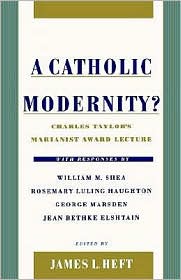
What if Catholicism and modernity are in cahoots?
As for total theological innovations or breaks (should there be one to issue from the Synod–we don’t know and it’s best to be agnostic about it)… there have been plenty in the West. The eventually usually are pressed into the category of doctrinal development. The imposition of universal priestly celibacy very late in Church history is one example. The break with the strict monotheism of Judaism with the formulation of the Trinity is another one; one which the faithful are still having trouble absorbing. On a subtler level, the move toward auricular confession and the encouragement to participate in it much more frequently (we’re not the only period with confession issues, if they really are that) changed Church practice to such an extent that Taylor argues in his A Catholic Modernity? it helped to usher in the development of the modern private and buffered individual.
On the moral level the Church has a long history of rejecting prudish moralism as heresy. Early on there were the holy-rollers of Montanism whose rigorism appealed to no less a figure than the first truly systematic Western Christian theologian, Tertullian. They eventually disappeared.
But more importantly for our purposes there were the Donatists (See: Peter Brown’s account in his biography of Augustine) who rejected the validity of the sacraments administered by priests who had repudiated their faith during the Persecution of Diocletian. Even though a commission appointed by Pope Miltiades ruled against the Donatists by taking something like a gradualist line. But the Donatists persisted, outnumbering the orthodox in many regions, proclaiming themselves as the true Church. Then they eventually died out.
Do we not see the same sort of divisive self-righteous moralism in the following (already apocalyptic) threat from Douthat?
SUCH a reversal would put the church on the brink of a precipice. Of course it would be welcomed by some progressive Catholics and hailed by the secular press. But it would leave many of the church’s bishops and theologians in an untenable position, and it would sow confusion among the church’s orthodox adherents — encouraging doubt and defections, apocalypticism and paranoia (remember there is another pope still living!) and eventually even a real schism.
Those adherents are, yes, a minority — sometimes a small minority — among self-identified Catholics in the West. But they are the people who have done the most to keep the church vital in an age of institutional decline: who have given their energy and time and money in an era when the church is stained by scandal, who have struggled to raise families and live up to demanding teachings, who have joined the priesthood and religious life in an age when those vocations are not honored as they once were. They have kept the faith amid moral betrayals by their leaders; they do not deserve a theological betrayal.

The church as neither liberal nor conservative nor fearful.
The real betrayal would be to give into Douthat’s directive of BE VERY AFRAID (sky is falling, schism broiling, institutional collapse is around the corner)!!!
It all reminds me too much of the automatic apocalyptic mind chatter (all those disastrous “what ifs” we keep replaying in our minds) Martin Laird deconstructs in his book about contemplation.
But is there not a much greater appeal in John Paul II’s “Be not afraid”?
This is from JPII’s homily for the inauguration of his pontificate:
Brothers and sisters, do not be afraid to welcome Christ and accept his power. Help the Pope and all those who wish to serve Christ and with Christ’s power to serve the human person and the whole of mankind. Do not be afraid. Open wide the doors for Christ. To his saving power open the boundaries of States, economic and political systems, the vast fields of culture, civilization and development. Do not be afraid. Christ knows “what is in man.” He alone knows it.
Recently C.C. Pecknold proposed the “Dominican Option” along the Polish pope’s open lines:
Dominic told his men to go into the world without fear. They should study, they should pray, and they should preach. His Order harmonized the life of a contemplative with the activity of an evangelist. This meant intellectual training. One only needs to think of St. Thomas Aquinas at the University of Paris to understand the impact this had. Dominicans studied other languages, and other religions, in order to preach more effectively. Aquinas himself wrote the Summa Contra Gentiles precisely to assist the brothers’ preaching to Muslims.
I only propose these things because Douthat’s choice of fear and retrenchment appeals to my own easily spooked personality. To be honest I’d rather hide behind the walls rather than raze the bastions, whether in religion or life, which amounts to the same thing.
What attracts me to the vision and practice of Francis, however it might play itself out in the Synod, is that he is not afraid to take on problems little old church ladies (and frankly the rest of us) only whisper about after Mass. Forget the conservative and liberal label-traps, there is something more profound going on here.
I seem to have read somewhere that fear is the opposite of hope. Fear seems to be the default setting of the human mind (or maybe only mine?). This why the vision of openness and hope offered by Francis is much more appealing to me than Douthat’s Donatist fear of contamination, sin, and change.
The whispers of fear should not have the final word (I keep repeating to myself):
Previous Post

October 29, 2014
The Church's Geopolitical Chess Strategy
Next Post
October 31, 2014 Reformation Day is an Oops?
Browse Our Archives
Select a Category #WhyRemainCatholic Abortion Advent Anti-Catholicism Arts Atheism Beauty Benedict XVI Bible Book Review Catholic Cinema Comedy Cosmos: A Space-Time Odyssey Czesław Miłosz Dariusz Karłowicz Devil Easter Eastern Orthodoxy Economics Environment Family Famous Atheists Who Weren't Atheists Guest Post Hans Urs von Balthasar HHS Mandate History Imagination Interview Islam Jean-Luc Marion John Paul II Judaism Just War Lent Literature Little Sisters of the Poor Liturgy Martyrdom Music News Paganism Patristics Phenomenology Philosophy Pierre Hadot Poetry Poland Pop Culture Pope Francis Poverty Prayer Protestantism Rabelais Race Remi Brague Rene Girard Russia Sam Rocha Science & Religion SCOTUS Secularization Sexual Abuse Sexuality Silence Solidarity Stratford Caldecott Synod14 Terrorism Top 10 Uncategorized Walker Percy War Weakened Edition World War II World Youth Day WYD Krakow
Select a Month July 2017 June 2017 May 2017 April 2017 March 2017 February 2017 January 2017 December 2016 October 2016 September 2016 August 2016 July 2016 June 2016 May 2016 April 2016 March 2016 February 2016 January 2016 December 2015 November 2015 October 2015 September 2015 August 2015 July 2015 June 2015 May 2015 April 2015 March 2015 February 2015 January 2015 December 2014 November 2014 October 2014 September 2014 August 2014 July 2014 May 2014 April 2014 March 2014 February 2014 January 2014 December 2013 November 2013 October 2013 September 2013 August 2013 July 2013 June 2013 May 2013
Follow Us!
TAKE THE
Religious Wisdom Quiz
What does the Greek word 'Christos' mean?
Select your answer to see how you score.
Anointed One Lord Redeemer Savior
Related posts from Cosmos The In Lost

The Surprising Anti-Capitalist Logic Behind the Catholic Church's...


The Holy Family as an Icon of World...

How is Classical Philosophy is Like War?
TRENDING AT PATHEOS Catholic

Rejecting Doom: Christian Hope And Human Action
Christianity is a religion of hope. We are to have hope and...

It’s What Comes From Within Which Matters
One of the most difficult things for us to understand is why...

Why I Choose the Eucharist Over the Sermon
Choose the Eucharist, Not the Sermon What are we supposed to get...

5 Design Elements Found in Spiritually Rooted Homes
Putting Spirituality Into Home Decor Our homes are more than our living...

Credo: A Story of God Told with the...
About 10 years ago, I began to imagine a personal "Credo" that...

The Anatomy of Divine Revelation in Catholic Thought
The claim that God has made Himself known to human beings is...
view all Catholic blogs
Ad-Free & Subscriber Log-In Subscription Support
- About Us
- 2026 Calendar
- Videos
- Podcasts
- Library of World Religions
- Faith In Media Tracker
- Advertise With Us
- Write for Us
- Privacy Policy
- Terms of Service
- Do Not Sell My Data
- Contact Us
- Radiant Digital
- Manage Newsletter Subscriptions
- Unsubscribe From Notifications
- Sitemap
Copyright 2008-2026, Patheos. All rights reserved.
Subscription Support Ad-Free & Subscriber Log-In
Follow Patheos