
BuddhistCatholicContemplativeEvangelicalGeneral ChristianHinduJewishLatter-day SaintMuslimNew VisionsProgressive Christian
Beliefs
- Buddhist
- Catholic
- Contemplative
- Evangelical
- General Christian
- Hindu
- Jewish
- Latter-day Saint
- More Voices
- Muslim
- New Visions
- Pagan
- Progressive Christian
Topics
- Religion News
- Food and Religion
- Sports and Religion
- Religious Art
- Religious Music and Entertainment
- Religious Events
- History and Religion
- Style and Religion
- Politics and Religion
- Women in Religion
- Recreation Outdoors and Religion
- Business Finance and Religion
- Careers Workplace and Religion
- Education and Religion
- Family Parenting and Religion
- Health Fitness and Religion
- Home and Religion
- Relationships and Religion
- Technology and Religion
- Travel and Religion
Columnists
- Buddhist Columnists
- Business Finance and Religion Columnists
- Careers Workplace and Religion Columnists
- Catholic Columnists
- Contemplative Columnists
- Education and Religion Columnists
- Evangelists Columnists
- Family Parenting and Religion Columnists
- General Christian Columnists
- Health Fitness and Religion Columnists
- Hindu Columnists
- History and Religion Columnists
- Home and Religion Columnists
- Jewish Columnists
- More Voices Columnists
- Latter Day Columnists
- Muslim Columnists
- New Visions Columnists
- Nonreligious Columnists
- Pagan Columnists
- Politics and Religion Columnists
- Progressive Columnists
- Recreation Outdoors and Religion Columnists
- Relationships and Religion Columnists
- Religion News Columnists
- Religious Art Columnists
- Religious Events Columnists
- Religious Music and Entertainment Columnists
- Sports and Religion Columnists
- Style and Religion Columnists
- Technology and Religion Columnists
- Travel and Religion Columnists
- Women in Religion Columnists
Resource Library
- 2026 Calendar
- Library of World Religions
- The 100 Most Holy Places on Earth
- Patheos Answers
- Podcasts
- Videos
- Faith Leaders Database
- Anglican Episcopalian
- Bahai
- Baptist
- Buddhism
- Christianity
- Confucianism
- Eastern Orthodoxy
- Hinduism
- Holiness and Pentecostal
- ISKCON
- Islam
- Judaism
- Lutheran
- Methodist
- The Church of Jesus Christ of Latter-day Saints
- New Age
- Paganism
- Presbytarian and Reformed
- Protestantism
- Religion Behind the Scenes
- Roman Catholic
- Scientology
- Shia Islam
- Sikhism
- Sufism
- Sunni Islam
- Taoism
- Zen
- See all religions
Research Tools
 Ad-Free & Subscriber Log-In Subscription Support
Ad-Free & Subscriber Log-In Subscription Support
Follow Patheos 

- Trending:
- Forgiveness
- |
- Marriage
- |
- Consciousness
- |
- Death Penalty
- |
- Election
- |
- Halloween
 Cosmos The In Lost
- Home
- Catholic
- MacIntyre’s Revelatory Argument About Disability
MacIntyre’s Revelatory Argument About Disability
Last updated on: January 28, 2015 at 11:22 am by Artur Rosman
MacIntyre’s Revelatory Argument About Disability 2015-01-28T11:22:13-07:00 Artur Rosman
Patheos Explore the world's faith through different perspectives on religion and spirituality! Patheos has the views of the prevalent religions and spiritualities of the world.
There is nothing like the thrill of discovering a new vein of thought. The only thrill greater is the discovery of a new vein of thought in a thinker you thought you knew.
Alasdair MacIntyre is someone who is frequently quoted in theology and philosophy papers. You see his After Virtue referenced all over the place. You might also find mentions of his God, Philosophy, University and many tiresome variations on the title Whose Justice? Which Rationality?
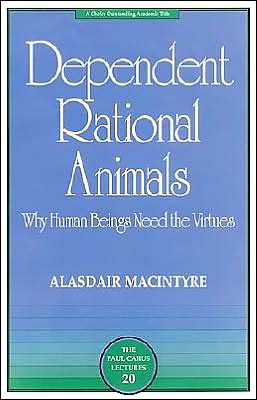
The plain cover of this book reveals nothing of its groundbreaking argument.
You almost never hear about the work Dependent Rational Animals. I think we are all the worse for it. This is a remarkable book with an opening salvo as memorable as the one in After Virtue.
The topic of Dependent Rational Animals is human inter-dependence, with the emphasis on dependence. It is a topic I have broached many times, ror example, when talking about Kristeva’s appreciation of St. John Paul II and in the context of the extended family’s collapse.
MacIntyre talks approaches dependence from an interesting angle. He presents disability as a revelatory situation. It is revelatory because the extreme case, although MacIntyre argues the extreme case is actually more commonplace than we like to remember, reveals to us something that is the case for all of us:
We human beings are vulnerable to many kinds of affliction and most of us are at some time afflicted by serious ills. How we cope is only in small part up to us. It is most often to others that we owe our survival, let alone our flourishing, as we encounter bodily illness and injury, inadequate nutrition, mental defect and disturbance, and human aggression and neglect. This dependence on particular others for protection and sustenance is most obvious in early childhood and in old age. But between these first and last stages our lives are characteristically marked by longer or shorter periods of injury, illness or other disablement, and some among us are disabled for their entire lives.
These two related sets of facts, those concerning our vulnerabilities and afflictions and those concerning the extent of our dependence on particular others are so evidently of singular importance that it might seem that no account of the human condition whose authors hoped to achieve credibility could avoid giving them a central place. Yet the history of Western moral philosophy suggests otherwise. From Plato to Moore and since, there are usually, with some rare exceptions , only passing references to human vulnerability and affliction and to the connections between them and our dependence on others. Some of the facts of human limitation and of our consequent need of cooperation with others are more generally acknowledged, but for the most part only then to be put on one side.
And when the ill, the injured and the otherwise disabled are presented in the pages of moral philosophy books, it is almost always exclusively as possible subjects of benevolence by moral agents who are themselves presented as though they were continuously rational, healthy, and untroubled. So we are invited, when we think of disability, to think of “the disabled” as “them,” as other than “us,” as a separate class, not as ourselves as we have been, sometimes are now, and may well be in the future.
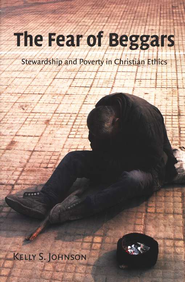
The cover is enough to scare you off, isn’t it? Yet, the beggar remains.
This passage also throws a new light upon the Walker Percy fragment we featured yesterday. The stigma attached to depression and other mental diseases make them that much more difficult to cope with. The irony is that these diseases lead to isolation, but the lack of acceptance and understanding associated with them only leads to more isolation. It is a vicious circle propagated by the cult of self-reliance and success. The unwillingness to acknowledge such problems misses a revelatory moment.
In the end I think this also is related to our fear of beggars. The beggar’s reliance upon our help is so overwhelming that one feels the need to ignore them in order not to see a humbling truth about oneself.
Luigi Giussani liked to say the beggar is the protagonist of history, rather than the autonomous individual destined for endless economic dynamism. To not understand the fact that dependence is a necessary condition of our lives, rather than a temporary condition, is to miss a great deal about what it means to be human–pretty much most of what it means to be human.
There is no greater witness to this than John Paul II during the last years of his pontificate.
The ridicule he endured in the media for his disabilities shows how difficult a truth this is to swallow, but swallow we will.
Previous Post

October 21, 2014
Percy on Mental Hygiene: You Are Entitled to Your Depression
Next Post
October 23, 2014 What We Want is a Spirituality of Wiping Bottoms and Breastfeeding!
Browse Our Archives
Select a Category #WhyRemainCatholic Abortion Advent Anti-Catholicism Arts Atheism Beauty Benedict XVI Bible Book Review Catholic Cinema Comedy Cosmos: A Space-Time Odyssey Czesław Miłosz Dariusz Karłowicz Devil Easter Eastern Orthodoxy Economics Environment Family Famous Atheists Who Weren't Atheists Guest Post Hans Urs von Balthasar HHS Mandate History Imagination Interview Islam Jean-Luc Marion John Paul II Judaism Just War Lent Literature Little Sisters of the Poor Liturgy Martyrdom Music News Paganism Patristics Phenomenology Philosophy Pierre Hadot Poetry Poland Pop Culture Pope Francis Poverty Prayer Protestantism Rabelais Race Remi Brague Rene Girard Russia Sam Rocha Science & Religion SCOTUS Secularization Sexual Abuse Sexuality Silence Solidarity Stratford Caldecott Synod14 Terrorism Top 10 Uncategorized Walker Percy War Weakened Edition World War II World Youth Day WYD Krakow
Select a Month July 2017 June 2017 May 2017 April 2017 March 2017 February 2017 January 2017 December 2016 October 2016 September 2016 August 2016 July 2016 June 2016 May 2016 April 2016 March 2016 February 2016 January 2016 December 2015 November 2015 October 2015 September 2015 August 2015 July 2015 June 2015 May 2015 April 2015 March 2015 February 2015 January 2015 December 2014 November 2014 October 2014 September 2014 August 2014 July 2014 May 2014 April 2014 March 2014 February 2014 January 2014 December 2013 November 2013 October 2013 September 2013 August 2013 July 2013 June 2013 May 2013
Follow Us!
TAKE THE
Religious Wisdom Quiz
Where was Jesus Born?
Select your answer to see how you score.
Bethlehem Shiloh Jerusalem Nazareth
Related posts from Cosmos The In Lost

The Surprising Anti-Capitalist Logic Behind the Catholic Church's...

The Holy Family as an Icon of World...

How is Classical Philosophy is Like War?

Why Does the World's Leading Philosopher Remain a...
TRENDING AT PATHEOS Catholic

Creation, Preservation, and Teleology in Catholic Theology
As I write this, it is very early Monday morning. Like millions...

The Parable Of The Sower And The Word...
One of Christ’s most famous parables is that of the sower who...

Rejecting Doom: Christian Hope And Human Action
Christianity is a religion of hope. We are to have hope and...

Why I Choose the Eucharist Over the Sermon
Choose the Eucharist, Not the Sermon What are we supposed to get...

5 Design Elements Found in Spiritually Rooted Homes
Putting Spirituality Into Home Decor Our homes are more than our living...

Credo: A Story of God Told with the...
About 10 years ago, I began to imagine a personal "Credo" that...
view all Catholic blogs
Ad-Free & Subscriber Log-In Subscription Support
- About Us
- 2026 Calendar
- Videos
- Podcasts
- Library of World Religions
- Faith In Media Tracker
- Advertise With Us
- Write for Us
- Privacy Policy
- Terms of Service
- Do Not Sell My Data
- Contact Us
- Radiant Digital
- Manage Newsletter Subscriptions
- Unsubscribe From Notifications
- Sitemap
Copyright 2008-2026, Patheos. All rights reserved.
Subscription Support Ad-Free & Subscriber Log-In
Follow Patheos