
BuddhistCatholicContemplativeEvangelicalGeneral ChristianHinduJewishLatter-day SaintMuslimNew VisionsProgressive Christian
Beliefs
- Buddhist
- Catholic
- Contemplative
- Evangelical
- General Christian
- Hindu
- Jewish
- Latter-day Saint
- More Voices
- Muslim
- New Visions
- Pagan
- Progressive Christian
Topics
- Religion News
- Food and Religion
- Sports and Religion
- Religious Art
- Religious Music and Entertainment
- Religious Events
- History and Religion
- Style and Religion
- Politics and Religion
- Women in Religion
- Recreation Outdoors and Religion
- Business Finance and Religion
- Careers Workplace and Religion
- Education and Religion
- Family Parenting and Religion
- Health Fitness and Religion
- Home and Religion
- Relationships and Religion
- Technology and Religion
- Travel and Religion
Columnists
- Buddhist Columnists
- Business Finance and Religion Columnists
- Careers Workplace and Religion Columnists
- Catholic Columnists
- Contemplative Columnists
- Education and Religion Columnists
- Evangelists Columnists
- Family Parenting and Religion Columnists
- General Christian Columnists
- Health Fitness and Religion Columnists
- Hindu Columnists
- History and Religion Columnists
- Home and Religion Columnists
- Jewish Columnists
- More Voices Columnists
- Latter Day Columnists
- Muslim Columnists
- New Visions Columnists
- Nonreligious Columnists
- Pagan Columnists
- Politics and Religion Columnists
- Progressive Columnists
- Recreation Outdoors and Religion Columnists
- Relationships and Religion Columnists
- Religion News Columnists
- Religious Art Columnists
- Religious Events Columnists
- Religious Music and Entertainment Columnists
- Sports and Religion Columnists
- Style and Religion Columnists
- Technology and Religion Columnists
- Travel and Religion Columnists
- Women in Religion Columnists
Resource Library
- 2026 Calendar
- Library of World Religions
- The 100 Most Holy Places on Earth
- Patheos Answers
- Podcasts
- Videos
- Faith Leaders Database
- Anglican Episcopalian
- Bahai
- Baptist
- Buddhism
- Christianity
- Confucianism
- Eastern Orthodoxy
- Hinduism
- Holiness and Pentecostal
- ISKCON
- Islam
- Judaism
- Lutheran
- Methodist
- The Church of Jesus Christ of Latter-day Saints
- New Age
- Paganism
- Presbytarian and Reformed
- Protestantism
- Religion Behind the Scenes
- Roman Catholic
- Scientology
- Shia Islam
- Sikhism
- Sufism
- Sunni Islam
- Taoism
- Zen
- See all religions
Research Tools
 Ad-Free & Subscriber Log-In Subscription Support
Ad-Free & Subscriber Log-In Subscription Support
Follow Patheos 

- Trending:
- Forgiveness
- |
- Marriage
- |
- Consciousness
- |
- Death Penalty
- |
- Election
- |
- Halloween
 Cosmos The In Lost
- Home
- Catholic
- No Devil, No God
No Devil, No God
Last updated on: September 24, 2014 at 4:52 pm by Artur Rosman
No Devil, No God 2014-09-24T16:52:58-07:00 Artur Rosman
Patheos Explore the world's faith through different perspectives on religion and spirituality! Patheos has the views of the prevalent religions and spiritualities of the world.
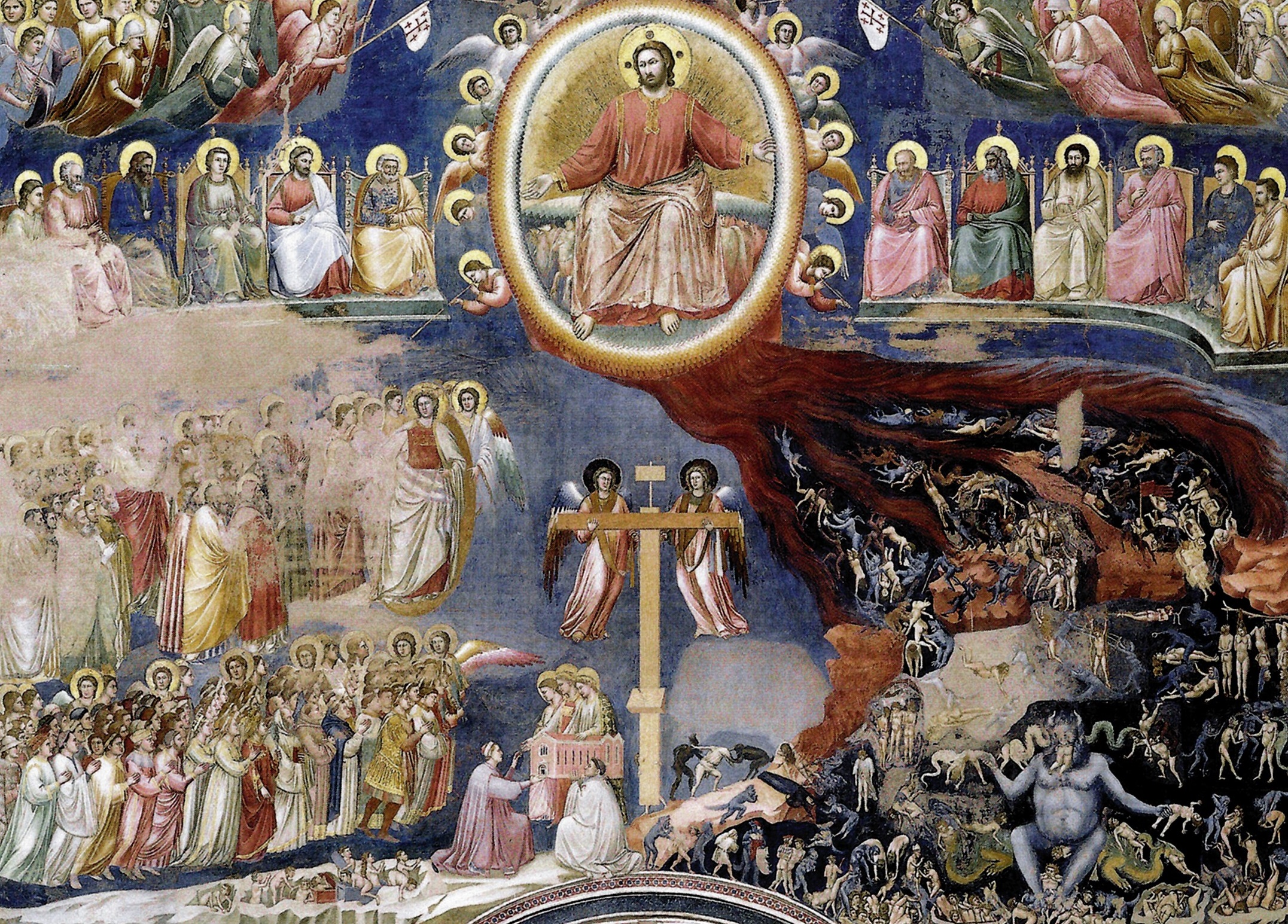
Medieval Last Judgments do justice to the narrative necessity (as opposed to doctrinal) of the devil for the Incarnation to make sense. This one is Giotto’s from the Scrovegni Chapel (1307).
There is an amusing episode recounted by the distinguished historian Tony Judt in his NYRB obituary for Leszek Kolakowski:
Kolakowski had a knack for nailing fundamental problems.
The seductively suggestive title of Kołakowski’s talk was “The Devil in History” [I believe it was renamed “Politics and the Devil” and collected in Modernity on Endless Trial] For a while there was silence as students, faculty, and visitors listened intently. Kołakowski’s writings were well known to many of those present and his penchant for irony and close reasoning was familiar. But even so, the audience was clearly having trouble following his argument. Try as they would, they could not decode the metaphor. An air of bewildered mystification started to fall across the auditorium. And then, about a third of the way through, my neighbor—Timothy Garton Ash—leaned across. “I’ve got it,” he whispered. “He really is talking about the Devil.” And so he was.

I was thrilled by the recently released Oliver Davies book, Theology of Transformation, because he articulates a vision of an unadulterated Christianity that has nothing to fear from the latest scientific understandings of the world. In fact, Davies believes that what he calls the present Second Scientific Revolution, with its emphasis upon how body and mind are enmeshed, is much more amenable to Christian incarnational belief than the extreme dualism of the First Scientific Revolution.
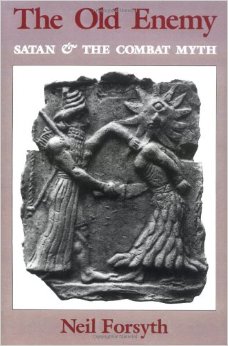
But the devil was almost totally missing from the Davies book. I believe that the Evil One only made appearances in adjectival and adverbial form as “demonic.” Neil Forsyth in his massive study, The Old Enemy: Satan and the Combat Myth suggests why this might be a very big omission:
Together, forever?
“No Devil, no God,” as John Wesley put it, but this idea is not a peculiarity of the devil-soaked Protestant imagination; it is basic to the Christian story. It is mainly Satan, in fact, who give to Christianity the mythological dimension that has been so much at issues in modern theology, from the “demythologizing tradition” initiated by Rudolf Bultmann to the book which a few years ago disturbed the quiet waters of English theology, The Myth of God Incarnate. The depredations and tyranny of Satan are what motivate the incarnation story and that against which the activities of Christ are directed.
Statements like these drive my theologian friends crazy, because they take them as ontological or dogmatic statements. But it is easy to see how the almost universal disappearance of the Devil from modern Christian theology takes the teeth, not to mention the horns, out of the Christian narrative and ultimately the faith. In the end one wonders what precisely is Christ saving us from. Where’s the action, man?
I was not entirely surprised Davies made this omission–it’s all too typical. However, he could have taken advantage of a resource from my TOP10 philosophy list, I mean, Rene Girard.
Girard’s theories can be distilled into the following: a) human beings copy all their desires from each other b) this copying usually leads to conflict between rivals c) once the desire miming gets out of control it can destabilize a whole society d) the said society usually regains its equilibrium and peace through the unification caused by a mob killing of a scapegoat (human or animal).
Girard makes a novel move in the book mentioned in yesterday’s list Things Hidden Since the Foundation of the World and in the following passage from a more recent book, I See Satan Fall Like Lightning, by identifying this process with Satan:
That’s not Satan, that’s St. Paul. Book design fumble!
[Satan] sustains himself as a parasite on what God creates by imitating God in a manner that is jealous, grotesque, perverse, and as contrary as possible to the upright and obedient imitation of Jesus. To repeat, Satan is an imitator in the rivalristic sense of the word. His kingdom is a caricature of the Kingdom of God. Satan is the ape of God. To affirm that Satan has no actual being, as Christian theology has done, means that Christianity does not oblige us to see him as someone who really exists. The interpretation that assimilates Satan to rivalristic contagion and its consequences enables us for the first time to acknowledge the importance of the prince of this world without also endowing him with personal being. Traditional theology has rightly refused to do the latter.

We’ve always been told, especially by C.S. Lewis fans, that Satan’s greatest trick was making us believe he doesn’t exist. But what if his greatest trick consists in making us believe he actually does exist, that he has independent ontological weight?
The further implication from the Girard passage above is that, like in Milbank’s Being Reconciled, even though Milbank intensely dislikes Girard, the Kingdom of God is one of peace and reconciliation–but not without spiritual combat first!
To wrap things up here’s Bono as MacPhisto brilliantly prank-calling strangers during concerts before U2 sold its soul to the Apple demon:
Previous Post

September 23, 2014
Ruined by Books 2: My TOP10 Philosophy List
Next Post

September 25, 2014 On Not Fighting Matt Walsh's Cultural Warrior Contagion
Browse Our Archives
Select a Category #WhyRemainCatholic Abortion Advent Anti-Catholicism Arts Atheism Beauty Benedict XVI Bible Book Review Catholic Cinema Comedy Cosmos: A Space-Time Odyssey Czesław Miłosz Dariusz Karłowicz Devil Easter Eastern Orthodoxy Economics Environment Family Famous Atheists Who Weren't Atheists Guest Post Hans Urs von Balthasar HHS Mandate History Imagination Interview Islam Jean-Luc Marion John Paul II Judaism Just War Lent Literature Little Sisters of the Poor Liturgy Martyrdom Music News Paganism Patristics Phenomenology Philosophy Pierre Hadot Poetry Poland Pop Culture Pope Francis Poverty Prayer Protestantism Rabelais Race Remi Brague Rene Girard Russia Sam Rocha Science & Religion SCOTUS Secularization Sexual Abuse Sexuality Silence Solidarity Stratford Caldecott Synod14 Terrorism Top 10 Uncategorized Walker Percy War Weakened Edition World War II World Youth Day WYD Krakow
Select a Month July 2017 June 2017 May 2017 April 2017 March 2017 February 2017 January 2017 December 2016 October 2016 September 2016 August 2016 July 2016 June 2016 May 2016 April 2016 March 2016 February 2016 January 2016 December 2015 November 2015 October 2015 September 2015 August 2015 July 2015 June 2015 May 2015 April 2015 March 2015 February 2015 January 2015 December 2014 November 2014 October 2014 September 2014 August 2014 July 2014 May 2014 April 2014 March 2014 February 2014 January 2014 December 2013 November 2013 October 2013 September 2013 August 2013 July 2013 June 2013 May 2013
Follow Us!
TAKE THE
Religious Wisdom Quiz
Who was Jochebed?
Select your answer to see how you score.
David's mother Jesus' mother Moses' mother Samuel's mother
Related posts from Cosmos The In Lost

What is the Source of Our Culture of...

The Stanford Memorial Resolution for René Girard

Don't Look to Secularism if You Want to...
Slavoj Žižek: There's a Special Place in Hell...
TRENDING AT PATHEOS Catholic

Rejecting Doom: Christian Hope And Human Action
Christianity is a religion of hope. We are to have hope and...

It’s What Comes From Within Which Matters
One of the most difficult things for us to understand is why...

Why I Choose the Eucharist Over the Sermon
Choose the Eucharist, Not the Sermon What are we supposed to get...

5 Design Elements Found in Spiritually Rooted Homes
Putting Spirituality Into Home Decor Our homes are more than our living...

Credo: A Story of God Told with the...
About 10 years ago, I began to imagine a personal "Credo" that...

The Anatomy of Divine Revelation in Catholic Thought
The claim that God has made Himself known to human beings is...
view all Catholic blogs
Ad-Free & Subscriber Log-In Subscription Support
- About Us
- 2026 Calendar
- Videos
- Podcasts
- Library of World Religions
- Faith In Media Tracker
- Advertise With Us
- Write for Us
- Privacy Policy
- Terms of Service
- Do Not Sell My Data
- Contact Us
- Radiant Digital
- Manage Newsletter Subscriptions
- Unsubscribe From Notifications
- Sitemap
Copyright 2008-2026, Patheos. All rights reserved.
Subscription Support Ad-Free & Subscriber Log-In
Follow Patheos