
BuddhistCatholicContemplativeEvangelicalGeneral ChristianHinduJewishLatter-day SaintMuslimNew VisionsProgressive Christian
Beliefs
- Buddhist
- Catholic
- Contemplative
- Evangelical
- General Christian
- Hindu
- Jewish
- Latter-day Saint
- More Voices
- Muslim
- New Visions
- Pagan
- Progressive Christian
Topics
- Religion News
- Food and Religion
- Sports and Religion
- Religious Art
- Religious Music and Entertainment
- Religious Events
- History and Religion
- Style and Religion
- Politics and Religion
- Women in Religion
- Recreation Outdoors and Religion
- Business Finance and Religion
- Careers Workplace and Religion
- Education and Religion
- Family Parenting and Religion
- Health Fitness and Religion
- Home and Religion
- Relationships and Religion
- Technology and Religion
- Travel and Religion
Columnists
- Buddhist Columnists
- Business Finance and Religion Columnists
- Careers Workplace and Religion Columnists
- Catholic Columnists
- Contemplative Columnists
- Education and Religion Columnists
- Evangelists Columnists
- Family Parenting and Religion Columnists
- General Christian Columnists
- Health Fitness and Religion Columnists
- Hindu Columnists
- History and Religion Columnists
- Home and Religion Columnists
- Jewish Columnists
- More Voices Columnists
- Latter Day Columnists
- Muslim Columnists
- New Visions Columnists
- Nonreligious Columnists
- Pagan Columnists
- Politics and Religion Columnists
- Progressive Columnists
- Recreation Outdoors and Religion Columnists
- Relationships and Religion Columnists
- Religion News Columnists
- Religious Art Columnists
- Religious Events Columnists
- Religious Music and Entertainment Columnists
- Sports and Religion Columnists
- Style and Religion Columnists
- Technology and Religion Columnists
- Travel and Religion Columnists
- Women in Religion Columnists
Resource Library
- 2026 Calendar
- Library of World Religions
- The 100 Most Holy Places on Earth
- Patheos Answers
- Podcasts
- Videos
- Faith Leaders Database
- Anglican Episcopalian
- Bahai
- Baptist
- Buddhism
- Christianity
- Confucianism
- Eastern Orthodoxy
- Hinduism
- Holiness and Pentecostal
- ISKCON
- Islam
- Judaism
- Lutheran
- Methodist
- The Church of Jesus Christ of Latter-day Saints
- New Age
- Paganism
- Presbytarian and Reformed
- Protestantism
- Religion Behind the Scenes
- Roman Catholic
- Scientology
- Shia Islam
- Sikhism
- Sufism
- Sunni Islam
- Taoism
- Zen
- See all religions
Research Tools
 Ad-Free & Subscriber Log-In Subscription Support
Ad-Free & Subscriber Log-In Subscription Support
Follow Patheos 

- Trending:
- Forgiveness
- |
- Marriage
- |
- Consciousness
- |
- Death Penalty
- |
- Election
- |
- Halloween
 Cosmos The In Lost
- Home
- Catholic
- Ruined by Books 2: My TOP10 Philosophy List
Ruined by Books 2: My TOP10 Philosophy List
Last updated on: November 27, 2015 at 8:36 pm by Artur Rosman
Ruined by Books 2: My TOP10 Philosophy List 2015-11-27T20:36:06-07:00 Artur Rosman
Patheos Explore the world's faith through different perspectives on religion and spirituality! Patheos has the views of the prevalent religions and spiritualities of the world.
Today, as promised in last week’s TOP10 novel list, we continue on my semi-autobiographical experiment in book classification.
We’re turning to philosophy.
Compiling a pure philosophy list is problematic, because I believe, following Henri de Lubac‘s The Drama of Atheist Humanism and John Milbank‘s Theology and Social Theory that the boundary between religion and philosophy is so porous that it is pretty much meaningless. If some of my choices or omissions seem arbitrary to you then next week’s theology list might atone for some of my book sins.
I’ll also skip over Plato, Aristotle, Augustine, Aquinas, and some of the moderns because everyone has read them. Now you can’t complain about that either.
The books below are in no particular order with brief comments from me and publisher blurbs between the quotation marks. They come with an assist from Elvira, proving they really participate in something Good (CAUTION: intentionally corny video ahead!):
You must change your take on philosophy.
1. Philosophy as a Way of Life by Pierre Hadot
Hadot’s book is groundbreaking in changing the conversation about what philosophy itself was and should be. He argues that philosophy started out as a way of life, a little bit like Christian monasticism, and only much later became a discipline devoted to dry abstract argument. I’ve written extensively about philosophy as a way of life (i.e. here) as it helped to shape Christianity’s most basic practices such its commitment to holding out saints as exemplary guides and even prayer.
“This book presents a history of spiritual exercises from Socrates to early Christianity, an account of their decline in modern philosophy, and a discussion of the different conceptions of philosophy that have accompanied the trajectory and fate of the theory and practice of spiritual exercises. Hadot’s book demonstrates the extent to which philosophy has been, and still is, above all else a way of seeing and of being in the world.”
This man is so bright it hurts.
2. The Modern Philosophical Revolution by David Walsh
Most religious people have an instinctive fear of modern philosophy, especially philosophy since Kant. The CUA philosopher David Walsh explodes all of these reservations as he engages with such scary philosophical bullies as Kant, Heidegger, Derrida, plus many others showing how their philosophies are complimentary to theology in their openness to the revelatory possibilities of being. This is easily the single most revolutionary philosophy book of the last twenty years.
“My encounter with The Modern Philosophical Revolution has been one of the most formative experiences in my life as a philosopher. I have no hesitation in placing it along with Bernard Lonergan’s Insight and Eric Voegelin’s Order and History as one of the greatest works in contemporary English-language philosophy, and I predict its French and German translations will follow even more rapidly than did those of Lonergan’s and Voegelin’s opera magna.”
—Brendan Purcell
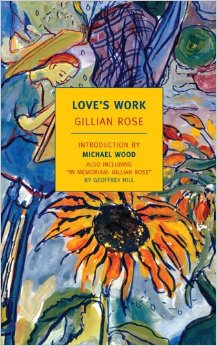
Life is not all flowers, but that doesn’t make it any less beautiful.
3. Love’s Work by Gillian Rose
Rose’s book is billed as a reckoning with life. She wrote it in the late stages of terminal cancer. She affirms the fragility of life throughout this beautiful book. There is nothing hokey or sentimental about it, because she affirms life at its most vulnerable, even cringe-inducing. A must read.
“Magnificent…Makes whatever else has been written on the deepest issues of human life by the philosophers of our time seem intolerably abstract and even frivolous.”
—Arthur Danto
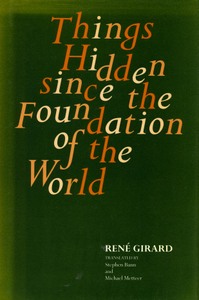
Weak cover font choice, but the argument is as forceful as it gets.
4. Things Hidden Since the Foundation of the World by Rene Girard
I could have chosen any number of books by Girard. This one covers just about everything there is to know about his way of thinking about violence and how we manage it on the personal and societal levels. This book’s merit also lies in offending all of Girard’s previous supporters because Girard came out in it as a Catholic. People still freak out about this fact nearly three decades later.
“A necessary companion piece to Violence and the Sacred for those interested in Girard’s grand theory of society and human nature. . . . Girard expounds his vision of the foundational place of mimesis, violence, and scapegoating for all human cultures. . . . More forcefully stated here than elsewhere is Girard’s conviction that his thesis is merely an uncovering of the message heretofore buried in the Christian scriptures.”

Yet another thing we can blame on Augustine.
5. The Sources of the Self by Charles Taylor
Taylor lays the foundations of his philosophical/theological project in this book. The best part about it is how he takes down both the boosters and knockers of the modern self by tracing its roots to early Christianity. Sources is an important book for putting history and contingency back into philosophy.
“Sources of the Self is in every sense a large book: in length and in the range of what it covers, but above all in the generosity and breadth of its sympathies and its interest in humanity…Few books on such large subjects are so engaging.”
—Bernard Williams
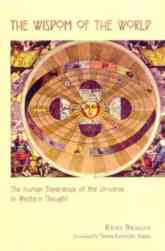
No, he doesn’t mean Ayn Rand or Chicago School economists.
6. The Wisdom of the World by Remi Brague
Brague’s book is a good companion to Taylor’s, because he shows the development of the other pole of experience. Whereas Taylor charts the development of subjectivity, Brague charts the historical developments that have led to our understanding of the world. He thereby shows both the limitations of our self-understanding and its rooting in much more ancient traditions.
“Remi Brague is a wondrous scholar in philosophy and philology–two subjects rarely found together in the same mind. In the Wisdom of the World his main goal is to show how the world became a guide for human life, and something to be imitated. Beautifully written, his book tells us of the discovery of the cosmos, and gives us some idea of what we have since lost, or deliberately forsaken.”
—Harvey Mansfield
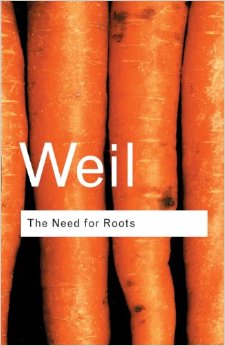
Simone Weil really cooks here.
7. The Need for Roots by Simone Weil
Simone Weil is at her most Manichean in her most widely read book in English, Gravity and Grace, however, in this book finds her at her most incarnate. Roots was written during WW2 as a report to de Gaulle on how to make postwar life a little more human (and divine). We’re all the worse for not listening to her.
“We must simply expose ourselves to the personality of a woman of genius, of a kind of genius akin to that of the saints.”
–T.S. Eliot in the Preface

Kierkegaard makes you doubt doubt.
8. Philosophical Fragments by Soren Kierkegaard
Kierkegaard’s book might be the first real philosophy book I ever read (Peter Kreeft and CS Lewis didn’t seem like real philosophy). Eugene Webb had us reading this for his intro to theology class. He wasn’t kidding when he said we’d crack our heads over this book. I read through it once and didn’t understand a thing, because I needed to to learn a new language and a new way of thinking. I’ve used it as a measuring stick ever since. Fragments is a thought experiment in what is entailed by drinking the modern obsession with doubt all the way down into the dregs.
“Through Climacus, Kierkegaard contrasts the paradoxes of Christianity with Greek and modern philosophical thinking. In Philosophical Fragments he begins with Greek Platonic philosophy, exploring the implications of venturing beyond the Socratic understanding of truth acquired through recollection to the Christian experience of acquiring truth through grace.”
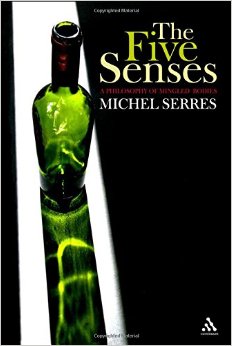
The prose alone will get you drunk.
9. The Five Senses by Michel Serres
If you identify philosophy with the bloodless endless debates about things only analytical philosophers get excited about, then this book will destroy your illusions. It helps that Serres has the heart of the poet and his prose lives up to the task of bringing you to your (five) senses.
“Every page is alive with rich descriptions of feeling, sensing, apprehending, engaging, living… this translation, like all of Serres’ work that we have in English, is a banquet, a feast for thought”
—Sanford Lakoff

Cosmopolis gives you a new perspective.
10a. Cosmopolis by Stephen Toulmin
Toulmin’s frames his argument as a battle-royale between Descartes and Montaigne. He argues we’d be better off had Montaigne won because we’d operate from a much more sensuous philosophical tradition that would be open to the vagaries of concrete life. Bummer.
“Cosmopolis is simply the best discussion on modernity and post-modernity available today. Toulmin’s insights have major implications for our universitities and our politics because he changes the way we see our world. In a time of uncertainty he has given us a wonderfully hopeful book.”
—Robert Bellah
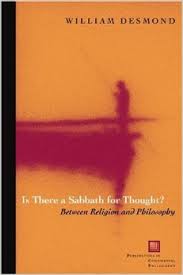
Give a man this book and he won’t need to fish for a day.
10b. Is There a Sabbath for Thought? by William Desmond
Philosophy and religion go together like a horse and carriage. Desmond gets the priest and the philosopher talking in this book. Beyond their superficial argument Tiresias and Oedipus have been conspiring against your unfounded beliefs since time immemorial.
“Seeking to renew an ancient companionship between the philosophical and the religious, this book’s meditative chapters dwell on certain elemental experiences or happenings that keep the soul alive to the enigma of the divine. William Desmond engages the philosophical work of Pascal, Kant, Hegel, Nietzsche, Shestov, and Soloviev, among others, and pursues with a philosophical mindfulness what is most intimate in us, yet most universal: sleep, poverty,imagination, courage and witness, reverence, hatred and love, peace and war. Being religious has to do with that intimate universal, beyond arbitrary subjectivism and reductionist objectivism. In this book, he attempts to look at religion with a fresh and open mind, asking how philosophy might itself stand up to some of the questions posed to it by religion, not just how religion might stand up to the questions posed to it by philosophy.”
Honorable mentions: Ernst Becker The Denial of Death, Epictetus Enchiridion, Jean-Luc Marion Prolegomena to Charity, Pascal Pensees, Bruno Latour We Have Never Been Modern, Voltaire Candide, Nietzsche The Gay Science, Michel Henry The Genealogy of Psychoanalysis, and Mark Johnson The Meaning of the Body.
Woody on Socrates and philosophy to close things out:
Previous Post

September 22, 2014
All the Best to the Russians, But I Am Profoundly Skeptical
Next Post
September 24, 2014 No Devil, No God
Browse Our Archives
Select a Category #WhyRemainCatholic Abortion Advent Anti-Catholicism Arts Atheism Beauty Benedict XVI Bible Book Review Catholic Cinema Comedy Cosmos: A Space-Time Odyssey Czesław Miłosz Dariusz Karłowicz Devil Easter Eastern Orthodoxy Economics Environment Family Famous Atheists Who Weren't Atheists Guest Post Hans Urs von Balthasar HHS Mandate History Imagination Interview Islam Jean-Luc Marion John Paul II Judaism Just War Lent Literature Little Sisters of the Poor Liturgy Martyrdom Music News Paganism Patristics Phenomenology Philosophy Pierre Hadot Poetry Poland Pop Culture Pope Francis Poverty Prayer Protestantism Rabelais Race Remi Brague Rene Girard Russia Sam Rocha Science & Religion SCOTUS Secularization Sexual Abuse Sexuality Silence Solidarity Stratford Caldecott Synod14 Terrorism Top 10 Uncategorized Walker Percy War Weakened Edition World War II World Youth Day WYD Krakow
Select a Month July 2017 June 2017 May 2017 April 2017 March 2017 February 2017 January 2017 December 2016 October 2016 September 2016 August 2016 July 2016 June 2016 May 2016 April 2016 March 2016 February 2016 January 2016 December 2015 November 2015 October 2015 September 2015 August 2015 July 2015 June 2015 May 2015 April 2015 March 2015 February 2015 January 2015 December 2014 November 2014 October 2014 September 2014 August 2014 July 2014 May 2014 April 2014 March 2014 February 2014 January 2014 December 2013 November 2013 October 2013 September 2013 August 2013 July 2013 June 2013 May 2013
Follow Us!
TAKE THE
Religious Wisdom Quiz
Who was thrown into a fiery furnace for refusing to worship an idol?
Select your answer to see how you score.
Shadrach, Meshach, and Abednego Daniel Joseph Gideon
Related posts from Cosmos The In Lost

How is Classical Philosophy is Like War?

Why Does the World's Leading Philosopher Remain a...
What Does Greek Philosopher Socrates Have to do...
TRENDING AT PATHEOS Catholic

Creation, Preservation, and Teleology in Catholic Theology
As I write this, it is very early Monday morning. Like millions...

The Parable Of The Sower And The Word...
One of Christ’s most famous parables is that of the sower who...

Rejecting Doom: Christian Hope And Human Action
Christianity is a religion of hope. We are to have hope and...

Why I Choose the Eucharist Over the Sermon
Choose the Eucharist, Not the Sermon What are we supposed to get...

5 Design Elements Found in Spiritually Rooted Homes
Putting Spirituality Into Home Decor Our homes are more than our living...

Credo: A Story of God Told with the...
About 10 years ago, I began to imagine a personal "Credo" that...
view all Catholic blogs
Ad-Free & Subscriber Log-In Subscription Support
- About Us
- 2026 Calendar
- Videos
- Podcasts
- Library of World Religions
- Faith In Media Tracker
- Advertise With Us
- Write for Us
- Privacy Policy
- Terms of Service
- Do Not Sell My Data
- Contact Us
- Radiant Digital
- Manage Newsletter Subscriptions
- Unsubscribe From Notifications
- Sitemap
Copyright 2008-2026, Patheos. All rights reserved.
Subscription Support Ad-Free & Subscriber Log-In
Follow Patheos