
BuddhistCatholicContemplativeEvangelicalGeneral ChristianHinduJewishLatter-day SaintMuslimNew VisionsProgressive Christian
Beliefs
- Buddhist
- Catholic
- Contemplative
- Evangelical
- General Christian
- Hindu
- Jewish
- Latter-day Saint
- More Voices
- Muslim
- New Visions
- Pagan
- Progressive Christian
Topics
- Religion News
- Food and Religion
- Sports and Religion
- Religious Art
- Religious Music and Entertainment
- Religious Events
- History and Religion
- Style and Religion
- Politics and Religion
- Women in Religion
- Recreation Outdoors and Religion
- Business Finance and Religion
- Careers Workplace and Religion
- Education and Religion
- Family Parenting and Religion
- Health Fitness and Religion
- Home and Religion
- Relationships and Religion
- Technology and Religion
- Travel and Religion
Columnists
- Buddhist Columnists
- Business Finance and Religion Columnists
- Careers Workplace and Religion Columnists
- Catholic Columnists
- Contemplative Columnists
- Education and Religion Columnists
- Evangelists Columnists
- Family Parenting and Religion Columnists
- General Christian Columnists
- Health Fitness and Religion Columnists
- Hindu Columnists
- History and Religion Columnists
- Home and Religion Columnists
- Jewish Columnists
- More Voices Columnists
- Latter Day Columnists
- Muslim Columnists
- New Visions Columnists
- Nonreligious Columnists
- Pagan Columnists
- Politics and Religion Columnists
- Progressive Columnists
- Recreation Outdoors and Religion Columnists
- Relationships and Religion Columnists
- Religion News Columnists
- Religious Art Columnists
- Religious Events Columnists
- Religious Music and Entertainment Columnists
- Sports and Religion Columnists
- Style and Religion Columnists
- Technology and Religion Columnists
- Travel and Religion Columnists
- Women in Religion Columnists
Resource Library
- 2026 Calendar
- Library of World Religions
- The 100 Most Holy Places on Earth
- Patheos Answers
- Podcasts
- Videos
- Faith Leaders Database
- Anglican Episcopalian
- Bahai
- Baptist
- Buddhism
- Christianity
- Confucianism
- Eastern Orthodoxy
- Hinduism
- Holiness and Pentecostal
- ISKCON
- Islam
- Judaism
- Lutheran
- Methodist
- The Church of Jesus Christ of Latter-day Saints
- New Age
- Paganism
- Presbytarian and Reformed
- Protestantism
- Religion Behind the Scenes
- Roman Catholic
- Scientology
- Shia Islam
- Sikhism
- Sufism
- Sunni Islam
- Taoism
- Zen
- See all religions
Research Tools
 Ad-Free & Subscriber Log-In Subscription Support
Ad-Free & Subscriber Log-In Subscription Support
Follow Patheos 

- Trending:
- Forgiveness
- |
- Marriage
- |
- Consciousness
- |
- Death Penalty
- |
- Election
- |
- Halloween
 Cosmos The In Lost
- Home
- Catholic
- The Empire Strikes Back: Feast of the Holy Cross
The Empire Strikes Back: Feast of the Holy Cross
Last updated on: September 15, 2014 at 10:51 am by Artur Rosman
The Empire Strikes Back: Feast of the Holy Cross 2014-09-15T10:51:19-07:00 Artur Rosman
Patheos Explore the world's faith through different perspectives on religion and spirituality! Patheos has the views of the prevalent religions and spiritualities of the world.

Archaeology and Empire Building: Piero della Francesca, Discovery of the True Cross, 1466.
It’s easy to forget the Feast of the Holy Cross is a consummate Constantinian feast.
St. Helen (patron saint of archaeologists), mother of Constantine, so the story goes, found the True Cross on an expedition in 326. This was a mere year after the imperial-doctrinal consolidation at the First Ecumenical Council of Nicea that would keep Christians and the Empire together. The feast was rolled out with the dedication of the Church of the Holy Sepulcher on 13 September 334. The True Cross itself was brought into the church on 14 September 334, hence the feast. Needless to say, the possession and exhibition of this relic didn’t hurt the image of Christianity as the true religion that would solidify the Empire.
You’ll be hearing from me about this first rate work briefly.
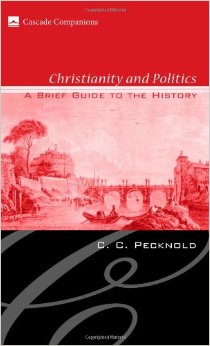
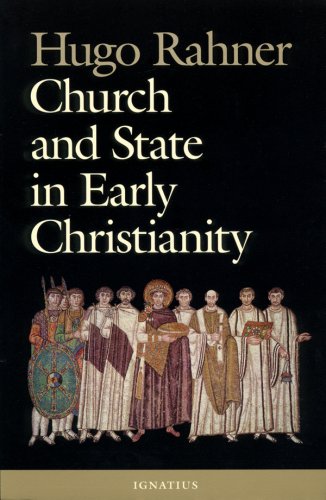
There is a small convergence between this feast and my reading of Chad Pecknold’s Christianity and Politics: A Brief Guide to the History. Professor Pecknold cites a passage about church-state relations from Hugo Rahner’s (a.k.a. “The Other Rahner” or “Brother Rahner”) classic study Church and State in Early Christianity that really struck me.
This is the Rahner original expanded to capture as of the necessary ironies of Church relations with the state as possible:
The other alternative has had even a greater historical role to play. In the Latin West, the Church, under the guidance of the Pope and her bishops, vindicated her freedom before the state. In this she was helped by a variety of external developments. Not the least of these is the fact that in the West, the Roman Empire collapsed in the fifth century, and the papacy remained the only rock of cultural unity among the states that rose in the aftermath of the invasions. It is often said that the freedom of the Western Church was built only on the ruins of the civil power; but the Church had in fact defended her freedom against Emperor Constantius and later against Byzantine despotism, which weighed heavily on Rome and the West from the sixth to the eighth century, What favored the Western Church’s victorious struggle for her freedom was, above all, the fact that in Latin culture the sense of human freedom, especially religious freedom, had deeper roots than in the East. When Ambrose, a noble Roman citizen, launched his attacks against the tyranny of an empire that threatened to enslave the Church, one can detect what E. Caspar describes as: “The freedom of a Christian and the libertas of the ancient Roman citizen fused in a single concept, which must have sounded strange to the heir of the orientalizing and despotic system of Diocletian.”
But the most important internal resource from which the Western Church drew renewed strength in her struggle for freedom was the guiding role of the papacy, growing increasingly conscious of the rights granted to it by Christ as it sought to respond to the needs of a Church basically solid but ever struggling even in a Christian empire. It is a fact grasped not only by faith but also seen in history that all the churches who wish to withdraw from the unity of the Church dogmatically first of all seek refuge with the state but soon are absorbed by the state and fall with it. As proof we can cite the Arians settled in the Germanic states of the West or the Eastern Greek church and those who seceded from her because of christological differences, whose sad remnants are still to be found in the Near East.
The following phrase from the above is something we should remember with Reformation Day coming around the corner:
It is a fact grasped not only by faith but also seen in history that all the churches who wish to withdraw from the unity of the Church dogmatically first of all seek refuge with the state but soon are absorbed by the state and fall with it.
With all that said, there are reasons for thanking Constantine for giving the Church the freedom to adopt a wide variety of philosophies to its uses as I’ve argued a while back here using the work of Polish Patristics scholar Dariusz Karlowicz.
Who said making heads of the church-state relationship was going to be easy? There’s even a recent book by a Presbyterian entitled Defending Constantine: The Twilight of an Empire and the Dawn of Christendom. Wow. How many Catholics have enough chutzpah to defend the Emperor in a scholarly volume? What’s more, if you’ll remember the glorious Gregory VII and the Investiture Controversy, sometime the church can strike back and bring the state to its knees.
On a more immediate political level: after digesting Senator (Vera?) Cruz’s striking rekindling of the church-state/empire controversy at the cost of persecuted Christian groups, I’d like to unload with a favorite Lutheran Humor video of mine:
By the by, you can read the whole of Hugo Rahner’s introduction to Church and State in Early Christianity here before you consider pulling the trigger here.
Previous Post

September 12, 2014
They Were Not Able to Separate the Soul From the Flesh
Next Post

September 16, 2014 Woody Allen Considers Conversion
Browse Our Archives
Select a Category #WhyRemainCatholic Abortion Advent Anti-Catholicism Arts Atheism Beauty Benedict XVI Bible Book Review Catholic Cinema Comedy Cosmos: A Space-Time Odyssey Czesław Miłosz Dariusz Karłowicz Devil Easter Eastern Orthodoxy Economics Environment Family Famous Atheists Who Weren't Atheists Guest Post Hans Urs von Balthasar HHS Mandate History Imagination Interview Islam Jean-Luc Marion John Paul II Judaism Just War Lent Literature Little Sisters of the Poor Liturgy Martyrdom Music News Paganism Patristics Phenomenology Philosophy Pierre Hadot Poetry Poland Pop Culture Pope Francis Poverty Prayer Protestantism Rabelais Race Remi Brague Rene Girard Russia Sam Rocha Science & Religion SCOTUS Secularization Sexual Abuse Sexuality Silence Solidarity Stratford Caldecott Synod14 Terrorism Top 10 Uncategorized Walker Percy War Weakened Edition World War II World Youth Day WYD Krakow
Select a Month July 2017 June 2017 May 2017 April 2017 March 2017 February 2017 January 2017 December 2016 October 2016 September 2016 August 2016 July 2016 June 2016 May 2016 April 2016 March 2016 February 2016 January 2016 December 2015 November 2015 October 2015 September 2015 August 2015 July 2015 June 2015 May 2015 April 2015 March 2015 February 2015 January 2015 December 2014 November 2014 October 2014 September 2014 August 2014 July 2014 May 2014 April 2014 March 2014 February 2014 January 2014 December 2013 November 2013 October 2013 September 2013 August 2013 July 2013 June 2013 May 2013
Follow Us!
TAKE THE
Religious Wisdom Quiz
Who said, "My Lord and my God!"?
Select your answer to see how you score.
Thomas Paul John Peter
Related posts from Cosmos The In Lost

The Surprising Anti-Capitalist Logic Behind the Catholic Church's...

The Holy Family as an Icon of World...

How is Classical Philosophy is Like War?

Why Does the World's Leading Philosopher Remain a...
TRENDING AT PATHEOS Catholic

Creation, Preservation, and Teleology in Catholic Theology
As I write this, it is very early Monday morning. Like millions...

The Parable Of The Sower And The Word...
One of Christ’s most famous parables is that of the sower who...

Rejecting Doom: Christian Hope And Human Action
Christianity is a religion of hope. We are to have hope and...

Why I Choose the Eucharist Over the Sermon
Choose the Eucharist, Not the Sermon What are we supposed to get...

5 Design Elements Found in Spiritually Rooted Homes
Putting Spirituality Into Home Decor Our homes are more than our living...

Credo: A Story of God Told with the...
About 10 years ago, I began to imagine a personal "Credo" that...
view all Catholic blogs
Ad-Free & Subscriber Log-In Subscription Support
- About Us
- 2026 Calendar
- Videos
- Podcasts
- Library of World Religions
- Faith In Media Tracker
- Advertise With Us
- Write for Us
- Privacy Policy
- Terms of Service
- Do Not Sell My Data
- Contact Us
- Radiant Digital
- Manage Newsletter Subscriptions
- Unsubscribe From Notifications
- Sitemap
Copyright 2008-2026, Patheos. All rights reserved.
Subscription Support Ad-Free & Subscriber Log-In
Follow Patheos