
BuddhistCatholicContemplativeEvangelicalGeneral ChristianHinduJewishLatter-day SaintMuslimNew VisionsProgressive Christian
Beliefs
- Buddhist
- Catholic
- Contemplative
- Evangelical
- General Christian
- Hindu
- Jewish
- Latter-day Saint
- More Voices
- Muslim
- New Visions
- Pagan
- Progressive Christian
Topics
- Religion News
- Food and Religion
- Sports and Religion
- Religious Art
- Religious Music and Entertainment
- Religious Events
- History and Religion
- Style and Religion
- Politics and Religion
- Women in Religion
- Recreation Outdoors and Religion
- Business Finance and Religion
- Careers Workplace and Religion
- Education and Religion
- Family Parenting and Religion
- Health Fitness and Religion
- Home and Religion
- Relationships and Religion
- Technology and Religion
- Travel and Religion
Columnists
- Buddhist Columnists
- Business Finance and Religion Columnists
- Careers Workplace and Religion Columnists
- Catholic Columnists
- Contemplative Columnists
- Education and Religion Columnists
- Evangelists Columnists
- Family Parenting and Religion Columnists
- General Christian Columnists
- Health Fitness and Religion Columnists
- Hindu Columnists
- History and Religion Columnists
- Home and Religion Columnists
- Jewish Columnists
- More Voices Columnists
- Latter Day Columnists
- Muslim Columnists
- New Visions Columnists
- Nonreligious Columnists
- Pagan Columnists
- Politics and Religion Columnists
- Progressive Columnists
- Recreation Outdoors and Religion Columnists
- Relationships and Religion Columnists
- Religion News Columnists
- Religious Art Columnists
- Religious Events Columnists
- Religious Music and Entertainment Columnists
- Sports and Religion Columnists
- Style and Religion Columnists
- Technology and Religion Columnists
- Travel and Religion Columnists
- Women in Religion Columnists
Resource Library
- 2026 Calendar
- Library of World Religions
- The 100 Most Holy Places on Earth
- Patheos Answers
- Podcasts
- Videos
- Faith Leaders Database
- Anglican Episcopalian
- Bahai
- Baptist
- Buddhism
- Christianity
- Confucianism
- Eastern Orthodoxy
- Hinduism
- Holiness and Pentecostal
- ISKCON
- Islam
- Judaism
- Lutheran
- Methodist
- The Church of Jesus Christ of Latter-day Saints
- New Age
- Paganism
- Presbytarian and Reformed
- Protestantism
- Religion Behind the Scenes
- Roman Catholic
- Scientology
- Shia Islam
- Sikhism
- Sufism
- Sunni Islam
- Taoism
- Zen
- See all religions
Research Tools
 Ad-Free & Subscriber Log-In Subscription Support
Ad-Free & Subscriber Log-In Subscription Support
Follow Patheos 

- Trending:
- Forgiveness
- |
- Marriage
- |
- Consciousness
- |
- Death Penalty
- |
- Election
- |
- Halloween
 Cosmos The In Lost
- Home
- Catholic
- Holocaust in Context: Auden’s September 1, 1939
Holocaust in Context: Auden’s September 1, 1939
Last updated on: January 27, 2015 at 9:49 pm by Artur Rosman
Holocaust in Context: Auden’s September 1, 1939 2015-01-27T21:49:17-07:00 Artur Rosman
Patheos Explore the world's faith through different perspectives on religion and spirituality! Patheos has the views of the prevalent religions and spiritualities of the world.
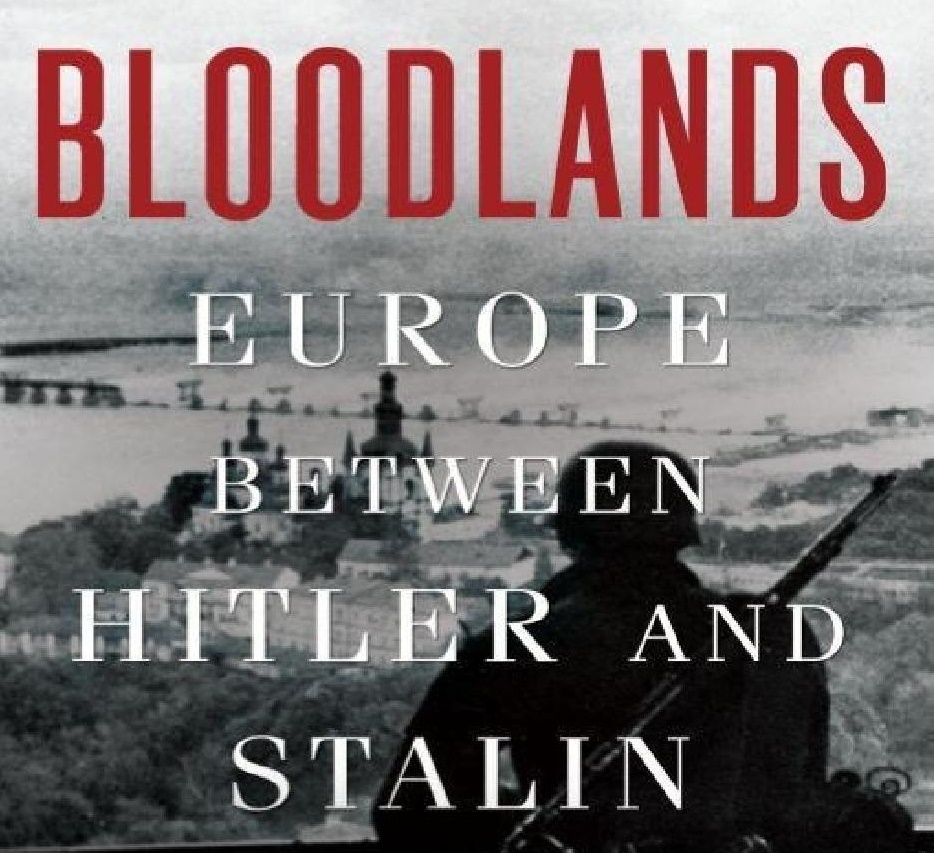
Snyder puts the region’s history in proper perspective.
Faulkner wrote, “The past is never dead. It’s not even past,” in his Requiem for a Nun. One prime example is World War II. The memory of this almost now mythical conflict continues to shape the Western social imaginary in a multitude of ways; for example, Western Europeans use it to bolster their unpractical cowardly pacifism, while the Americans use it to bolster their equally unpractical rash militarism.
Even more profoundly, the Holocaust has become an almost metaphysical measuring stick of humanity’s capacity for radical evil. In his essay collection Prisms Adorno made the claim (frequently cited out of context as I shall do in a second) that, “To write poetry after Auschwitz is barbaric.” Whatever this statement meant in its original context, it has come to mean that the Holocaust was such an unprecedented event, that it caused a such rupture in our social imginary, that it rendered certain modes of life, ways of comporting yourself to reality, forms of thinking, impossible.
Timothy Snyder’s Bloodlands: Europe Between Hitler and Stalin puts the Holocaust within its Central European context. What’s frequently lost is how Snyder’s international bestseller suggests the Holocaust is not some ahistorical transcendent metaphysical essence, but rather a contingent historical event. First of all, Snyder’s book puts the Holocaust within the context of the genocides perpetrated against other populations stuck between Germany and the Soviet Union. Second, Bloodlands gives a thorough account of the Generalplan Ost: the secret German plan to exterminate the Slavs so that Germans could repopulate their lands and take advantage of the Ukrainian breadbasket.
The extermination of the Slavs was Germany’s main plan. What they did not anticipate was the strength of the Soviet resistance and how the herding of Jewish populations would cause the Nazis logistical problems. The rapid accumulation of large populations in ghettos led the Germans to send them to preexisting concentration camps. These camps were first used to systematically kill Catholic clergy, Polish resistance fighters, and Communists.
Even with this murderous diversion the toll on non-Jewish Poles was still high. Snyder estimates the toll on the gentile, mostly Catholic population, at around 2.7 million deaths. When combined with the catastrophic loss of three million Polish-Jewish lives (not uniform in their adherence and non-adherence to various forms of Judaism) this means that Poland lost about one-sixth of its prewar population. Can you even imagine one in six people you know being murdered in the span of around five years? You should, because given human nature, it is a distinct possibility in any historical period.
Some have even gone as far as calling the extermination of Poland’s Catholic population The Forgotten Holocaust. Whether this controversial claim is accurate is beyond the scope of this post, however, one thing is clear, had history turned out differently, in an alternate, not at all unlikely history, Western civilization might have been perpetually haunted by the extermination of Europe’s Slavs.
Today is the anniversary of Poland’s invasion by the Nazi Blitzkrieg, the day that set all those historical contingencies into motion. W.H. Auden thought through the significance of the event almost live in a poem you will no doubt see flashing across social media several times today:
September 1, 1939
I sit in one of the dives
On Fifty-second Street
Uncertain and afraid
As the clever hopes expire
Of a low dishonest decade:
Waves of anger and fear
Circulate over the bright
And darkened lands of the earth,
Obsessing our private lives;
The unmentionable odour of death
Offends the September night.Accurate scholarship can
Unearth the whole offence
From Luther until now
That has driven a culture mad,
Find what occurred at Linz,
What huge imago made
A psychopathic god:
I and the public know
What all schoolchildren learn,
Those to whom evil is done
Do evil in return.Exiled Thucydides knew
All that a speech can say
About Democracy,
And what dictators do,
The elderly rubbish they talk
To an apathetic grave;
Analysed all in his book,
The enlightenment driven away,
The habit-forming pain,
Mismanagement and grief:
We must suffer them all again.
Have you considered my servant Wystan as a theologian?
Into this neutral air
Where blind skyscrapers use
Their full height to proclaim
The strength of Collective Man,
Each language pours its vain
Competitive excuse:
But who can live for long
In an euphoric dream;
Out of the mirror they stare,
Imperialism’s face
And the international wrong.Faces along the bar
Cling to their average day:
The lights must never go out,
The music must always play,
All the conventions conspire
To make this fort assume
The furniture of home;
Lest we should see where we are,
Lost in a haunted wood,
Children afraid of the night
Who have never been happy or good.The windiest militant trash
Important Persons shout
Is not so crude as our wish:
What mad Nijinsky wrote
About Diaghilev
Is true of the normal heart;
For the error bred in the bone
Of each woman and each man
Craves what it cannot have,
Not universal love
But to be loved alone.From the conservative dark
Into the ethical life
The dense commuters come,
Repeating their morning vow;
“I will be true to the wife,
I’ll concentrate more on my work,”
And helpless governors wake
To resume their compulsory game:
Who can release them now,
Who can reach the deaf,
Who can speak for the dumb?All I have is a voice
To undo the folded lie,
The romantic lie in the brain
Of the sensual man-in-the-street
And the lie of Authority
Whose buildings grope the sky:
There is no such thing as the State
And no one exists alone;
Hunger allows no choice
To the citizen or the police;
We must love one another or die.Defenceless under the night
Our world in stupor lies;
Yet, dotted everywhere,
Ironic points of light
Flash out wherever the Just
Exchange their messages:
May I, composed like them
Of Eros and of dust,
Beleaguered by the same
Negation and despair,
Show an affirming flame.
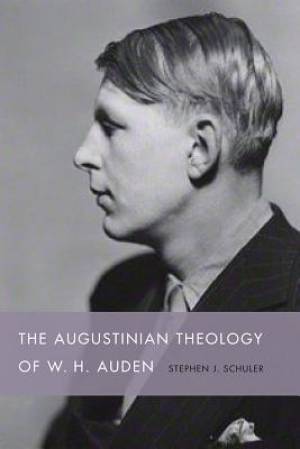
Auden was a fine religious thinker, as Stephen J. Schuler demonstrated in his The Augustinian Theology of W.H. Auden (see also: Arthur Kirsch’s Auden and Christianity) who understood how Original Sin twists individual and collective psyches. The following lines from the above poem demonstrate this twisted logic better than just about anything else I’ve ever read:
Those to whom evil is done
Do evil in return.
Auden spent a great deal of time in interwar Germany and understood how the punitive reparations for World War I imposed upon that country created a culture of resentment. They were so punitive that World War I effectively ended only a few years ago when Germany finally paid off its debts.
Who knows how history might have turned out had the French and Americans been wiser at Versailles?
I don’t know, but all this ultimately suggests to me the potentially positively disruptive power of forgiveness. Perhaps, this is a much more promising vein, in our very own “low dishonest decade” for looking at contemporary conflicts, rather than seeing them in terms of a battle of absolute good against absolute evil?
Yes, Holocausts are possible. Yes, they will happen. Unresolved contingencies stipulate the possibility that there might be several possible Holocausts underway right now. Will negation and despair win out, or will anyone have the crazy idea to put forward an affirming flame?
One thing is clear: thank God poetry is still here with us to provoke us into thinking about all the complexities of these situations and the radical possibility of forgiveness and hope.
Previous Post

August 28, 2014
The Call to Being Has Already Exiled You: Sam Rocha's Late to Love
Next Post
September 2, 2014 FACT: Christians DON'T Believe in the Immortality of the Soul
Browse Our Archives
Select a Category #WhyRemainCatholic Abortion Advent Anti-Catholicism Arts Atheism Beauty Benedict XVI Bible Book Review Catholic Cinema Comedy Cosmos: A Space-Time Odyssey Czesław Miłosz Dariusz Karłowicz Devil Easter Eastern Orthodoxy Economics Environment Family Famous Atheists Who Weren't Atheists Guest Post Hans Urs von Balthasar HHS Mandate History Imagination Interview Islam Jean-Luc Marion John Paul II Judaism Just War Lent Literature Little Sisters of the Poor Liturgy Martyrdom Music News Paganism Patristics Phenomenology Philosophy Pierre Hadot Poetry Poland Pop Culture Pope Francis Poverty Prayer Protestantism Rabelais Race Remi Brague Rene Girard Russia Sam Rocha Science & Religion SCOTUS Secularization Sexual Abuse Sexuality Silence Solidarity Stratford Caldecott Synod14 Terrorism Top 10 Uncategorized Walker Percy War Weakened Edition World War II World Youth Day WYD Krakow
Select a Month July 2017 June 2017 May 2017 April 2017 March 2017 February 2017 January 2017 December 2016 October 2016 September 2016 August 2016 July 2016 June 2016 May 2016 April 2016 March 2016 February 2016 January 2016 December 2015 November 2015 October 2015 September 2015 August 2015 July 2015 June 2015 May 2015 April 2015 March 2015 February 2015 January 2015 December 2014 November 2014 October 2014 September 2014 August 2014 July 2014 May 2014 April 2014 March 2014 February 2014 January 2014 December 2013 November 2013 October 2013 September 2013 August 2013 July 2013 June 2013 May 2013
Follow Us!
TAKE THE
Religious Wisdom Quiz
How many days did God take to create the world?
Select your answer to see how you score.
Six Ten Two Seven
Related posts from Cosmos The In Lost

The Surprising Anti-Capitalist Logic Behind the Catholic Church's...

The Holy Family as an Icon of World...
Western Civ Doesn't Need Tenured Radicals to Ruin...

Post-Execution Church: Rise Up from the Electric Chair!
TRENDING AT PATHEOS Catholic

Rejecting Doom: Christian Hope And Human Action
Christianity is a religion of hope. We are to have hope and...

It’s What Comes From Within Which Matters
One of the most difficult things for us to understand is why...

Why I Choose the Eucharist Over the Sermon
Choose the Eucharist, Not the Sermon What are we supposed to get...

5 Design Elements Found in Spiritually Rooted Homes
Putting Spirituality Into Home Decor Our homes are more than our living...

Credo: A Story of God Told with the...
About 10 years ago, I began to imagine a personal "Credo" that...

The Anatomy of Divine Revelation in Catholic Thought
The claim that God has made Himself known to human beings is...
view all Catholic blogs
Ad-Free & Subscriber Log-In Subscription Support
- About Us
- 2026 Calendar
- Videos
- Podcasts
- Library of World Religions
- Faith In Media Tracker
- Advertise With Us
- Write for Us
- Privacy Policy
- Terms of Service
- Do Not Sell My Data
- Contact Us
- Radiant Digital
- Manage Newsletter Subscriptions
- Unsubscribe From Notifications
- Sitemap
Copyright 2008-2026, Patheos. All rights reserved.
Subscription Support Ad-Free & Subscriber Log-In
Follow Patheos