
BuddhistCatholicContemplativeEvangelicalGeneral ChristianHinduJewishLatter-day SaintMuslimNew VisionsProgressive Christian
Beliefs
- Buddhist
- Catholic
- Contemplative
- Evangelical
- General Christian
- Hindu
- Jewish
- Latter-day Saint
- More Voices
- Muslim
- New Visions
- Pagan
- Progressive Christian
Topics
- Religion News
- Food and Religion
- Sports and Religion
- Religious Art
- Religious Music and Entertainment
- Religious Events
- History and Religion
- Style and Religion
- Politics and Religion
- Women in Religion
- Recreation Outdoors and Religion
- Business Finance and Religion
- Careers Workplace and Religion
- Education and Religion
- Family Parenting and Religion
- Health Fitness and Religion
- Home and Religion
- Relationships and Religion
- Technology and Religion
- Travel and Religion
Columnists
- Buddhist Columnists
- Business Finance and Religion Columnists
- Careers Workplace and Religion Columnists
- Catholic Columnists
- Contemplative Columnists
- Education and Religion Columnists
- Evangelists Columnists
- Family Parenting and Religion Columnists
- General Christian Columnists
- Health Fitness and Religion Columnists
- Hindu Columnists
- History and Religion Columnists
- Home and Religion Columnists
- Jewish Columnists
- More Voices Columnists
- Latter Day Columnists
- Muslim Columnists
- New Visions Columnists
- Nonreligious Columnists
- Pagan Columnists
- Politics and Religion Columnists
- Progressive Columnists
- Recreation Outdoors and Religion Columnists
- Relationships and Religion Columnists
- Religion News Columnists
- Religious Art Columnists
- Religious Events Columnists
- Religious Music and Entertainment Columnists
- Sports and Religion Columnists
- Style and Religion Columnists
- Technology and Religion Columnists
- Travel and Religion Columnists
- Women in Religion Columnists
Resource Library
- 2026 Calendar
- Library of World Religions
- The 100 Most Holy Places on Earth
- Patheos Answers
- Podcasts
- Videos
- Faith Leaders Database
- Anglican Episcopalian
- Bahai
- Baptist
- Buddhism
- Christianity
- Confucianism
- Eastern Orthodoxy
- Hinduism
- Holiness and Pentecostal
- ISKCON
- Islam
- Judaism
- Lutheran
- Methodist
- The Church of Jesus Christ of Latter-day Saints
- New Age
- Paganism
- Presbytarian and Reformed
- Protestantism
- Religion Behind the Scenes
- Roman Catholic
- Scientology
- Shia Islam
- Sikhism
- Sufism
- Sunni Islam
- Taoism
- Zen
- See all religions
Research Tools
 Ad-Free & Subscriber Log-In Subscription Support
Ad-Free & Subscriber Log-In Subscription Support
Follow Patheos 

- Trending:
- Forgiveness
- |
- Marriage
- |
- Consciousness
- |
- Death Penalty
- |
- Election
- |
- Halloween
 Cosmos The In Lost
- Home
- Catholic
- Tolkien’s Smaug of Money: Class Conflict in a Children’s Classic
Tolkien’s Smaug of Money: Class Conflict in a Children’s Classic
Last updated on: August 20, 2014 at 1:49 pm by Artur Rosman
Tolkien’s Smaug of Money: Class Conflict in a Children’s Classic 2014-08-20T13:49:34-07:00 Artur Rosman
Patheos Explore the world's faith through different perspectives on religion and spirituality! Patheos has the views of the prevalent religions and spiritualities of the world.

Did you notice that Tolkien’s The Hobbit is also about class conflict?
My resistance to the Inklings is strong, but breaking down. Two causes stand behind my aversion.
First, all my dorky church friends in high school–Evangelicals, Mormons, and even some Catholics–spent a lot of their free time talking the greatness of C.S. Lewis. I was alienated from church and their witness frankly didn’t help. Their enthusiasm skipped off of me because at that point I was enjoying the comforts of atheism.
Second, I was also in the process of discovering truly great literature through my AP English class. Old Man Taylor had us reading A Canticle for Liebowitz, The Sound and the Fury, Dante’s Inferno, The Grapes of Wrath, and T.S. Eliot. I mean, how are you going to keep them down on the C.S. Lewis farm after they’ve read Faulkner?
Ever since reverting to the faith at a secular state college the intersection of literature, theology, and contemporary issues has been a constant preoccupation of mine. I recently completed and defended a dissertation on the Catholic imagination of Czeslaw Milosz. I’ve also spent some time commenting on the controversy over the state of contemporary Catholic literature. I stand with Gregory Wolfe against Paul Elie; for those with eyes to see and time to read we are presently in a Golden Age of religiously saturated fiction and poetry. If you need some glasses to better see what’s going on, then see my TOP10 lists about contemporary religious fiction and poetry. While you’re at it peruse all my other award-winning (not really) TOP10 book lists. None of this made me look at the Inklings again.
There was a much more practical motivation behind it. I am the father of three kids under six. Bedtime has a tendency to be a period of whining for the kids and heavy annoyance for the parents. One day, out of desperation, I reached for The Hobbit at the bookstore. It worked. Look up the definition soporific and you’ll find reading around seven pages of the Hobbit as one of the definitions. I think this has something to do with all the walking in the book:
Eventually I discovered that there’s a theologically serious side to the whole book. The Hobbit gives its readers a presentiment that everything that happens, no matter how insignificant, happens for a purpose. I would say there is a providential thread throughout the book. You learn to pay attention to Bilbo’s actions and discoveries. You suspect that they will ultimately be significant, even if you are not sure how, when they actualize themselves fully. It is the case with the ring, but also with a whole host of other details that are too innumerable to list. There’s is a kind of providential penumbra about the book as the characters develop through integrating insights from their experience in a way that would probably give the author of Method of Theology shivers. I picked up on one of these insights some time ago, but then it went into hiding like Smaug.
However, yesterday I ran across an advertisement for the book The New Class Conflict. The book is published by an imprint of the journal that brought the best of critical theory to the United States, Telos. It was founded by a Catholic, Paul Piccone, with roots in (you guessed it!) phenomenology.
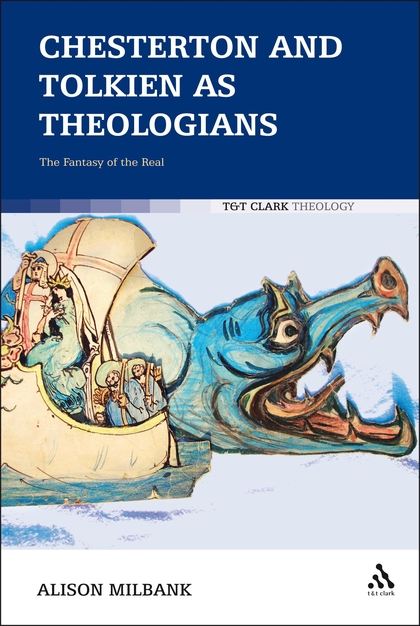
Alison Milbank is your go-to person for heavy theological insights about Tolkien.
“But, seriously, what does the Hobbit have to do with class conflict?,” you might ask yourself.
Everything. Here’s Smaug, the baddie of the book, speaking upon discovering that the Hobbit reappropiated a golden cup from him:
“Thieves! Fire! Murder! Such a thing had not happened since first he came to the Mountain! His rage passes description – the sort of rage that is only seen when rich folk that have more than they can enjoy suddenly lose something that they have long had but have never before used or wanted. His fire belched forth, the hall smoked, he shook the mountain-roots.”
If you doubt the veracity of this portrayal of what the sinfully rich think, then get a load of this Wall Street Journal letter to the editor. It’s a rich guy claiming that demands for equality lead straight into (NO JOKE!) a Kristallnacht for the richest. In a total deadpan he compares the rich of America to the Jews of World War II Europe.
The quest of Tolkien’s book actually revolves around redressing the unfair hoarding of wealth (coupled with the destruction of the environment… sound familiar?) and returning it back into the common good. Granted, something later in the book or series might complicate the picture a bit, but don’t let that stop me from jumping to conclusions right now. Anyway, hurry, quick, hide the crystal and the Krug Brut!
The inequality that emerges out of the class war the richest fight against the rest of was also a pressing issue to John Paul II, Benedict XVI, and Francis now too. Even if we fail to reform ourselves this side of the eschaton we know with all these popes that there’s a special place for all those Smaug-headed class warriors.
Meanwhile, the super rich arm themselves:
Previous Post

August 19, 2014
Phenomenology, the Anxieties of Life, and the Mystery of Hope
Next Post
August 26, 2014 Patrick Deneen on Economic Two-Way Baloney
Browse Our Archives
Select a Category #WhyRemainCatholic Abortion Advent Anti-Catholicism Arts Atheism Beauty Benedict XVI Bible Book Review Catholic Cinema Comedy Cosmos: A Space-Time Odyssey Czesław Miłosz Dariusz Karłowicz Devil Easter Eastern Orthodoxy Economics Environment Family Famous Atheists Who Weren't Atheists Guest Post Hans Urs von Balthasar HHS Mandate History Imagination Interview Islam Jean-Luc Marion John Paul II Judaism Just War Lent Literature Little Sisters of the Poor Liturgy Martyrdom Music News Paganism Patristics Phenomenology Philosophy Pierre Hadot Poetry Poland Pop Culture Pope Francis Poverty Prayer Protestantism Rabelais Race Remi Brague Rene Girard Russia Sam Rocha Science & Religion SCOTUS Secularization Sexual Abuse Sexuality Silence Solidarity Stratford Caldecott Synod14 Terrorism Top 10 Uncategorized Walker Percy War Weakened Edition World War II World Youth Day WYD Krakow
Select a Month July 2017 June 2017 May 2017 April 2017 March 2017 February 2017 January 2017 December 2016 October 2016 September 2016 August 2016 July 2016 June 2016 May 2016 April 2016 March 2016 February 2016 January 2016 December 2015 November 2015 October 2015 September 2015 August 2015 July 2015 June 2015 May 2015 April 2015 March 2015 February 2015 January 2015 December 2014 November 2014 October 2014 September 2014 August 2014 July 2014 May 2014 April 2014 March 2014 February 2014 January 2014 December 2013 November 2013 October 2013 September 2013 August 2013 July 2013 June 2013 May 2013
Follow Us!
TAKE THE
Religious Wisdom Quiz
Where was Jesus Born?
Select your answer to see how you score.
Bethlehem Shiloh Jerusalem Nazareth
Related posts from Cosmos The In Lost

The Surprising Anti-Capitalist Logic Behind the Catholic Church's...

What is the Source of Our Culture of...

How is Classical Philosophy is Like War?

Why Does the World's Leading Philosopher Remain a...
TRENDING AT PATHEOS Catholic

Creation, Preservation, and Teleology in Catholic Theology
As I write this, it is very early Monday morning. Like millions...

The Parable Of The Sower And The Word...
One of Christ’s most famous parables is that of the sower who...

Rejecting Doom: Christian Hope And Human Action
Christianity is a religion of hope. We are to have hope and...

Why I Choose the Eucharist Over the Sermon
Choose the Eucharist, Not the Sermon What are we supposed to get...

5 Design Elements Found in Spiritually Rooted Homes
Putting Spirituality Into Home Decor Our homes are more than our living...

Credo: A Story of God Told with the...
About 10 years ago, I began to imagine a personal "Credo" that...
view all Catholic blogs
Ad-Free & Subscriber Log-In Subscription Support
- About Us
- 2026 Calendar
- Videos
- Podcasts
- Library of World Religions
- Faith In Media Tracker
- Advertise With Us
- Write for Us
- Privacy Policy
- Terms of Service
- Do Not Sell My Data
- Contact Us
- Radiant Digital
- Manage Newsletter Subscriptions
- Unsubscribe From Notifications
- Sitemap
Copyright 2008-2026, Patheos. All rights reserved.
Subscription Support Ad-Free & Subscriber Log-In
Follow Patheos