
BuddhistCatholicContemplativeEvangelicalGeneral ChristianHinduJewishLatter-day SaintMuslimNew VisionsProgressive Christian
Beliefs
- Buddhist
- Catholic
- Contemplative
- Evangelical
- General Christian
- Hindu
- Jewish
- Latter-day Saint
- More Voices
- Muslim
- New Visions
- Pagan
- Progressive Christian
Topics
- Religion News
- Food and Religion
- Sports and Religion
- Religious Art
- Religious Music and Entertainment
- Religious Events
- History and Religion
- Style and Religion
- Politics and Religion
- Women in Religion
- Recreation Outdoors and Religion
- Business Finance and Religion
- Careers Workplace and Religion
- Education and Religion
- Family Parenting and Religion
- Health Fitness and Religion
- Home and Religion
- Relationships and Religion
- Technology and Religion
- Travel and Religion
Columnists
- Buddhist Columnists
- Business Finance and Religion Columnists
- Careers Workplace and Religion Columnists
- Catholic Columnists
- Contemplative Columnists
- Education and Religion Columnists
- Evangelists Columnists
- Family Parenting and Religion Columnists
- General Christian Columnists
- Health Fitness and Religion Columnists
- Hindu Columnists
- History and Religion Columnists
- Home and Religion Columnists
- Jewish Columnists
- More Voices Columnists
- Latter Day Columnists
- Muslim Columnists
- New Visions Columnists
- Nonreligious Columnists
- Pagan Columnists
- Politics and Religion Columnists
- Progressive Columnists
- Recreation Outdoors and Religion Columnists
- Relationships and Religion Columnists
- Religion News Columnists
- Religious Art Columnists
- Religious Events Columnists
- Religious Music and Entertainment Columnists
- Sports and Religion Columnists
- Style and Religion Columnists
- Technology and Religion Columnists
- Travel and Religion Columnists
- Women in Religion Columnists
Resource Library
- 2026 Calendar
- Library of World Religions
- The 100 Most Holy Places on Earth
- Patheos Answers
- Podcasts
- Videos
- Faith Leaders Database
- Anglican Episcopalian
- Bahai
- Baptist
- Buddhism
- Christianity
- Confucianism
- Eastern Orthodoxy
- Hinduism
- Holiness and Pentecostal
- ISKCON
- Islam
- Judaism
- Lutheran
- Methodist
- The Church of Jesus Christ of Latter-day Saints
- New Age
- Paganism
- Presbytarian and Reformed
- Protestantism
- Religion Behind the Scenes
- Roman Catholic
- Scientology
- Shia Islam
- Sikhism
- Sufism
- Sunni Islam
- Taoism
- Zen
- See all religions
Research Tools
 Ad-Free & Subscriber Log-In Subscription Support
Ad-Free & Subscriber Log-In Subscription Support
Follow Patheos 

- Trending:
- Forgiveness
- |
- Marriage
- |
- Consciousness
- |
- Death Penalty
- |
- Election
- |
- Halloween
 Cosmos The In Lost
- Home
- Catholic
- Phenomenology, the Anxieties of Life, and the Mystery of Hope
Phenomenology, the Anxieties of Life, and the Mystery of Hope
Last updated on: August 19, 2014 at 10:40 am by Artur Rosman
Phenomenology, the Anxieties of Life, and the Mystery of Hope 2014-08-19T10:40:27-07:00 Artur Rosman
Patheos Explore the world's faith through different perspectives on religion and spirituality! Patheos has the views of the prevalent religions and spiritualities of the world.
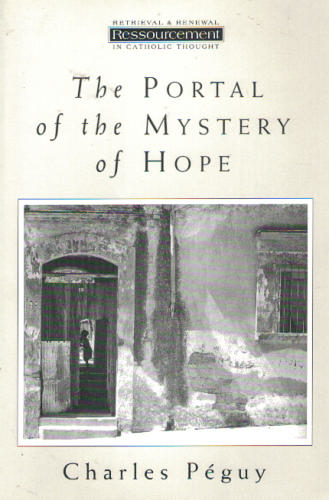
“But Hope, says God, that is what astonishes me.”
It’s finally time to write a post here at Patheos. I’ve kept busy the past week figuring out how to transition into the new blog and life after finishing up my PhD. I’ve been accompanied through this time of transition and anxiety by two books.
First, there’s Michael Gubser’s book on phenomenology: The Far Reaches. Gubser argues that phenomenology is not an abstract academy pursuit, not some isolated idealism, but rather a philosophy that always engages with the world. According to him, phenomenology is also hospitable to Catholicism, because it puts high emphasis upon sacrificing oneself to values within hierarchically ordered communities.
Gubser’s book is a great read because the author, like any postmodern, does not seem entirely comfortable with the orientation of phenomenological thinkers (mainly Husserl, Stein, Scheler, Patocka, Wojtyla, and Tischner) to absolute values and sacrifice. Yet, Gubser cannot help but admire them for their principled stands. To be honest, their difficult battles helped me put my own battle into perspective. This is why in the end The Far Reaches, like the phenomenological writings it so loving describes, is an example of an academic book that speaks to our everyday problems.
I’ve written about aspects about this remarkable book on my old blog. If you want to learn more about the influence of phenomenology upon Catholicism then peruse these posts: on the Central European and social heart of phenomenology, on the Polish heart of Phenomenology in translation, and finally, on how Husserl, the founder of phenomenology, changed Catholic attitudes toward Judaism.
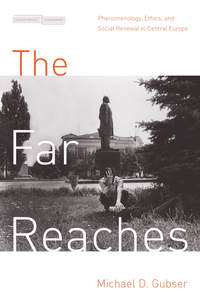
Gubser reaches deep as well.
I’ve also written several times about the present French Catholic flowering of phenomenology here and here. This philosophical boom has put theology at the forefront of philosophical debates in recent years. The development proves that Catholics have not totally moved into the catacombs or succumbed to the “Benedict Option.” Catholicism, despite all the temptations, is a public religion, not a private or sectarian escape.
Given my previous interests it only seemed natural to pick up a book about the recent French history of phenomenology after completing Gubser’s book.
The Return of Religion in France is a much more jargony book than The Far Reaches. The story it tells is about the collapse of French secular-republican universalism in the 1980’s and how it ushered in identity politics. Ironically, thanks to this opening the absolute values of Catholic theological discourse were once again able to gain a foothold in the French academy and in public debates.
The Return of Religion in France gets right down into current French debates, including a chapter on gay marriage. The most interesting aspect of the book is how its author is also ambivalent the Catholic emphasis upon reason and sacrifice against postmodern fracturing and solely personal affirmation. He singles out the encyclical Fides et Ratio (see especially the new translation: Restoring Faith in Reason) as the turning point where Catholicism took ownership of a widely abandoned reason.

Don’t call it a comeback.
The national scope (so far) of the book on the French return of God makes it a less immediately practical read than Gubser’s book, but it nonetheless has its moments of existential clarity. For example, it reminded me that Michel de Certeau, whose The Practice of Everyday Life is a staple in secular graduate curricula in the United States, was a Jesuit priest. As such, most of his writings are oriented theologically. The following passage from one of his explicitly theological essays in the French journal Esprit has been a mantra for me these past few anxiety-ridden days.
“By accepting to not identify ourselves according to what [others] expect from us, and not to identify them according to the satisfaction and assurances that we expect from them, we will discover the sense of *poverty* which is the heart of all communication.” –Michel de Certeau, SJ
Luigi Guissani liked to say that the beggar is the protagonist of history. Yet, it seems counter-intuitive to think of poverty as liberating. But if sacrificing our all too small presuppositions built out of the ruins of the past liberates us to communicate with others, then it also opens up new vistas and values for ourselves in the future.
I suppose this is the reason why Charles Peguy had God say the following in The Portal of the Mystery of Hope:
“But Hope, says God, that is what astonishes me. // I, myself, find it astonishing / that my children see what happens and believe things will improve.”
If a Polish guy can learn to play baseball, then I suppose everything is possible with God:
Previous Post

August 12, 2014
Really, Big, Big, Big News: Walesa and Patheos!
Next Post

August 20, 2014 Tolkien's Smaug of Money: Class Conflict in a Children's Classic
Browse Our Archives
Select a Category #WhyRemainCatholic Abortion Advent Anti-Catholicism Arts Atheism Beauty Benedict XVI Bible Book Review Catholic Cinema Comedy Cosmos: A Space-Time Odyssey Czesław Miłosz Dariusz Karłowicz Devil Easter Eastern Orthodoxy Economics Environment Family Famous Atheists Who Weren't Atheists Guest Post Hans Urs von Balthasar HHS Mandate History Imagination Interview Islam Jean-Luc Marion John Paul II Judaism Just War Lent Literature Little Sisters of the Poor Liturgy Martyrdom Music News Paganism Patristics Phenomenology Philosophy Pierre Hadot Poetry Poland Pop Culture Pope Francis Poverty Prayer Protestantism Rabelais Race Remi Brague Rene Girard Russia Sam Rocha Science & Religion SCOTUS Secularization Sexual Abuse Sexuality Silence Solidarity Stratford Caldecott Synod14 Terrorism Top 10 Uncategorized Walker Percy War Weakened Edition World War II World Youth Day WYD Krakow
Select a Month July 2017 June 2017 May 2017 April 2017 March 2017 February 2017 January 2017 December 2016 October 2016 September 2016 August 2016 July 2016 June 2016 May 2016 April 2016 March 2016 February 2016 January 2016 December 2015 November 2015 October 2015 September 2015 August 2015 July 2015 June 2015 May 2015 April 2015 March 2015 February 2015 January 2015 December 2014 November 2014 October 2014 September 2014 August 2014 July 2014 May 2014 April 2014 March 2014 February 2014 January 2014 December 2013 November 2013 October 2013 September 2013 August 2013 July 2013 June 2013 May 2013
Follow Us!
TAKE THE
Religious Wisdom Quiz
Who traveled with Paul and received letters to lead churches in Crete?
Select your answer to see how you score.
Barnabas Timothy Titus Luke
Related posts from Cosmos The In Lost

The Surprising Anti-Capitalist Logic Behind the Catholic Church's...

How is Classical Philosophy is Like War?

Why Does the World's Leading Philosopher Remain a...
How Did the Resurrection Historically Affect Reason?
TRENDING AT PATHEOS Catholic

Creation, Preservation, and Teleology in Catholic Theology
As I write this, it is very early Monday morning. Like millions...

The Parable Of The Sower And The Word...
One of Christ’s most famous parables is that of the sower who...

Rejecting Doom: Christian Hope And Human Action
Christianity is a religion of hope. We are to have hope and...

Why I Choose the Eucharist Over the Sermon
Choose the Eucharist, Not the Sermon What are we supposed to get...

5 Design Elements Found in Spiritually Rooted Homes
Putting Spirituality Into Home Decor Our homes are more than our living...

Credo: A Story of God Told with the...
About 10 years ago, I began to imagine a personal "Credo" that...
view all Catholic blogs
Ad-Free & Subscriber Log-In Subscription Support
- About Us
- 2026 Calendar
- Videos
- Podcasts
- Library of World Religions
- Faith In Media Tracker
- Advertise With Us
- Write for Us
- Privacy Policy
- Terms of Service
- Do Not Sell My Data
- Contact Us
- Radiant Digital
- Manage Newsletter Subscriptions
- Unsubscribe From Notifications
- Sitemap
Copyright 2008-2026, Patheos. All rights reserved.
Subscription Support Ad-Free & Subscriber Log-In
Follow Patheos