
BuddhistCatholicContemplativeEvangelicalGeneral ChristianHinduJewishLatter-day SaintMuslimNew VisionsProgressive Christian
Beliefs
- Buddhist
- Catholic
- Contemplative
- Evangelical
- General Christian
- Hindu
- Jewish
- Latter-day Saint
- More Voices
- Muslim
- New Visions
- Pagan
- Progressive Christian
Topics
- Religion News
- Food and Religion
- Sports and Religion
- Religious Art
- Religious Music and Entertainment
- Religious Events
- History and Religion
- Style and Religion
- Politics and Religion
- Women in Religion
- Recreation Outdoors and Religion
- Business Finance and Religion
- Careers Workplace and Religion
- Education and Religion
- Family Parenting and Religion
- Health Fitness and Religion
- Home and Religion
- Relationships and Religion
- Technology and Religion
- Travel and Religion
Columnists
- Buddhist Columnists
- Business Finance and Religion Columnists
- Careers Workplace and Religion Columnists
- Catholic Columnists
- Contemplative Columnists
- Education and Religion Columnists
- Evangelists Columnists
- Family Parenting and Religion Columnists
- General Christian Columnists
- Health Fitness and Religion Columnists
- Hindu Columnists
- History and Religion Columnists
- Home and Religion Columnists
- Jewish Columnists
- More Voices Columnists
- Latter Day Columnists
- Muslim Columnists
- New Visions Columnists
- Nonreligious Columnists
- Pagan Columnists
- Politics and Religion Columnists
- Progressive Columnists
- Recreation Outdoors and Religion Columnists
- Relationships and Religion Columnists
- Religion News Columnists
- Religious Art Columnists
- Religious Events Columnists
- Religious Music and Entertainment Columnists
- Sports and Religion Columnists
- Style and Religion Columnists
- Technology and Religion Columnists
- Travel and Religion Columnists
- Women in Religion Columnists
Resource Library
- 2026 Calendar
- Library of World Religions
- The 100 Most Holy Places on Earth
- Patheos Answers
- Podcasts
- Videos
- Faith Leaders Database
- Anglican Episcopalian
- Bahai
- Baptist
- Buddhism
- Christianity
- Confucianism
- Eastern Orthodoxy
- Hinduism
- Holiness and Pentecostal
- ISKCON
- Islam
- Judaism
- Lutheran
- Methodist
- The Church of Jesus Christ of Latter-day Saints
- New Age
- Paganism
- Presbytarian and Reformed
- Protestantism
- Religion Behind the Scenes
- Roman Catholic
- Scientology
- Shia Islam
- Sikhism
- Sufism
- Sunni Islam
- Taoism
- Zen
- See all religions
Research Tools
 Ad-Free & Subscriber Log-In Subscription Support
Ad-Free & Subscriber Log-In Subscription Support
Follow Patheos 

- Trending:
- Forgiveness
- |
- Marriage
- |
- Consciousness
- |
- Death Penalty
- |
- Election
- |
- Halloween
 Cosmos The In Lost
- Home
- Catholic
- The Polish Heart of Phenomenology in English Translation
The Polish Heart of Phenomenology in English Translation
Last updated on: August 18, 2014 at 3:00 pm by Artur Rosman
The Polish Heart of Phenomenology in English Translation 2014-08-18T15:00:46-07:00 Artur Rosman
Patheos Explore the world's faith through different perspectives on religion and spirituality! Patheos has the views of the prevalent religions and spiritualities of the world.
 I think I first encountered the notion of Krakow as the capital of phenomenology in Kenneth Schmitz’s At the Center of the Human Drama: The Philosophy of Karol Wojtyla/Pope John Paul II. I didn’t know what this meant until I spent three years in Krakow.
While in Krakow I took a seminar on Max Scheler’s Ordo Amoris with Swierzawski and translated essays for the Tischner’s journal of philosophy Thinking in Values. Phenomenology is alive and well there.
I also keenly remember reading the poet Adam Zagajewski’s memoir Another Beauty where he describes Ingarden’s lectures. The sense of discovery associated with this philosophy comes across in the following passage from that book:
“Roman Ingarden was the philosophers’ god. He’d already retired by the time I started my studies, but he stopped by the department regularly, like an ageing nobleman who no longer governs his estate but still takes an interest in the fruits produced by the legacy that he’s passed on to a younger generation. He was able to function normally at the university to conduct classes without making concessions to the prevailing doctrine of base and superstructure: this was one of Krakow’s great surprises. He was rather short and had the handsome head of an elderly gentleman. This student of Husserl, the author of subtle studies on the nature of artworks was also renowned for this marvelous lectures. His former students tried to describe Ingarden’s manner to those unfortunates who’d come too late to experience his charisma, precision, and eloquence firsthand.
‘One time he had a pitcher of water in front of him. He started talking about it, an insignificant pitcher, not even crystal, with such force that after an hour or so this humble pitcher—you wouldn’t have given it a second glance ordinarily, in a junk shop you’d have ignored it completely, gone looking for prettier pitchers or secondhand beads–had become more beautiful for us than all the palaces of the Emperor of India (even if there is no such person). All he had to do was trace the shape of a chair with his hand, like a painter, and the chair stood there before us. When he was in good form, well rested, not under fire from the administration, it seemed as though he were creating objects with the wave of his hand, bringing them into being.’
‘He was a great poet, a poet of objects. Sometimes he’d talk about the role of everyday things in our lives, how we treat them, how they dwell with us, seemingly tamer than the friendliest dog or cat. But we never see them whole, they always hold a certain mystery, a side we can’t see, and for them is is perhaps their key, their root, their heart, their core. We’d relinquish our mundane sense of reality; and the barrier that divided the dull, everyday trappings of the lecture hall from the worlds created by Professor Ingarden would disappear.'”
These words capture some of the beauty and attention to detail I experienced while taking Strozewski’s lectures on Scheler’s “Ordo Amoris” [The Order of Love]. We spent a whole academic year dissecting every word and sentence of the German philosopher’s essay on love’s order.
I expected that my experience was buried in my obscure native language, but it turns out that a surprising amount Polish phenomenological thinkers have been translated into English. Reading Michael Gubser’s The Far Reaches: Phenomenology, Ethics, and Social Renewal in Central Europe has inspired me to dig up the following sampler of Polish phenomenological treatises in translation with blurbs and a little bit of commentary from me.
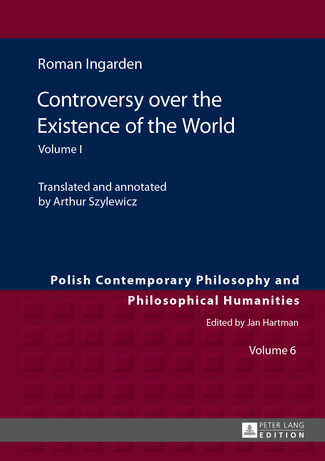
Ingarden both continued and criticized Husserl’s legacy.
The Controversy Over the Existence of the World by Roman Ingarden
I was slated to translate volume two of this work, but things didn’t work out according to plans. Ingarden is the forefather of phenomenology in Poland and its direct link to Husserl.
“Roman Ingarden (1893-1970), one of Husserl’s closest students and friends, ranks among the most eminent of the first generation of phenomenologists. His magisterial Controversy Over the Existence of the World, written during the years of World War II in occupied Poland, consists of a fundamental defense of realism in phenomenology. Volume I, which receives here its first complete and critical translation into English, initiates the grand project of refuting transcendental idealism, and begins by setting the foundations for an elaborate and precise ontological system. This is Ingarden’s greatest accomplishment, who is rather known as a theoretician of literature than an ontologist outside of Poland. The most important achievement of Ingarden’s ontology is an analysis of the modes of being of various types of objects – things, processes, events, purely intentional objects and ideas. The three-volume Controversy is perhaps the last great systematic work in the history of philosophy, and undoubtedly one of the most important works in 20th century philosophical literature.”
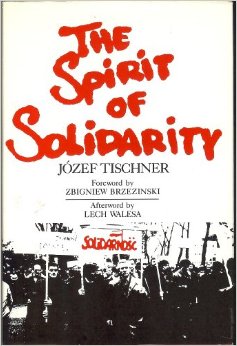
Tischner was directly involved in shaping Solidarity.
I spent most of my time in Krakow translating Jozef Tischner’s work. He is important because he was both the theorist and chaplain of Solidarity.
The Spirit of Solidarity by Jozef Tischner
This collection is comprised of a series of sermons and lectures Tischner delivered in the early days of Solidarity.
“Fr. Jozef Tischner, makes a modest but impressive debut on the American scene. The two dozen or so sermons and lectures collected here articulate a sort of ethical constitution for Polish workers. The approach is popular but thoughtful, the language restrained but forceful, the accent warmly patriotic but not chauvinistic. Tischner posits a fundamental dialectic between socialism and Christianity, between justice as the end result of class conflict and justice as a product of love. Both systems seek to promote human happiness, but thus far they have clashed and cooperated. “
Michalski was a philosopher of intensity.
I encountered Michalski during a lecture he gave on this book and during an interview I conducted with him about it. It’s as if every fiber of his being vibrated with the question you addressed to him. He was Tischner’s best student. Together they started the Institute for Human Sciences which has supported the work of outstanding scholars such as Timothy Snyder and Charles Taylor.
The Flame of Eternity: An Interpretation of Niezsche’s Thought by Krzysztof Michalski
“The Flame of Eternity provides a reexamination and new interpretation of Nietzsche’s philosophy and the central role that the concepts of eternity and time, as he understood them, played in it. According to Krzysztof Michalski, Nietzsche’s reflections on human life are inextricably linked to time, which in turn cannot be conceived of without eternity. Eternity is a measure of time, but also, Michalski argues, something Nietzsche viewed first and foremost as a physiological concept having to do with the body. The body ages and decays, involving us in a confrontation with our eventual death. It is in relation to this brute fact that we come to understand eternity and the finitude of time. Nietzsche argues that humanity has long regarded the impermanence of our life as an illness in need of curing. It is this “pathology” that Nietzsche called nihilism. Arguing that this insight lies at the core of Nietzsche’s philosophy as a whole, Michalski seeks to explain and reinterpret Nietzsche’s thought in light of it.”
Strozewski was my direct link to Husserl. His seminar was a study in close reading.
Strozewski is a walking testament to phenomenology’s lasting presence.
Existence, Sense and Values. Essays in Metaphysics and Phenomenology by Wladyslaw Strozewski
“This collection of essays is about some of the most fundamental issues connected with metaphysics, theory of values and philosophy of man. In the first part of the book, the author is trying to answer questions concerning both the methodological status of metaphysics and the main subject-matter of metaphysical investigations. He convincingly argues that metaphysics is an indispensable domain of research that may help us to understand the world and what we experience in much better manner. In the next part, the author draws our attention to the problem of existence and the ways we experience it. The question on existence is definitely the central issue of this entire volume, also in the next two parts of the book where the author focuses on values, their origins and status as well as their relationship to human nature.”
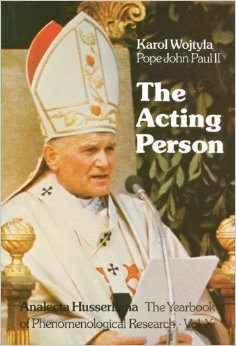
Philosophy, social action, and the church go together.
There’s been some controversy over the translation of the following Wojtyla book, but for now this is the only one available. The Polish edition was one of the main springboards for Solidarity.
The Acting Person by Karol Wojtyla
“The book stresses that Man must ceaselessly unravel his mysteries and strive for a new and more mature expression of his nature. The author sees this expression as an emphasis on the significance of the individual living in community and on the person in the process of performing an action. The author states in his preface that he has tried to face the major issues concerning life, nature, and the existence of Man directly as they present themselves to Man in his struggles to survive while maintaining the dignity of a human being, but who is torn apart between his all too limited condition and his highest aspirations to set himself free.”
Marxism and Christianity: The Quarrel and the Dialogue in Poland by Jozef Tischner
Tischner’s classic texts collected in this volume show that both he and the pope were as engaged in dialogue with Marxism as liberation theology. The situation in Poland was a lot more complex then a good versus evil Manichean battle.
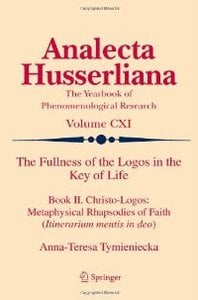
The fullness of phenomenology resides in Poland?
The Fullness of the Logos in the Key of Life: Book II. Christo-Logos: Metaphysical Rhapsodies of Faith by Anna-Teresa Tymieniecka
“This highly personal account of a lifetime’s spiritual and philosophical enquiry charts the author’s journey of faith through contemporary culture. Distinguishing between what she posits as the ‘universal’ and the ‘rhapsodic’ logos, Tymieniecka interrogates concepts as varied as creativity and the media, joy and suffering, and truth and ambiguity. She contemplates the possibilities and limits of communication between human beings, and outlines what she calls the ‘transnatural destiny’ of the human soul. The radiative meditations of this ‘rhapsodic logos’ weave their way through the entanglements of the mystery of incarnation, the constitutive archetypes, the inwardly sacred, the transnatural destiny of the soul, and finally ascend the rhapsodic scales toward culminating faith in the Christo-Logos.”
The Polish dominance over the legacy of Husserl is most apparent in Tymieniecka’s editorship of the Analecta Husserliana series. Her writings in this series are definitely worth a look.
Previous Post

August 5, 2014
The Central European and Social Heart of Phenomenology
Next Post
August 7, 2014 How Husserl Changed Catholic Attitudes Toward Judaism
Browse Our Archives
Select a Category #WhyRemainCatholic Abortion Advent Anti-Catholicism Arts Atheism Beauty Benedict XVI Bible Book Review Catholic Cinema Comedy Cosmos: A Space-Time Odyssey Czesław Miłosz Dariusz Karłowicz Devil Easter Eastern Orthodoxy Economics Environment Family Famous Atheists Who Weren't Atheists Guest Post Hans Urs von Balthasar HHS Mandate History Imagination Interview Islam Jean-Luc Marion John Paul II Judaism Just War Lent Literature Little Sisters of the Poor Liturgy Martyrdom Music News Paganism Patristics Phenomenology Philosophy Pierre Hadot Poetry Poland Pop Culture Pope Francis Poverty Prayer Protestantism Rabelais Race Remi Brague Rene Girard Russia Sam Rocha Science & Religion SCOTUS Secularization Sexual Abuse Sexuality Silence Solidarity Stratford Caldecott Synod14 Terrorism Top 10 Uncategorized Walker Percy War Weakened Edition World War II World Youth Day WYD Krakow
Select a Month July 2017 June 2017 May 2017 April 2017 March 2017 February 2017 January 2017 December 2016 October 2016 September 2016 August 2016 July 2016 June 2016 May 2016 April 2016 March 2016 February 2016 January 2016 December 2015 November 2015 October 2015 September 2015 August 2015 July 2015 June 2015 May 2015 April 2015 March 2015 February 2015 January 2015 December 2014 November 2014 October 2014 September 2014 August 2014 July 2014 May 2014 April 2014 March 2014 February 2014 January 2014 December 2013 November 2013 October 2013 September 2013 August 2013 July 2013 June 2013 May 2013
Follow Us!
TAKE THE
Religious Wisdom Quiz
Which book in the New Testament is the shortest?
Select your answer to see how you score.
Philemon Jude 3 John 2 John
Related posts from Cosmos The In Lost

The Surprising Anti-Capitalist Logic Behind the Catholic Church's...

The Holy Family as an Icon of World...

Where Does the Body of Christ Go After...

How is Classical Philosophy is Like War?
TRENDING AT PATHEOS Catholic

Rejecting Doom: Christian Hope And Human Action
Christianity is a religion of hope. We are to have hope and...

It’s What Comes From Within Which Matters
One of the most difficult things for us to understand is why...

Why I Choose the Eucharist Over the Sermon
Choose the Eucharist, Not the Sermon What are we supposed to get...

5 Design Elements Found in Spiritually Rooted Homes
Putting Spirituality Into Home Decor Our homes are more than our living...

Credo: A Story of God Told with the...
About 10 years ago, I began to imagine a personal "Credo" that...

The Anatomy of Divine Revelation in Catholic Thought
The claim that God has made Himself known to human beings is...
view all Catholic blogs
Ad-Free & Subscriber Log-In Subscription Support
- About Us
- 2026 Calendar
- Videos
- Podcasts
- Library of World Religions
- Faith In Media Tracker
- Advertise With Us
- Write for Us
- Privacy Policy
- Terms of Service
- Do Not Sell My Data
- Contact Us
- Radiant Digital
- Manage Newsletter Subscriptions
- Unsubscribe From Notifications
- Sitemap
Copyright 2008-2026, Patheos. All rights reserved.
Subscription Support Ad-Free & Subscriber Log-In
Follow Patheos