
BuddhistCatholicContemplativeEvangelicalGeneral ChristianHinduJewishLatter-day SaintMuslimNew VisionsProgressive Christian
Beliefs
- Buddhist
- Catholic
- Contemplative
- Evangelical
- General Christian
- Hindu
- Jewish
- Latter-day Saint
- More Voices
- Muslim
- New Visions
- Pagan
- Progressive Christian
Topics
- Religion News
- Food and Religion
- Sports and Religion
- Religious Art
- Religious Music and Entertainment
- Religious Events
- History and Religion
- Style and Religion
- Politics and Religion
- Women in Religion
- Recreation Outdoors and Religion
- Business Finance and Religion
- Careers Workplace and Religion
- Education and Religion
- Family Parenting and Religion
- Health Fitness and Religion
- Home and Religion
- Relationships and Religion
- Technology and Religion
- Travel and Religion
Columnists
- Buddhist Columnists
- Business Finance and Religion Columnists
- Careers Workplace and Religion Columnists
- Catholic Columnists
- Contemplative Columnists
- Education and Religion Columnists
- Evangelists Columnists
- Family Parenting and Religion Columnists
- General Christian Columnists
- Health Fitness and Religion Columnists
- Hindu Columnists
- History and Religion Columnists
- Home and Religion Columnists
- Jewish Columnists
- More Voices Columnists
- Latter Day Columnists
- Muslim Columnists
- New Visions Columnists
- Nonreligious Columnists
- Pagan Columnists
- Politics and Religion Columnists
- Progressive Columnists
- Recreation Outdoors and Religion Columnists
- Relationships and Religion Columnists
- Religion News Columnists
- Religious Art Columnists
- Religious Events Columnists
- Religious Music and Entertainment Columnists
- Sports and Religion Columnists
- Style and Religion Columnists
- Technology and Religion Columnists
- Travel and Religion Columnists
- Women in Religion Columnists
Resource Library
- 2026 Calendar
- Library of World Religions
- The 100 Most Holy Places on Earth
- Patheos Answers
- Podcasts
- Videos
- Faith Leaders Database
- Anglican Episcopalian
- Bahai
- Baptist
- Buddhism
- Christianity
- Confucianism
- Eastern Orthodoxy
- Hinduism
- Holiness and Pentecostal
- ISKCON
- Islam
- Judaism
- Lutheran
- Methodist
- The Church of Jesus Christ of Latter-day Saints
- New Age
- Paganism
- Presbytarian and Reformed
- Protestantism
- Religion Behind the Scenes
- Roman Catholic
- Scientology
- Shia Islam
- Sikhism
- Sufism
- Sunni Islam
- Taoism
- Zen
- See all religions
Research Tools
 Ad-Free & Subscriber Log-In Subscription Support
Ad-Free & Subscriber Log-In Subscription Support
Follow Patheos 

- Trending:
- Forgiveness
- |
- Marriage
- |
- Consciousness
- |
- Death Penalty
- |
- Election
- |
- Halloween
 Cosmos The In Lost
- Home
- Catholic
- The Ultimate (2x TOP10) Summer Theology Reading List!
The Ultimate (2x TOP10) Summer Theology Reading List!
Last updated on: August 18, 2014 at 3:05 pm by Artur Rosman
The Ultimate (2x TOP10) Summer Theology Reading List! 2014-08-18T15:05:35-07:00 Artur Rosman
Patheos Explore the world's faith through different perspectives on religion and spirituality! Patheos has the views of the prevalent religions and spiritualities of the world.
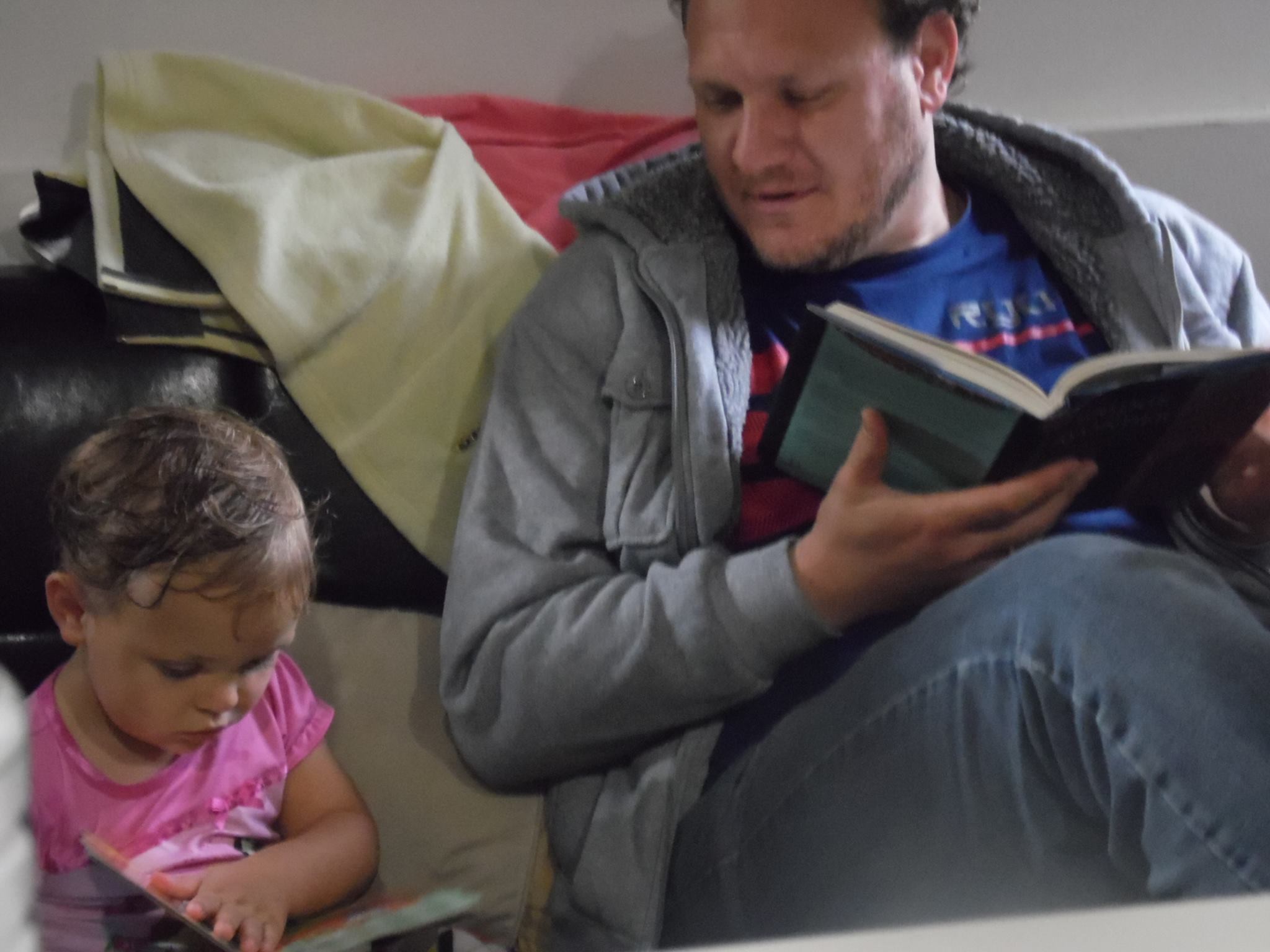
Hannah and I reading. I’m going through Bridge to Wonder, which I will review for Syndicate Theology.
The publishing world didn’t stop just because I piled on one more dissertation into the ProQuest archives.
During the writing of my dissertation the boredom of non-stop writing and my nostalgia for reading led to the development of a curious habit. Whenever three or four in the morning would roll around I’d go hounding the websites of respected publishers looking at their recent releases.
Then I’d write them.
To my surprise almost nobody turned me down.
Below is the list of newly published books that have piled higher and deeper over the few last months of my dissertation writing. I’ve included publisher blurbs for your convenience. I can’t wait to dig into these books now that I’m unemployed (by the way, you can help with rent through the papal donation button on the upper right-hand side of my homepage here).

Small book on big topic.
1) Thomas Aquinas’s “Summa theologiae”: A Biography by Bernard McGinn
“An exceptional achievement. Against the backdrop of his magisterial scholarship–already on display in his multivolume history of mysticism–McGinn offers us both a theoretical and historical introduction to this masterpiece of Christian rationality as well as a balanced appreciation of Thomism.”
—Jean-Luc Marion, University of Chicago
2) Minding the Modern: Human Agency, Intellectual Traditions, and Responsible Knowledge by Thomas Pfau
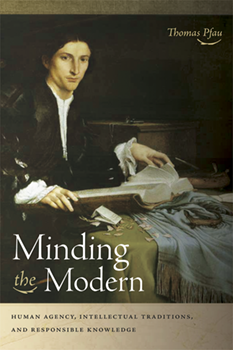
Something to put a load on your mind.
“Minding the Modern is comparable to Alasdair MacIntyre’s Whose Justice? Which Rationality? and Charles Taylor’s A Secular Age. With extraordinary erudition, Pfau locates the philosophical developments that contributed to the agony of the modern mind. Moreover, he helps us see why many who exemplify that intellectual stance do not recognize their own despair. Suffice it to say, this is an immensely important book that hopefully will be read widely and across the disciplines.”
—Stanley Hauerwas, Duke
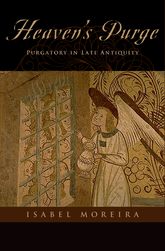
Purging can be heavenly.
3) Heaven’s Purge: Purgatory in Late Antiquity by Isabel Moreira
“This compelling investigation of the origins of purgatory gives long overdue recognition to late antique and Anglo-Saxon discussions of penance and topography of the afterlife. Moreira’s superb study reminds us how anticipation of purgatorial suffering was deeply integral to Christian life from an early date. Had it not been for belief in purgatory, and attendant fears of the painful suffering that even devout Christians would undergo in this place, the subsequent development of Catholicism would have been very different.”
—Bonnie Effros, University of Florida
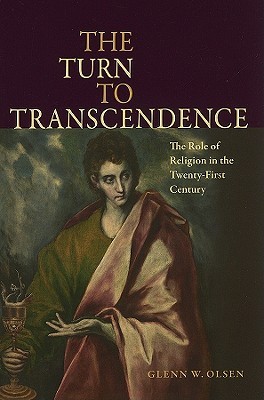
No wrong turns here.
4) The Turn to Transcendence: The Role of Religion in the Twenty-First Century by Glenn W. Olsen
“Olsen offers a unique combination of political, economic, artistic, literary, and liturgical evidence to delineate what went wrong with the rise of modernity and modernism and what needs to be done about it.”
—Dennis D. Martin, associate professor of theology, Loyola University Chicago
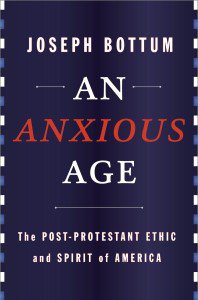
Be not afraid.
5) An Anxious Age: The Post-Protestant Ethic and the Spirit of America by Joseph Bottum
“A poet and critic and essayist with a sideline in history and philosophy [Joseph Bottum is attempting] to wrench the true complexity of faith back from the complexity-destroying context of contemporary political debates.”
—Ross Douthat, NYT
6) Philology: The Forgotten Origins of the Modern Humanities by James Turner
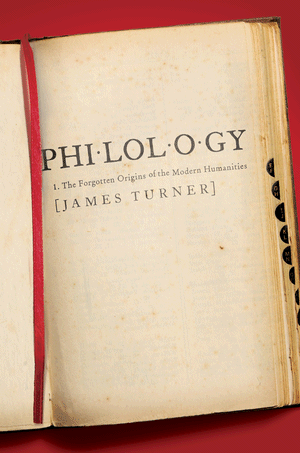
Don’t forget to read this one.
“This fascinating book makes a powerful argument: that the modern humanities derived in large part from the broad tradition of philology. This genealogy, Turner shows, clarifies the origins of both the modern research university and its disciplines, and explains similarities between such apparently diverse fields as history and comparative religion. He offers a compelling account of the role that biblical studies played in the intellectual history of modern Britain and America, and he makes sense of the development of modern literary studies in a way that no historian has managed to before. This is a gripping intellectual detective story.”
—Anthony Grafton, Princeton University
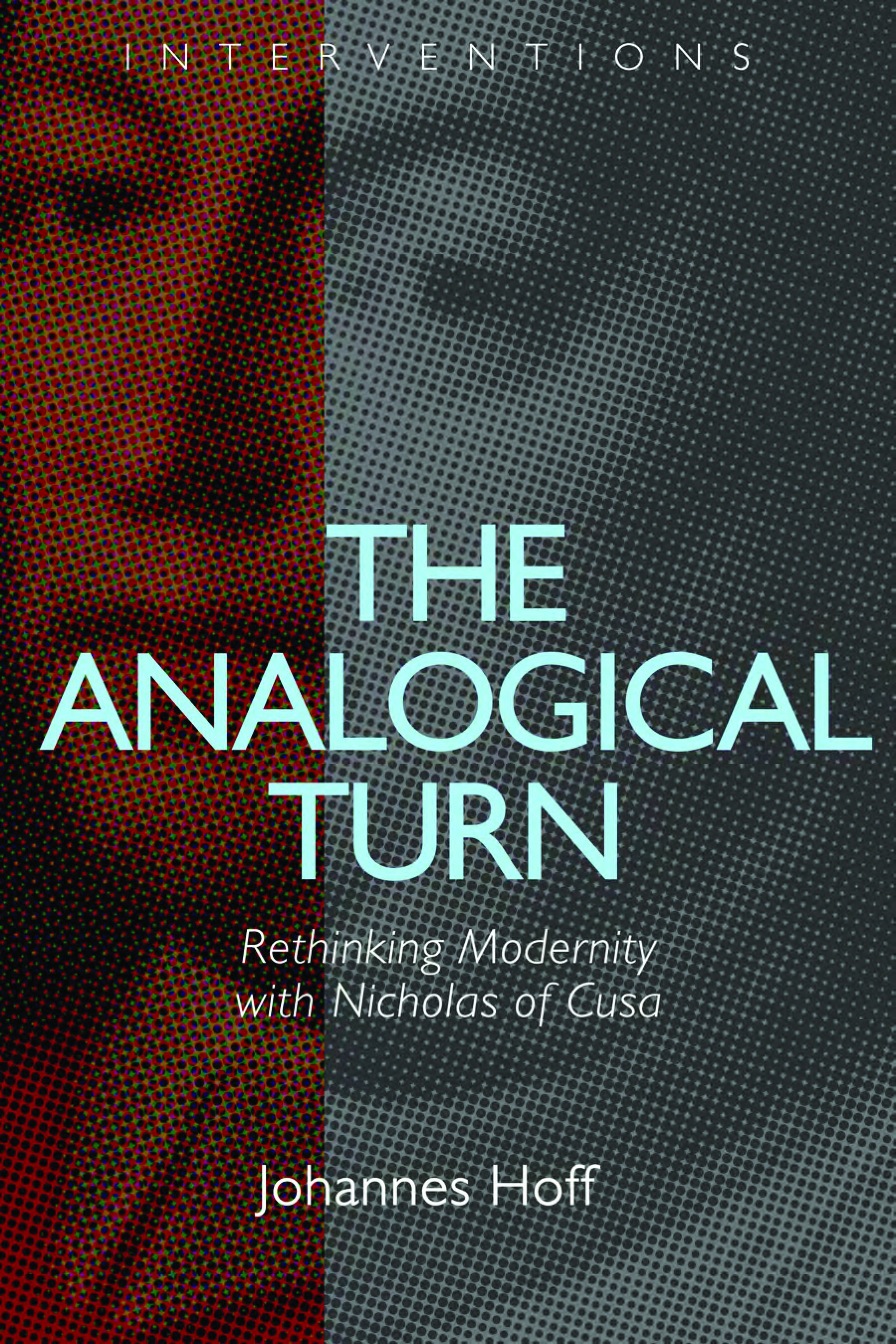
Some Anas are logical.
7) The Analogical Turn: Rethinking Modernity with Nicholas of Cusa by Johannes Hoff
“This work by Johannes Hoff crucially enhances our understanding of the origins of modernity in the late Middle Ages. He shows how the fragmented and illusory modern world in which we live was not an inevitable outcome of the cultural and intellectual upheavals of the fourteenth and fifteenth centuries. There is an alternative modernity, centered on a theological symbolic reality, which can be derived chiefly from the work of fifteenth-century theologian, philosopher, and mathematician Nicholas of Cusa. There is a way of radically rethinking our modern cultural and intellectual malaise. This is scholarship of the very highest caliber. Hoff’s book will establish itself as one of the most significant works of Christian theology and philosophy in recent years.”
—Simon Oliver, University of Wales
Giddy on up for this one.
8) King of the Jews: Temple Theology in John’s Gospel by Margaret Barker
“Only John’s Gospel says that Jesus was crucified as Jesus the Nazorean, the King of the Jews. Jesus was the keeper of the ways of the first temple in Jerusalem. These had almost been lost when the Moses traditions came to dominate in the second-temple period. Jesus’ mission was to restore the ways of the original temple. He entrusted his visions to John the Elder, a priestly disciple in Jerusalem, and John compiled them into the Book of Revelation. Later, John wrote his Gospel to show how the visions had been fulfilled. The background to the Fourth Gospel is temple tradition. John shows how Jesus’ debates with the Jews centred on the great difference between the world of the second temple and the world of the priest-kings of the first temple from which Christianity emerged. The Johannine community were the Hebrew disciples of Jesus who saw themselves as the true high priesthood restored.”
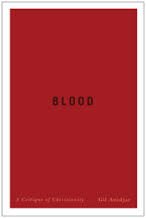
Nobody will notice if you get a papercut while reading this book.
9) Blood: A Critique of Christianity by Gil Anidjar
“In this highly original book Anidjar deconstructs ‘Christianity’ into its element: blood. In doing so he demonstrates, with impressive skill, the ubiquity of blood–and its metamorphoses–in Christian history. In this exploration of the circulation of blood as the life of nation, state, and capital, the reader is presented with an extraordinary account of modernity no less. Scholars of modernity will learn to see ‘Christianity’ as something at once more and less than ‘religion’–even though it is, as Anidjar argues, the (misleading) prototype of all religions.’ This is a work to be read carefully and its implications pondered over.”
—Talal Asad, CUNY Graduate Center
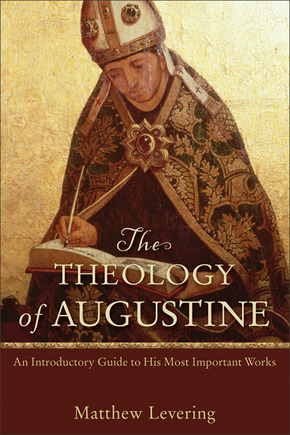
10) The Theology of Augustine: An Introductory Guide to His Most Important Works by Matthew Levering
“Levering offers to students the best introduction to Augustine devised so far. He makes clear that Augustine himself was no ‘Augustinian’; even though he invented subjective angst and had an acute sense of sin, Augustine was also a humanist and a profound metaphysician. This book successfully inducts us into the bishop of Hippo’s integral blend of soul-searching, critical reading of sacred texts, ontological reflection, and social activism.”
—John Milbank, University of Nottingham
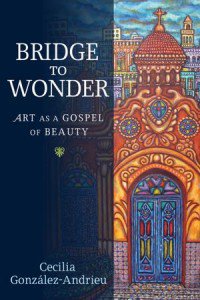
Worth the price of the toll?
11) Bridge to Wonder: Art as a Gospel of Beauty by Cecilia González-Andrieu
Gonzalez-Andrieu’s passionately expressed desire is that hearts as well as eyes be opened to the love-inspiring and transformative power of beauty, which is both eternal and earthly, intended and accidental, and often found in the most unexpected places. The divine gift of vision is the beginning of redemption.”
—Robin Jensen, Vanderbilt University
It all comes down to sex.
12) How the West Really Lost God: A New Theory of Secularization by Mary Eberstadt
“Mary Eberstadt’s account of the connection between religion and family, showing that the two institutions rise and fall together, is finely written, impressively argued and entirely persuasive. This book tells us much about the condition of Western societies today and reminds us that the atheists and the Nietzscheans owe their influence less to the truth of their views than to the loneliness to which they appeal.”
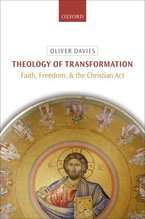
The Optimus Prime of theology reads.
13) Theology of Transformation: Faith, Freedom, and the Christian Act by Oliver Davies
“Significant advances in science bring new understandings of the human as a unity of mind, body, and world and calls into question the deep-seated dualistic presuppositions of modern theology. Oliver Davies argues that the changing framework allows a return to the defining question of the Easter Church: ‘Where is Jesus Christ?’ This is a question which can bring about a fundamental reorientation of theology, since it gives space for the theological reception of the disruptive presence of the living Christ as the present material as well as formal object of theology in the world. At the centre of this study therefore is a new theology of the doctrine of the exaltation of Christ, based upon St. Paul’s encounter with the exalted or commissioning Christ on the road to Damascus. This places calling and commissioning at the center of systematic theology. It provides the ground for a new understanding of theology as transcending the Academy-Church division as well as the divide between systematic and practical theology. It points also to a new critical theological method of engagement and collaboration.”
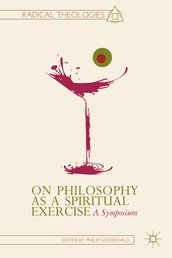
14) On Philosophy as a Spiritual Exercise: A Symposium by Philip Goodchild
“Very few writers today are willing, in an age of conformity and uniformity, to experiment. How rare it is to read a book that is both original in thought and style. Using Plato’s Symposium as his guide, Goodchild reinvigorates the original practice of philosophy for our times as a spiritual journey of self-questioning and discovery.”
—William Large, President of the British Society of Phenomenology
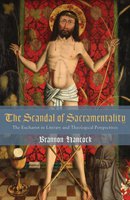
A vine divine.
15) The Scandal of Sacramentality: The Eucharist in Literary and Theological Perspectives by Brannon Hancock
“In the texts addressed by Hancock here we return to the body in all its messy complexity, and therefore to the mystery that lies at the very heart of the incarnation, the Word made flesh. . . . For some, this may seem a profane book–but it is in its heart deeply sacramental and, perhaps, even devout. Yet it is timely and challenging, a reminder that religion, and the Christian sacramental tradition, remains a central part of our world and our experience of what it is to be human.
—David Jasper, University of Glasgow
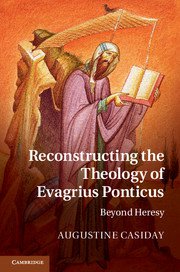
Some assembly required.
16) Reconstructing the Theology of Evagrius Ponticus: Beyond Heresy by Augustine Casiday
“Evagrius Ponticus is regarded by many scholars as the architect of the eastern heresy Origenism, as his theology corresponded to the debates that erupted in 399 and episodically thereafter, culminating in the Second Council of Constantinople in 553 AD. However some scholars now question this conventional interpretation of Evagrius’ place in the Origenist controversies. Augustine Casiday sets out to reconstruct Evagrius’ theology in its own terms, freeing interpretation of his work from the reputation for heresy that overwhelmed it, and studying his life, writings and evolving legacy in detail.”
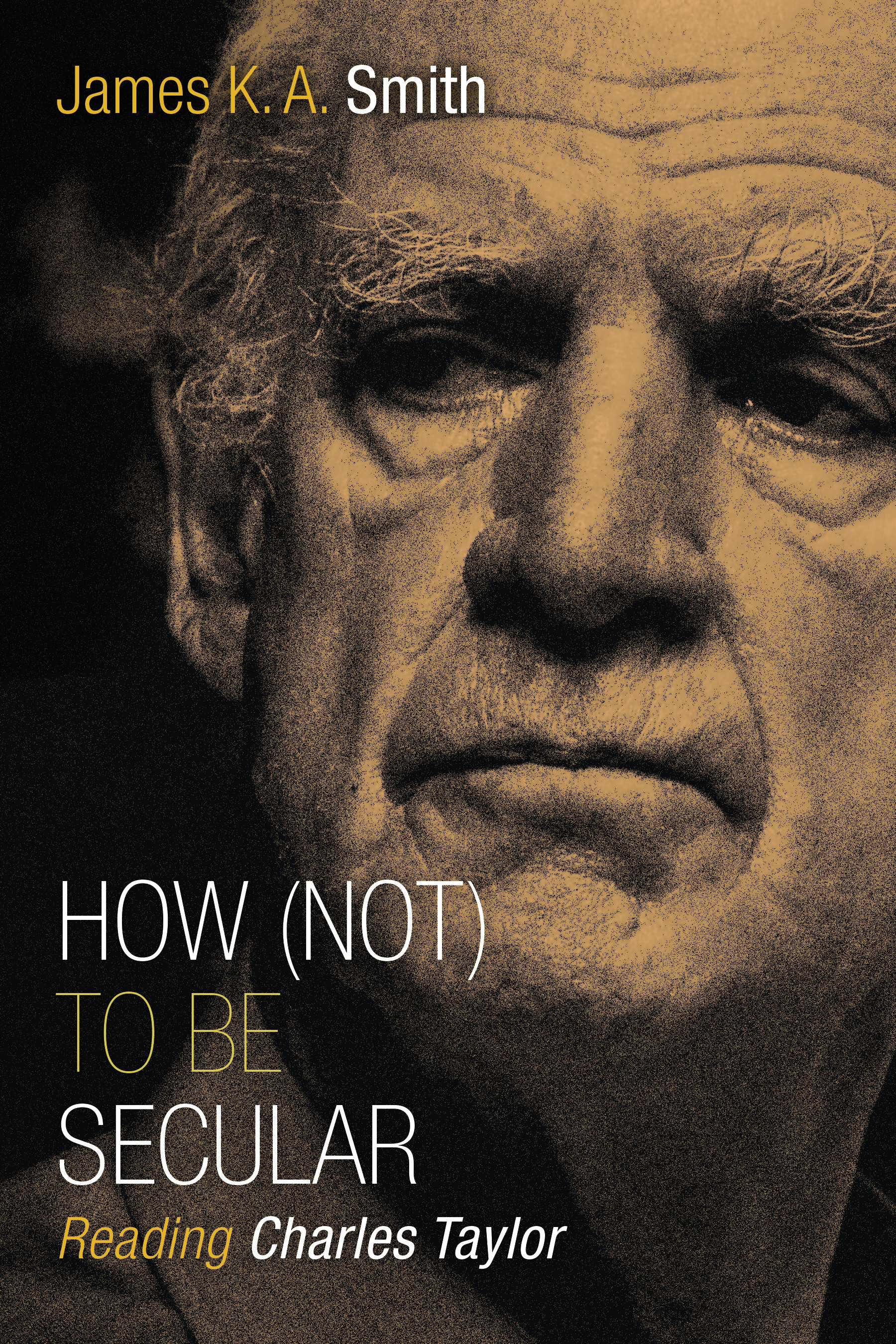
A cover that would make Goldie Hawn jealous.
17) How (Not) To Be Secular by James K.A. Smith
“Charles Taylor’s daunting tome, A Secular Age, has just turned a great deal less intimidating. Combining his usual lucid style, his love for literature, and his passion for the church’s future, Jamie Smith offers a faithful guide through the pages of Taylor’s monumental work. Along the way, he wisely cautions his co-religionists against facile responses to the ‘disenchantment’ of modernity, but he also insists that the Christian faith may have much more going for it than many recognize.”
—Hans Boersma, Regent College
The newest oldest fashion.
18) Turning to Tradition: Converts and the Making of an American Orthodox Church by D. Oliver Herbel
“Turning to Tradition is a powerful and convincing argument for viewing Orthodoxy as something more than ethno-religiosity. Alongside the cradle Orthodox in this volume are a variety of converts–African-Americans, former Evangelicals, and former Eastern-Rite Catholics–each with its own story. In the process of telling their stories, Herbel shows how converts have substantially reshaped North American Orthodoxy. At a time when growing numbers opt out of Christian faith traditions, or choose a faith tradition they were not raised in, these American converts are crucial for understanding twenty-first-century Orthodox identity.”
—Michael J. McClymond, Professor of Modern Christianity, Saint Louis University
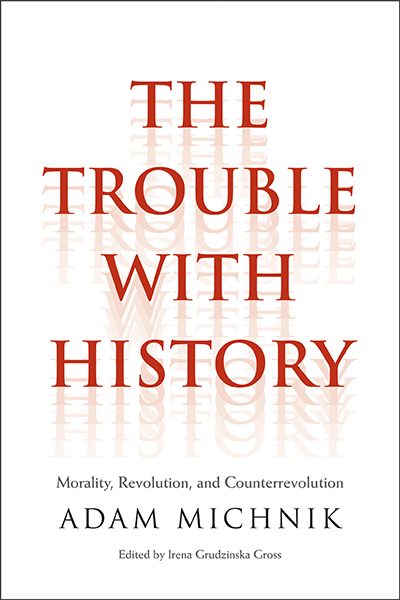
What troubles?
19) The Trouble with History: Morality, Revolution, and Counterrevolution by Adam Michnik
“This is a thoughtful and thought-provoking essay on the borderlines of history, politics, and literature by one of East Europe’s most brilliant and respected public intellectuals. Written with clarity, erudition and political incisiveness, it provides an unusual perspective on a highly sensitive subject.”
—Jacques Rupnik, Sciences-Po, Paris
I told you sex sells.
20) From Shame to Sin by Kyle Harper
“Kyle Harper’s book From Shame to Sin: The Christian Transformation of Sexual Morality in Late Antiquity is a scintillating contribution. Not only does it measure the exact nature of the tension between the familiar and the deeply unfamiliar that lies behind our image of the sexual morality of Greeks and Romans of the Roman Empire of the classical period. It also goes on to evoke the sheer, unexpected strangeness of the very different sexual code elaborated in early Christian circles, and its sudden, largely unforeseen undermining of a very ancient social equilibrium in the two centuries that followed the conversion of Constantine to Christianity in 312…What Harper has done with this peremptory material is remarkable. He has imposed a firm narrative structure, based on the progress of the laws, on the history of sex in late antiquity.”
—Peter Brown, Princeton University
If you like what you see in this list then take a look at my other TOP10 lists here. The ones about French Phenomenology, Science and Religion, and the Best Theology Books of the Last 10 Years have been especially popular.
Previous Post

July 12, 2014
Papal World Cup Final 2014: Argentina is on God's Side #QED
Next Post
July 16, 2014 Polish Poetry: Milosz, Herbert, & Kamienska on Suffering & Insight
Browse Our Archives
Select a Category #WhyRemainCatholic Abortion Advent Anti-Catholicism Arts Atheism Beauty Benedict XVI Bible Book Review Catholic Cinema Comedy Cosmos: A Space-Time Odyssey Czesław Miłosz Dariusz Karłowicz Devil Easter Eastern Orthodoxy Economics Environment Family Famous Atheists Who Weren't Atheists Guest Post Hans Urs von Balthasar HHS Mandate History Imagination Interview Islam Jean-Luc Marion John Paul II Judaism Just War Lent Literature Little Sisters of the Poor Liturgy Martyrdom Music News Paganism Patristics Phenomenology Philosophy Pierre Hadot Poetry Poland Pop Culture Pope Francis Poverty Prayer Protestantism Rabelais Race Remi Brague Rene Girard Russia Sam Rocha Science & Religion SCOTUS Secularization Sexual Abuse Sexuality Silence Solidarity Stratford Caldecott Synod14 Terrorism Top 10 Uncategorized Walker Percy War Weakened Edition World War II World Youth Day WYD Krakow
Select a Month July 2017 June 2017 May 2017 April 2017 March 2017 February 2017 January 2017 December 2016 October 2016 September 2016 August 2016 July 2016 June 2016 May 2016 April 2016 March 2016 February 2016 January 2016 December 2015 November 2015 October 2015 September 2015 August 2015 July 2015 June 2015 May 2015 April 2015 March 2015 February 2015 January 2015 December 2014 November 2014 October 2014 September 2014 August 2014 July 2014 May 2014 April 2014 March 2014 February 2014 January 2014 December 2013 November 2013 October 2013 September 2013 August 2013 July 2013 June 2013 May 2013
Follow Us!
TAKE THE
Religious Wisdom Quiz
Whom did Paul leave sick at Miletus, showing that early Christians sometimes suffered illness?
Select your answer to see how you score.
Silas Timothy Barnabas Trophimus
Related posts from Cosmos The In Lost

The Surprising Anti-Capitalist Logic Behind the Catholic Church's...

How is Classical Philosophy is Like War?

Why Does the World's Leading Philosopher Remain a...

Biblical Authority After Babel Cannot Be Built Upon...
TRENDING AT PATHEOS Catholic

Rejecting Doom: Christian Hope And Human Action
Christianity is a religion of hope. We are to have hope and...

It’s What Comes From Within Which Matters
One of the most difficult things for us to understand is why...

Why I Choose the Eucharist Over the Sermon
Choose the Eucharist, Not the Sermon What are we supposed to get...

5 Design Elements Found in Spiritually Rooted Homes
Putting Spirituality Into Home Decor Our homes are more than our living...

Credo: A Story of God Told with the...
About 10 years ago, I began to imagine a personal "Credo" that...

The Anatomy of Divine Revelation in Catholic Thought
The claim that God has made Himself known to human beings is...
view all Catholic blogs
Ad-Free & Subscriber Log-In Subscription Support
- About Us
- 2026 Calendar
- Videos
- Podcasts
- Library of World Religions
- Faith In Media Tracker
- Advertise With Us
- Write for Us
- Privacy Policy
- Terms of Service
- Do Not Sell My Data
- Contact Us
- Radiant Digital
- Manage Newsletter Subscriptions
- Unsubscribe From Notifications
- Sitemap
Copyright 2008-2026, Patheos. All rights reserved.
Subscription Support Ad-Free & Subscriber Log-In
Follow Patheos