
BuddhistCatholicContemplativeEvangelicalGeneral ChristianHinduJewishLatter-day SaintMuslimNew VisionsProgressive Christian
Beliefs
- Buddhist
- Catholic
- Contemplative
- Evangelical
- General Christian
- Hindu
- Jewish
- Latter-day Saint
- More Voices
- Muslim
- New Visions
- Pagan
- Progressive Christian
Topics
- Religion News
- Food and Religion
- Sports and Religion
- Religious Art
- Religious Music and Entertainment
- Religious Events
- History and Religion
- Style and Religion
- Politics and Religion
- Women in Religion
- Recreation Outdoors and Religion
- Business Finance and Religion
- Careers Workplace and Religion
- Education and Religion
- Family Parenting and Religion
- Health Fitness and Religion
- Home and Religion
- Relationships and Religion
- Technology and Religion
- Travel and Religion
Columnists
- Buddhist Columnists
- Business Finance and Religion Columnists
- Careers Workplace and Religion Columnists
- Catholic Columnists
- Contemplative Columnists
- Education and Religion Columnists
- Evangelists Columnists
- Family Parenting and Religion Columnists
- General Christian Columnists
- Health Fitness and Religion Columnists
- Hindu Columnists
- History and Religion Columnists
- Home and Religion Columnists
- Jewish Columnists
- More Voices Columnists
- Latter Day Columnists
- Muslim Columnists
- New Visions Columnists
- Nonreligious Columnists
- Pagan Columnists
- Politics and Religion Columnists
- Progressive Columnists
- Recreation Outdoors and Religion Columnists
- Relationships and Religion Columnists
- Religion News Columnists
- Religious Art Columnists
- Religious Events Columnists
- Religious Music and Entertainment Columnists
- Sports and Religion Columnists
- Style and Religion Columnists
- Technology and Religion Columnists
- Travel and Religion Columnists
- Women in Religion Columnists
Resource Library
- 2026 Calendar
- Library of World Religions
- The 100 Most Holy Places on Earth
- Patheos Answers
- Podcasts
- Videos
- Faith Leaders Database
- Anglican Episcopalian
- Bahai
- Baptist
- Buddhism
- Christianity
- Confucianism
- Eastern Orthodoxy
- Hinduism
- Holiness and Pentecostal
- ISKCON
- Islam
- Judaism
- Lutheran
- Methodist
- The Church of Jesus Christ of Latter-day Saints
- New Age
- Paganism
- Presbytarian and Reformed
- Protestantism
- Religion Behind the Scenes
- Roman Catholic
- Scientology
- Shia Islam
- Sikhism
- Sufism
- Sunni Islam
- Taoism
- Zen
- See all religions
Research Tools
 Ad-Free & Subscriber Log-In Subscription Support
Ad-Free & Subscriber Log-In Subscription Support
Follow Patheos 

- Trending:
- Forgiveness
- |
- Marriage
- |
- Consciousness
- |
- Death Penalty
- |
- Election
- |
- Halloween
 Cosmos The In Lost
- Home
- Catholic
- Barker’s First Temple Fireworks: Christianity, Judaism, Islam
Barker’s First Temple Fireworks: Christianity, Judaism, Islam
Last updated on: December 23, 2014 at 4:53 pm by Artur Rosman
Barker’s First Temple Fireworks: Christianity, Judaism, Islam 2014-12-23T16:53:10-07:00 Artur Rosman
Patheos Explore the world's faith through different perspectives on religion and spirituality! Patheos has the views of the prevalent religions and spiritualities of the world.
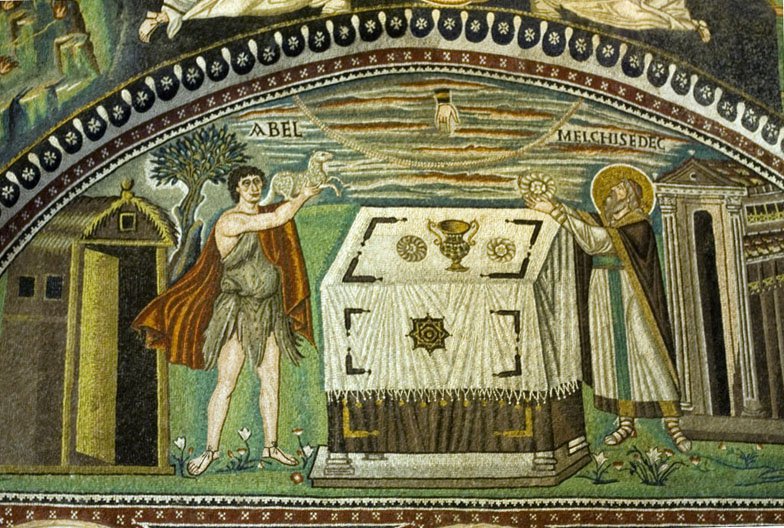
Margaret Barker gives you the lost story behind Melchizedek, the First Temple, the strange Jewish roots of Early Christianity, and more. Melchizedek fresco in Ravenna, Italy.
The ISIS attempts at reestablishing the caliphate are getting much press of late. They goaded me into recycling the following three older posts on Islam: Islam Does Not Need a Reformation, TOP10: Religion and World Politics Reading List, and Christianity is Neither a Monotheism Nor a Religion of the Book. All three posts engage the relationship between Islam and Christianity in some way.
That well has run dry, so I’m going to turn to some new material. The relationship between Christianity and Islam is probably much closer than most Christians and Muslims realize. The revelations contained in the recently translated book, The Syro-Aramaic Reading of the Koran, are one example.
The anonymous author of this book argues that the very language of the Koran derives from earlier Syriac-Christian writings. According to “Luxenberg,” the Koran can only be properly understood in this initial context. When this is done lots of things that didn’t make sense before turn out to be bad translations from Syriac into Arabic (like the 70 virgins).
The Methodist Biblical scholar Margaret Barker provides another angle on this relationship with Islam in her Temple Theology: An Introduction. The book is a summary of her research into the lost First Temple tradition (supplanted by Josiah’s “Reforms” that shaped the traditions of the Second Temple) and its importance for the emergence of Christianity.
[Listen to Barker give the Schmemann Lecture on the topic “Our Great High Priest: The Church Is the New Temple” on Ancient Faith Radio here.]
The following excerpt from Temple Theology gives you a basic rundown of Barker’s project while making interesting connections with Islam, especially the Kaaba:
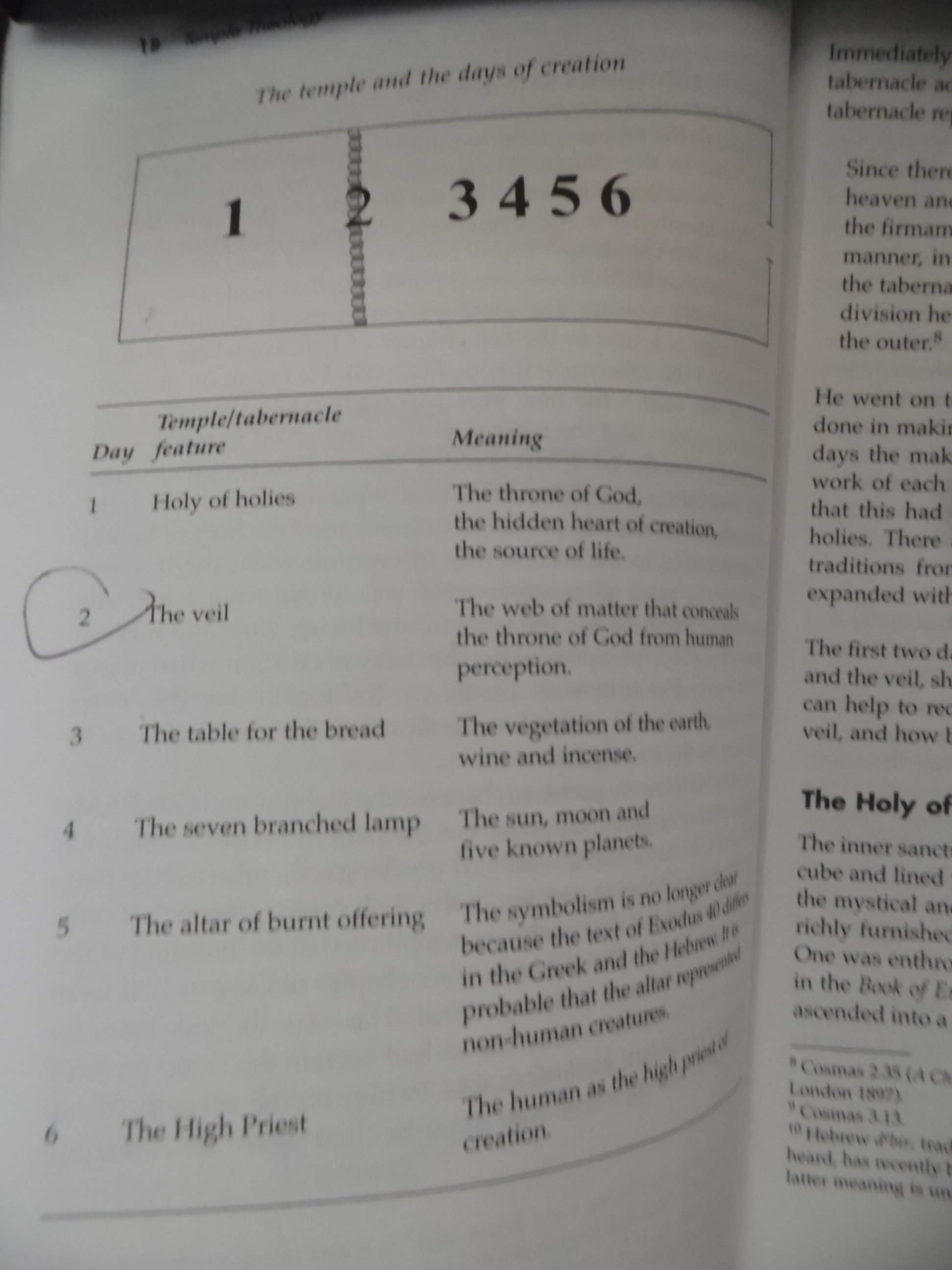
Barker’s account in Temple Theology of how the structure of the First Temple recapitulated the creation myth of Genesis. It’s a topic for another post.
“Jewish tradition remembered and recorded that many priests of the original temple had fled to Arabia after the time of Josiah’s purge. They must have taken with them the faith of the older temple. Paul also spent time in ‘Arabia’ (Gal. 1:17) before returning and arguing that the roots of Christianity lay in the faith of Abraham.
Traditions associated with the origin of Islam knew that there had been another ancient faith that was neither Christianity nor Judaism. There earliest account of the life of Muhammad was written by Ibn Ishaq in the middle of the 8th century CE and so only about 100 years after the time of Muhammad. Before the prophet appeared, he wrote, four good men set out to seek the religion of their father Abraham, which they believed their people had corrupted. ‘They went their several ways in the lands, seeking the Hanifiya, the religion of Abraham.’ One of them eventually met a Christian monk in Syria who told him there was nobody left who could guide him to the religion of Abraham, but that a new prophet would soon appear. The Qur’an too distinguished between the religion of Abraham and the religion of Moses… Much of the Temple lore re-emerged in Islam; the traditional dimensions of the holy of holies are also those of the Kaaba.”
Now how much does this complicate our notions of Christian origins? Could it possibly make inter-religious dialogue easier–at least between the three great monotheistic traditions? Does this prove Brague wrong?
I don’t know. Possibly.
That remains to be seen as Barker’s work continues to carve out a place for itself in the mainstream of biblical studies. She argues the nature of the topic will almost necessarily keep her work controversial, but it also has an advantage over the established assumptions:
“Recovering the world of the original temple is not a simple matter. There is no single text which reveals the lost world and proves beyond any doubt that what I am proposing was the case. What is beyond doubt is the unsatisfactory and even unreasonable account of ‘New Testament background’ which has prevailed for so long. It has been assumed that rabbinic texts from a period long after the New Testament could be used to illustrate the New Testament situation, but that the writings of Philo of Alexandria, a Jewish contemporary of Jesus in Egypt, were suspect because they were so different from the rabbinic texts.”
I should add that reading Barker is a bit like reading a great mystery novel. You keep picking up on all these little details that create a bigger biblical picture you never suspected was there.
It’s a lot of fun!
[Listen to Barker give the Schmemann Lecture on the topic “Our Great High Priest: The Church Is the New Temple” on Ancient Faith Radio here.]
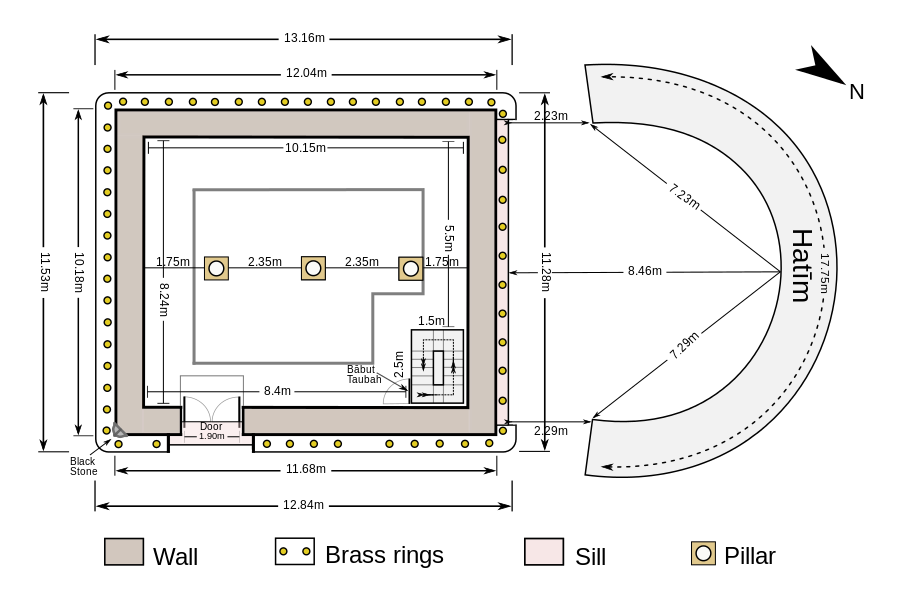
Here be the Kaaba dimensions she mentions. Could there be an ancient Jewish-Christian genealogy to this sacred structure of Islam?
Previous Post

July 8, 2014
Were Catholics Targeted by the Conservative Culture Wars?
Next Post
July 12, 2014 Papal World Cup Final 2014: Argentina is on God's Side #QED
Browse Our Archives
Select a Category #WhyRemainCatholic Abortion Advent Anti-Catholicism Arts Atheism Beauty Benedict XVI Bible Book Review Catholic Cinema Comedy Cosmos: A Space-Time Odyssey Czesław Miłosz Dariusz Karłowicz Devil Easter Eastern Orthodoxy Economics Environment Family Famous Atheists Who Weren't Atheists Guest Post Hans Urs von Balthasar HHS Mandate History Imagination Interview Islam Jean-Luc Marion John Paul II Judaism Just War Lent Literature Little Sisters of the Poor Liturgy Martyrdom Music News Paganism Patristics Phenomenology Philosophy Pierre Hadot Poetry Poland Pop Culture Pope Francis Poverty Prayer Protestantism Rabelais Race Remi Brague Rene Girard Russia Sam Rocha Science & Religion SCOTUS Secularization Sexual Abuse Sexuality Silence Solidarity Stratford Caldecott Synod14 Terrorism Top 10 Uncategorized Walker Percy War Weakened Edition World War II World Youth Day WYD Krakow
Select a Month July 2017 June 2017 May 2017 April 2017 March 2017 February 2017 January 2017 December 2016 October 2016 September 2016 August 2016 July 2016 June 2016 May 2016 April 2016 March 2016 February 2016 January 2016 December 2015 November 2015 October 2015 September 2015 August 2015 July 2015 June 2015 May 2015 April 2015 March 2015 February 2015 January 2015 December 2014 November 2014 October 2014 September 2014 August 2014 July 2014 May 2014 April 2014 March 2014 February 2014 January 2014 December 2013 November 2013 October 2013 September 2013 August 2013 July 2013 June 2013 May 2013
Follow Us!
TAKE THE
Religious Wisdom Quiz
True or False: Samson's strength came from his long hair.
Select your answer to see how you score.
FALSE TRUE
Related posts from Cosmos The In Lost

The Surprising Anti-Capitalist Logic Behind the Catholic Church's...

How is Classical Philosophy is Like War?

Why Does the World's Leading Philosopher Remain a...

Post-Execution Church: Rise Up from the Electric Chair!
TRENDING AT PATHEOS Catholic

Rejecting Doom: Christian Hope And Human Action
Christianity is a religion of hope. We are to have hope and...

It’s What Comes From Within Which Matters
One of the most difficult things for us to understand is why...

Why I Choose the Eucharist Over the Sermon
Choose the Eucharist, Not the Sermon What are we supposed to get...

5 Design Elements Found in Spiritually Rooted Homes
Putting Spirituality Into Home Decor Our homes are more than our living...

Credo: A Story of God Told with the...
About 10 years ago, I began to imagine a personal "Credo" that...

The Anatomy of Divine Revelation in Catholic Thought
The claim that God has made Himself known to human beings is...
view all Catholic blogs
Ad-Free & Subscriber Log-In Subscription Support
- About Us
- 2026 Calendar
- Videos
- Podcasts
- Library of World Religions
- Faith In Media Tracker
- Advertise With Us
- Write for Us
- Privacy Policy
- Terms of Service
- Do Not Sell My Data
- Contact Us
- Radiant Digital
- Manage Newsletter Subscriptions
- Unsubscribe From Notifications
- Sitemap
Copyright 2008-2026, Patheos. All rights reserved.
Subscription Support Ad-Free & Subscriber Log-In
Follow Patheos