
BuddhistCatholicContemplativeEvangelicalGeneral ChristianHinduJewishLatter-day SaintMuslimNew VisionsProgressive Christian
Beliefs
- Buddhist
- Catholic
- Contemplative
- Evangelical
- General Christian
- Hindu
- Jewish
- Latter-day Saint
- More Voices
- Muslim
- New Visions
- Pagan
- Progressive Christian
Topics
- Religion News
- Food and Religion
- Sports and Religion
- Religious Art
- Religious Music and Entertainment
- Religious Events
- History and Religion
- Style and Religion
- Politics and Religion
- Women in Religion
- Recreation Outdoors and Religion
- Business Finance and Religion
- Careers Workplace and Religion
- Education and Religion
- Family Parenting and Religion
- Health Fitness and Religion
- Home and Religion
- Relationships and Religion
- Technology and Religion
- Travel and Religion
Columnists
- Buddhist Columnists
- Business Finance and Religion Columnists
- Careers Workplace and Religion Columnists
- Catholic Columnists
- Contemplative Columnists
- Education and Religion Columnists
- Evangelists Columnists
- Family Parenting and Religion Columnists
- General Christian Columnists
- Health Fitness and Religion Columnists
- Hindu Columnists
- History and Religion Columnists
- Home and Religion Columnists
- Jewish Columnists
- More Voices Columnists
- Latter Day Columnists
- Muslim Columnists
- New Visions Columnists
- Nonreligious Columnists
- Pagan Columnists
- Politics and Religion Columnists
- Progressive Columnists
- Recreation Outdoors and Religion Columnists
- Relationships and Religion Columnists
- Religion News Columnists
- Religious Art Columnists
- Religious Events Columnists
- Religious Music and Entertainment Columnists
- Sports and Religion Columnists
- Style and Religion Columnists
- Technology and Religion Columnists
- Travel and Religion Columnists
- Women in Religion Columnists
Resource Library
- 2026 Calendar
- Library of World Religions
- The 100 Most Holy Places on Earth
- Patheos Answers
- Podcasts
- Videos
- Faith Leaders Database
- Anglican Episcopalian
- Bahai
- Baptist
- Buddhism
- Christianity
- Confucianism
- Eastern Orthodoxy
- Hinduism
- Holiness and Pentecostal
- ISKCON
- Islam
- Judaism
- Lutheran
- Methodist
- The Church of Jesus Christ of Latter-day Saints
- New Age
- Paganism
- Presbytarian and Reformed
- Protestantism
- Religion Behind the Scenes
- Roman Catholic
- Scientology
- Shia Islam
- Sikhism
- Sufism
- Sunni Islam
- Taoism
- Zen
- See all religions
Research Tools
 Ad-Free & Subscriber Log-In Subscription Support
Ad-Free & Subscriber Log-In Subscription Support
Follow Patheos 

- Trending:
- Forgiveness
- |
- Marriage
- |
- Consciousness
- |
- Death Penalty
- |
- Election
- |
- Halloween
 Cosmos The In Lost
- Home
- Catholic
- Saint Socrates: What Damon Linker Got Wrong About Philosophy
Saint Socrates: What Damon Linker Got Wrong About Philosophy
Last updated on: February 9, 2017 at 4:06 pm by Artur Rosman
Saint Socrates: What Damon Linker Got Wrong About Philosophy 2017-02-09T16:06:21-07:00 Artur Rosman
Patheos Explore the world's faith through different perspectives on religion and spirituality! Patheos has the views of the prevalent religions and spiritualities of the world.
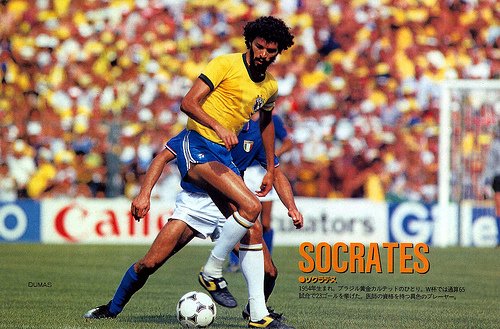
Philiosophy, way of life: Socrates did a lot more than just exercise the mind.
When translating the book Socrates and Other Saints I learned that Erasmus, among others, called Socrates a saint.
How strange does that sound to your ear? It shouldn’t.
The notion of spiritual exercises was first developed by the Greek philosophers and only later taken up (and democratized) by Christian thinkers. Ignatius of Loyola came fairly late in this tradition. Actually, very late, his Spiritual Exercises were a recovery of the tradition of the spiritual exercises after it went mostly underground during the scholastic period.
A couple of weeks ago I wrote a piece, “Science Doesn’t Think,” taking up Damon Linker’s critique of Neil deGrasse Tyson’s philistinism. He was correct in pointing out how metaphysics precedes science in setting down the fundamental preconditions for our understanding anything.
But there was a flaw in his argument in the following passage:
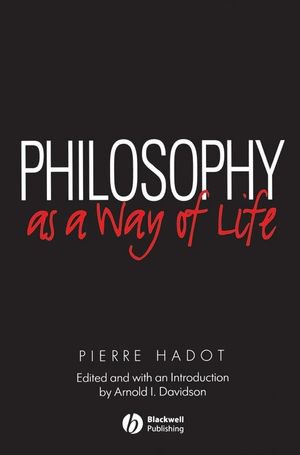
This book philosophy back into its true original context: the spiritual exercises.
Socrates appears to have been one of these natural philosophers in his youth. But at some point he became convinced that the anti-dogmatism of his fellow philosophers concealed an even deeper dogmatism. Like the poets, politicians, and craftsmen he regularly talked to on the streets of Athens, the natural philosophers were incapable of giving a coherent account of their own activity and why it was good. They couldn’t explain the nature and origins of the concepts they presupposed in their own thinking. They couldn’t consistently define what they meant by such fundamental ideas as truth, goodness, nobility, beauty, and justice. Neither could they consistently explain what they hoped for from the knowledge they so passionately pursued.
If the natural philosophers truly wished to liberate themselves from dogma in all of its forms and live lives of complete intellectual wakefulness and self-awareness, they would need to pose far more searching questions. They would need to begin reflecting on human nature as both a part of and distinct from the wider natural world. They would need to begin examining their own minds and motives, very much including their motives in taking up the pursuit of philosophical knowledge in the first place.
Philosophy rightly understood is the mind’s rigorous, open-ended, radically undogmatic pursuit of this self-knowledge.
This makes the Greeks look like ancient Voltaires pursuing knowledge for the sake of knowledge itself. But there was actually a fair share of dogmatism in their pursuits. What the philosophers wanted to do was to transform themselves, rather than merely endlessly continuing the questioning for the sake of questioning like analytical philosophers.
Linker’s description is also too disembodied. Dariusz Karlowicz in Socrates and Other Saints argues convincingly that Socrates, Plato, even Aristotle did much more than think freely. They adhered to a set of spiritual exercises that ranged from intellectual pursuits to gymnastics. The goal was transforming one’s whole being to be more in tune with the order of the cosmos.
This was done in philosophical schools. The followers of Socrates we see everywhere in texts about him are one such group. Much like monastic communities (the main Christian inheritors of this tradition) these groups had strict sets of rules about what activities, mental and physical, had to be performed in order to create a perfected human being. Apparently, if they were anonymous Christians, they didn’t much believe in irresistible grace!
These quasi monastic groups were so dogmatic about what exercises were best for furnishing the mind of a wise man that they spent a considerable amount of time debunking the words and deeds of the leaders of opposing schools. If their opponents could be exposed as shams, as not having learned how to die properly (like Socrates), then their school would be partially vindicated as being correct.
The ten volumes of The Lives of Eminent Philosophers by Diogenes Laertius are chock-full of amusing examples of mutual debunkings and accusations between schools. It also lists some of the exercises unique to each school. These were usually set down by an exemplary figure who gathered followers around himself, hence Saint Socrates. Furthermore, it was believed that martyrdom was the best way to attest to the truth of one’s teachings (or the founder of one’s school), because it showed that one is willing to pay the ultimate price for the teaching, and that they make one spiritually resilient enough to stand the ultimate test.
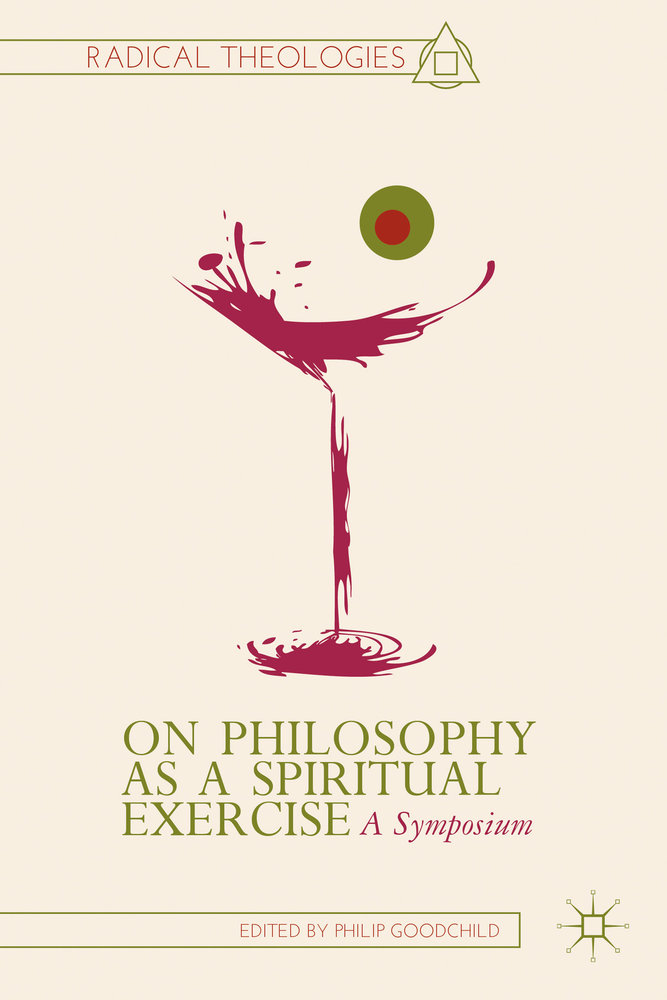
Symposium: I sometimes like to think drinking is a spiritual exercise.
All of this assumed that there is a correct way of life that would give you penetrating epistemological insight, but, and this is a BIG BUT, only at the end of the road of repeating sayings of sages (basically prayer), fasting, exercise, and mastering math and other intellectual pursuits (not for their own sake, but for the sake of self-transformation).
Recent philosophy and theology is tapping into this tradition after the groundbreaking work of Pierre Hadot recovered it. I’ve already written a little about Jean-Yves Lacoste’s From Theology to Theological Thinking. John Milbank’s Beyond Secular Order also discusses how ancient philosophy collapsed the boundaries between theology, philosophy, and life, but I haven’t gotten far enough in the book to see where he takes it. Milbank’s colleague at Nottingham has a whole book that revolves around holding a conversation with sources ancient and modern on philosophy as a way of life. It’s entitled On Philosophy as a Spiritual Exercise: A Symposium. A review copy of his book just arrived from the publishers yesterday and I can’t wait to dip into it whenever/if I find some free time in the coming weeks.
You can glimpse what Goodchild is up to in the following interview on the topic of spiritual exercises:
For good measure, here are the career highlights of the Brazilian soccer great Socrates:
http://www.youtube.com/watch?v=XcqAD697Cbk
If I were properly philosophical I’d be reciting the Liturgy of the Hours instead of writing this post.
Previous Post

May 7, 2014
Science Doesn't Think: Neil deGrasse Tyson Busts a Move on Philosophy
Next Post
July 8, 2014 Were Catholics Targeted by the Conservative Culture Wars?
Browse Our Archives
Select a Category #WhyRemainCatholic Abortion Advent Anti-Catholicism Arts Atheism Beauty Benedict XVI Bible Book Review Catholic Cinema Comedy Cosmos: A Space-Time Odyssey Czesław Miłosz Dariusz Karłowicz Devil Easter Eastern Orthodoxy Economics Environment Family Famous Atheists Who Weren't Atheists Guest Post Hans Urs von Balthasar HHS Mandate History Imagination Interview Islam Jean-Luc Marion John Paul II Judaism Just War Lent Literature Little Sisters of the Poor Liturgy Martyrdom Music News Paganism Patristics Phenomenology Philosophy Pierre Hadot Poetry Poland Pop Culture Pope Francis Poverty Prayer Protestantism Rabelais Race Remi Brague Rene Girard Russia Sam Rocha Science & Religion SCOTUS Secularization Sexual Abuse Sexuality Silence Solidarity Stratford Caldecott Synod14 Terrorism Top 10 Uncategorized Walker Percy War Weakened Edition World War II World Youth Day WYD Krakow
Select a Month July 2017 June 2017 May 2017 April 2017 March 2017 February 2017 January 2017 December 2016 October 2016 September 2016 August 2016 July 2016 June 2016 May 2016 April 2016 March 2016 February 2016 January 2016 December 2015 November 2015 October 2015 September 2015 August 2015 July 2015 June 2015 May 2015 April 2015 March 2015 February 2015 January 2015 December 2014 November 2014 October 2014 September 2014 August 2014 July 2014 May 2014 April 2014 March 2014 February 2014 January 2014 December 2013 November 2013 October 2013 September 2013 August 2013 July 2013 June 2013 May 2013
Follow Us!
TAKE THE
Religious Wisdom Quiz
What does "Tamar" mean in Hebrew?
Select your answer to see how you score.
Palm tree Daughter of the King My delight The Lord is my refuge
Related posts from Cosmos The In Lost

The Surprising Anti-Capitalist Logic Behind the Catholic Church's...

How is Classical Philosophy is Like War?

Why Does the World's Leading Philosopher Remain a...
How Did the Resurrection Historically Affect Reason?
TRENDING AT PATHEOS Catholic

Rejecting Doom: Christian Hope And Human Action
Christianity is a religion of hope. We are to have hope and...

It’s What Comes From Within Which Matters
One of the most difficult things for us to understand is why...

Why I Choose the Eucharist Over the Sermon
Choose the Eucharist, Not the Sermon What are we supposed to get...

5 Design Elements Found in Spiritually Rooted Homes
Putting Spirituality Into Home Decor Our homes are more than our living...

Credo: A Story of God Told with the...
About 10 years ago, I began to imagine a personal "Credo" that...

The Anatomy of Divine Revelation in Catholic Thought
The claim that God has made Himself known to human beings is...
view all Catholic blogs
Ad-Free & Subscriber Log-In Subscription Support
- About Us
- 2026 Calendar
- Videos
- Podcasts
- Library of World Religions
- Faith In Media Tracker
- Advertise With Us
- Write for Us
- Privacy Policy
- Terms of Service
- Do Not Sell My Data
- Contact Us
- Radiant Digital
- Manage Newsletter Subscriptions
- Unsubscribe From Notifications
- Sitemap
Copyright 2008-2026, Patheos. All rights reserved.
Subscription Support Ad-Free & Subscriber Log-In
Follow Patheos