
BuddhistCatholicContemplativeEvangelicalGeneral ChristianHinduJewishLatter-day SaintMuslimNew VisionsProgressive Christian
Beliefs
- Buddhist
- Catholic
- Contemplative
- Evangelical
- General Christian
- Hindu
- Jewish
- Latter-day Saint
- More Voices
- Muslim
- New Visions
- Pagan
- Progressive Christian
Topics
- Religion News
- Food and Religion
- Sports and Religion
- Religious Art
- Religious Music and Entertainment
- Religious Events
- History and Religion
- Style and Religion
- Politics and Religion
- Women in Religion
- Recreation Outdoors and Religion
- Business Finance and Religion
- Careers Workplace and Religion
- Education and Religion
- Family Parenting and Religion
- Health Fitness and Religion
- Home and Religion
- Relationships and Religion
- Technology and Religion
- Travel and Religion
Columnists
- Buddhist Columnists
- Business Finance and Religion Columnists
- Careers Workplace and Religion Columnists
- Catholic Columnists
- Contemplative Columnists
- Education and Religion Columnists
- Evangelists Columnists
- Family Parenting and Religion Columnists
- General Christian Columnists
- Health Fitness and Religion Columnists
- Hindu Columnists
- History and Religion Columnists
- Home and Religion Columnists
- Jewish Columnists
- More Voices Columnists
- Latter Day Columnists
- Muslim Columnists
- New Visions Columnists
- Nonreligious Columnists
- Pagan Columnists
- Politics and Religion Columnists
- Progressive Columnists
- Recreation Outdoors and Religion Columnists
- Relationships and Religion Columnists
- Religion News Columnists
- Religious Art Columnists
- Religious Events Columnists
- Religious Music and Entertainment Columnists
- Sports and Religion Columnists
- Style and Religion Columnists
- Technology and Religion Columnists
- Travel and Religion Columnists
- Women in Religion Columnists
Resource Library
- 2026 Calendar
- Library of World Religions
- The 100 Most Holy Places on Earth
- Patheos Answers
- Podcasts
- Videos
- Faith Leaders Database
- Anglican Episcopalian
- Bahai
- Baptist
- Buddhism
- Christianity
- Confucianism
- Eastern Orthodoxy
- Hinduism
- Holiness and Pentecostal
- ISKCON
- Islam
- Judaism
- Lutheran
- Methodist
- The Church of Jesus Christ of Latter-day Saints
- New Age
- Paganism
- Presbytarian and Reformed
- Protestantism
- Religion Behind the Scenes
- Roman Catholic
- Scientology
- Shia Islam
- Sikhism
- Sufism
- Sunni Islam
- Taoism
- Zen
- See all religions
Research Tools
 Ad-Free & Subscriber Log-In Subscription Support
Ad-Free & Subscriber Log-In Subscription Support
Follow Patheos 

- Trending:
- Forgiveness
- |
- Marriage
- |
- Consciousness
- |
- Death Penalty
- |
- Election
- |
- Halloween
 Cosmos The In Lost
- Home
- Catholic
- Charles Taylor: The State of Religion in a Secular Age (Firth Lectures)
Charles Taylor: The State of Religion in a Secular Age (Firth Lectures)
Last updated on: April 22, 2014 at 11:27 am by Artur Rosman
Charles Taylor: The State of Religion in a Secular Age (Firth Lectures) 2014-04-22T11:27:38-07:00 Artur Rosman
Patheos Explore the world's faith through different perspectives on religion and spirituality! Patheos has the views of the prevalent religions and spiritualities of the world.

Charles Taylor as light in darkness?
If you’ve missed the discussions surrounding Charles Taylor’s A Secular Age, then you’ve been living an intellectual rock. Taylor is only the most widely discussed philosopher of the last 20 years or so.
His wider influence in the world of philosophy coincided with him coming out… coming out as a Catholic. He did this after he wrote the groundbreaking Sources of the Self: The Making of Modern Identity.
The basic premise of the story he tells in Sources of the Self and all subsequent books (especially A Secular Age) is that the emergence of the positive aspects of modernity is not something that magically came about when we jettisoned religious belief (what he calls the “subtraction theory”). Taylor instead painstakingly goes into the roots of the positive aspects of modernity in, get this, theology and ecclesial developments. It’s an argument that makes both believers and unbelievers uncomfortable.
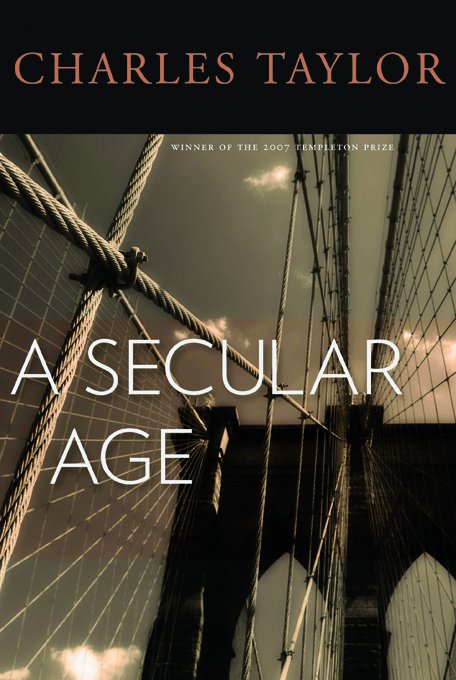
A Secular Age is probably the single most debated book in philosophy of the last decade. The only other book to start so many controversies that I know of is After Virtue.
He has a shorter, openly Catholic version, of this account in a series of lectures entitled A Catholic Modernity? The gist of it is that Taylor thinks all the things we usually attribute to the Renaissance, Reformation, or the Enlightenment, things such as increasingly autonomous and responsible self, can be traced to reforms around the 13th century. Some of these reforms were: clerics pressing the laity to frequently participate in confession, to receive Eucharist at least once a year, improving basic theological training, and so on.
(I should parenthetically add that an essay by Charles Taylor [in conversation with the work of Polish philosopher Jozef Tischner], on the clash between the values of capitalism and democracy, can be found online in my own translation. The English original was lost and I had the task of resurrecting it back into English. Taylor approved the translation. It’s entitled “Several Reflections on the Theme of Solidarity.”)
While articulating this long historical argument it looks like Taylor has also kept the present and the future in mind. He will be delivering the Firth Lectures at the University of Nottingham, home of the Centre of Theology and Philosophy, on the following topic (after the accolades):
“Charles Taylor is Emeritus Professor of Philosophy at McGill University in Canada and formerly Chichele Professor of Social and Political Theory at Oxford and a Fellow of All Souls College. He received the Templeton Prize in 2007. The Templeton Prize was established in 1972 as the world’s largest annual award given to an individual at that time. It is intended to recognize exemplary achievement in work related to life’s spiritual dimension. This distinction was followed in November 2008 by him becoming the first Canadian to win Japan’s Kyoto Prize for arts and philosophy.
Professor Taylor is also a member of the Order of Canada and a foreign honorary member of the American Academy of Arts and Sciences. He was made honorary Doctor of Letters in the University of Oxford in 2012.
His lectures will be an attempt to assess where the philosophical and theological view of human beings stand today in relation to western secular civilisation.”
I suspect the video of the lectures will appear somewhere here on this site.
In the meantime, it appears that the Firth lectures that went into Terry Eagleton’s latest book Culture and the Death of God (where he covers some of the same ground as Taylor, but with more dirty jokes) can be viewed online here:
And here:
Previous Post

April 20, 2014
Resurrection Sunday: Whoever Believes That Should Not Behave as We Do
Next Post
April 23, 2014 James K.A. Smith: Seeking Transcendence in a Secular Age
Browse Our Archives
Select a Category #WhyRemainCatholic Abortion Advent Anti-Catholicism Arts Atheism Beauty Benedict XVI Bible Book Review Catholic Cinema Comedy Cosmos: A Space-Time Odyssey Czesław Miłosz Dariusz Karłowicz Devil Easter Eastern Orthodoxy Economics Environment Family Famous Atheists Who Weren't Atheists Guest Post Hans Urs von Balthasar HHS Mandate History Imagination Interview Islam Jean-Luc Marion John Paul II Judaism Just War Lent Literature Little Sisters of the Poor Liturgy Martyrdom Music News Paganism Patristics Phenomenology Philosophy Pierre Hadot Poetry Poland Pop Culture Pope Francis Poverty Prayer Protestantism Rabelais Race Remi Brague Rene Girard Russia Sam Rocha Science & Religion SCOTUS Secularization Sexual Abuse Sexuality Silence Solidarity Stratford Caldecott Synod14 Terrorism Top 10 Uncategorized Walker Percy War Weakened Edition World War II World Youth Day WYD Krakow
Select a Month July 2017 June 2017 May 2017 April 2017 March 2017 February 2017 January 2017 December 2016 October 2016 September 2016 August 2016 July 2016 June 2016 May 2016 April 2016 March 2016 February 2016 January 2016 December 2015 November 2015 October 2015 September 2015 August 2015 July 2015 June 2015 May 2015 April 2015 March 2015 February 2015 January 2015 December 2014 November 2014 October 2014 September 2014 August 2014 July 2014 May 2014 April 2014 March 2014 February 2014 January 2014 December 2013 November 2013 October 2013 September 2013 August 2013 July 2013 June 2013 May 2013
Follow Us!
TAKE THE
Religious Wisdom Quiz
What Christian group emphasizes "The Inner Light" as guidance from God?
Select your answer to see how you score.
Pentecostals Baptists Methodists Quakers
Related posts from Cosmos The In Lost

The Surprising Anti-Capitalist Logic Behind the Catholic Church's...

Where Does the Body of Christ Go After...

How is Classical Philosophy is Like War?

Why Does the World's Leading Philosopher Remain a...
TRENDING AT PATHEOS Catholic

Rejecting Doom: Christian Hope And Human Action
Christianity is a religion of hope. We are to have hope and...

It’s What Comes From Within Which Matters
One of the most difficult things for us to understand is why...

Why I Choose the Eucharist Over the Sermon
Choose the Eucharist, Not the Sermon What are we supposed to get...

5 Design Elements Found in Spiritually Rooted Homes
Putting Spirituality Into Home Decor Our homes are more than our living...

Credo: A Story of God Told with the...
About 10 years ago, I began to imagine a personal "Credo" that...

The Anatomy of Divine Revelation in Catholic Thought
The claim that God has made Himself known to human beings is...
view all Catholic blogs
Ad-Free & Subscriber Log-In Subscription Support
- About Us
- 2026 Calendar
- Videos
- Podcasts
- Library of World Religions
- Faith In Media Tracker
- Advertise With Us
- Write for Us
- Privacy Policy
- Terms of Service
- Do Not Sell My Data
- Contact Us
- Radiant Digital
- Manage Newsletter Subscriptions
- Unsubscribe From Notifications
- Sitemap
Copyright 2008-2026, Patheos. All rights reserved.
Subscription Support Ad-Free & Subscriber Log-In
Follow Patheos