
BuddhistCatholicContemplativeEvangelicalGeneral ChristianHinduJewishLatter-day SaintMuslimNew VisionsProgressive Christian
Beliefs
- Buddhist
- Catholic
- Contemplative
- Evangelical
- General Christian
- Hindu
- Jewish
- Latter-day Saint
- More Voices
- Muslim
- New Visions
- Pagan
- Progressive Christian
Topics
- Religion News
- Food and Religion
- Sports and Religion
- Religious Art
- Religious Music and Entertainment
- Religious Events
- History and Religion
- Style and Religion
- Politics and Religion
- Women in Religion
- Recreation Outdoors and Religion
- Business Finance and Religion
- Careers Workplace and Religion
- Education and Religion
- Family Parenting and Religion
- Health Fitness and Religion
- Home and Religion
- Relationships and Religion
- Technology and Religion
- Travel and Religion
Columnists
- Buddhist Columnists
- Business Finance and Religion Columnists
- Careers Workplace and Religion Columnists
- Catholic Columnists
- Contemplative Columnists
- Education and Religion Columnists
- Evangelists Columnists
- Family Parenting and Religion Columnists
- General Christian Columnists
- Health Fitness and Religion Columnists
- Hindu Columnists
- History and Religion Columnists
- Home and Religion Columnists
- Jewish Columnists
- More Voices Columnists
- Latter Day Columnists
- Muslim Columnists
- New Visions Columnists
- Nonreligious Columnists
- Pagan Columnists
- Politics and Religion Columnists
- Progressive Columnists
- Recreation Outdoors and Religion Columnists
- Relationships and Religion Columnists
- Religion News Columnists
- Religious Art Columnists
- Religious Events Columnists
- Religious Music and Entertainment Columnists
- Sports and Religion Columnists
- Style and Religion Columnists
- Technology and Religion Columnists
- Travel and Religion Columnists
- Women in Religion Columnists
Resource Library
- 2026 Calendar
- Library of World Religions
- The 100 Most Holy Places on Earth
- Patheos Answers
- Podcasts
- Videos
- Faith Leaders Database
- Anglican Episcopalian
- Bahai
- Baptist
- Buddhism
- Christianity
- Confucianism
- Eastern Orthodoxy
- Hinduism
- Holiness and Pentecostal
- ISKCON
- Islam
- Judaism
- Lutheran
- Methodist
- The Church of Jesus Christ of Latter-day Saints
- New Age
- Paganism
- Presbytarian and Reformed
- Protestantism
- Religion Behind the Scenes
- Roman Catholic
- Scientology
- Shia Islam
- Sikhism
- Sufism
- Sunni Islam
- Taoism
- Zen
- See all religions
Research Tools
 Ad-Free & Subscriber Log-In Subscription Support
Ad-Free & Subscriber Log-In Subscription Support
Follow Patheos 

- Trending:
- Forgiveness
- |
- Marriage
- |
- Consciousness
- |
- Death Penalty
- |
- Election
- |
- Halloween
 Cosmos The In Lost
- Home
- Catholic
- Catholiclandia: Solidarity Means Carrying One Another's Burden
Catholiclandia: Solidarity Means Carrying One Another's Burden
Last updated on: April 17, 2014 at 11:12 am by Artur Rosman
Catholiclandia: Solidarity Means Carrying One Another's Burden 2014-04-17T11:12:32-07:00 Artur Rosman
Patheos Explore the world's faith through different perspectives on religion and spirituality! Patheos has the views of the prevalent religions and spiritualities of the world.
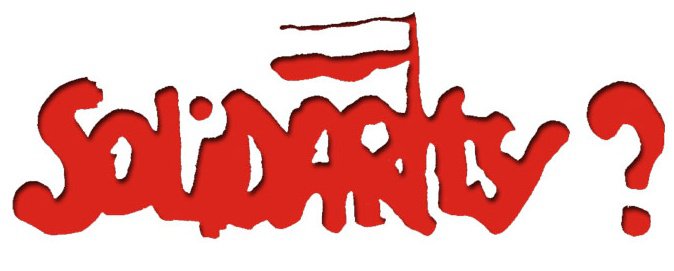
What does the spirit of Solidarity have to do with Maundy Thursday?
Maundy Thursday usually has people twittering about whose carefully cultivated stinky feet will get washed and what canons might or might not get violated. This is all well and good, but as we gear up for Good Friday, we should start honing in on the absurd act of gratuitously inflicting violence on a God who graciously, even foolishly, empties himself out.
You might not be aware of this, but thinking, reacting, and rectifying the act of needlessly inflicted violence upon others was the cornerstone of the Solidarity movement in Poland. Fr. Jozef Tischner, a scholar of Husserl and phenomenology, became the unlikely chaplain of the workers’ movement–perhaps the single historical instance of the proletariat rising up against the bourgeoisie and ultimately winning non-violently.
I’ve been reading his reflections, The Spirit of Solidarity, which he wrote right in the middle of the movement’s organization, as an attempt to describe its thrust. He asks some pointed questions in this little book, questions that could have issued from both some kind of Polish theology of liberation and a traditional reflection on Holy Week (as if those two are mutually exclusive!):
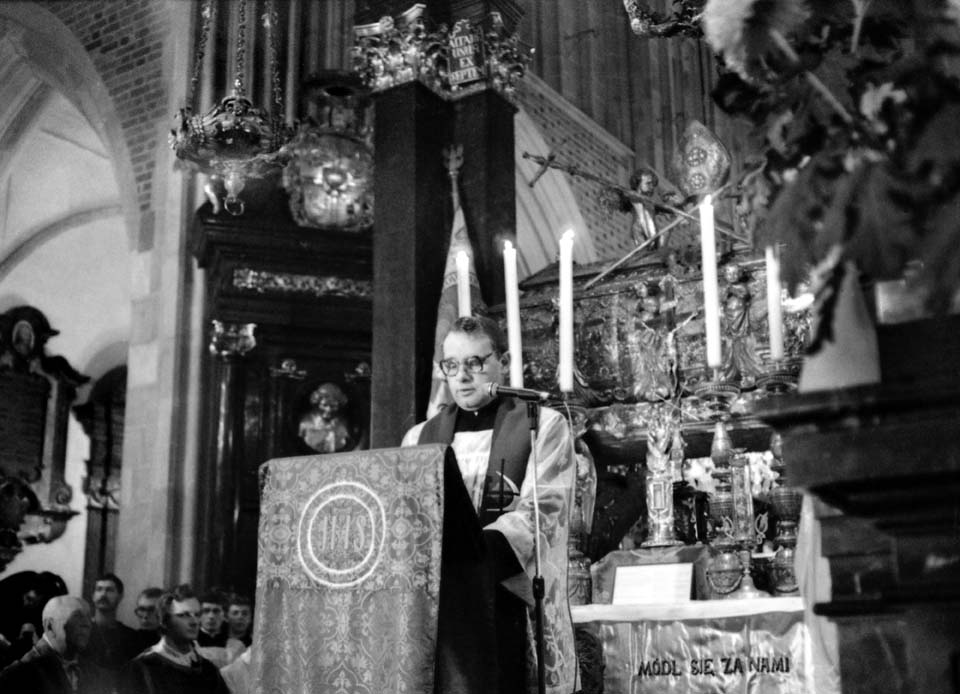
Fr. Tischner preaching in the Wawel Cathedral to a delegation of Solidarity representatives on the “Solidarity of Consciences” (10 October 1980). The content of today’s post is taken from this historic sermon.
“With whom therefore is our solidarity? It is, above all, with those who have been wounded by other people, with those who suffer pain that could be avoided–accidental, needless pain. This does not preclude solidarity with others, with all who suffer. However, the solidarity with those who suffer at the hands of others is particularly vital, strong, and spontaneous.
Does this touch politics? Yes, indeed; but only when the politics is corrupt. When politics is good, it is permeated of itself with the spirit of solidarity. Is it not the aim of politics to organize the arena of human life in such a way that one person does not inflict injury on another?”
He further explains the spirit of Solidarity in a way that ties it further to recognizing and responding to the senseless (from at least the human point of view) torture of Good Friday:
“This old but also very new word solidarity, what does it mean? To what does it call us? What memories does it bring back? To explicate more precisely its meaning, perhaps it is necessary to reach into the gospel and seek the origin of the word there. Christ explains its meaning: ‘Carry one another’s burden and in this way fulfill God’s law’ (paraphrase of Paul in Gal. 6:2). It means to carry the burden of another person. No one is an island all alone. We are bound to each other even if we do not know it. The landscape binds us, flesh and blood bind us, work and speech bind us. However, we are not always conscious of these bonds. When solidarity is born, this consciousness is awakened, and then speech and word appear–and at this point something that was hidden becomes manifest.”
This makes me wonder whether it is more important to pick up someone else’s cross rather than your own. Or, alternatively, perhaps is it not the case that there isn’t really much of a distinction between these two crosses?
By the way, it seems the pope was channeling solidarity-consciousness during Maundy Thursday Mass today:
Previous Post

April 16, 2014
What Do We Make of a Disturbingly Radical Papacy?
Next Post
April 18, 2014 A Non-Triumphant Descent Into Hell with Hans Urs von Balthasar
Browse Our Archives
Select a Category #WhyRemainCatholic Abortion Advent Anti-Catholicism Arts Atheism Beauty Benedict XVI Bible Book Review Catholic Cinema Comedy Cosmos: A Space-Time Odyssey Czesław Miłosz Dariusz Karłowicz Devil Easter Eastern Orthodoxy Economics Environment Family Famous Atheists Who Weren't Atheists Guest Post Hans Urs von Balthasar HHS Mandate History Imagination Interview Islam Jean-Luc Marion John Paul II Judaism Just War Lent Literature Little Sisters of the Poor Liturgy Martyrdom Music News Paganism Patristics Phenomenology Philosophy Pierre Hadot Poetry Poland Pop Culture Pope Francis Poverty Prayer Protestantism Rabelais Race Remi Brague Rene Girard Russia Sam Rocha Science & Religion SCOTUS Secularization Sexual Abuse Sexuality Silence Solidarity Stratford Caldecott Synod14 Terrorism Top 10 Uncategorized Walker Percy War Weakened Edition World War II World Youth Day WYD Krakow
Select a Month July 2017 June 2017 May 2017 April 2017 March 2017 February 2017 January 2017 December 2016 October 2016 September 2016 August 2016 July 2016 June 2016 May 2016 April 2016 March 2016 February 2016 January 2016 December 2015 November 2015 October 2015 September 2015 August 2015 July 2015 June 2015 May 2015 April 2015 March 2015 February 2015 January 2015 December 2014 November 2014 October 2014 September 2014 August 2014 July 2014 May 2014 April 2014 March 2014 February 2014 January 2014 December 2013 November 2013 October 2013 September 2013 August 2013 July 2013 June 2013 May 2013
Follow Us!
TAKE THE
Religious Wisdom Quiz
How many verses are in the shortest chapter in the Bible?
Select your answer to see how you score.
5 2 7 10
Related posts from Cosmos The In Lost

The Surprising Anti-Capitalist Logic Behind the Catholic Church's...

What is the Source of Our Culture of...

The Holy Family as an Icon of World...

How is Classical Philosophy is Like War?
TRENDING AT PATHEOS Catholic

Rejecting Doom: Christian Hope And Human Action
Christianity is a religion of hope. We are to have hope and...

It’s What Comes From Within Which Matters
One of the most difficult things for us to understand is why...

Why I Choose the Eucharist Over the Sermon
Choose the Eucharist, Not the Sermon What are we supposed to get...

5 Design Elements Found in Spiritually Rooted Homes
Putting Spirituality Into Home Decor Our homes are more than our living...

Credo: A Story of God Told with the...
About 10 years ago, I began to imagine a personal "Credo" that...

The Anatomy of Divine Revelation in Catholic Thought
The claim that God has made Himself known to human beings is...
view all Catholic blogs
Ad-Free & Subscriber Log-In Subscription Support
- About Us
- 2026 Calendar
- Videos
- Podcasts
- Library of World Religions
- Faith In Media Tracker
- Advertise With Us
- Write for Us
- Privacy Policy
- Terms of Service
- Do Not Sell My Data
- Contact Us
- Radiant Digital
- Manage Newsletter Subscriptions
- Unsubscribe From Notifications
- Sitemap
Copyright 2008-2026, Patheos. All rights reserved.
Subscription Support Ad-Free & Subscriber Log-In
Follow Patheos