
BuddhistCatholicContemplativeEvangelicalGeneral ChristianHinduJewishLatter-day SaintMuslimNew VisionsProgressive Christian
Beliefs
- Buddhist
- Catholic
- Contemplative
- Evangelical
- General Christian
- Hindu
- Jewish
- Latter-day Saint
- More Voices
- Muslim
- New Visions
- Pagan
- Progressive Christian
Topics
- Religion News
- Food and Religion
- Sports and Religion
- Religious Art
- Religious Music and Entertainment
- Religious Events
- History and Religion
- Style and Religion
- Politics and Religion
- Women in Religion
- Recreation Outdoors and Religion
- Business Finance and Religion
- Careers Workplace and Religion
- Education and Religion
- Family Parenting and Religion
- Health Fitness and Religion
- Home and Religion
- Relationships and Religion
- Technology and Religion
- Travel and Religion
Columnists
- Buddhist Columnists
- Business Finance and Religion Columnists
- Careers Workplace and Religion Columnists
- Catholic Columnists
- Contemplative Columnists
- Education and Religion Columnists
- Evangelists Columnists
- Family Parenting and Religion Columnists
- General Christian Columnists
- Health Fitness and Religion Columnists
- Hindu Columnists
- History and Religion Columnists
- Home and Religion Columnists
- Jewish Columnists
- More Voices Columnists
- Latter Day Columnists
- Muslim Columnists
- New Visions Columnists
- Nonreligious Columnists
- Pagan Columnists
- Politics and Religion Columnists
- Progressive Columnists
- Recreation Outdoors and Religion Columnists
- Relationships and Religion Columnists
- Religion News Columnists
- Religious Art Columnists
- Religious Events Columnists
- Religious Music and Entertainment Columnists
- Sports and Religion Columnists
- Style and Religion Columnists
- Technology and Religion Columnists
- Travel and Religion Columnists
- Women in Religion Columnists
Resource Library
- 2026 Calendar
- Library of World Religions
- The 100 Most Holy Places on Earth
- Patheos Answers
- Podcasts
- Videos
- Faith Leaders Database
- Anglican Episcopalian
- Bahai
- Baptist
- Buddhism
- Christianity
- Confucianism
- Eastern Orthodoxy
- Hinduism
- Holiness and Pentecostal
- ISKCON
- Islam
- Judaism
- Lutheran
- Methodist
- The Church of Jesus Christ of Latter-day Saints
- New Age
- Paganism
- Presbytarian and Reformed
- Protestantism
- Religion Behind the Scenes
- Roman Catholic
- Scientology
- Shia Islam
- Sikhism
- Sufism
- Sunni Islam
- Taoism
- Zen
- See all religions
Research Tools
 Ad-Free & Subscriber Log-In Subscription Support
Ad-Free & Subscriber Log-In Subscription Support
Follow Patheos 

- Trending:
- Forgiveness
- |
- Marriage
- |
- Consciousness
- |
- Death Penalty
- |
- Election
- |
- Halloween
 Cosmos The In Lost
- Home
- Catholic
- What Do We Make of a Disturbingly Radical Papacy?
What Do We Make of a Disturbingly Radical Papacy?
Last updated on: May 10, 2016 at 11:37 pm by Artur Rosman
What Do We Make of a Disturbingly Radical Papacy? 2016-05-10T23:37:54-07:00 Artur Rosman
Patheos Explore the world's faith through different perspectives on religion and spirituality! Patheos has the views of the prevalent religions and spiritualities of the world.
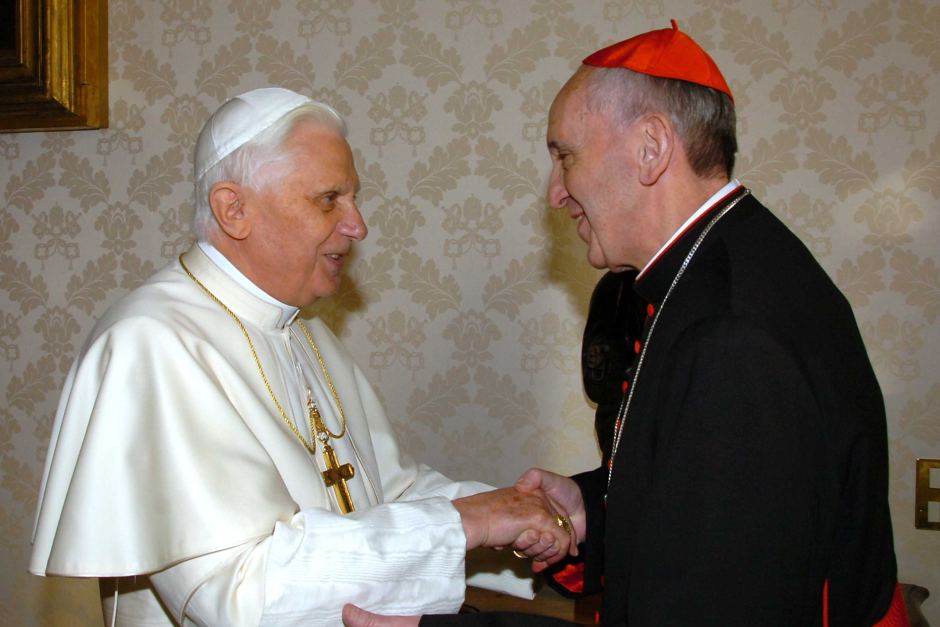
This post is about the dude on the left. (Get it?)
There are papacies and there are radical papacies. Nobody notices the really radical papacies, because too many things off their radar change and are absorbed into the mainstream. Decades later people are like, “Haven’t we always done it this way?” As a counterexample of a radical papacy I’d like to present the tenure of the soon to be St. John XXIII (see: Faggioli’s new biography). He was quite conservative. He went through all the proper channels in convening Vatican II. Is there anything more boring and conservative than calling together a council? The Council went back to the ancient practice of using vernacular as the Eastern-Rite Catholics had done since time immemorial. In What Happened at Vatican II O’Malley recounts how these groups, with the real old-timer liturgies, were really behind the bold effort to bring back the vulgar languages. The last great rash of innovations, in reaction to the Reformers (but also borrowing a great deal from them), came to us with Trent. Some would even say that Trent ruined the traditional liturgy by streamlining and standardizing it. Well, to be honest, Vatican I was also a watershed moment. (Is it true that some of the opponents of the doctrine were spirited off during crucial portions of the debate, or even vote, in great Rabelaisian Catholic fashion? Why aren’t there more recent historical accounts of this Council? Is this a Masonic plot of some sort?) Anyway, the objectors were wrong since in the long run infallibility is a good thing. because papal primacy has, for the most part, helped the Roman church keep its head above the nationalist temptations of the Orthodox, not to mention all the relentlessly fissiparous Protestant denominations. This is because Catholicism, thanks to the papacy, is greatly independent of the interests of any one of the illiberal liberal regimes and totalitarian ones too.
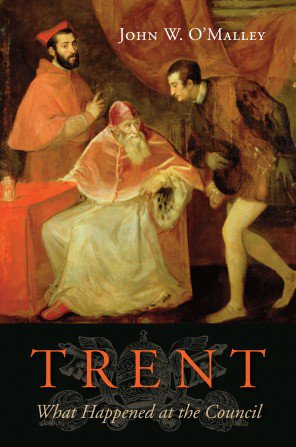
Inquiring minds want to know whatever happened to bring back into fashion dudes sporting leggings. I saw one at the bus stop the other day. Could Catholic super-traddies be somehow behind this?
Now, for all intents and purposes, the papacy of Benedict XVI didn’t rock the innovation boat all that much. He started out by unintentionally alienating everybody (with the Regensburg address) who hadn’t already been scandalously alienated from him by the John L. Allen biography that preceded his election and was updated after his election without much of a tone change. Benedict XVI then alienated whatever is left of the Anglican church by instating an elaborate poaching scheme. Then came the SSPX fiasco, a partial dialing back of the clock on liturgy, and the Prada shoes, which managed to alienate several groups of Catholics. All in all, this was par for the course, looking good as a stodgily conservative Catholic papacy. But was it? Signs were afoot that things weren’t as comfy as the central “conservative” narrative would have it. Papa Ratzinger (grates on the ear a bit doesn’t it?) continued his cordial exchanges with the atheist philosopher Jurgen Habermas (these weren’t merely random interviews). He cracked down relentlessly on child sex abusers. He met with the always charming Hans Kung. What’s more, sometime around 2008, I can’t remember the exact date, the pope made a show of approval for Gustavo Gutierrez, author of the seminal study A Theology of Liberation (and my favorite On Job). Finally, he started a Twitter account! Don’t these make him look a little more like the guy whose Introduction to Christianity was banned by Cardinal Wyszynski in the Warsaw archdiocese for being too liberal when it first came out in Polish translation? Then came the last big radical papal blow on my birthday. Is there anything more radical than an abdication when there is no serious personal scandal or incompetency? This is totally unprecedented. It breaks any and all hermeneutics of continuity!

Was Benedict’s papacy a blow to primacy?
What worries me most about it is how much the fallout from this radical papacy might affect the future of not only how the Bishop of Rome is perceived, but also how the Catholic Church will conduct its affairs. Does this precedent not expose the Vatican to pressure both within and without? Could the next step be an involuntary abdication? Does it not open the door for pressure from outside entities, whether national or corporate, to force future popes out who might prove to be inconvenient? All of these questions would have seemed unthinkable after the papacy of a much more tradition-bound gradual reformer like John Paul II. Despite all these reservations I continue to read Papa Ratzinger’s Eschatology: Death and Eternal Life, which, as you might have guessed is a traditional, yet radically modern, account of the Last Things. I came to Ratzinger on these issues after I recently read John E. Thiel’s Icons of Hope: The Last Things in the Catholic Imagination. Thiel’s book made me wonder what the heck happened to Purgatory in the 20th century. But that’s a subject for a future post,.. In the meantime you should take a look at what’s going on in contemporary theological thinking on the topics of heaven and hell. Oh, and Happy 87th Birthday (!), uhm… ex-pope, pope-emeritus, or whatever the preferred nomenclature might be. It’s so radical, we don’t have the words for it.
Previous Post

April 15, 2014
He Emptied Himself: A Kenosis Reading List
Next Post
April 17, 2014 Catholiclandia: Solidarity Means Carrying One Another's Burden
Browse Our Archives
Select a Category #WhyRemainCatholic Abortion Advent Anti-Catholicism Arts Atheism Beauty Benedict XVI Bible Book Review Catholic Cinema Comedy Cosmos: A Space-Time Odyssey Czesław Miłosz Dariusz Karłowicz Devil Easter Eastern Orthodoxy Economics Environment Family Famous Atheists Who Weren't Atheists Guest Post Hans Urs von Balthasar HHS Mandate History Imagination Interview Islam Jean-Luc Marion John Paul II Judaism Just War Lent Literature Little Sisters of the Poor Liturgy Martyrdom Music News Paganism Patristics Phenomenology Philosophy Pierre Hadot Poetry Poland Pop Culture Pope Francis Poverty Prayer Protestantism Rabelais Race Remi Brague Rene Girard Russia Sam Rocha Science & Religion SCOTUS Secularization Sexual Abuse Sexuality Silence Solidarity Stratford Caldecott Synod14 Terrorism Top 10 Uncategorized Walker Percy War Weakened Edition World War II World Youth Day WYD Krakow
Select a Month July 2017 June 2017 May 2017 April 2017 March 2017 February 2017 January 2017 December 2016 October 2016 September 2016 August 2016 July 2016 June 2016 May 2016 April 2016 March 2016 February 2016 January 2016 December 2015 November 2015 October 2015 September 2015 August 2015 July 2015 June 2015 May 2015 April 2015 March 2015 February 2015 January 2015 December 2014 November 2014 October 2014 September 2014 August 2014 July 2014 May 2014 April 2014 March 2014 February 2014 January 2014 December 2013 November 2013 October 2013 September 2013 August 2013 July 2013 June 2013 May 2013
Follow Us!
TAKE THE
Religious Wisdom Quiz
Who tricked Jacob into marrying Leah instead of Rachel?
Select your answer to see how you score.
Reuben Esau Joseph Laban
Related posts from Cosmos The In Lost

The Surprising Anti-Capitalist Logic Behind the Catholic Church's...

The Holy Family as an Icon of World...

Where Does the Body of Christ Go After...

How is Classical Philosophy is Like War?
TRENDING AT PATHEOS Catholic

Rejecting Doom: Christian Hope And Human Action
Christianity is a religion of hope. We are to have hope and...

It’s What Comes From Within Which Matters
One of the most difficult things for us to understand is why...

Why I Choose the Eucharist Over the Sermon
Choose the Eucharist, Not the Sermon What are we supposed to get...

5 Design Elements Found in Spiritually Rooted Homes
Putting Spirituality Into Home Decor Our homes are more than our living...

Credo: A Story of God Told with the...
About 10 years ago, I began to imagine a personal "Credo" that...

The Anatomy of Divine Revelation in Catholic Thought
The claim that God has made Himself known to human beings is...
view all Catholic blogs
Ad-Free & Subscriber Log-In Subscription Support
- About Us
- 2026 Calendar
- Videos
- Podcasts
- Library of World Religions
- Faith In Media Tracker
- Advertise With Us
- Write for Us
- Privacy Policy
- Terms of Service
- Do Not Sell My Data
- Contact Us
- Radiant Digital
- Manage Newsletter Subscriptions
- Unsubscribe From Notifications
- Sitemap
Copyright 2008-2026, Patheos. All rights reserved.
Subscription Support Ad-Free & Subscriber Log-In
Follow Patheos