
BuddhistCatholicContemplativeEvangelicalGeneral ChristianHinduJewishLatter-day SaintMuslimNew VisionsProgressive Christian
Beliefs
- Buddhist
- Catholic
- Contemplative
- Evangelical
- General Christian
- Hindu
- Jewish
- Latter-day Saint
- More Voices
- Muslim
- New Visions
- Pagan
- Progressive Christian
Topics
- Religion News
- Food and Religion
- Sports and Religion
- Religious Art
- Religious Music and Entertainment
- Religious Events
- History and Religion
- Style and Religion
- Politics and Religion
- Women in Religion
- Recreation Outdoors and Religion
- Business Finance and Religion
- Careers Workplace and Religion
- Education and Religion
- Family Parenting and Religion
- Health Fitness and Religion
- Home and Religion
- Relationships and Religion
- Technology and Religion
- Travel and Religion
Columnists
- Buddhist Columnists
- Business Finance and Religion Columnists
- Careers Workplace and Religion Columnists
- Catholic Columnists
- Contemplative Columnists
- Education and Religion Columnists
- Evangelists Columnists
- Family Parenting and Religion Columnists
- General Christian Columnists
- Health Fitness and Religion Columnists
- Hindu Columnists
- History and Religion Columnists
- Home and Religion Columnists
- Jewish Columnists
- More Voices Columnists
- Latter Day Columnists
- Muslim Columnists
- New Visions Columnists
- Nonreligious Columnists
- Pagan Columnists
- Politics and Religion Columnists
- Progressive Columnists
- Recreation Outdoors and Religion Columnists
- Relationships and Religion Columnists
- Religion News Columnists
- Religious Art Columnists
- Religious Events Columnists
- Religious Music and Entertainment Columnists
- Sports and Religion Columnists
- Style and Religion Columnists
- Technology and Religion Columnists
- Travel and Religion Columnists
- Women in Religion Columnists
Resource Library
- 2026 Calendar
- Library of World Religions
- The 100 Most Holy Places on Earth
- Patheos Answers
- Podcasts
- Videos
- Faith Leaders Database
- Anglican Episcopalian
- Bahai
- Baptist
- Buddhism
- Christianity
- Confucianism
- Eastern Orthodoxy
- Hinduism
- Holiness and Pentecostal
- ISKCON
- Islam
- Judaism
- Lutheran
- Methodist
- The Church of Jesus Christ of Latter-day Saints
- New Age
- Paganism
- Presbytarian and Reformed
- Protestantism
- Religion Behind the Scenes
- Roman Catholic
- Scientology
- Shia Islam
- Sikhism
- Sufism
- Sunni Islam
- Taoism
- Zen
- See all religions
Research Tools
 Ad-Free & Subscriber Log-In Subscription Support
Ad-Free & Subscriber Log-In Subscription Support
Follow Patheos 

- Trending:
- Forgiveness
- |
- Marriage
- |
- Consciousness
- |
- Death Penalty
- |
- Election
- |
- Halloween
 Cosmos The In Lost
- Home
- Catholic
- Famous Feminists Who Aren't Atheists: Luce Irigaray, Catholic
Famous Feminists Who Aren't Atheists: Luce Irigaray, Catholic
Last updated on: April 1, 2014 at 1:21 pm by Artur Rosman
Famous Feminists Who Aren't Atheists: Luce Irigaray, Catholic 2014-04-01T13:21:15-07:00 Artur Rosman
Patheos Explore the world's faith through different perspectives on religion and spirituality! Patheos has the views of the prevalent religions and spiritualities of the world.
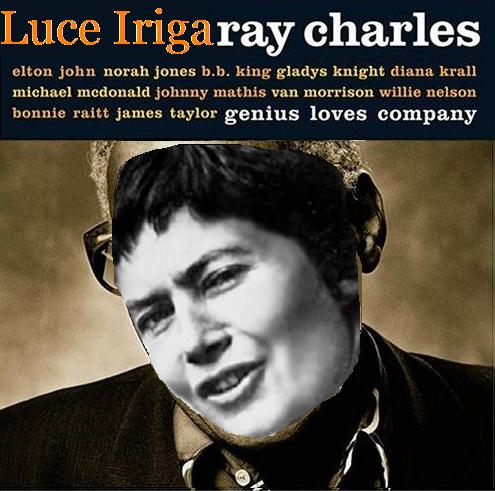
“Well… I got a woman, way over town / She’s good to me, oh yeah / Said I got a woman, way over town / She’s good to me, oh yeah / She gives me money when I’m in need.”
Yeah, she’s a kind of friend indeed
It took me a while to figure out a topic for April Fool’s that would confuse the hell out of everyone. The consistently ambivalent Famous Atheists Who Weren’t Atheists segment seems like the place to dig.
Goodness knows how the deterministic cage of many an agnostic and atheist has been rattled by the revelation that famous nihilists such as Heidegger, Warhol, Sartre, Camus, and Hitchcock all ended up as religious believers (or just never stopped being believers).
Now, everybody knows how much trouble feminists have with religious folk and how much the latter return the favor. It’s as if the two groups are symmetrical rivals. I’ve tried to play with these prejudices by rerunning two pieces on the facebook page of this blog (give it a like here) about feminist-atheist-theorist Julia Kristeva. She’s especially appreciative of the lessons the Catholic baroque and John Paul II have given us about the potential sweetness of suffering.
Those of you who haven’t had your head buried in the sand know that Luce Irigaray is one of the leading living feminist figures. If you’re into Radical Orthodoxy, you probably encountered excerpts from her work in the classic The Postmodern God reader (a book dedicated to a Fr. Michael Jackson, no less!).
The Spirit blows (where it wills)
Irigaray is best known for texts with titles such as Elemental Passions, This Sex Which is Not One, Marine Lover of Friedrich Nietzsche, which might make the homeschoolers among you run for the woods (or deeper into the woods).
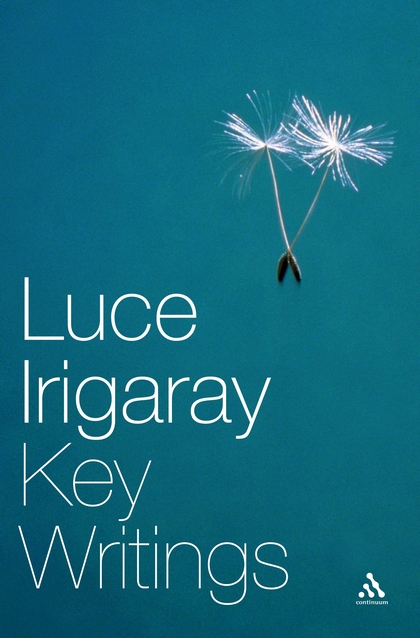
Be that as it may, if you pick up Irigaray’s anthology Key Writings, you’ll note there is a whole section entitled “Religion and Spirituality.” What this leading feminist writes in the introduction to that section might surprise you:
“As many people in Europe, I was born and educated in a Christian context. Also as many people, upon becoming an adult, I left my own tradition, at least the conscious part of it. Later, I came to understand that a religious dimension is an important aspect of our culture and that it is crucial in considering both how we have been determined by this dimension and how we can, in the present, situate ourselves with respect to it.”
In all earnest, she continues:
“I am afraid that, by neglecting such a task, we harm our subjectivity and the relations with our cultural environment and with the other(s). This question is all the more critical in that we are entering into an era of globalization and so we have to situate ourselves in our tradition in order to create possible bridges with other traditions. This work cannot remain an abstract and moral discourse or a simple political interest but has to be a daily behavior which allows us to be faithful to ourselves and to communicate with the others.”
She continues by pointing out the seemingly inevitable, since she was educated at Louvain, the documentary capital of phenomenology, the movement that gave us JP2 and Edith Stein:
“I thus returned to my tradition not in order to blindly obey it but to reach some perspectives on my culture and thus on myself. Which permits a conscious becoming of my global subjectivity… [The] intercultural context has helped me in this undertaking, especially the approach of the Far Eastern traditions. I also have understood that we have to become adult and responsible towards our tradition and that which it has produced in ourselves: that is, neither to remain children, nor to become iconoclasts.”
Behind some of the wooly jargon of authenticity you can glimpse someone trying to grapple with their tradition in very productive ways.
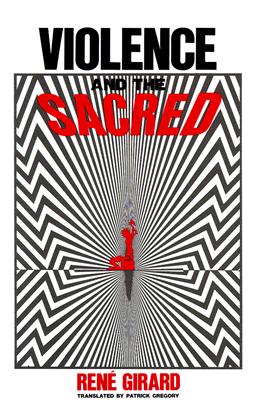
The things she says here remind me of the uncritically critical statements Rene Girard made about Christianity as he began his return to Catholicism between writing what’s been called the first fully atheist sociology of the sacred in Violence and the Sacred and his partial coming out as a Catholic in Things HIdden Since the Foundation of the World. The more Girard learned about the theological tradition, the more he saw the lines of intersection between his critiques of religion and orthodoxy.
I’m not suggesting that the same will happen with Irigaray. Then again, how can we know where the wind blows? Are you confused now? That’s what Rabelaisian Catholicism is all about.
http://www.youtube.com/watch?v=81cyUwnM71U
Famous Atheists Who Weren't Atheists
Famous Atheists Who Weren't Atheists
Previous Post

March 27, 2014
Liturgy, Fanny Howe, and the Horrors of Reality
Next Post
April 2, 2014 John Paul II, the Artist in You, and Coleridge
Browse Our Archives
Select a Category #WhyRemainCatholic Abortion Advent Anti-Catholicism Arts Atheism Beauty Benedict XVI Bible Book Review Catholic Cinema Comedy Cosmos: A Space-Time Odyssey Czesław Miłosz Dariusz Karłowicz Devil Easter Eastern Orthodoxy Economics Environment Family Famous Atheists Who Weren't Atheists Guest Post Hans Urs von Balthasar HHS Mandate History Imagination Interview Islam Jean-Luc Marion John Paul II Judaism Just War Lent Literature Little Sisters of the Poor Liturgy Martyrdom Music News Paganism Patristics Phenomenology Philosophy Pierre Hadot Poetry Poland Pop Culture Pope Francis Poverty Prayer Protestantism Rabelais Race Remi Brague Rene Girard Russia Sam Rocha Science & Religion SCOTUS Secularization Sexual Abuse Sexuality Silence Solidarity Stratford Caldecott Synod14 Terrorism Top 10 Uncategorized Walker Percy War Weakened Edition World War II World Youth Day WYD Krakow
Select a Month July 2017 June 2017 May 2017 April 2017 March 2017 February 2017 January 2017 December 2016 October 2016 September 2016 August 2016 July 2016 June 2016 May 2016 April 2016 March 2016 February 2016 January 2016 December 2015 November 2015 October 2015 September 2015 August 2015 July 2015 June 2015 May 2015 April 2015 March 2015 February 2015 January 2015 December 2014 November 2014 October 2014 September 2014 August 2014 July 2014 May 2014 April 2014 March 2014 February 2014 January 2014 December 2013 November 2013 October 2013 September 2013 August 2013 July 2013 June 2013 May 2013
Follow Us!
TAKE THE
Religious Wisdom Quiz
Who anointed David as king as a boy?
Select your answer to see how you score.
Moses Samuel Saul Nathan
Related posts from Cosmos The In Lost

The Surprising Anti-Capitalist Logic Behind the Catholic Church's...

How is Classical Philosophy is Like War?

Why Does the World's Leading Philosopher Remain a...

Atheists Have "National Day of Reason," But American...
TRENDING AT PATHEOS Catholic

The Parable Of The Sower And The Word...
One of Christ’s most famous parables is that of the sower who...

Rejecting Doom: Christian Hope And Human Action
Christianity is a religion of hope. We are to have hope and...

Why I Choose the Eucharist Over the Sermon
Choose the Eucharist, Not the Sermon What are we supposed to get...

5 Design Elements Found in Spiritually Rooted Homes
Putting Spirituality Into Home Decor Our homes are more than our living...

Credo: A Story of God Told with the...
About 10 years ago, I began to imagine a personal "Credo" that...

The Anatomy of Divine Revelation in Catholic Thought
The claim that God has made Himself known to human beings is...
view all Catholic blogs
Ad-Free & Subscriber Log-In Subscription Support
- About Us
- 2026 Calendar
- Videos
- Podcasts
- Library of World Religions
- Faith In Media Tracker
- Advertise With Us
- Write for Us
- Privacy Policy
- Terms of Service
- Do Not Sell My Data
- Contact Us
- Radiant Digital
- Manage Newsletter Subscriptions
- Unsubscribe From Notifications
- Sitemap
Copyright 2008-2026, Patheos. All rights reserved.
Subscription Support Ad-Free & Subscriber Log-In
Follow Patheos