
BuddhistCatholicContemplativeEvangelicalGeneral ChristianHinduJewishLatter-day SaintMuslimNew VisionsProgressive Christian
Beliefs
- Buddhist
- Catholic
- Contemplative
- Evangelical
- General Christian
- Hindu
- Jewish
- Latter-day Saint
- More Voices
- Muslim
- New Visions
- Pagan
- Progressive Christian
Topics
- Religion News
- Food and Religion
- Sports and Religion
- Religious Art
- Religious Music and Entertainment
- Religious Events
- History and Religion
- Style and Religion
- Politics and Religion
- Women in Religion
- Recreation Outdoors and Religion
- Business Finance and Religion
- Careers Workplace and Religion
- Education and Religion
- Family Parenting and Religion
- Health Fitness and Religion
- Home and Religion
- Relationships and Religion
- Technology and Religion
- Travel and Religion
Columnists
- Buddhist Columnists
- Business Finance and Religion Columnists
- Careers Workplace and Religion Columnists
- Catholic Columnists
- Contemplative Columnists
- Education and Religion Columnists
- Evangelists Columnists
- Family Parenting and Religion Columnists
- General Christian Columnists
- Health Fitness and Religion Columnists
- Hindu Columnists
- History and Religion Columnists
- Home and Religion Columnists
- Jewish Columnists
- More Voices Columnists
- Latter Day Columnists
- Muslim Columnists
- New Visions Columnists
- Nonreligious Columnists
- Pagan Columnists
- Politics and Religion Columnists
- Progressive Columnists
- Recreation Outdoors and Religion Columnists
- Relationships and Religion Columnists
- Religion News Columnists
- Religious Art Columnists
- Religious Events Columnists
- Religious Music and Entertainment Columnists
- Sports and Religion Columnists
- Style and Religion Columnists
- Technology and Religion Columnists
- Travel and Religion Columnists
- Women in Religion Columnists
Resource Library
- 2026 Calendar
- Library of World Religions
- The 100 Most Holy Places on Earth
- Patheos Answers
- Podcasts
- Videos
- Faith Leaders Database
- Anglican Episcopalian
- Bahai
- Baptist
- Buddhism
- Christianity
- Confucianism
- Eastern Orthodoxy
- Hinduism
- Holiness and Pentecostal
- ISKCON
- Islam
- Judaism
- Lutheran
- Methodist
- The Church of Jesus Christ of Latter-day Saints
- New Age
- Paganism
- Presbytarian and Reformed
- Protestantism
- Religion Behind the Scenes
- Roman Catholic
- Scientology
- Shia Islam
- Sikhism
- Sufism
- Sunni Islam
- Taoism
- Zen
- See all religions
Research Tools
 Ad-Free & Subscriber Log-In Subscription Support
Ad-Free & Subscriber Log-In Subscription Support
Follow Patheos 

- Trending:
- Forgiveness
- |
- Marriage
- |
- Consciousness
- |
- Death Penalty
- |
- Election
- |
- Halloween
 Cosmos The In Lost
- Home
- Catholic
- Squishy New Atheist Pieties Miss Gospel Love’s Ruthless Demands
Squishy New Atheist Pieties Miss Gospel Love’s Ruthless Demands
Last updated on: February 14, 2015 at 10:13 pm by Artur Rosman
Squishy New Atheist Pieties Miss Gospel Love’s Ruthless Demands 2015-02-14T22:13:06-07:00 Artur Rosman
Patheos Explore the world's faith through different perspectives on religion and spirituality! Patheos has the views of the prevalent religions and spiritualities of the world.
What’s the difference between this…
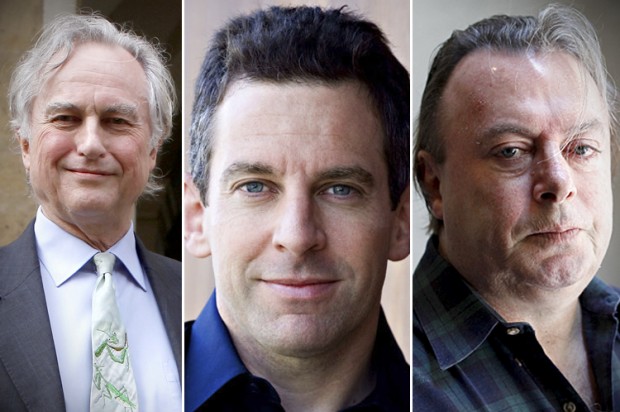
smug bourgeois self-certainty
…and this?
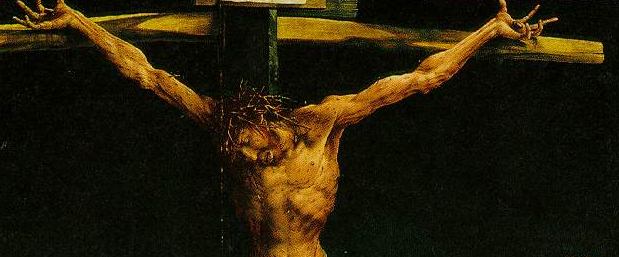
the scapegoat, a.k.a.reviled scum of the earth
And what do both of them have to do with this?

things might be even more complicated than this
Cosmos: A Spacetime Odyssey has inspired much conversation about science and religion. I’ve had a fun time demonstrating how and why most of it is shallow.
The latest episode begins with a vignette about how scientific knowledge is a panacea for our existential fears. But in reality science (see: last image above) has contributed to our fears with its picture of human worth(-lessness).
Not that I have a problem with that, since I think a little pessimism is not a bad thing at all.
I’ve been reading Eagleton’s Reason, Faith, and Revolution as I wait for the release of his Culture and the Death of God. The latter promises to be a riveting read from what I saw in an excerpt in Commonweal entitled, “An Unbelieving Age.”
On the other hand, the older book provides me with a bridge from my discussions of science to my discussions of the Catholic imagination.
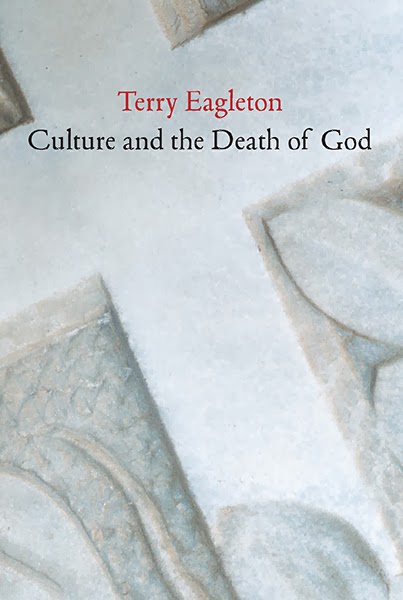
Eagelton takes on God’s death.:I hope the jokes are as good as always.
In Reason, Faith, and Revolution Eagleton demonstrates why the Christian imagination radically goes beyond loving the lovable by putting what he calls “the scum of the earth” at the center of its cult:
For Christian teaching, God’s love and forgiveness are ruthlessly unforgiving powers which break violently into our protective, self-rationalizing little sphere, smashing our sentimental illusions and turning our world brutally upside down. In Jesus, the law is revealed to be the law of love and mercy, and God not some Blakean Nobodaddy but a helpless, vulnerable animal. It is the flayed and bloody scapegoat of Calvary that is now the true signifier of the Law.
Because of time constraints I conveniently copy and pasted the above passage from a Douthat Lenten post from a few years back instead of dutifully typing it out of the book I’m reading. The curious thing is how author of Bad Religion tellingly omitted the following passage in his post:
…Which is to say that those who are faithful to God’s law of justice and compassion will be done away with by the state. If you don’t love, you’re dead, and if you do, they’ll kill you [Eagleton borrows this phrase from his teacher, Herbert McCabe, OP]…
Douthat then continues excerpting Eagleton’s book with this passage from the same paragraph:

Here, then, is your pie in the sky or opium of the people, your soft-eyed consolation and pale-cheeked piety. Here is the fantasy and escapism that the hard-headed secularist pragmatist finds so distasteful. Freud saw religion as the mitigation of the harshness of the human condition; but it would surely be at least as plausible to claim that what we call reality is a mitigation of the Gospel’s ruthless demands, which include such agreeable acts of escapism as being ready to lay down your life for a total stranger. Imitating Jesus means imitating his death as well as his life, since the two are not finally distinguishable. The death is the consummation of the life, the place where the ultimate meaning of Jesus’s self-giving is revealed.
I suspect Douthat’s omission has something to do with his arguments in Bad Religion. What he advocates there is a form of religion that’s culturally visible and relevant (like the mainline and Catholicism in the 1950’s). And because of this it is a religion that’s afraid of exposing itself to martyrdom for scum of the earth. My guess is that, unlike what Douthat would have you believe, the 1950’s were not a Golden Age, but only the prelude to the partial collapse of the 60’s and 70’s.
Strangely enough, Eagleton, as a Catholic agnostic, does a better job of accounting for what might keep Christianity relevant and dangerous. That thing is the ruthless demand for martyrdom in the name of the scum of the earth.
Now that’s something neither philosophy nor science can do. And when science and philosophy advocate for the scum, they’re only doing it, as Nietzsche would argue, because the Christian imagination still operates within them.
So perhaps the dichotomies between science and religion in the last illustration at the top aren’t as strong as one might initially believe?
For more insightful atheist/agnostic/skeptic writing on religion like Eagleton’s see this Ethika Politika TOP10 list.
Previous Post

March 21, 2014
The Eclipse of Science During Those Terrible Middle Ages
Next Post
March 27, 2014 Liturgy, Fanny Howe, and the Horrors of Reality
Browse Our Archives
Select a Category #WhyRemainCatholic Abortion Advent Anti-Catholicism Arts Atheism Beauty Benedict XVI Bible Book Review Catholic Cinema Comedy Cosmos: A Space-Time Odyssey Czesław Miłosz Dariusz Karłowicz Devil Easter Eastern Orthodoxy Economics Environment Family Famous Atheists Who Weren't Atheists Guest Post Hans Urs von Balthasar HHS Mandate History Imagination Interview Islam Jean-Luc Marion John Paul II Judaism Just War Lent Literature Little Sisters of the Poor Liturgy Martyrdom Music News Paganism Patristics Phenomenology Philosophy Pierre Hadot Poetry Poland Pop Culture Pope Francis Poverty Prayer Protestantism Rabelais Race Remi Brague Rene Girard Russia Sam Rocha Science & Religion SCOTUS Secularization Sexual Abuse Sexuality Silence Solidarity Stratford Caldecott Synod14 Terrorism Top 10 Uncategorized Walker Percy War Weakened Edition World War II World Youth Day WYD Krakow
Select a Month July 2017 June 2017 May 2017 April 2017 March 2017 February 2017 January 2017 December 2016 October 2016 September 2016 August 2016 July 2016 June 2016 May 2016 April 2016 March 2016 February 2016 January 2016 December 2015 November 2015 October 2015 September 2015 August 2015 July 2015 June 2015 May 2015 April 2015 March 2015 February 2015 January 2015 December 2014 November 2014 October 2014 September 2014 August 2014 July 2014 May 2014 April 2014 March 2014 February 2014 January 2014 December 2013 November 2013 October 2013 September 2013 August 2013 July 2013 June 2013 May 2013
Follow Us!
TAKE THE
Religious Wisdom Quiz
According to Ecclesiastes 12, what happens to the human spirit when a person dies?
Select your answer to see how you score.
It is reincarnated It ceases to exist It remains on earth It returns to God
Related posts from Cosmos The In Lost

The Surprising Anti-Capitalist Logic Behind the Catholic Church's...

How is Classical Philosophy is Like War?

Why Does the World's Leading Philosopher Remain a...

Post-Execution Church: Rise Up from the Electric Chair!
TRENDING AT PATHEOS Catholic

Rejecting Doom: Christian Hope And Human Action
Christianity is a religion of hope. We are to have hope and...

It’s What Comes From Within Which Matters
One of the most difficult things for us to understand is why...

Why I Choose the Eucharist Over the Sermon
Choose the Eucharist, Not the Sermon What are we supposed to get...

5 Design Elements Found in Spiritually Rooted Homes
Putting Spirituality Into Home Decor Our homes are more than our living...

Credo: A Story of God Told with the...
About 10 years ago, I began to imagine a personal "Credo" that...

The Anatomy of Divine Revelation in Catholic Thought
The claim that God has made Himself known to human beings is...
view all Catholic blogs
Ad-Free & Subscriber Log-In Subscription Support
- About Us
- 2026 Calendar
- Videos
- Podcasts
- Library of World Religions
- Faith In Media Tracker
- Advertise With Us
- Write for Us
- Privacy Policy
- Terms of Service
- Do Not Sell My Data
- Contact Us
- Radiant Digital
- Manage Newsletter Subscriptions
- Unsubscribe From Notifications
- Sitemap
Copyright 2008-2026, Patheos. All rights reserved.
Subscription Support Ad-Free & Subscriber Log-In
Follow Patheos