
BuddhistCatholicContemplativeEvangelicalGeneral ChristianHinduJewishLatter-day SaintMuslimNew VisionsProgressive Christian
Beliefs
- Buddhist
- Catholic
- Contemplative
- Evangelical
- General Christian
- Hindu
- Jewish
- Latter-day Saint
- More Voices
- Muslim
- New Visions
- Pagan
- Progressive Christian
Topics
- Religion News
- Food and Religion
- Sports and Religion
- Religious Art
- Religious Music and Entertainment
- Religious Events
- History and Religion
- Style and Religion
- Politics and Religion
- Women in Religion
- Recreation Outdoors and Religion
- Business Finance and Religion
- Careers Workplace and Religion
- Education and Religion
- Family Parenting and Religion
- Health Fitness and Religion
- Home and Religion
- Relationships and Religion
- Technology and Religion
- Travel and Religion
Columnists
- Buddhist Columnists
- Business Finance and Religion Columnists
- Careers Workplace and Religion Columnists
- Catholic Columnists
- Contemplative Columnists
- Education and Religion Columnists
- Evangelists Columnists
- Family Parenting and Religion Columnists
- General Christian Columnists
- Health Fitness and Religion Columnists
- Hindu Columnists
- History and Religion Columnists
- Home and Religion Columnists
- Jewish Columnists
- More Voices Columnists
- Latter Day Columnists
- Muslim Columnists
- New Visions Columnists
- Nonreligious Columnists
- Pagan Columnists
- Politics and Religion Columnists
- Progressive Columnists
- Recreation Outdoors and Religion Columnists
- Relationships and Religion Columnists
- Religion News Columnists
- Religious Art Columnists
- Religious Events Columnists
- Religious Music and Entertainment Columnists
- Sports and Religion Columnists
- Style and Religion Columnists
- Technology and Religion Columnists
- Travel and Religion Columnists
- Women in Religion Columnists
Resource Library
- 2026 Calendar
- Library of World Religions
- The 100 Most Holy Places on Earth
- Patheos Answers
- Podcasts
- Videos
- Faith Leaders Database
- Anglican Episcopalian
- Bahai
- Baptist
- Buddhism
- Christianity
- Confucianism
- Eastern Orthodoxy
- Hinduism
- Holiness and Pentecostal
- ISKCON
- Islam
- Judaism
- Lutheran
- Methodist
- The Church of Jesus Christ of Latter-day Saints
- New Age
- Paganism
- Presbytarian and Reformed
- Protestantism
- Religion Behind the Scenes
- Roman Catholic
- Scientology
- Shia Islam
- Sikhism
- Sufism
- Sunni Islam
- Taoism
- Zen
- See all religions
Research Tools
 Ad-Free & Subscriber Log-In Subscription Support
Ad-Free & Subscriber Log-In Subscription Support
Follow Patheos 

- Trending:
- Forgiveness
- |
- Marriage
- |
- Consciousness
- |
- Death Penalty
- |
- Election
- |
- Halloween
 Cosmos The In Lost
- Home
- Catholic
- The Eclipse of Science During Those Terrible Middle Ages
The Eclipse of Science During Those Terrible Middle Ages
Last updated on: April 15, 2015 at 11:43 am by Artur Rosman
The Eclipse of Science During Those Terrible Middle Ages 2015-04-15T11:43:16-07:00 Artur Rosman
Patheos Explore the world's faith through different perspectives on religion and spirituality! Patheos has the views of the prevalent religions and spiritualities of the world.
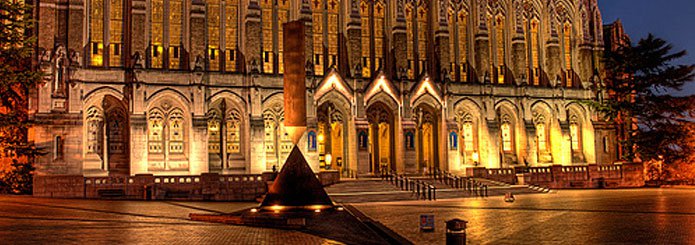
The University of Washington Suzzallo Library‘s facade tells a medieval Catholic story.
You might think the debunking of the Bruno, Galileo (Never tortured, spent three days in prison, if any), and Hypatia myths still doesn’t touch the so-called eclipse of science during those terrible Middle Ages.
You’d be wrong, of course.
One of the most pernicious Reformation and Enlightenment myths we persistently cling to is the erroneous belief that the middle ages impeded the advancement toward modern science.
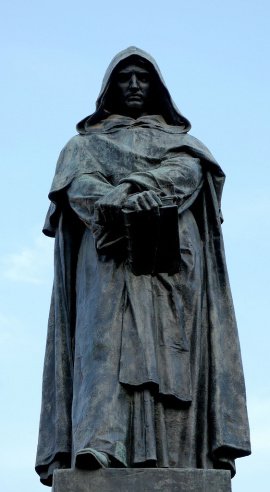
Giordano Bruno: Brought to you by the same intellectual tradition as the horoscope.This historical lie was (of course, duh, what else did you expect?) perpetuated by the first episode of Cosmos.
We were told that Bruno was a significant breakthrough from the crudeness and ignorance of the so-called Dark Ages–even if it’s not clear to the show’s makers if he was a martyr for science, or really a martyr for anything.
Thanks to Bruno, we are told, a new light magically dawned upon the Western world thanks to his rediscovery of the ancients and their commitment to nature.
If it sounds too simple, it is.
In truth Karsten Harries recounts in his Infinity and Perspective how Bruno was a hermetic [quack] whose theories were not derived from direct observation, but from books of hermetic magic.
Bruno also subscribed to millenarian apocalyptic beliefs that have much more in common with those who believe in the Rapture (and Swedenborg) than with scientists and orthodox theologians. People like Bruno harbored fanatical hopes for a cosmic revolution in 1600 because of the magical significance of the numbers nine and seven. No, I’m not kidding.
Do science popularizers like deGrasse Tyson really want to position themselves in such company? Are they trying to tell us something? If it’s all about the imagination escaping the thought police, then why are science educators going after creationists who build museums that feature humans and dinos side by side?
According to Elspeth Whitney in Medieval Science and Technology, if we want to look for the dawning of a new spirit of scientific inquiry then we should look about six hundred years earlier than Bruno:
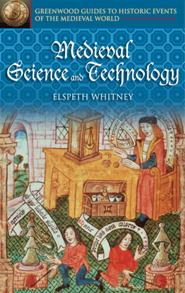
All that you didn’t know about the Middle Ages can be found here.
“Between 1000-1300, Europe changed from an intellectual backwater to one of the most intellectually innovative cultures of the world. This process happened in several stages. From about the year 1000, there are numerous signs that medieval thinkers developed a new and original appreciation of nature. In the words of one important historian [Marie-Dominique Chenu, OP], 12th and 13th century thinkers ‘thought of themselves as confronting an external present, intelligible, and active reality as they might confront a partner.’
This new attitude had wide repercussions:
The personification of nature as a forceful and imperious goddess appeared everywhere in literature, detailed and accurate relief sculptures of local plants appeared on church exteriors, and ‘the natural’ became a new touchstone for what was considered normal and appropriate behavior. This new awareness of nature was supported by an increasingly dynamic economy, greater social mobility, and new political and religious institutions.

The notion of an eclipse of science during the middle ages is terribly misguided.
The intellectual institutions she has in mind are universities, funded by the Church, even though theology was actually one of the least studied topics in them.
Their results are indisputable. These results put the elitist philosophical schools of Greece and Rome (institutions of the 1% if there are any) to shame. In the chapter on the supposed medieval repression of science in Galileo Goes to Jail we read:
Between 1150 and 1500, more literate Europeans had had access to scientific materials than any of their predecessors in earlier cultures, thanks largely to the emergence, rapid growth, and naturalistic arts curricula of the medieval universities. if the medieval church had intended to suppress the inquiry into nature, it must have been completely powerless, for it utterly failed to reach its goal.
When you take all of this into consideration then there may be some piety and awareness of origins in making a major state university library resemble a medieval cathedral and not including Bruno among the statues on the facade?
Previous Post

March 19, 2014
Walker Percy on the College Dorm Arguments of Sagan and deGrasse Tyson
Next Post

March 25, 2014 Squishy New Atheist Pieties Miss Gospel Love's Ruthless Demands
Browse Our Archives
Select a Category #WhyRemainCatholic Abortion Advent Anti-Catholicism Arts Atheism Beauty Benedict XVI Bible Book Review Catholic Cinema Comedy Cosmos: A Space-Time Odyssey Czesław Miłosz Dariusz Karłowicz Devil Easter Eastern Orthodoxy Economics Environment Family Famous Atheists Who Weren't Atheists Guest Post Hans Urs von Balthasar HHS Mandate History Imagination Interview Islam Jean-Luc Marion John Paul II Judaism Just War Lent Literature Little Sisters of the Poor Liturgy Martyrdom Music News Paganism Patristics Phenomenology Philosophy Pierre Hadot Poetry Poland Pop Culture Pope Francis Poverty Prayer Protestantism Rabelais Race Remi Brague Rene Girard Russia Sam Rocha Science & Religion SCOTUS Secularization Sexual Abuse Sexuality Silence Solidarity Stratford Caldecott Synod14 Terrorism Top 10 Uncategorized Walker Percy War Weakened Edition World War II World Youth Day WYD Krakow
Select a Month July 2017 June 2017 May 2017 April 2017 March 2017 February 2017 January 2017 December 2016 October 2016 September 2016 August 2016 July 2016 June 2016 May 2016 April 2016 March 2016 February 2016 January 2016 December 2015 November 2015 October 2015 September 2015 August 2015 July 2015 June 2015 May 2015 April 2015 March 2015 February 2015 January 2015 December 2014 November 2014 October 2014 September 2014 August 2014 July 2014 May 2014 April 2014 March 2014 February 2014 January 2014 December 2013 November 2013 October 2013 September 2013 August 2013 July 2013 June 2013 May 2013
Follow Us!
TAKE THE
Religious Wisdom Quiz
How many people did Jesus raise from the dead?
Select your answer to see how you score.
2 4 5 3
Related posts from Cosmos The In Lost

2 Reasons Why the March for Science is...
What Do Sex, Lent, UFO's, Evolution, and the...
Extraterrestrials Aren't a Threat to Theology, Because They...

TRENDING AT PATHEOS Catholic

Rejecting Doom: Christian Hope And Human Action
Christianity is a religion of hope. We are to have hope and...

It’s What Comes From Within Which Matters
One of the most difficult things for us to understand is why...

Why I Choose the Eucharist Over the Sermon
Choose the Eucharist, Not the Sermon What are we supposed to get...

5 Design Elements Found in Spiritually Rooted Homes
Putting Spirituality Into Home Decor Our homes are more than our living...

Credo: A Story of God Told with the...
About 10 years ago, I began to imagine a personal "Credo" that...

The Anatomy of Divine Revelation in Catholic Thought
The claim that God has made Himself known to human beings is...
view all Catholic blogs
Ad-Free & Subscriber Log-In Subscription Support
- About Us
- 2026 Calendar
- Videos
- Podcasts
- Library of World Religions
- Faith In Media Tracker
- Advertise With Us
- Write for Us
- Privacy Policy
- Terms of Service
- Do Not Sell My Data
- Contact Us
- Radiant Digital
- Manage Newsletter Subscriptions
- Unsubscribe From Notifications
- Sitemap
Copyright 2008-2026, Patheos. All rights reserved.
Subscription Support Ad-Free & Subscriber Log-In
Follow Patheos