
BuddhistCatholicContemplativeEvangelicalGeneral ChristianHinduJewishLatter-day SaintMuslimNew VisionsProgressive Christian
Beliefs
- Buddhist
- Catholic
- Contemplative
- Evangelical
- General Christian
- Hindu
- Jewish
- Latter-day Saint
- More Voices
- Muslim
- New Visions
- Pagan
- Progressive Christian
Topics
- Religion News
- Food and Religion
- Sports and Religion
- Religious Art
- Religious Music and Entertainment
- Religious Events
- History and Religion
- Style and Religion
- Politics and Religion
- Women in Religion
- Recreation Outdoors and Religion
- Business Finance and Religion
- Careers Workplace and Religion
- Education and Religion
- Family Parenting and Religion
- Health Fitness and Religion
- Home and Religion
- Relationships and Religion
- Technology and Religion
- Travel and Religion
Columnists
- Buddhist Columnists
- Business Finance and Religion Columnists
- Careers Workplace and Religion Columnists
- Catholic Columnists
- Contemplative Columnists
- Education and Religion Columnists
- Evangelists Columnists
- Family Parenting and Religion Columnists
- General Christian Columnists
- Health Fitness and Religion Columnists
- Hindu Columnists
- History and Religion Columnists
- Home and Religion Columnists
- Jewish Columnists
- More Voices Columnists
- Latter Day Columnists
- Muslim Columnists
- New Visions Columnists
- Nonreligious Columnists
- Pagan Columnists
- Politics and Religion Columnists
- Progressive Columnists
- Recreation Outdoors and Religion Columnists
- Relationships and Religion Columnists
- Religion News Columnists
- Religious Art Columnists
- Religious Events Columnists
- Religious Music and Entertainment Columnists
- Sports and Religion Columnists
- Style and Religion Columnists
- Technology and Religion Columnists
- Travel and Religion Columnists
- Women in Religion Columnists
Resource Library
- 2026 Calendar
- Library of World Religions
- The 100 Most Holy Places on Earth
- Patheos Answers
- Podcasts
- Videos
- Faith Leaders Database
- Anglican Episcopalian
- Bahai
- Baptist
- Buddhism
- Christianity
- Confucianism
- Eastern Orthodoxy
- Hinduism
- Holiness and Pentecostal
- ISKCON
- Islam
- Judaism
- Lutheran
- Methodist
- The Church of Jesus Christ of Latter-day Saints
- New Age
- Paganism
- Presbytarian and Reformed
- Protestantism
- Religion Behind the Scenes
- Roman Catholic
- Scientology
- Shia Islam
- Sikhism
- Sufism
- Sunni Islam
- Taoism
- Zen
- See all religions
Research Tools
 Ad-Free & Subscriber Log-In Subscription Support
Ad-Free & Subscriber Log-In Subscription Support
Follow Patheos 

- Trending:
- Forgiveness
- |
- Marriage
- |
- Consciousness
- |
- Death Penalty
- |
- Election
- |
- Halloween
 Cosmos The In Lost
- Home
- Catholic
- Lies, Damned Lies, and Cartoons: Cosmos on Giordano Bruno
Lies, Damned Lies, and Cartoons: Cosmos on Giordano Bruno
Last updated on: March 13, 2014 at 3:16 am by Artur Rosman
Lies, Damned Lies, and Cartoons: Cosmos on Giordano Bruno 2014-03-13T03:16:55-07:00 Artur Rosman
Patheos Explore the world's faith through different perspectives on religion and spirituality! Patheos has the views of the prevalent religions and spiritualities of the world.
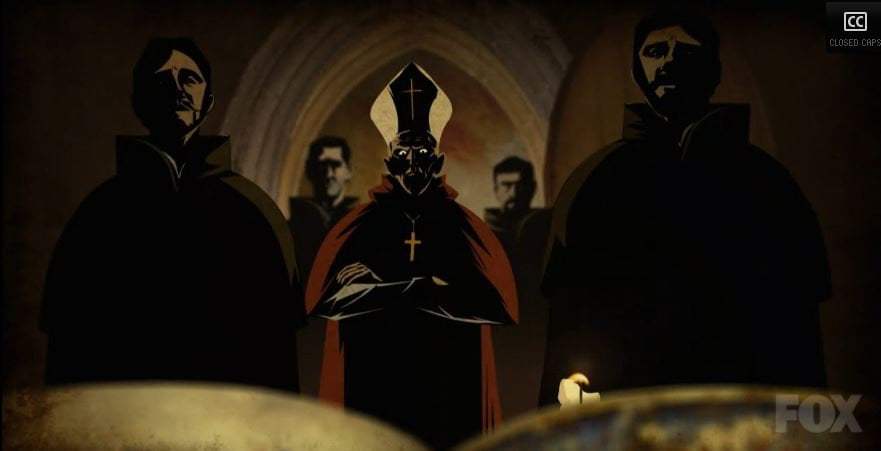
Oh look, the banal evil Inquistion meme! Cosmos: A Space-Time Odyssey’s section on Giordano Bruno is not history. It is a cartoon.
NEWSFLASH: The Giordano Bruno portion of “Cosmos: A Space-Time Odyssey” (click link to watch the full first episode) looks like it was researched on 4Chan.
The notion that Bruno was a martyr for science or that he was an inventive dreamer ultimately useful to science is false. The show wants to enlist him for science while denying he was a scientist, although the way it presents his story makes Bruno look like a science martyr. I can’t figure out what this muddled thinking is aiming at by wasting half of a decent show on a cartoon history.
The graphic below from the blog Quodlibeta is a quick rundown of the real history behind Bruno’s execution.
It’s complicated:
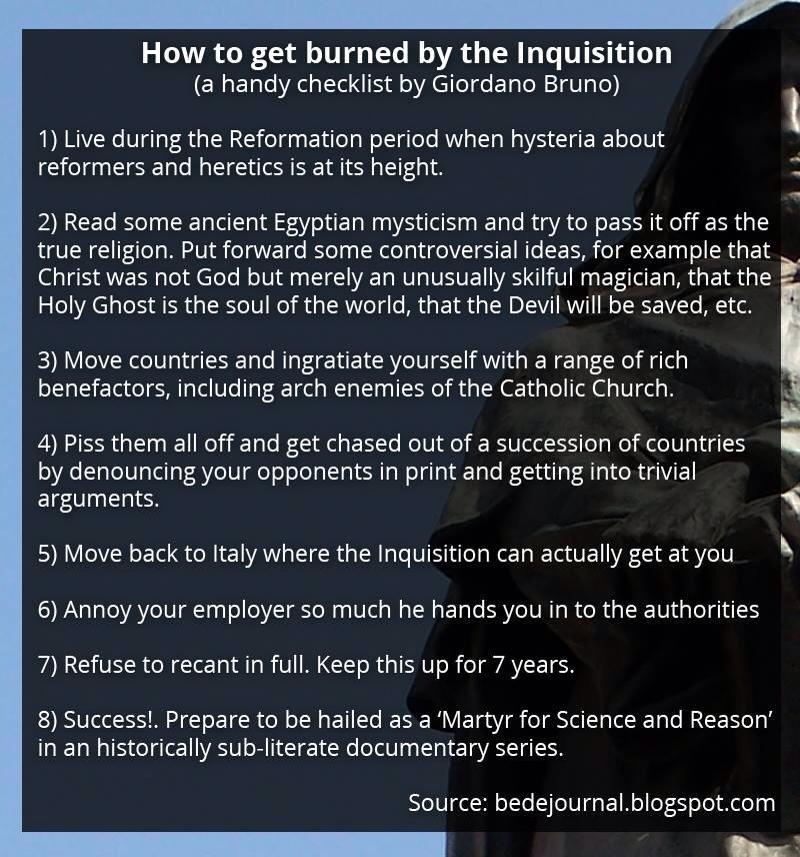
Details, schmetails…Additionally, John Bossy argues that Girodano Bruno was a specific sort of spy in England. History doesn’t even support the picture of an impoverished dreamer we saw in the cartoon. But this does look like the early modern equivalent of “suicide by cop.“
I know it’s a little immature to conduct an argument with cartoons and memes, but Neil deGrasse Tyson already blazed that trail for me in Cosmos, therefore I’ll continue in this vein.
But let me get this out there before I go on being all negative and stuff:
The FOX series (nota bene: FOX outfits are known for their objectivity) is visually a little like Tree of Life but without the philosophical and emotional depth, also a little like The Matrix but without the action and suspense. All in all, I enjoyed being led through the Cosmos with decent computer generated graphics despite the kitschy and condescending spaceship. I’d even consider showing it to my Pre-K kids, although I worry they’d only remember the spaceship.
I enjoyed the show mostly when it didn’t stray into areas where scientists have classically shown little competence. I’m thinking of minor swaths of the human condition when compared with the hugeness of science. I’m thinking of fields as insignificant as history, ethics, sociology, metaphysics, politics, and religion (“Your god is too small”). Science is way bigger than all those, and as with Giordano Bruno’s Hermetic god: SIZE DOES MATTER.
For example, two clear and present dangers of our age were caused by scientists being way bigger than ethics: environmental degradation and nukes. Is it any wonder that since scientists contributed so much to creating both of these problems they now have so much trouble getting people to listen to their warnings about nuclear wars and environmental destruction?
Can we trust them? From experience we can trust them to scapegoat the uncomprehending herd that hasn’t been intiated into the arcana of science for using their well-intentioned gifts to humanity, such as nukes, badly. You’ll have to look hard for signs of repentance for working for the military-industrial complex. Pangs of conscience usually come too late, like with Oppenheimer (or Nobel and his dynamite awards)–if at all.
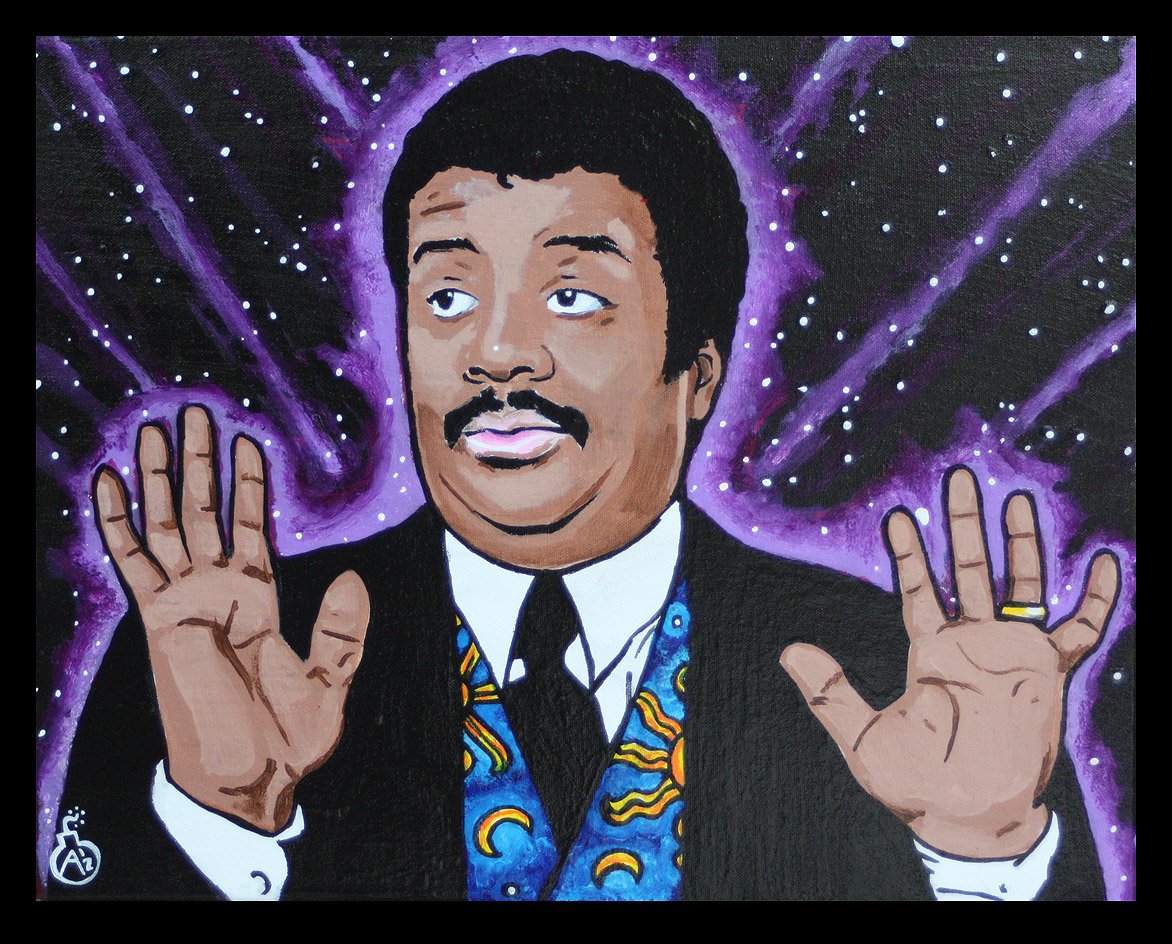
When it comes to Giordano Bruno and the scientific progress Neil deGrasse Tyson don’t know much about history.
In fact, I would have liked it a lot more if the show was a little bit more skeptical about science. Instead it gave us the following tired cliche: science is based upon a “simple method” that builds upon the accumulated knowledge of previous generations. To the theology buffs among you this should have sounded somewhat like how religious traditions function, for example, in the development of doctrine. And of course Thomas Kuhn caught plenty of flack for comparing the structures of scientific research to the structures of religious organizations when his now classic The Structure of Scientific Revolutions first came out. Kuhn also gave a thick account of the messiness of scientific revolutions in that book. He aired all their human pettiness and resentments, instead of making scientists out to be superheroes or martyrs. Bruno Latour continues this tradition of science writing today. The messy human side of science is on display in books such as Laboratory Life and Pandora’s Box.
It ain’t all progress, baby. There is also plenty of miscalculation, mystification, regress (and flat out failure) in science (yes, I said science). Ain’t nothing wrong with that. Maybe even scientists are sinners?
Let’s face it: There’s a lot of historical crap out there and there’s little in their training to provide scientists with the historical methods they’d need to make an intelligent contribution.
But with finals week right around the corner there’s one thing that I find especially disturbing about the Cosmos series: it appears to be engaging in plagiarism.
Here’s the story of how I came to that conclusion. I didn’t run across that neat graphic I gave you up there on the facts of Giordano Bruno’s life immediately. And so after watching the show I grabbed my copy of the ultimate science and religion BS radar: Galileo Goes to Jail and Other Myths about Religion and Science (published by Harvard University Press not Bob Jones University). The chapter debunking Bruno as a science martyr contains the following quote from Andrew Dickson White as an example of appalling ideology-driven 19th century “historical” scholarship:
“But the new truth could not be concealed; it could neither be laughed down nor frowned down. Many minds had received it, but within the hearing of the papacy only one tongue appears to have dared to utter it clearly. This new warrior was that strange mortal, Giordano Bruno. He was hunted from land to land, until at last he turned on his pursuers with fearful invectives. For this he was entrapped at Venice, imprisoned during six years in the dungeons of the Inquisition at Rome, then burned alive, and his ashes scattered to the winds. Still, the truth lived on.”
If you’ve watched the show, does this sound familiar?
From what I remember this is the basic outline of the 20 minute segment on Bruno (that was such an immense waste of time). What’s worse, I suspect that whole sections of the Bruno “history” monologue are lifted whole cloth out of that Dickson White passage. I can’t wait to read the script when it’s made public.
It wouldn’t surprise me much if my hunches are correct. I’ve graded too many essays and exams written by science majors for humanities classes. The results aren’t encouraging. They think that if they are competent in one area of knowledge then that will transfer to another area of knowledge. But they forget that knowledge does not work like hermetic magic.

The history of the idea of an infinite universe shows that history is more twisted than what your run of the mill scientist can handle with his or her “simple method.”
Before I forget there’s also one more error: the idea of the infinite universe was not invented by Giordano Bruno. It is not even a modern idea. It came into being during the horrible Middle Ages. It was popularized by Cardinal Nicholas of Cusa in the early fifteenth century–meaning, about a 150 years before Giordano Bruno. As luck would have it there’s a great new book about Nicholas of Cusa entitled The Analogical Turn. I’m afraid the teaching assistants who wrote the script for the first episode of Cosmos probably didn’t read it and they probably knew nothing about the Karsten Harries classic Infinity and Perspective, which has Cardinal Cusa as the hero in the middle of the development of the idea of a center-less and infinite universe.
In closing I should add that Galileo Goes to Jail and Other Myths About Religion and Science should be required reading for those of you who insist watching the rest of Cosmos.
You could even design a whole drinking game around watching the show. Drink a shot of vodka every time Neil deGrasse Tyson falls for one of the 25 (soo many opportunities) common myths debunked in the book. I suspect you also pick up the wonder-inducing and gravity-defying habit of alcoholism while you’re at it. And that’s one heck of a sacrifice for Lent.
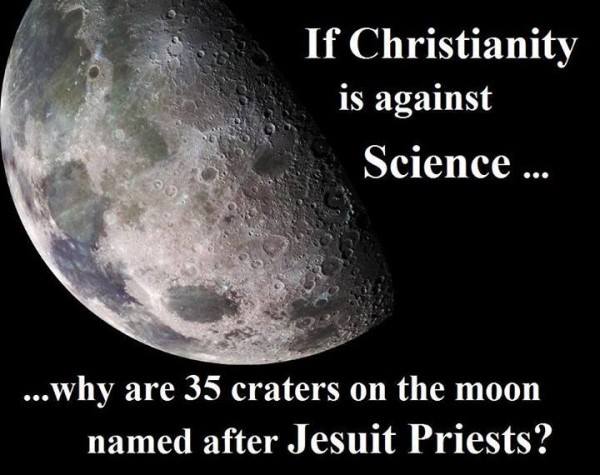
Riddle me this.
Speaking of Lent: Is anyone else bored by the nauseatingly frequently repeated truism that we are made out of stardust? What’s so wonder-inducing about being made from the contents of the cosmic ashtray? Such an ordinary fact doesn’t make me wonder or help me overcome alienation, it makes me want to buy a duster!
Let’s not forget that interstellar ashtray was generous enough to accommodate both Carl’s Sagan’s joints and Carl Sagan himself.
How cold is that?
For a more balanced take on the dialogue between science and religion–one that doesn’t deify stardust–consult this list.
Previous Post

March 12, 2014
Lost in the Cosmos: Why Does Space Leave Us Cold?
Next Post
March 16, 2014 Bye-Bye Hypatia Science Martyr?
Browse Our Archives
Select a Category #WhyRemainCatholic Abortion Advent Anti-Catholicism Arts Atheism Beauty Benedict XVI Bible Book Review Catholic Cinema Comedy Cosmos: A Space-Time Odyssey Czesław Miłosz Dariusz Karłowicz Devil Easter Eastern Orthodoxy Economics Environment Family Famous Atheists Who Weren't Atheists Guest Post Hans Urs von Balthasar HHS Mandate History Imagination Interview Islam Jean-Luc Marion John Paul II Judaism Just War Lent Literature Little Sisters of the Poor Liturgy Martyrdom Music News Paganism Patristics Phenomenology Philosophy Pierre Hadot Poetry Poland Pop Culture Pope Francis Poverty Prayer Protestantism Rabelais Race Remi Brague Rene Girard Russia Sam Rocha Science & Religion SCOTUS Secularization Sexual Abuse Sexuality Silence Solidarity Stratford Caldecott Synod14 Terrorism Top 10 Uncategorized Walker Percy War Weakened Edition World War II World Youth Day WYD Krakow
Select a Month July 2017 June 2017 May 2017 April 2017 March 2017 February 2017 January 2017 December 2016 October 2016 September 2016 August 2016 July 2016 June 2016 May 2016 April 2016 March 2016 February 2016 January 2016 December 2015 November 2015 October 2015 September 2015 August 2015 July 2015 June 2015 May 2015 April 2015 March 2015 February 2015 January 2015 December 2014 November 2014 October 2014 September 2014 August 2014 July 2014 May 2014 April 2014 March 2014 February 2014 January 2014 December 2013 November 2013 October 2013 September 2013 August 2013 July 2013 June 2013 May 2013
Follow Us!
TAKE THE
Religious Wisdom Quiz
Which Christian movement began with John Wesley in the 18th century?
Select your answer to see how you score.
Lutheranism Calvinism Presbyterianism Methodism
Related posts from Cosmos The In Lost

Atheists Have "National Day of Reason," But American...

2 Reasons Why the March for Science is...

Famous Atheists Who Aren't Atheist: Facebook Creator Mark...
What Do Sex, Lent, UFO's, Evolution, and the...
TRENDING AT PATHEOS Catholic

Creation, Preservation, and Teleology in Catholic Theology
As I write this, it is very early Monday morning. Like millions...

The Parable Of The Sower And The Word...
One of Christ’s most famous parables is that of the sower who...

Rejecting Doom: Christian Hope And Human Action
Christianity is a religion of hope. We are to have hope and...

Why I Choose the Eucharist Over the Sermon
Choose the Eucharist, Not the Sermon What are we supposed to get...

5 Design Elements Found in Spiritually Rooted Homes
Putting Spirituality Into Home Decor Our homes are more than our living...

Credo: A Story of God Told with the...
About 10 years ago, I began to imagine a personal "Credo" that...
view all Catholic blogs
Ad-Free & Subscriber Log-In Subscription Support
- About Us
- 2026 Calendar
- Videos
- Podcasts
- Library of World Religions
- Faith In Media Tracker
- Advertise With Us
- Write for Us
- Privacy Policy
- Terms of Service
- Do Not Sell My Data
- Contact Us
- Radiant Digital
- Manage Newsletter Subscriptions
- Unsubscribe From Notifications
- Sitemap
Copyright 2008-2026, Patheos. All rights reserved.
Subscription Support Ad-Free & Subscriber Log-In
Follow Patheos