
BuddhistCatholicContemplativeEvangelicalGeneral ChristianHinduJewishLatter-day SaintMuslimNew VisionsProgressive Christian
Beliefs
- Buddhist
- Catholic
- Contemplative
- Evangelical
- General Christian
- Hindu
- Jewish
- Latter-day Saint
- More Voices
- Muslim
- New Visions
- Pagan
- Progressive Christian
Topics
- Religion News
- Food and Religion
- Sports and Religion
- Religious Art
- Religious Music and Entertainment
- Religious Events
- History and Religion
- Style and Religion
- Politics and Religion
- Women in Religion
- Recreation Outdoors and Religion
- Business Finance and Religion
- Careers Workplace and Religion
- Education and Religion
- Family Parenting and Religion
- Health Fitness and Religion
- Home and Religion
- Relationships and Religion
- Technology and Religion
- Travel and Religion
Columnists
- Buddhist Columnists
- Business Finance and Religion Columnists
- Careers Workplace and Religion Columnists
- Catholic Columnists
- Contemplative Columnists
- Education and Religion Columnists
- Evangelists Columnists
- Family Parenting and Religion Columnists
- General Christian Columnists
- Health Fitness and Religion Columnists
- Hindu Columnists
- History and Religion Columnists
- Home and Religion Columnists
- Jewish Columnists
- More Voices Columnists
- Latter Day Columnists
- Muslim Columnists
- New Visions Columnists
- Nonreligious Columnists
- Pagan Columnists
- Politics and Religion Columnists
- Progressive Columnists
- Recreation Outdoors and Religion Columnists
- Relationships and Religion Columnists
- Religion News Columnists
- Religious Art Columnists
- Religious Events Columnists
- Religious Music and Entertainment Columnists
- Sports and Religion Columnists
- Style and Religion Columnists
- Technology and Religion Columnists
- Travel and Religion Columnists
- Women in Religion Columnists
Resource Library
- 2026 Calendar
- Library of World Religions
- The 100 Most Holy Places on Earth
- Patheos Answers
- Podcasts
- Videos
- Faith Leaders Database
- Anglican Episcopalian
- Bahai
- Baptist
- Buddhism
- Christianity
- Confucianism
- Eastern Orthodoxy
- Hinduism
- Holiness and Pentecostal
- ISKCON
- Islam
- Judaism
- Lutheran
- Methodist
- The Church of Jesus Christ of Latter-day Saints
- New Age
- Paganism
- Presbytarian and Reformed
- Protestantism
- Religion Behind the Scenes
- Roman Catholic
- Scientology
- Shia Islam
- Sikhism
- Sufism
- Sunni Islam
- Taoism
- Zen
- See all religions
Research Tools
 Ad-Free & Subscriber Log-In Subscription Support
Ad-Free & Subscriber Log-In Subscription Support
Follow Patheos 

- Trending:
- Forgiveness
- |
- Marriage
- |
- Consciousness
- |
- Death Penalty
- |
- Election
- |
- Halloween
 Cosmos The In Lost
- Home
- Catholic
- Lost in the Cosmos: Why Does Space Leave Us Cold?
Lost in the Cosmos: Why Does Space Leave Us Cold?
Last updated on: March 12, 2014 at 7:13 am by Artur Rosman
Lost in the Cosmos: Why Does Space Leave Us Cold? 2014-03-12T07:13:59-07:00 Artur Rosman
Patheos Explore the world's faith through different perspectives on religion and spirituality! Patheos has the views of the prevalent religions and spiritualities of the world.

The original caption reads, “Some astrophysicists propose that the universe was formed by a collapsing 4D star.” Why does this leave me cold?
Once in a while you run across a thread that nearly makes all those hours you waste on facebook somewhat almost worthwhile.
A couple of days ago I spent some time belittling the Nova story about cosmology I found in my news feed (I felt bad about it later). My attitude grew out of how the nice PBS people went for the jugular in their posting of the story. The post led with, “Ready to have your mind blown? We might be living in a membrane around the event horizon of a collapsed hyperdimensional star that gave birth to the universe.” My mind was still intact and not too stimulated after reading the rather tame full story here.
Out of sheer cosmic boredom my next mission will consist of taking apart the “Cosmos: A Space-Time Odyssey” ship of the imagination, but for different reasons, purely as something of a trained historian.
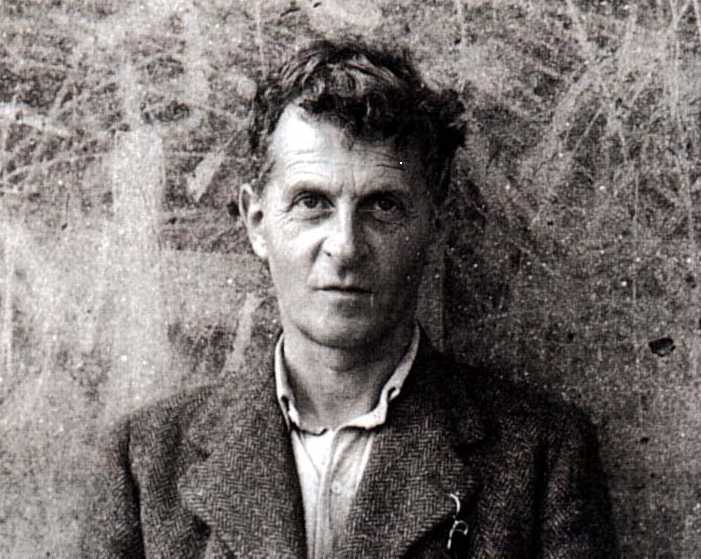
Tractatus Logico-Philosophicus: science is meh to life.
Ultimately I’m partial to Wittgenstein’s attitude from the Tractatus Logico-Philosophicus about all such cosmological discoveries. He says, “Once we have answered all questions of science there is still the matter of how to live life.” Walker Percy said something along these lines in one of the five or so subtitles to his classic Lost in the Cosmos, “Why is it that of all the billions and billions of strange objects in the Cosmos–novas, quasars, pulsars, black holes–you are beyond doubt the strangest?” I’ll return to how these pertain to our (or maybe just mine?) cosmic ennui.
It was easy to dismiss the membrane, since it was so overblown. Yet, it was impossible to ignore the personal urgency and significance given to another recent scientific achievement by Matthew J. Peterson of the de Koninck Project. Here is his facebook reaction to an Atlantic piece that was rather enthusiastically titled, “We Made It: Humanity Has Arrived at Interstellar Space.” Matthew says,
“We built something that is now 12 billion miles away, recording the sound of the Sun exploding as heard beyond the solar winds in interstellar space. And yet we have no songs or poems about the greatest achievements in the exploration of the universe that keep on growing; we are quite dead to it… Why?”
So why doesn’t that generate excitement from humanists and theologians? Aren’t they getting lost in the cosmos even more by ignoring it? Don’t they cede ground to atheist cosmic-mystics like Carl Sagan, Richard “the Mild” Dawkins, Neil de Greese Tyson, Bill Nye, and Barbara Hubbard-Marx?
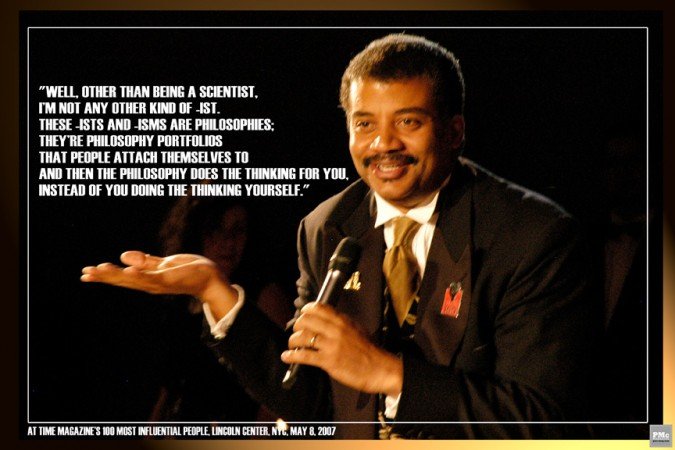
Demagoguery: Occurs when you give your -ism a free pass instead of thinking through a philosophical justification yourself.
Actually, this hasn’t been entirely ignored by theologians. There are people working on these questions in theology, people like Fr. Michael Heller, Conor Cunningham, George Coyne, SJ and Thomas F. O’Meara, OP. They’ve been working out the implications of evolution, space travel, cosmology, and even extraterrestrials. Most of them are scientists of the highest rank. In this they are merely part of a long tradition of orthodox believers who’ve made nearly all the most fundamental contributions within many scientific fields.
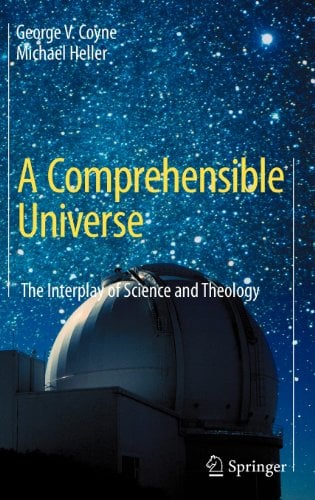
Coyne and Heller on the implications of a universe that is comprehensible.
So let’s not fall into “declinism” too quickly. Our urge for instant gratification forgets how it takes genuine scientific discoveries, and other intellectual innovations, about two to three hundred years to filter into the popular imagination. And you thought Rome is slow!
For example, in the Land of Urlo Czeslaw Milosz welcomes the discoveries of modern physics, because he believes they open up to Christian theology in a way that wasn’t possible in a mechanistic universe run by an expandable watchmaker. He also notes we’ve barely absorbed Newton, so it’s no surprise that both Einstein and the Copenhagen School of quantum physics haven’t trickled down into the popular imagination.
Let’s be patient.
Be that as it may, there is also the problem of relation when it comes to getting aroused by vacuums twelve billion miles away even if “we’ve made it.” Poetic utterances require us to have something at-hand in order to be capable of intuitions (the original meaning of ποίησις is “to make”).
Therefore, if you want to make something of the moral law within, or the starry skies above, then your intuitions of both are fairly close at hand. All you have to do is to step outside and look (if there isn’t too much light pollution where you live), or look inside (if you’re not a shallow bastard like me). The same goes with great historical discoveries. Testimonies are at hand in personal and historical accounts of the events. The same can’t be said for the abstract constructs of modern physics or interstellar travel. That’s why they leave us cold. Heck, even as great a poet as W.H. Auden couldn’t relate much to the moon-landing:
http://www.youtube.com/watch?v=ymDPQodemU4
What’s more, we should temper our lamentations at the loss of teleology since Francis Bacon. We should remember that the Roman Empire’s reliance upon the Greek model of the world/cosmos as a source of wisdom eventually, right around the time of Christ, became a burden.
As Remi Brague reminds us in The Wisdom of the World, one of the main appeals of Christianity was its marked ambivalence toward the world as a source of wisdom. After all, it’s amusing to read your future in the horoscope once ever so often. But what if you believed it contained the literal itinerary of your next week? How hellish would that be? We might be made from stardust, but thank God we are no longer bound by an idolatry of stars.
There is a kind of comfort in being lost in a comprehensible cosmos while knowing we cannot be reduced to easily digestible to scientific formulas. These mysteries go back to another one of Walker Percy’s subtitles for Lost in the Cosmos, “How it is possible for the man who designed Voyager 19, which arrived at Titania, a satellite of Uranus, three seconds off schedule and a hundred yards off course after a flight of six years, to be one of the most screwed-up creatures in California-or the Cosmos?”
All in all, the matter of theology should be the encouraging of personal transformation as both Larry Chapp and Michael J. Buckley have argued in books that made my TOP 10 list of recent books in theology. Collecting objective data about the universe will not effect the total subjective transformation that the best theology demands from you through spiritual exercises; you can be a dickhead and a great scientist.
But, if you do chance your own life, you’ll also see the universe around you differently. Which reminds me…
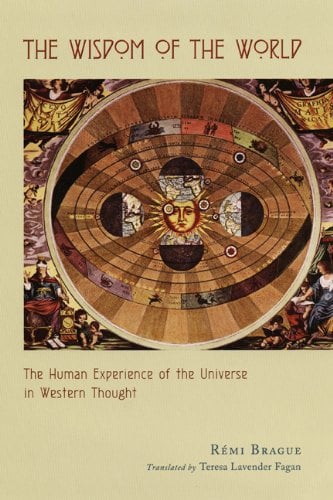
“Man therefore is not meant to govern himself according to the phenomena of the world, but must seek elsewhere for a model of behavior. In the final analysis that model is God himself. God manifests himself less through his creation than through a more direct intervention: He can either give the world his law, as in Judaism and Islam, or he can indeed enter into that world through incarnation, as in Christianity,” says Brague in The Wisdom of the World.
Space is too cold for me to care. Did you notice how Neil deGrasse Tyson was aware of just that?
He resurrected the ghost of Sagan at the end of the first episode of his version of “Cosmos” in order to warm up the cold corpse of the universe. He also spent an inordinate amount of time hoping, contrary to hard evidence, that there’s life on Mars (or that there’s a multiverse).
http://www.youtube.com/watch?v=v–IqqusnNQ
All of that is understandable.
Previous Post

March 11, 2014
Augustine Rocha n' Rolls
Next Post
March 13, 2014 Lies, Damned Lies, and Cartoons: Cosmos on Giordano Bruno
Browse Our Archives
Select a Category #WhyRemainCatholic Abortion Advent Anti-Catholicism Arts Atheism Beauty Benedict XVI Bible Book Review Catholic Cinema Comedy Cosmos: A Space-Time Odyssey Czesław Miłosz Dariusz Karłowicz Devil Easter Eastern Orthodoxy Economics Environment Family Famous Atheists Who Weren't Atheists Guest Post Hans Urs von Balthasar HHS Mandate History Imagination Interview Islam Jean-Luc Marion John Paul II Judaism Just War Lent Literature Little Sisters of the Poor Liturgy Martyrdom Music News Paganism Patristics Phenomenology Philosophy Pierre Hadot Poetry Poland Pop Culture Pope Francis Poverty Prayer Protestantism Rabelais Race Remi Brague Rene Girard Russia Sam Rocha Science & Religion SCOTUS Secularization Sexual Abuse Sexuality Silence Solidarity Stratford Caldecott Synod14 Terrorism Top 10 Uncategorized Walker Percy War Weakened Edition World War II World Youth Day WYD Krakow
Select a Month July 2017 June 2017 May 2017 April 2017 March 2017 February 2017 January 2017 December 2016 October 2016 September 2016 August 2016 July 2016 June 2016 May 2016 April 2016 March 2016 February 2016 January 2016 December 2015 November 2015 October 2015 September 2015 August 2015 July 2015 June 2015 May 2015 April 2015 March 2015 February 2015 January 2015 December 2014 November 2014 October 2014 September 2014 August 2014 July 2014 May 2014 April 2014 March 2014 February 2014 January 2014 December 2013 November 2013 October 2013 September 2013 August 2013 July 2013 June 2013 May 2013
Follow Us!
TAKE THE
Religious Wisdom Quiz
According to Jesus, "Blessed are those who hunger and thirst for." what?
Select your answer to see how you score.
Power Popularity Righteousness Money
Related posts from Cosmos The In Lost

The Surprising Anti-Capitalist Logic Behind the Catholic Church's...

Biblical Authority After Babel Cannot Be Built Upon...

2 Reasons Why the March for Science is...

Liberal Theologian's Lenient Easter Sermon Makes a Mockery...
TRENDING AT PATHEOS Catholic

Rejecting Doom: Christian Hope And Human Action
Christianity is a religion of hope. We are to have hope and...

It’s What Comes From Within Which Matters
One of the most difficult things for us to understand is why...

Why I Choose the Eucharist Over the Sermon
Choose the Eucharist, Not the Sermon What are we supposed to get...

5 Design Elements Found in Spiritually Rooted Homes
Putting Spirituality Into Home Decor Our homes are more than our living...

Credo: A Story of God Told with the...
About 10 years ago, I began to imagine a personal "Credo" that...

The Anatomy of Divine Revelation in Catholic Thought
The claim that God has made Himself known to human beings is...
view all Catholic blogs
Ad-Free & Subscriber Log-In Subscription Support
- About Us
- 2026 Calendar
- Videos
- Podcasts
- Library of World Religions
- Faith In Media Tracker
- Advertise With Us
- Write for Us
- Privacy Policy
- Terms of Service
- Do Not Sell My Data
- Contact Us
- Radiant Digital
- Manage Newsletter Subscriptions
- Unsubscribe From Notifications
- Sitemap
Copyright 2008-2026, Patheos. All rights reserved.
Subscription Support Ad-Free & Subscriber Log-In
Follow Patheos