
BuddhistCatholicContemplativeEvangelicalGeneral ChristianHinduJewishLatter-day SaintMuslimNew VisionsProgressive Christian
Beliefs
- Buddhist
- Catholic
- Contemplative
- Evangelical
- General Christian
- Hindu
- Jewish
- Latter-day Saint
- More Voices
- Muslim
- New Visions
- Pagan
- Progressive Christian
Topics
- Religion News
- Food and Religion
- Sports and Religion
- Religious Art
- Religious Music and Entertainment
- Religious Events
- History and Religion
- Style and Religion
- Politics and Religion
- Women in Religion
- Recreation Outdoors and Religion
- Business Finance and Religion
- Careers Workplace and Religion
- Education and Religion
- Family Parenting and Religion
- Health Fitness and Religion
- Home and Religion
- Relationships and Religion
- Technology and Religion
- Travel and Religion
Columnists
- Buddhist Columnists
- Business Finance and Religion Columnists
- Careers Workplace and Religion Columnists
- Catholic Columnists
- Contemplative Columnists
- Education and Religion Columnists
- Evangelists Columnists
- Family Parenting and Religion Columnists
- General Christian Columnists
- Health Fitness and Religion Columnists
- Hindu Columnists
- History and Religion Columnists
- Home and Religion Columnists
- Jewish Columnists
- More Voices Columnists
- Latter Day Columnists
- Muslim Columnists
- New Visions Columnists
- Nonreligious Columnists
- Pagan Columnists
- Politics and Religion Columnists
- Progressive Columnists
- Recreation Outdoors and Religion Columnists
- Relationships and Religion Columnists
- Religion News Columnists
- Religious Art Columnists
- Religious Events Columnists
- Religious Music and Entertainment Columnists
- Sports and Religion Columnists
- Style and Religion Columnists
- Technology and Religion Columnists
- Travel and Religion Columnists
- Women in Religion Columnists
Resource Library
- 2026 Calendar
- Library of World Religions
- The 100 Most Holy Places on Earth
- Patheos Answers
- Podcasts
- Videos
- Faith Leaders Database
- Anglican Episcopalian
- Bahai
- Baptist
- Buddhism
- Christianity
- Confucianism
- Eastern Orthodoxy
- Hinduism
- Holiness and Pentecostal
- ISKCON
- Islam
- Judaism
- Lutheran
- Methodist
- The Church of Jesus Christ of Latter-day Saints
- New Age
- Paganism
- Presbytarian and Reformed
- Protestantism
- Religion Behind the Scenes
- Roman Catholic
- Scientology
- Shia Islam
- Sikhism
- Sufism
- Sunni Islam
- Taoism
- Zen
- See all religions
Research Tools
 Ad-Free & Subscriber Log-In Subscription Support
Ad-Free & Subscriber Log-In Subscription Support
Follow Patheos 

- Trending:
- Forgiveness
- |
- Marriage
- |
- Consciousness
- |
- Death Penalty
- |
- Election
- |
- Halloween
 Cosmos The In Lost
- Home
- Catholic
- What Makes Literature Catholic?
What Makes Literature Catholic?
Last updated on: January 17, 2015 at 12:09 am by Artur Rosman
What Makes Literature Catholic? 2015-01-17T00:09:12-07:00 Artur Rosman
Patheos Explore the world's faith through different perspectives on religion and spirituality! Patheos has the views of the prevalent religions and spiritualities of the world.
One of the main problems with current debates about the state of Catholic literature is the lack of a consensus about what makes literature Catholic.
Paul Elie sets up one set of criteria that can only presumably be met by the novel he’s now writing. Randy Boyagoda argues contemporary Catholic literature doesn’t interface with the experience of its readers, but he promises us a book that will do just that.
Gregory Wolfe of IMAGE Journal makes an argument is more nuanced and distanced. He argues that the tone of Catholic literature has changed from the shouting of Flannery O’Connor to a more subtle whisper.
For those of you who don’t remember, O’Connor said the following in one of her letters (collected here):
“The novelist with Christian concerns will find in modern life distortions which are repugnant to him, and his problem will be to make these appear as distortions to an audience which is used to seeing them as natural; and he may well be forced to take ever more violent means to get his vision across to this hostile audience. When you can assume that your audience holds the same beliefs you do, you can relax a little and use more normal ways of talking to it; when you have to assume that it does not, then you have to make your vision apparent by shock — to the hard of hearing you shout, and for the almost blind you draw large and startling figures” (Collected Works, 805-806).
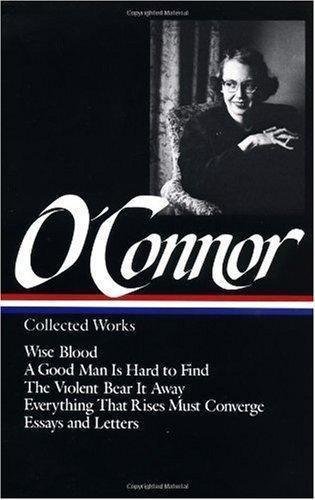
Flan, Flan, the one hundred pound gorilla in every Catholic’s literary closet.
I won’t rub everyone’s noses in the uncomfortable fact that her shouting was followed by one of the great demographic collapses in American Catholic history. Maybe her methods, despite the good intentions, were not as effective as we’d like to remember” As for the state of Catholic literature these days, Wolfe shifts the blame from the writers to the readers and their conventional reading habits:
“So here’s my counter-thesis: The loss of a Catholic presence in mainstream literary culture is not because we are suffering from a dearth of gifted Catholic writers but because ideological blinders have prevented religious and secular people alike from perceiving and engaging the work that is out there.
In other words, we suffer from a type of spiritual and cultural anorexia: What would feed and nourish us is before us, but we will not eat.”
In his The Fine Delight: Postconciliar Catholic Literature Nick Ripatrazone adds even more complexity to the task of identifying what might count as Catholic literature:
“Catholic literature, and Catholic writers, resist definition. To be ‘catholic’ is to be inclusive to accept all voices, though not all writing can be considered religiously Catholic. Is a writer Catholic because of her standing within the Church: baptized, confirmed, practicing? What if she is inactive or lapsed? Is she only Catholic if she operates in fidelity with the doctrinal beliefs of the Church; are certain beliefs more important than others? Would a staunchly pro-life writer not be considered Catholic if she rejected papal infallibility? What about writers who convert to, or from the faith? Or a writer living ‘culturally’ as a Catholic, but not participating in the rituals of the Church? Which is more important: biography or literary content? If an atheist writes a novel about a priest, is that novel Catholic, or is it only Catholic if the characters act in accordance with Church teachings, and do not leave the seminary for the secular world? When the Vatican issued a letter condemning Graham Greene’s 1940 novel, The Power and the Glory, Greene penned a sly response to Cardinal Pizzardo in April 1954, reinforcing his allegiance to the Church. Does it make Greene any less Catholic of a writer if he elsewhere admitted to not simply adultery, but a long-term extramarital relationship? There might be no end to Catholic forgiveness, but what of literary absolution?”

The Fine Delight: Small book, big questions.
Ripatrazone’s book features well-known Catholic whisperers such as Ron Hansen, Andre Dubus, and Paul Mariani.
The Fine Delight (there’s also a website) includes a chapter that profiles a whole host of other Catholics, practicing, lapsed, cultural, and even non-Catholics who’ve written in a Catholic vein. You can find some of them on my lists of living religious poets and novelists.
Ripatrazone also makes the past even messier than I suggested above by pointing out the obvious: how Walker Percy wrote mostly about ambivalent Episcopalians, whereas Flannery mostly about lapsed Baptists. What’s more, he suggest they adopted these strategies to counter a tidal wave of (if I may borrow a judgment Gombrowicz passed on Sienkiewicz) first-rate second-rate Catholic writers:
“This Catholic intellectual sense might have found its origins in a reaction against the inevitable proliferation of dogmatic Catholic literature a near subculture of ‘literary production including presses, publishers, newspapers, book clubs, awards, conferences, and professional associations.'”
When thinking about the past we tend to think of a lost paradise. For example, when thinking about the 60’s we think of Bob Dylan, The Beatles, The Rolling Stones, and Floyd. We not only forget about their failed albums, but also all the dross they were competing with for airtime. What else was playing? I don’t know. And I’m glad for it, but I know it’s there should I want to do the research.
If the critics want to avoid shouting at each other instead of making balanced judgments, then they have to figure out the criteria of literature, Catholic… My own predilection for messiness and surprise inclines me toward Wolfe and Ripatrazone.
If you want to familiarize yourself with some of the debates then see: Elie’s Tumblr site, Ripatrazone’s blogspot blog, Dana Gioia’s First Things essay, and Wolfe’s website. As you can see, there isn’t even a consensus about what internet platforms to use!
The short answer to the title question? For now we have no idea.
Previous Post

February 21, 2014
This Friday's Dose of Rabelaisian Catholicism
Next Post
February 26, 2014 Quick Catholic Ch-Ch-Ch Changes: Pope Francis Does a Phil Jenkins
Browse Our Archives
Select a Category #WhyRemainCatholic Abortion Advent Anti-Catholicism Arts Atheism Beauty Benedict XVI Bible Book Review Catholic Cinema Comedy Cosmos: A Space-Time Odyssey Czesław Miłosz Dariusz Karłowicz Devil Easter Eastern Orthodoxy Economics Environment Family Famous Atheists Who Weren't Atheists Guest Post Hans Urs von Balthasar HHS Mandate History Imagination Interview Islam Jean-Luc Marion John Paul II Judaism Just War Lent Literature Little Sisters of the Poor Liturgy Martyrdom Music News Paganism Patristics Phenomenology Philosophy Pierre Hadot Poetry Poland Pop Culture Pope Francis Poverty Prayer Protestantism Rabelais Race Remi Brague Rene Girard Russia Sam Rocha Science & Religion SCOTUS Secularization Sexual Abuse Sexuality Silence Solidarity Stratford Caldecott Synod14 Terrorism Top 10 Uncategorized Walker Percy War Weakened Edition World War II World Youth Day WYD Krakow
Select a Month July 2017 June 2017 May 2017 April 2017 March 2017 February 2017 January 2017 December 2016 October 2016 September 2016 August 2016 July 2016 June 2016 May 2016 April 2016 March 2016 February 2016 January 2016 December 2015 November 2015 October 2015 September 2015 August 2015 July 2015 June 2015 May 2015 April 2015 March 2015 February 2015 January 2015 December 2014 November 2014 October 2014 September 2014 August 2014 July 2014 May 2014 April 2014 March 2014 February 2014 January 2014 December 2013 November 2013 October 2013 September 2013 August 2013 July 2013 June 2013 May 2013
Follow Us!
TAKE THE
Religious Wisdom Quiz
In Revelation, what is the correct sequence of events in the End Times?
Select your answer to see how you score.
Beast rises from sea, dragon cast to earth, mark of the beast given, false prophet rises False prophet rises, dragon cast to earth, beast rises from sea, mark of the beast given Dragon cast to earth, beast rises from sea, false prophet rises from earth, mark of the beast given Mark of the beast given, dragon cast to earth, beast rises, false prophet rises
Related posts from Cosmos The In Lost

The Surprising Anti-Capitalist Logic Behind the Catholic Church's...

How is Classical Philosophy is Like War?

Why Does the World's Leading Philosopher Remain a...

It's a Good Friday to Leave Calypso's Island
TRENDING AT PATHEOS Catholic

Rejecting Doom: Christian Hope And Human Action
Christianity is a religion of hope. We are to have hope and...

It’s What Comes From Within Which Matters
One of the most difficult things for us to understand is why...

Why I Choose the Eucharist Over the Sermon
Choose the Eucharist, Not the Sermon What are we supposed to get...

5 Design Elements Found in Spiritually Rooted Homes
Putting Spirituality Into Home Decor Our homes are more than our living...

Credo: A Story of God Told with the...
About 10 years ago, I began to imagine a personal "Credo" that...

The Anatomy of Divine Revelation in Catholic Thought
The claim that God has made Himself known to human beings is...
view all Catholic blogs
Ad-Free & Subscriber Log-In Subscription Support
- About Us
- 2026 Calendar
- Videos
- Podcasts
- Library of World Religions
- Faith In Media Tracker
- Advertise With Us
- Write for Us
- Privacy Policy
- Terms of Service
- Do Not Sell My Data
- Contact Us
- Radiant Digital
- Manage Newsletter Subscriptions
- Unsubscribe From Notifications
- Sitemap
Copyright 2008-2026, Patheos. All rights reserved.
Subscription Support Ad-Free & Subscriber Log-In
Follow Patheos