
BuddhistCatholicContemplativeEvangelicalGeneral ChristianHinduJewishLatter-day SaintMuslimNew VisionsProgressive Christian
Beliefs
- Buddhist
- Catholic
- Contemplative
- Evangelical
- General Christian
- Hindu
- Jewish
- Latter-day Saint
- More Voices
- Muslim
- New Visions
- Pagan
- Progressive Christian
Topics
- Religion News
- Food and Religion
- Sports and Religion
- Religious Art
- Religious Music and Entertainment
- Religious Events
- History and Religion
- Style and Religion
- Politics and Religion
- Women in Religion
- Recreation Outdoors and Religion
- Business Finance and Religion
- Careers Workplace and Religion
- Education and Religion
- Family Parenting and Religion
- Health Fitness and Religion
- Home and Religion
- Relationships and Religion
- Technology and Religion
- Travel and Religion
Columnists
- Buddhist Columnists
- Business Finance and Religion Columnists
- Careers Workplace and Religion Columnists
- Catholic Columnists
- Contemplative Columnists
- Education and Religion Columnists
- Evangelists Columnists
- Family Parenting and Religion Columnists
- General Christian Columnists
- Health Fitness and Religion Columnists
- Hindu Columnists
- History and Religion Columnists
- Home and Religion Columnists
- Jewish Columnists
- More Voices Columnists
- Latter Day Columnists
- Muslim Columnists
- New Visions Columnists
- Nonreligious Columnists
- Pagan Columnists
- Politics and Religion Columnists
- Progressive Columnists
- Recreation Outdoors and Religion Columnists
- Relationships and Religion Columnists
- Religion News Columnists
- Religious Art Columnists
- Religious Events Columnists
- Religious Music and Entertainment Columnists
- Sports and Religion Columnists
- Style and Religion Columnists
- Technology and Religion Columnists
- Travel and Religion Columnists
- Women in Religion Columnists
Resource Library
- 2026 Calendar
- Library of World Religions
- The 100 Most Holy Places on Earth
- Patheos Answers
- Podcasts
- Videos
- Faith Leaders Database
- Anglican Episcopalian
- Bahai
- Baptist
- Buddhism
- Christianity
- Confucianism
- Eastern Orthodoxy
- Hinduism
- Holiness and Pentecostal
- ISKCON
- Islam
- Judaism
- Lutheran
- Methodist
- The Church of Jesus Christ of Latter-day Saints
- New Age
- Paganism
- Presbytarian and Reformed
- Protestantism
- Religion Behind the Scenes
- Roman Catholic
- Scientology
- Shia Islam
- Sikhism
- Sufism
- Sunni Islam
- Taoism
- Zen
- See all religions
Research Tools
 Ad-Free & Subscriber Log-In Subscription Support
Ad-Free & Subscriber Log-In Subscription Support
Follow Patheos 

- Trending:
- Forgiveness
- |
- Marriage
- |
- Consciousness
- |
- Death Penalty
- |
- Election
- |
- Halloween
 Cosmos The In Lost
- Home
- Catholic
- The Protestant Imagination
The Protestant Imagination
Last updated on: February 4, 2014 at 11:38 am by Artur Rosman
The Protestant Imagination 2014-02-04T11:38:00-07:00 Artur Rosman
Patheos Explore the world's faith through different perspectives on religion and spirituality! Patheos has the views of the prevalent religions and spiritualities of the world.
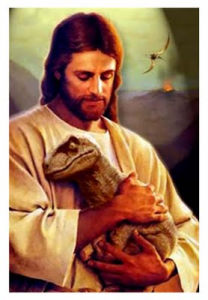
There’s more on the analogies between religion and science here.
After writing a post on the Catholic imagination a bit of Protestant dialectics “If You’re Defending Absolute Truth, You’re Defending The Wrong Thing” dropped into my lap like a cuddly baby dinosaur.
In that previous post I cited the following passage from Mama Unabridged:
“Choosing to become Catholic has, in part, been a realization that the way I think and see the world is already deeply Catholic. While the Protestant imagination can be said to be dialectic, thinking in terms of either/or and stressing the unlikeness of things, the Catholic imagination is analogic — incarnational — seeing things in terms of likeness and unity, welcoming paradox. There is no schism between faith and reason, between the sacred and secular, between the natural and the numinous; God, the ground of all Being, inhabits each of these realms. All of reality is engraced.”
I am well aware that in his The Analogical Imagination: Christian Theology and the Culture of Pluralism David Tracy presents the analogical and dialectical imaginations as ideal constructs that don’t necessarily appear in pure form in reality. For example, think of George Weigel’s obsessive labeling of everything he sees, since the publishing of his book, as examples of “evangelical Catholicism.” I should add that Tracy also believes these two imaginations are complimentary rather than locked in combat. (Some blame Tracy’s irenicism for his inability to publish the much-awaited book on the doctrine of God he’s been writing for the last two decades.)
Then again, sometimes these theological imaginations do appear in pure form.
I frequently run across status updates on facebook from Protestant friends that sound like they’re in a foreign language I can speak, but not as a native speaker. That’s precisely how I felt when I first read Kierkegaard’s supremely dialectical Philosophical Fragments.
Below is a sample of dialectics from the “If You’re Defending…” post. Note how it is an example of “thinking in terms of either/or and stressing the unlikeness of things”:
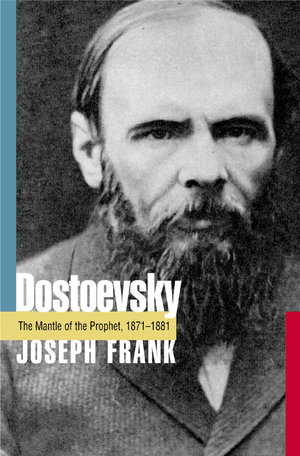
Was Dostoevsky secretly Protestant? He did spend altogether too much time in Germany and England.
“But like the Israel of Isaiah’s day, we suffer from an idolatry of faith that values theology and tradition more than people. We’re plagued by an idolatrous obsession over ideas that’s driven by a unquenchable need for control, a paranoid fear of the other, intense personal insecurity, and a pathological need to be right and have others recognize that we’re right.”
The author pulls the dialectics so far that he mirrors Dosteovsky’s famous (Protestant!) dichotomy between Christ and the truth. Here it is in the version cited in Joseph Frank’s Dostoevsky: The Mantle of the Prophet, 1871-1881:
“If someone proved to me that Christ is outside the truth and that in reality the truth were outside of Christ, then I should prefer to remain with Christ rather than with the truth.”
I believe the purest theological form of this sort of typically Protestant dialectical thinking can be found in Barth’s The Epistle to the Romans, which Catholic theologian Karl Adam called a “the bomb that fell on the playground of the theologians.”
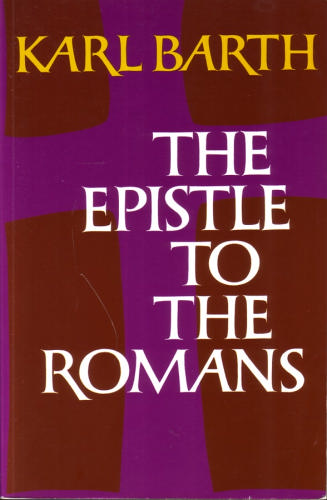
I sometimes wonder whether Barth had a background in mathematics.
Here’s Barth bombing away:
“The known plane is God’s creation, fallen out of its union with Him, and therefore the world of the flesh needing redemption, the world of men, and of time, and of things — our world. This known plane is intersected by another plane that is unknown — the world of the Father, of the Primal Creation, and of the final Redemption. The relation between us and God, between this world and His world presses for recognition, but the line of intersection is not self-evident.”
Can you see the difference now? Can you see how the dialectics in video Jesus > Religion might lead to a book that becomes a New York Times bestseller? Abandoning the world has unforeseen, but predictable, consequences for the world. Sometimes making God too transcendent of the world looks a lot like atheism. This is something that Michael Gillespie argues in The Theological Origins of Modernity.
Finally, in a totally awesome twist, the very same blog that did the “absolute truth” post also takes aim at the Jesus vs. Religion video. What’s more, it does so dialectically (see: this). If you’re keeping track that’s dialectics turning on dialectics dialectically.
Previous Post

January 31, 2014
The Catholic Imagination
Next Post
February 6, 2014 Want Some Fresh Ham From Rabelaisian Catholicism?
Browse Our Archives
Select a Category #WhyRemainCatholic Abortion Advent Anti-Catholicism Arts Atheism Beauty Benedict XVI Bible Book Review Catholic Cinema Comedy Cosmos: A Space-Time Odyssey Czesław Miłosz Dariusz Karłowicz Devil Easter Eastern Orthodoxy Economics Environment Family Famous Atheists Who Weren't Atheists Guest Post Hans Urs von Balthasar HHS Mandate History Imagination Interview Islam Jean-Luc Marion John Paul II Judaism Just War Lent Literature Little Sisters of the Poor Liturgy Martyrdom Music News Paganism Patristics Phenomenology Philosophy Pierre Hadot Poetry Poland Pop Culture Pope Francis Poverty Prayer Protestantism Rabelais Race Remi Brague Rene Girard Russia Sam Rocha Science & Religion SCOTUS Secularization Sexual Abuse Sexuality Silence Solidarity Stratford Caldecott Synod14 Terrorism Top 10 Uncategorized Walker Percy War Weakened Edition World War II World Youth Day WYD Krakow
Select a Month July 2017 June 2017 May 2017 April 2017 March 2017 February 2017 January 2017 December 2016 October 2016 September 2016 August 2016 July 2016 June 2016 May 2016 April 2016 March 2016 February 2016 January 2016 December 2015 November 2015 October 2015 September 2015 August 2015 July 2015 June 2015 May 2015 April 2015 March 2015 February 2015 January 2015 December 2014 November 2014 October 2014 September 2014 August 2014 July 2014 May 2014 April 2014 March 2014 February 2014 January 2014 December 2013 November 2013 October 2013 September 2013 August 2013 July 2013 June 2013 May 2013
Follow Us!
TAKE THE
Religious Wisdom Quiz
True or False: Daniel interpreted King Nebuchadnezzar's dream about a statue made of different metals.
Select your answer to see how you score.
FALSE TRUE
Related posts from Cosmos The In Lost

The Surprising Anti-Capitalist Logic Behind the Catholic Church's...

How is Classical Philosophy is Like War?

Why Does the World's Leading Philosopher Remain a...

Biblical Authority After Babel Cannot Be Built Upon...
TRENDING AT PATHEOS Catholic

Rejecting Doom: Christian Hope And Human Action
Christianity is a religion of hope. We are to have hope and...

It’s What Comes From Within Which Matters
One of the most difficult things for us to understand is why...

Why I Choose the Eucharist Over the Sermon
Choose the Eucharist, Not the Sermon What are we supposed to get...

5 Design Elements Found in Spiritually Rooted Homes
Putting Spirituality Into Home Decor Our homes are more than our living...

Credo: A Story of God Told with the...
About 10 years ago, I began to imagine a personal "Credo" that...

The Anatomy of Divine Revelation in Catholic Thought
The claim that God has made Himself known to human beings is...
view all Catholic blogs
Ad-Free & Subscriber Log-In Subscription Support
- About Us
- 2026 Calendar
- Videos
- Podcasts
- Library of World Religions
- Faith In Media Tracker
- Advertise With Us
- Write for Us
- Privacy Policy
- Terms of Service
- Do Not Sell My Data
- Contact Us
- Radiant Digital
- Manage Newsletter Subscriptions
- Unsubscribe From Notifications
- Sitemap
Copyright 2008-2026, Patheos. All rights reserved.
Subscription Support Ad-Free & Subscriber Log-In
Follow Patheos