
BuddhistCatholicContemplativeEvangelicalGeneral ChristianHinduJewishLatter-day SaintMuslimNew VisionsProgressive Christian
Beliefs
- Buddhist
- Catholic
- Contemplative
- Evangelical
- General Christian
- Hindu
- Jewish
- Latter-day Saint
- More Voices
- Muslim
- New Visions
- Pagan
- Progressive Christian
Topics
- Religion News
- Food and Religion
- Sports and Religion
- Religious Art
- Religious Music and Entertainment
- Religious Events
- History and Religion
- Style and Religion
- Politics and Religion
- Women in Religion
- Recreation Outdoors and Religion
- Business Finance and Religion
- Careers Workplace and Religion
- Education and Religion
- Family Parenting and Religion
- Health Fitness and Religion
- Home and Religion
- Relationships and Religion
- Technology and Religion
- Travel and Religion
Columnists
- Buddhist Columnists
- Business Finance and Religion Columnists
- Careers Workplace and Religion Columnists
- Catholic Columnists
- Contemplative Columnists
- Education and Religion Columnists
- Evangelists Columnists
- Family Parenting and Religion Columnists
- General Christian Columnists
- Health Fitness and Religion Columnists
- Hindu Columnists
- History and Religion Columnists
- Home and Religion Columnists
- Jewish Columnists
- More Voices Columnists
- Latter Day Columnists
- Muslim Columnists
- New Visions Columnists
- Nonreligious Columnists
- Pagan Columnists
- Politics and Religion Columnists
- Progressive Columnists
- Recreation Outdoors and Religion Columnists
- Relationships and Religion Columnists
- Religion News Columnists
- Religious Art Columnists
- Religious Events Columnists
- Religious Music and Entertainment Columnists
- Sports and Religion Columnists
- Style and Religion Columnists
- Technology and Religion Columnists
- Travel and Religion Columnists
- Women in Religion Columnists
Resource Library
- 2026 Calendar
- Library of World Religions
- The 100 Most Holy Places on Earth
- Patheos Answers
- Podcasts
- Videos
- Faith Leaders Database
- Anglican Episcopalian
- Bahai
- Baptist
- Buddhism
- Christianity
- Confucianism
- Eastern Orthodoxy
- Hinduism
- Holiness and Pentecostal
- ISKCON
- Islam
- Judaism
- Lutheran
- Methodist
- The Church of Jesus Christ of Latter-day Saints
- New Age
- Paganism
- Presbytarian and Reformed
- Protestantism
- Religion Behind the Scenes
- Roman Catholic
- Scientology
- Shia Islam
- Sikhism
- Sufism
- Sunni Islam
- Taoism
- Zen
- See all religions
Research Tools
 Ad-Free & Subscriber Log-In Subscription Support
Ad-Free & Subscriber Log-In Subscription Support
Follow Patheos 

- Trending:
- Forgiveness
- |
- Marriage
- |
- Consciousness
- |
- Death Penalty
- |
- Election
- |
- Halloween
 Cosmos The In Lost
- Home
- Catholic
- Abortion, Natural Law, and Antisemitism?
Abortion, Natural Law, and Antisemitism?
Last updated on: January 22, 2015 at 7:27 pm by Artur Rosman
Abortion, Natural Law, and Antisemitism? 2015-01-22T19:27:32-07:00 Artur Rosman
Patheos Explore the world's faith through different perspectives on religion and spirituality! Patheos has the views of the prevalent religions and spiritualities of the world.

Opponents of a state abortion bill circle its supporters in Austin, Texas, in early July.
This is the ancient history behind present day hot-button issues.
The plurality of stances possible within orthodoxy is surprising to our uncritical post-Enlightenment prejudices. On the other hand, heresy, perhaps by definition, or at least by etymology, tends to be sterile and one-sided. Ross Douthat, captures some of this heretical reductionism in Chapter 5 (“Lost in the Gospels”) of Bad Religion: How We Became a Nation of Heretics, “The goal of the great heresies . . . has often been to extract from the tensions of the gospel narratives a more consistent, streamlined, and noncontradictory Jesus.” [I’ve previously mentioned the surprising role Constantine played in the development of Christian pluralism here.]
Christians have been critically aware of orthodoxy’s perennial dynamism at least ever since John Henry Newman’s An Essay on the Development of Christian Doctrine, which you can read here in its entirety at the Newman Reader.
Yet, there have been some constants in this torrent of constant change. For example, Judeo-Christian sexual ethics totally revolutionized the looser attitudes of their Graeco-Roman predecessors. More importantly, given the recent mayhem in Texas over abortion legislation, there is the ancient Christian tradition of opposing abortion. It is enshrined in its oldest post-biblical documents such as the Didache and the Epistle of Barnabas.
Here is how Peter Brown, in his monumental study The Body and Society, summarizes the sexual transformation brought on by the first few centuries of Christianity:
“Nor did the products of sexual intercourse lie any longer in a neutral zone, waiting for the family to decide whether they were relevant or not to human society: contraception, abortion, and the placing out of children were equally condemned. By the sixth century, the ancient right of the Roman father to decide whether or not he would accept a newborn child was spoken of as a custom that belonged to a distant, pagan age. As Tertullian put it, with lapidary brevity: ‘What will be human is human.'”
Your mom!
There is no direct mention of abortion in the New Testament, because the pro-life position was taken for granted by Jews. The early Christians, as good Jews, followed many centuries of Jewish tradition by rejecting abortion, contraception, and infanticide.
One example is the Alexandrian Jewish writings known as the Sentences of Pseudo-Phocylides, “A woman should not destroy the unborn babe in her belly, nor after its birth throw it before dogs and vultures as prey.” It doesn’t take much effort reading between the lines to figure out these must have been fairly common practices among the Graeco-Roman population in which the Jewish diaspora lived. The most cursory glance at the historical scholarship done on Graeco-Roman practices will confirm what I’m saying here. You can also reference their literary output.
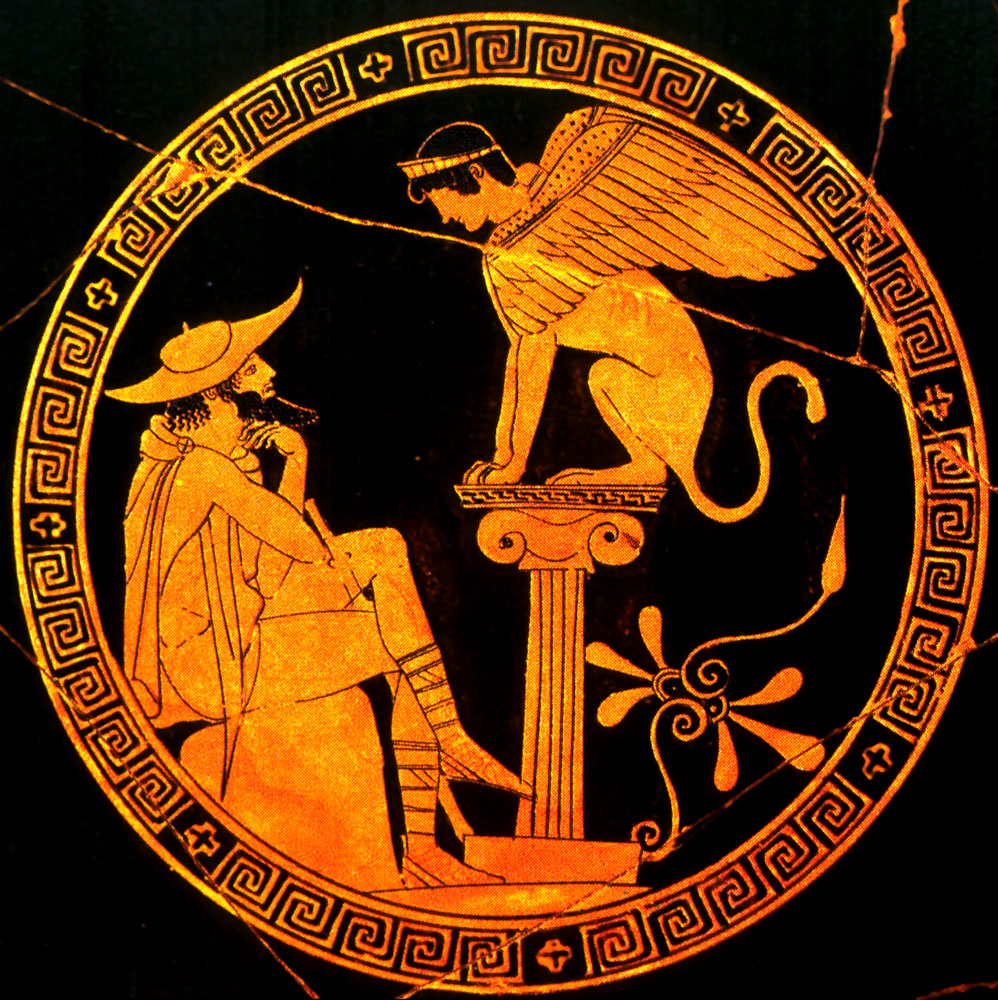
The difference of the fates of Oedipus and Moses are instructive here. They hint at very different attitudes toward children. One exposed child is fated to be a criminal, while the other becomes a liberator.
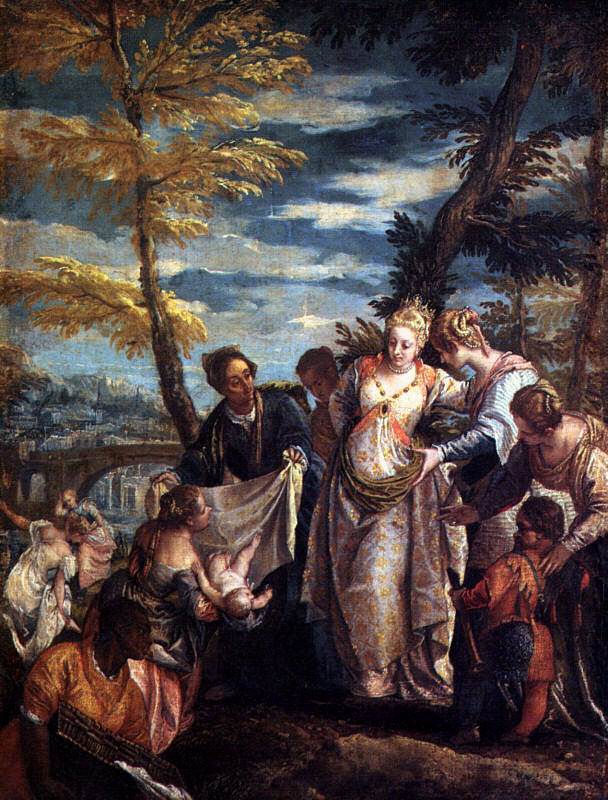
“I once was lost but now am found,
Was blind, but now, I see.” Can’t really say the same for Oedipus.
Therefore, the interesting historical twist might be that being pro-abortion is anti-Semitic.
There are also connections with the controversy about natural law, and its application to our abortion debates, started by David Bentley Hart in First Things. He says the following:
“There is a long, rich, varied, and subtle tradition of natural law theory, almost none of which I find especially convincing, but most of which I acknowledge to be—according to the presuppositions of the intellectual world in which it was gestated—perfectly coherent. My skepticism, moreover, has nothing to do with any metaphysical disagreement. I certainly believe in a harmony between cosmic and moral order, sustained by the divine goodness in which both participate. I simply do not believe that the terms of that harmony are as precisely discernible as natural law thinkers imagine.
That is an argument for another time, however. My chief topic here is the attempt in recent years by certain self-described Thomists, particularly in America, to import this tradition into public policy debates, but in a way amenable to modern political culture. What I have in mind is a style of thought whose proponents (names are not important) believe that compelling moral truths can be deduced from a scrupulous contemplation of the principles of cosmic and human nature, quite apart from special revelation, and within the context of the modern conceptual world. This, it seems to me, is a hopeless cause.”
I’ll have to do some more research before taking sides in this debate. It might be the case, like with the abolishing of slavery (think Moses again), that being pro-life is yet another revolutionary innovation of the Judeo-Christian tradition.
==================================================================================
For further reflections on this topic, this time more from a philosophical rather than an historical viewpoint see: “Abortion, Cognitive Bias, and the Problem of Representation.”
==================================================================================
Previous Post

January 22, 2014
The Cosmos Liberally Stretches Toward Aleteia and Vatican II
Next Post
January 24, 2014 Everything Under the S(u/o)n: Von Balthasar's and Milosz's God Metaphors
Browse Our Archives
Select a Category #WhyRemainCatholic Abortion Advent Anti-Catholicism Arts Atheism Beauty Benedict XVI Bible Book Review Catholic Cinema Comedy Cosmos: A Space-Time Odyssey Czesław Miłosz Dariusz Karłowicz Devil Easter Eastern Orthodoxy Economics Environment Family Famous Atheists Who Weren't Atheists Guest Post Hans Urs von Balthasar HHS Mandate History Imagination Interview Islam Jean-Luc Marion John Paul II Judaism Just War Lent Literature Little Sisters of the Poor Liturgy Martyrdom Music News Paganism Patristics Phenomenology Philosophy Pierre Hadot Poetry Poland Pop Culture Pope Francis Poverty Prayer Protestantism Rabelais Race Remi Brague Rene Girard Russia Sam Rocha Science & Religion SCOTUS Secularization Sexual Abuse Sexuality Silence Solidarity Stratford Caldecott Synod14 Terrorism Top 10 Uncategorized Walker Percy War Weakened Edition World War II World Youth Day WYD Krakow
Select a Month July 2017 June 2017 May 2017 April 2017 March 2017 February 2017 January 2017 December 2016 October 2016 September 2016 August 2016 July 2016 June 2016 May 2016 April 2016 March 2016 February 2016 January 2016 December 2015 November 2015 October 2015 September 2015 August 2015 July 2015 June 2015 May 2015 April 2015 March 2015 February 2015 January 2015 December 2014 November 2014 October 2014 September 2014 August 2014 July 2014 May 2014 April 2014 March 2014 February 2014 January 2014 December 2013 November 2013 October 2013 September 2013 August 2013 July 2013 June 2013 May 2013
Follow Us!
TAKE THE
Religious Wisdom Quiz
I was fed by ravens at a brook and later by a widow whose oil and flour never ran out. Who am I?
Select your answer to see how you score.
Samuel Elijah Moses Elisha
Related posts from Cosmos The In Lost

The Surprising Anti-Capitalist Logic Behind the Catholic Church's...

How is Classical Philosophy is Like War?

Why Does the World's Leading Philosopher Remain a...
Publicity Campaign Freudian Slip: Planned Parenthood Wants You...
TRENDING AT PATHEOS Catholic

Rejecting Doom: Christian Hope And Human Action
Christianity is a religion of hope. We are to have hope and...

It’s What Comes From Within Which Matters
One of the most difficult things for us to understand is why...

Why I Choose the Eucharist Over the Sermon
Choose the Eucharist, Not the Sermon What are we supposed to get...

5 Design Elements Found in Spiritually Rooted Homes
Putting Spirituality Into Home Decor Our homes are more than our living...

Credo: A Story of God Told with the...
About 10 years ago, I began to imagine a personal "Credo" that...

The Anatomy of Divine Revelation in Catholic Thought
The claim that God has made Himself known to human beings is...
view all Catholic blogs
Ad-Free & Subscriber Log-In Subscription Support
- About Us
- 2026 Calendar
- Videos
- Podcasts
- Library of World Religions
- Faith In Media Tracker
- Advertise With Us
- Write for Us
- Privacy Policy
- Terms of Service
- Do Not Sell My Data
- Contact Us
- Radiant Digital
- Manage Newsletter Subscriptions
- Unsubscribe From Notifications
- Sitemap
Copyright 2008-2026, Patheos. All rights reserved.
Subscription Support Ad-Free & Subscriber Log-In
Follow Patheos