
BuddhistCatholicContemplativeEvangelicalGeneral ChristianHinduJewishLatter-day SaintMuslimNew VisionsProgressive Christian
Beliefs
- Buddhist
- Catholic
- Contemplative
- Evangelical
- General Christian
- Hindu
- Jewish
- Latter-day Saint
- More Voices
- Muslim
- New Visions
- Pagan
- Progressive Christian
Topics
- Religion News
- Food and Religion
- Sports and Religion
- Religious Art
- Religious Music and Entertainment
- Religious Events
- History and Religion
- Style and Religion
- Politics and Religion
- Women in Religion
- Recreation Outdoors and Religion
- Business Finance and Religion
- Careers Workplace and Religion
- Education and Religion
- Family Parenting and Religion
- Health Fitness and Religion
- Home and Religion
- Relationships and Religion
- Technology and Religion
- Travel and Religion
Columnists
- Buddhist Columnists
- Business Finance and Religion Columnists
- Careers Workplace and Religion Columnists
- Catholic Columnists
- Contemplative Columnists
- Education and Religion Columnists
- Evangelists Columnists
- Family Parenting and Religion Columnists
- General Christian Columnists
- Health Fitness and Religion Columnists
- Hindu Columnists
- History and Religion Columnists
- Home and Religion Columnists
- Jewish Columnists
- More Voices Columnists
- Latter Day Columnists
- Muslim Columnists
- New Visions Columnists
- Nonreligious Columnists
- Pagan Columnists
- Politics and Religion Columnists
- Progressive Columnists
- Recreation Outdoors and Religion Columnists
- Relationships and Religion Columnists
- Religion News Columnists
- Religious Art Columnists
- Religious Events Columnists
- Religious Music and Entertainment Columnists
- Sports and Religion Columnists
- Style and Religion Columnists
- Technology and Religion Columnists
- Travel and Religion Columnists
- Women in Religion Columnists
Resource Library
- 2026 Calendar
- Library of World Religions
- The 100 Most Holy Places on Earth
- Patheos Answers
- Podcasts
- Videos
- Faith Leaders Database
- Anglican Episcopalian
- Bahai
- Baptist
- Buddhism
- Christianity
- Confucianism
- Eastern Orthodoxy
- Hinduism
- Holiness and Pentecostal
- ISKCON
- Islam
- Judaism
- Lutheran
- Methodist
- The Church of Jesus Christ of Latter-day Saints
- New Age
- Paganism
- Presbytarian and Reformed
- Protestantism
- Religion Behind the Scenes
- Roman Catholic
- Scientology
- Shia Islam
- Sikhism
- Sufism
- Sunni Islam
- Taoism
- Zen
- See all religions
Research Tools
 Ad-Free & Subscriber Log-In Subscription Support
Ad-Free & Subscriber Log-In Subscription Support
Follow Patheos 

- Trending:
- Forgiveness
- |
- Marriage
- |
- Consciousness
- |
- Death Penalty
- |
- Election
- |
- Halloween
 Cosmos The In Lost
- Home
- Catholic
- The Taciturn God of the New Testament
The Taciturn God of the New Testament
Last updated on: December 2, 2015 at 5:52 pm by Artur Rosman
The Taciturn God of the New Testament 2015-12-02T17:52:13-07:00 Artur Rosman
Patheos Explore the world's faith through different perspectives on religion and spirituality! Patheos has the views of the prevalent religions and spiritualities of the world.
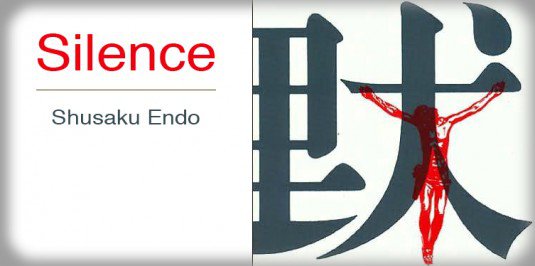
Perhaps the Christian God tends toward silence?
I broached the theme of silence in my last post in an extended quote from Remi Brague’s Wisdom of the World where he cites Ignatius of Antioch to the effect that, “the prince of this world was unaware of Mary’s virginity and the birth of her child, as well as the death of the Lord, three resounding mysteries that were carried out in the silence of God.”
Nowhere in modern literature is God’s taciturnity more unforgettably presented than in Shusaku Endo’s Silence:
“They were martyred. But what a martyrdom! I had long read about martyrdom in the lives of the saints—how the souls of the martyrs had gone home to Heaven, how they had been filled with glory in Paradise, how the angels had blown trumpets. This was the splendid martyrdom I had often seen in my dreams. But the martyrdom of the Japanese Christians I now describe to you was no such glorious thing. What a miserable and painful business it was! The rain falls unceasingly on the sea. And the sea which killed them surges on uncannily—in silence…I myself to do not quite understand. Only that today, when for the glory of God Mokichi and Ichizo moaned, suffered and died, I cannot bear the monotonous sound of the dark sea gnawing at the shore. Behind the depressing silence of this sea, the silence of God… the feeling that while men raise their voices in anguish God remains with folded arms, silent.”
It should be interesting to see how Scorsese’s much delayed film version will measure up to the original. Scorsese has obsessed with portraying decadent communities that copy–Richard Blake calls the copies afterimages–the structures and rituals of Catholic community. The priestly training of the director and his fascination with apostasy also gives me a modicum of hope he’ll deal with some of these disturbing questions seriously. It will be difficult since he’ll also have to contend with Bergman’s treatment of the topic in the film The Silence (not based on Endo’s book) and the 1971 version of the novel whose script was written by Endo. All I know is that the making of such a film should be one hell of a challenge given how close the book’s narrative touches upon themes central to Christian theology.
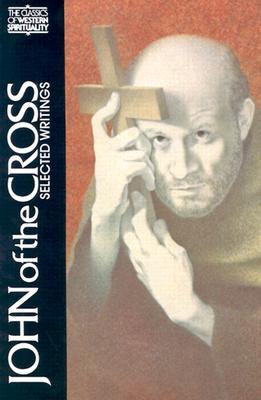
“You will not find anything to ask or desire of me through revelations and visions. Behold him well, for in him you will uncover all of these already made and given, and many more,” says John of the Cross about God’s silence.
You will not find anything to ask or desire of me through revelations and visions. Behold him well, for in him you will uncover all of these already made and given, and many more
Archbishop Sartain’s talk at the UW Newman Center yesterday reiterated a need to return to silence (and my own need to write this post, because it’s been percolating in my mind for a while).
The archbishop built a bridge between the news about the upcoming film and the Brague quote by paraphrasing one of his favorite passages from St. John of the Cross:
“If I have already told you all things in my Word, my Son, and if I have no other word, what answer or revelation can I now make that would surpass this? Fasten your eyes on him alone because in him I have spoken and revealed all and in him you will discover even more than you ask for and desire … I have already spoken, answered, manifested, and revealed to you by giving him to you as a brother, companion, master, ransom, and reward …If I spoke before [through priests and prophets in the Old Testament] it was to promise Christ … [But if people asked God to speak to them now or ask for visions] they would offend my beloved Son deeply because they would be obliging him to become incarnate and undergo his life and death again. You will not find anything to ask or desire of me through revelations and visions. Behold him well, for in him you will uncover all of these already made and given, and many more … My Apostle proclaimed this in writing to the Colossians: ‘In the Son of God are hidden all the treasures of the wisdom and knowledge of God’ (Col 2:3).”
Remi Brague works on the comparative implications of this passage from John of the Cross in his last book translated into English, On the God of the Christians. Brague suggests how the Christian picture of God differs from the pictures of God held by other “monotheistic” religions “of the book” through comparing the Hebrew Bible and the New Testament in this way:

According to Brague: God whispers (if that) more often than he shouts. Sorry Flannery fundamentalists and Paul Elie.
“In the old alliance, God seems closer to man than in the new alliance. He intervenes by deeds that are more easily ‘read’ as divine than those reported by the New Testament. His exploits are more spectacular. Medieval Jewish apologetics knew how to make hay of this argument: the liberation of the people held captive in Egypt, the scourges that struck the Egyptians, crossing the Red Sea, manna coming down from heaven for forty years–miracles that occurred before six hundred thousand witnesses–are hardly deniable. Whether these events really happened or not, the narrative of them is much more grandiose than anything the New Testament offers: healings of individuals, miracles done among a small circle, this without much in the way of witnesses, the resurrection of Jesus itself, which no one saw occur, even if witnesses claimed to have seen the resurrected one appear to them. The Old Testament contains much more that is ‘marvelous’ than the New Testament, which seems in comparison rather flat. The observation has been often made, starting with the Church Fathers who spoke of the ‘humble manner of speech’ (sermo humilis) of the New Testament.”
Brague gives this striking summary to the comparison:
“John of the Cross recognizes a paradox: the new law seems to be the opposite of a progress over the old law, rather a regress. The divine is not brought closer, but distanced. The fullness of revelation represents a disenchantment. To add to the injury: what was formerly permitted is henceforth forbidden [frequent and easy conversation with God].”
In the final analysis could it be that a blabbing God might be much more theologically problematic for Christians than a silent one? My friend MIchael Gruber has continually reminded me how tame Christian portrayals of the Crucifixion are compared to the reality.
He claims that those who were crucified (nude, of course) not only defecated (from the stretching of skin and pain), but also that the whole process gave them erections, and that the crowds used to amuse themselves by tossing the feces at the erect members. How is that for what Endo called a “miserable and painful business”?
Leaves you speechless, doesn’t it?
Talk about a real challenge for liturgists!
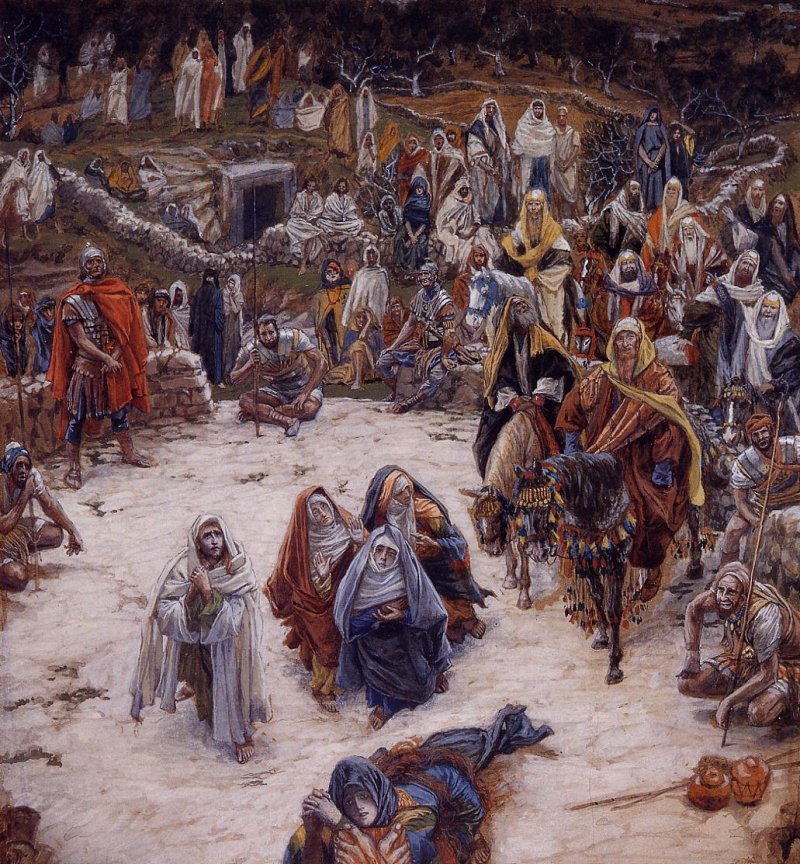
Creative, but still too clean?
James Tissot, Vision from the Cross, 1886.
Previous Post

January 12, 2014
God, Cosmos, Humankind, and Woman
Next Post
January 22, 2014 The Cosmos Liberally Stretches Toward Aleteia and Vatican II
Browse Our Archives
Select a Category #WhyRemainCatholic Abortion Advent Anti-Catholicism Arts Atheism Beauty Benedict XVI Bible Book Review Catholic Cinema Comedy Cosmos: A Space-Time Odyssey Czesław Miłosz Dariusz Karłowicz Devil Easter Eastern Orthodoxy Economics Environment Family Famous Atheists Who Weren't Atheists Guest Post Hans Urs von Balthasar HHS Mandate History Imagination Interview Islam Jean-Luc Marion John Paul II Judaism Just War Lent Literature Little Sisters of the Poor Liturgy Martyrdom Music News Paganism Patristics Phenomenology Philosophy Pierre Hadot Poetry Poland Pop Culture Pope Francis Poverty Prayer Protestantism Rabelais Race Remi Brague Rene Girard Russia Sam Rocha Science & Religion SCOTUS Secularization Sexual Abuse Sexuality Silence Solidarity Stratford Caldecott Synod14 Terrorism Top 10 Uncategorized Walker Percy War Weakened Edition World War II World Youth Day WYD Krakow
Select a Month July 2017 June 2017 May 2017 April 2017 March 2017 February 2017 January 2017 December 2016 October 2016 September 2016 August 2016 July 2016 June 2016 May 2016 April 2016 March 2016 February 2016 January 2016 December 2015 November 2015 October 2015 September 2015 August 2015 July 2015 June 2015 May 2015 April 2015 March 2015 February 2015 January 2015 December 2014 November 2014 October 2014 September 2014 August 2014 July 2014 May 2014 April 2014 March 2014 February 2014 January 2014 December 2013 November 2013 October 2013 September 2013 August 2013 July 2013 June 2013 May 2013
Follow Us!
TAKE THE
Religious Wisdom Quiz
In 1 Timothy, what does Paul say is a trustworthy saying?
Select your answer to see how you score.
God is love Christ Jesus came into the world to save sinners Faith without works is dead The righteous will live by faith
Related posts from Cosmos The In Lost

The Surprising Anti-Capitalist Logic Behind the Catholic Church's...

How is Classical Philosophy is Like War?

Why Does the World's Leading Philosopher Remain a...

Biblical Authority After Babel Cannot Be Built Upon...
TRENDING AT PATHEOS Catholic

Rejecting Doom: Christian Hope And Human Action
Christianity is a religion of hope. We are to have hope and...

It’s What Comes From Within Which Matters
One of the most difficult things for us to understand is why...

Why I Choose the Eucharist Over the Sermon
Choose the Eucharist, Not the Sermon What are we supposed to get...

5 Design Elements Found in Spiritually Rooted Homes
Putting Spirituality Into Home Decor Our homes are more than our living...

Credo: A Story of God Told with the...
About 10 years ago, I began to imagine a personal "Credo" that...

The Anatomy of Divine Revelation in Catholic Thought
The claim that God has made Himself known to human beings is...
view all Catholic blogs
Ad-Free & Subscriber Log-In Subscription Support
- About Us
- 2026 Calendar
- Videos
- Podcasts
- Library of World Religions
- Faith In Media Tracker
- Advertise With Us
- Write for Us
- Privacy Policy
- Terms of Service
- Do Not Sell My Data
- Contact Us
- Radiant Digital
- Manage Newsletter Subscriptions
- Unsubscribe From Notifications
- Sitemap
Copyright 2008-2026, Patheos. All rights reserved.
Subscription Support Ad-Free & Subscriber Log-In
Follow Patheos