
BuddhistCatholicContemplativeEvangelicalGeneral ChristianHinduJewishLatter-day SaintMuslimNew VisionsProgressive Christian
Beliefs
- Buddhist
- Catholic
- Contemplative
- Evangelical
- General Christian
- Hindu
- Jewish
- Latter-day Saint
- More Voices
- Muslim
- New Visions
- Pagan
- Progressive Christian
Topics
- Religion News
- Food and Religion
- Sports and Religion
- Religious Art
- Religious Music and Entertainment
- Religious Events
- History and Religion
- Style and Religion
- Politics and Religion
- Women in Religion
- Recreation Outdoors and Religion
- Business Finance and Religion
- Careers Workplace and Religion
- Education and Religion
- Family Parenting and Religion
- Health Fitness and Religion
- Home and Religion
- Relationships and Religion
- Technology and Religion
- Travel and Religion
Columnists
- Buddhist Columnists
- Business Finance and Religion Columnists
- Careers Workplace and Religion Columnists
- Catholic Columnists
- Contemplative Columnists
- Education and Religion Columnists
- Evangelists Columnists
- Family Parenting and Religion Columnists
- General Christian Columnists
- Health Fitness and Religion Columnists
- Hindu Columnists
- History and Religion Columnists
- Home and Religion Columnists
- Jewish Columnists
- More Voices Columnists
- Latter Day Columnists
- Muslim Columnists
- New Visions Columnists
- Nonreligious Columnists
- Pagan Columnists
- Politics and Religion Columnists
- Progressive Columnists
- Recreation Outdoors and Religion Columnists
- Relationships and Religion Columnists
- Religion News Columnists
- Religious Art Columnists
- Religious Events Columnists
- Religious Music and Entertainment Columnists
- Sports and Religion Columnists
- Style and Religion Columnists
- Technology and Religion Columnists
- Travel and Religion Columnists
- Women in Religion Columnists
Resource Library
- 2026 Calendar
- Library of World Religions
- The 100 Most Holy Places on Earth
- Patheos Answers
- Podcasts
- Videos
- Faith Leaders Database
- Anglican Episcopalian
- Bahai
- Baptist
- Buddhism
- Christianity
- Confucianism
- Eastern Orthodoxy
- Hinduism
- Holiness and Pentecostal
- ISKCON
- Islam
- Judaism
- Lutheran
- Methodist
- The Church of Jesus Christ of Latter-day Saints
- New Age
- Paganism
- Presbytarian and Reformed
- Protestantism
- Religion Behind the Scenes
- Roman Catholic
- Scientology
- Shia Islam
- Sikhism
- Sufism
- Sunni Islam
- Taoism
- Zen
- See all religions
Research Tools
 Ad-Free & Subscriber Log-In Subscription Support
Ad-Free & Subscriber Log-In Subscription Support
Follow Patheos 

- Trending:
- Forgiveness
- |
- Marriage
- |
- Consciousness
- |
- Death Penalty
- |
- Election
- |
- Halloween
 Cosmos The In Lost
- Home
- Catholic
- Lost in the Environment (Rather than Cosmos) of Commercialism
Lost in the Environment (Rather than Cosmos) of Commercialism
Last updated on: January 5, 2014 at 4:12 pm by Artur Rosman
Lost in the Environment (Rather than Cosmos) of Commercialism 2014-01-05T16:12:10-07:00 Artur Rosman
Patheos Explore the world's faith through different perspectives on religion and spirituality! Patheos has the views of the prevalent religions and spiritualities of the world.
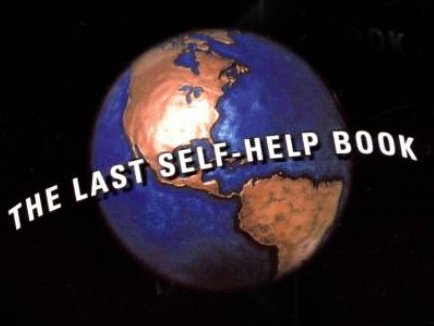
Yep, Lost in the Cosmos is that.
Lost in the Cosmos is one of those books that you immediately like, even if you don’t quite understand it. It seems to apply to just about everything that’s floating around in your life. Figuring out why it does that is another story. The main thing is that it isn’t an easy satisfaction like a Happy Meal or a Dan Brown book might be.
The indirect communication is half the fun of reading Walker Percy. He doesn’t give you easily digestible interpretive keys to his crazy tales. He wants you to struggle a bit in order to coordinate what he’s saying with the world as you and others experience it.
His writing shouldn’t be immediately comprehensible, because if it is, then you’re either A) lying to yourself B) not lost in the cosmos C) some sort of genius (very unlikely) D) none of the above E) All of the above.
Inchausti’s Subversive Orthodoxy gave me a new perspective on Percy by placing him right before the chapter on Dorothy Day, Thomas Merton, Martin Luther King, Jr., E.F. Schumacher, and Wendell Berry entitled “Antipolitical Politics.”
In the section on Walker Percy Inchausti quotes the following passage from Lost in the Cosmos that turns our economic schools on their heads:
“Why do people often feel bad in good environments and good in bad environments? Why did Mother Theresa think that affluent Westerners often seemed poorer than the Calcutta poor?”
Percy answers:
“The paradox comes to pass because the impoverishments and enrichments of a self in a world are not necessarily the same as the impoverishments and enrichments of an organism in an environment. The organism is needy or not needy accordingly as needs are satisfied or not satisfied by its environment.
Percy then goes on to explain how a world functions differently from an environment:
“The self in a world is rich or poor accordingly as it succeeds in identifying itself with a world-sign, such as a totem; religiously by identifying itself as a creature of God. But totems don’t work in a scientific age because no one believes, no matter how hard he tries, that he can become a tiger or a parakeet (cf. the depression of a Princeton tiger or Yale bulldog, one hour after the game.)”
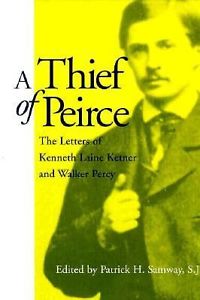
The explanation of a world as a structured by a triadic-symbolic structure takes one of Heidegger’s concepts (the world) and adds the triadic structure of the man whom Fr. Oakes called America’s Aristotle.
The distinction between an environment and a world is crucial. You might know Percy spent an inordinate amount of time reading existentialists, phenomenologists, and other philosophers while convalescing from tuberculosis. The passage above combines concepts straight out of Heidegger‘s Being and Time and supplements them with a little Peirce.
A human environment (or any animal’s) is shaped by a dyadic stimulus-response relationship between the human and his or her surroundings. The human (not really yet a person) only reacts to a limited area that stimulates it and somehow corresponds to its physical or other needs. It is very limited in its range. This impoverished twofold structure is precisely the background to how both psychology, the reductionist sciences, and the dismal (I wanted to say dreadful) science, economics, see people.
On the other hand, a world has a triangular structure because it involves human beings, the objects of their consciousness, and the words they give them. The satisfaction here is not of a stimulus-response (I see iPad, I buy iPad = satisfaction), instead the satisfaction comes from sharing a common symbolic world with other people.
The best analogy for what it means to satisfy these sorts of desires (as opposed to needs) is those situations when you are talking to someone who understands you, who is paying attention to what you’re saying, those situations when you’re having a heart to heart talk.
This kind of experience is something that economic theory cannot satisfy, because it goes beyond its (dyadic) model of how humans function: humans have needs and limited resources and time to fulfill them (everything is reduced to this plane).
Until reading Inchausti’s book I didn’t make a connection between Walker Percy’s Lost in the Cosmos, which I’ve read countless times, and critiques of economic theory. I suppose it also makes sense of why man does not live by bread alone. Symbolic relations are what really makes us human. Plus, they take us out of the zero-sum logic of dyadic-economic relations by giving us the ability to share a common world that is infinite in its riches.
Note how the family in this KFC ad is caught within a commercial environment of stimulus and response. The fact that the parents complain about the kids not communicating with them at all is especially telling about how advertisers imagine us as inhabiting an environment, not a world.
In the hierarchy of being anything below a world is silence.
Ultimately, this is the problem I have with recalibrating the faith to suit economic theories.
http://www.youtube.com/watch?v=rMT9NAvYKkY
Next Post

January 7, 2014 Percy's Cosmos, Dolan's Babylonian Captivity, and Kojeve's Last Man
Browse Our Archives
Select a Category #WhyRemainCatholic Abortion Advent Anti-Catholicism Arts Atheism Beauty Benedict XVI Bible Book Review Catholic Cinema Comedy Cosmos: A Space-Time Odyssey Czesław Miłosz Dariusz Karłowicz Devil Easter Eastern Orthodoxy Economics Environment Family Famous Atheists Who Weren't Atheists Guest Post Hans Urs von Balthasar HHS Mandate History Imagination Interview Islam Jean-Luc Marion John Paul II Judaism Just War Lent Literature Little Sisters of the Poor Liturgy Martyrdom Music News Paganism Patristics Phenomenology Philosophy Pierre Hadot Poetry Poland Pop Culture Pope Francis Poverty Prayer Protestantism Rabelais Race Remi Brague Rene Girard Russia Sam Rocha Science & Religion SCOTUS Secularization Sexual Abuse Sexuality Silence Solidarity Stratford Caldecott Synod14 Terrorism Top 10 Uncategorized Walker Percy War Weakened Edition World War II World Youth Day WYD Krakow
Select a Month July 2017 June 2017 May 2017 April 2017 March 2017 February 2017 January 2017 December 2016 October 2016 September 2016 August 2016 July 2016 June 2016 May 2016 April 2016 March 2016 February 2016 January 2016 December 2015 November 2015 October 2015 September 2015 August 2015 July 2015 June 2015 May 2015 April 2015 March 2015 February 2015 January 2015 December 2014 November 2014 October 2014 September 2014 August 2014 July 2014 May 2014 April 2014 March 2014 February 2014 January 2014 December 2013 November 2013 October 2013 September 2013 August 2013 July 2013 June 2013 May 2013
Follow Us!
TAKE THE
Religious Wisdom Quiz
Who said, "Though he slay me, yet will I hope in him"?
Select your answer to see how you score.
Peter Job David Isaiah
Related posts from Cosmos The In Lost

The Surprising Anti-Capitalist Logic Behind the Catholic Church's...

What is the Source of Our Culture of...

How is Classical Philosophy is Like War?

Why Does the World's Leading Philosopher Remain a...
TRENDING AT PATHEOS Catholic

Rejecting Doom: Christian Hope And Human Action
Christianity is a religion of hope. We are to have hope and...

It’s What Comes From Within Which Matters
One of the most difficult things for us to understand is why...

Why I Choose the Eucharist Over the Sermon
Choose the Eucharist, Not the Sermon What are we supposed to get...

5 Design Elements Found in Spiritually Rooted Homes
Putting Spirituality Into Home Decor Our homes are more than our living...

Credo: A Story of God Told with the...
About 10 years ago, I began to imagine a personal "Credo" that...

The Anatomy of Divine Revelation in Catholic Thought
The claim that God has made Himself known to human beings is...
view all Catholic blogs
Ad-Free & Subscriber Log-In Subscription Support
- About Us
- 2026 Calendar
- Videos
- Podcasts
- Library of World Religions
- Faith In Media Tracker
- Advertise With Us
- Write for Us
- Privacy Policy
- Terms of Service
- Do Not Sell My Data
- Contact Us
- Radiant Digital
- Manage Newsletter Subscriptions
- Unsubscribe From Notifications
- Sitemap
Copyright 2008-2026, Patheos. All rights reserved.
Subscription Support Ad-Free & Subscriber Log-In
Follow Patheos