
BuddhistCatholicContemplativeEvangelicalGeneral ChristianHinduJewishLatter-day SaintMuslimNew VisionsProgressive Christian
Beliefs
- Buddhist
- Catholic
- Contemplative
- Evangelical
- General Christian
- Hindu
- Jewish
- Latter-day Saint
- More Voices
- Muslim
- New Visions
- Pagan
- Progressive Christian
Topics
- Religion News
- Food and Religion
- Sports and Religion
- Religious Art
- Religious Music and Entertainment
- Religious Events
- History and Religion
- Style and Religion
- Politics and Religion
- Women in Religion
- Recreation Outdoors and Religion
- Business Finance and Religion
- Careers Workplace and Religion
- Education and Religion
- Family Parenting and Religion
- Health Fitness and Religion
- Home and Religion
- Relationships and Religion
- Technology and Religion
- Travel and Religion
Columnists
- Buddhist Columnists
- Business Finance and Religion Columnists
- Careers Workplace and Religion Columnists
- Catholic Columnists
- Contemplative Columnists
- Education and Religion Columnists
- Evangelists Columnists
- Family Parenting and Religion Columnists
- General Christian Columnists
- Health Fitness and Religion Columnists
- Hindu Columnists
- History and Religion Columnists
- Home and Religion Columnists
- Jewish Columnists
- More Voices Columnists
- Latter Day Columnists
- Muslim Columnists
- New Visions Columnists
- Nonreligious Columnists
- Pagan Columnists
- Politics and Religion Columnists
- Progressive Columnists
- Recreation Outdoors and Religion Columnists
- Relationships and Religion Columnists
- Religion News Columnists
- Religious Art Columnists
- Religious Events Columnists
- Religious Music and Entertainment Columnists
- Sports and Religion Columnists
- Style and Religion Columnists
- Technology and Religion Columnists
- Travel and Religion Columnists
- Women in Religion Columnists
Resource Library
- 2026 Calendar
- Library of World Religions
- The 100 Most Holy Places on Earth
- Patheos Answers
- Podcasts
- Videos
- Faith Leaders Database
- Anglican Episcopalian
- Bahai
- Baptist
- Buddhism
- Christianity
- Confucianism
- Eastern Orthodoxy
- Hinduism
- Holiness and Pentecostal
- ISKCON
- Islam
- Judaism
- Lutheran
- Methodist
- The Church of Jesus Christ of Latter-day Saints
- New Age
- Paganism
- Presbytarian and Reformed
- Protestantism
- Religion Behind the Scenes
- Roman Catholic
- Scientology
- Shia Islam
- Sikhism
- Sufism
- Sunni Islam
- Taoism
- Zen
- See all religions
Research Tools
 Ad-Free & Subscriber Log-In Subscription Support
Ad-Free & Subscriber Log-In Subscription Support
Follow Patheos 

- Trending:
- Forgiveness
- |
- Marriage
- |
- Consciousness
- |
- Death Penalty
- |
- Election
- |
- Halloween
 Cosmos The In Lost
- Home
- Catholic
- The Pope’s Sympathy for the Devil
The Pope’s Sympathy for the Devil
Last updated on: December 1, 2015 at 1:39 pm by Artur Rosman
The Pope’s Sympathy for the Devil 2015-12-01T13:39:29-07:00 Artur Rosman
Patheos Explore the world's faith through different perspectives on religion and spirituality! Patheos has the views of the prevalent religions and spiritualities of the world.
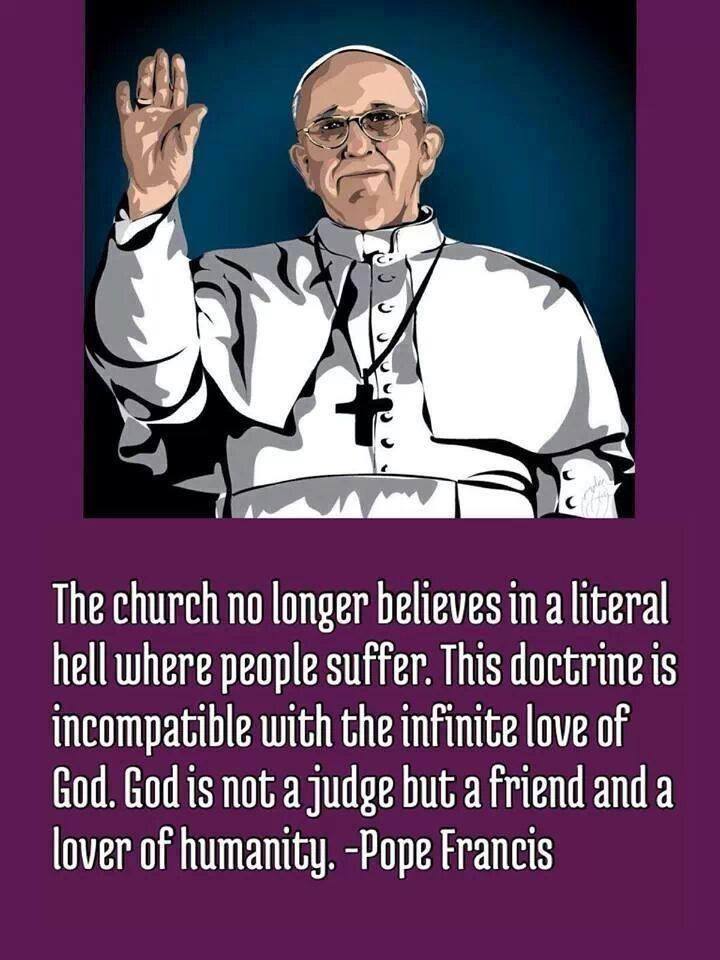
Forget Toward Vatican III. The reports say Vat 3 already happened. [Image by: Tobin Pilotte, Original DOES NOT FEATURE THE TEXT, WHICH WAS ADDED BY UNIDENTIFIED USER OF THE IMAGE].
The pope’s resurrection of Devil talk is one of the most appealing aspects of his style to me, because, hell, I’m a fan.
The biggest surprise of On Heaven and on Earth, the book-length dialogue between Cardinal Bergoglio and Rabbi Skorka, came pretty early in the book. The second chapter is called “On the Devil.” In it Bergoglio says the following:
Jesus defines [Satan] as the Father of Lies, and the book of Wisdom says that sin entered the world through the Devil’s envy of God’s masterpiece. His fruits are always destruction: division, hate, and slander. And in my personal experience, I feel him every time that I am tempted to do something that is not what God wants for me. I believe that the Devil exists. Maybe his greatest achievement in these times has been to make us believe that he does not exist, and that all can be fixed on a purely human level. Man’s life on Earth is warfare; Job says it means that people are constantly put to the test; that is to say, a test to overcome a situation and overcome oneself.
You’d think Skorka would agree, because religion has always been about the priesthood scaring the people into servility with threats of the the devil and hellfire. Right? Wrong!
The notion of the devil was a late addition to Jewish theology, perhaps around the 4th or 3rd century BC, perhaps through Persian sources. Nobody can be certain. What’s certain is that it didn’t take hold in all of the many schools of Judaism.
We didn’t always see it this way.
In the currents of Judaism where it took hold the notion of a personalized evil led to a gradual reinterpretation of earlier biblical sources. This was most notable in what the vast majority of Christians take to be the story of the Fall in Genesis.
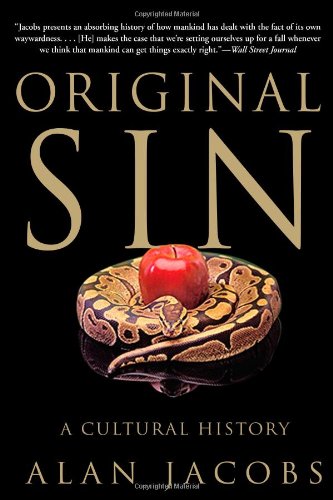
[As a matter of fact, the Fall was actually a much later, mostly Augustinian, addition. See: the standard account in Original Sin: A Cultural History by Alan Jacobs.]
Christianity further elaborated upon these sources and reinterpretations in the New Testament. Let’s not forget that early Christians were Jews (Jean Danielou’s The Theology of Jewish Christianity is still the place to go for the essential background) and Rabbinical Judaism would only become the definitive form of Judaism only after the destruction of the Temple in 70 AD.
Therefore when Rabbi Skorka says, a little flabbergasted by talk of a Devil, that there is a “wide variety of opinions on this topic in Judaism,” he is both right and wrong. He is right to say rabbinical Judaism does not tend toward a personalized view of evil. He is technically wrong to exclude Christianity from the set of “Judaism,” because it has both as little and as much in common with Second Temple Judaism as Rabbinical Judaism does–and forget, like everyone else, First Temple Judaism.
Back to Francis. His first sermon, preached in the Sistine chapel on 14 May 2013, started, as you might suspect by now, with a striking reference to the devil:
Third, professing: we can walk as much we want, we can build many things, but if we do not confess Jesus Christ, nothing will avail. We will become a compassionate NGO, but not the Church, the Bride of Christ. When one does not walk, one stalls. When one does not built on solid rocks, what happens? What happens is what happens to children on the beach when they make sandcastles: everything collapses, it is without consistency. When one does not profess Jesus Christ – I recall the phrase of Leon Bloy – “Whoever does not pray to God, prays to the devil.” When one does not profess Jesus Christ, one professes the worldliness of the devil.
If you haven’t noticed, he hasn’t stopped since.
After all this you might be scratching your head about the lead image for this post. It comes from rumors about Vatican III and the abolishing of the Devil by Francis that seem to originate on this comedy site and were picked up by some gullible media outlets. Nothing to it.
In fine, there is no better summary of the worldliness pope Francis talks about than, “Please allow me to introduce myself I’m a man of wealth and taste I’ve been around…” (especially since this song pretty much started the Altamont concert riots).
http://www.youtube.com/watch?v=vBecM3CQVD8
Previous Post

December 31, 2013
Blurred Lines: (Theologically) Nothing is Sacred
Next Post
January 2, 2014 Contra Zmirak: In Praise of the Inquisition
Browse Our Archives
Select a Category #WhyRemainCatholic Abortion Advent Anti-Catholicism Arts Atheism Beauty Benedict XVI Bible Book Review Catholic Cinema Comedy Cosmos: A Space-Time Odyssey Czesław Miłosz Dariusz Karłowicz Devil Easter Eastern Orthodoxy Economics Environment Family Famous Atheists Who Weren't Atheists Guest Post Hans Urs von Balthasar HHS Mandate History Imagination Interview Islam Jean-Luc Marion John Paul II Judaism Just War Lent Literature Little Sisters of the Poor Liturgy Martyrdom Music News Paganism Patristics Phenomenology Philosophy Pierre Hadot Poetry Poland Pop Culture Pope Francis Poverty Prayer Protestantism Rabelais Race Remi Brague Rene Girard Russia Sam Rocha Science & Religion SCOTUS Secularization Sexual Abuse Sexuality Silence Solidarity Stratford Caldecott Synod14 Terrorism Top 10 Uncategorized Walker Percy War Weakened Edition World War II World Youth Day WYD Krakow
Select a Month July 2017 June 2017 May 2017 April 2017 March 2017 February 2017 January 2017 December 2016 October 2016 September 2016 August 2016 July 2016 June 2016 May 2016 April 2016 March 2016 February 2016 January 2016 December 2015 November 2015 October 2015 September 2015 August 2015 July 2015 June 2015 May 2015 April 2015 March 2015 February 2015 January 2015 December 2014 November 2014 October 2014 September 2014 August 2014 July 2014 May 2014 April 2014 March 2014 February 2014 January 2014 December 2013 November 2013 October 2013 September 2013 August 2013 July 2013 June 2013 May 2013
Follow Us!
TAKE THE
Religious Wisdom Quiz
What is the teaching in "Let your yes be yes and your no, no"?
Select your answer to see how you score.
Lie if needed Never speak Be vague Be honest and straightforward
Related posts from Cosmos The In Lost

The Surprising Anti-Capitalist Logic Behind the Catholic Church's...

How is Classical Philosophy is Like War?

Why Does the World's Leading Philosopher Remain a...

Biblical Authority After Babel Cannot Be Built Upon...
TRENDING AT PATHEOS Catholic

Rejecting Doom: Christian Hope And Human Action
Christianity is a religion of hope. We are to have hope and...

It’s What Comes From Within Which Matters
One of the most difficult things for us to understand is why...

Why I Choose the Eucharist Over the Sermon
Choose the Eucharist, Not the Sermon What are we supposed to get...

5 Design Elements Found in Spiritually Rooted Homes
Putting Spirituality Into Home Decor Our homes are more than our living...

Credo: A Story of God Told with the...
About 10 years ago, I began to imagine a personal "Credo" that...

The Anatomy of Divine Revelation in Catholic Thought
The claim that God has made Himself known to human beings is...
view all Catholic blogs
Ad-Free & Subscriber Log-In Subscription Support
- About Us
- 2026 Calendar
- Videos
- Podcasts
- Library of World Religions
- Faith In Media Tracker
- Advertise With Us
- Write for Us
- Privacy Policy
- Terms of Service
- Do Not Sell My Data
- Contact Us
- Radiant Digital
- Manage Newsletter Subscriptions
- Unsubscribe From Notifications
- Sitemap
Copyright 2008-2026, Patheos. All rights reserved.
Subscription Support Ad-Free & Subscriber Log-In
Follow Patheos