
BuddhistCatholicContemplativeEvangelicalGeneral ChristianHinduJewishLatter-day SaintMuslimNew VisionsProgressive Christian
Beliefs
- Buddhist
- Catholic
- Contemplative
- Evangelical
- General Christian
- Hindu
- Jewish
- Latter-day Saint
- More Voices
- Muslim
- New Visions
- Pagan
- Progressive Christian
Topics
- Religion News
- Food and Religion
- Sports and Religion
- Religious Art
- Religious Music and Entertainment
- Religious Events
- History and Religion
- Style and Religion
- Politics and Religion
- Women in Religion
- Recreation Outdoors and Religion
- Business Finance and Religion
- Careers Workplace and Religion
- Education and Religion
- Family Parenting and Religion
- Health Fitness and Religion
- Home and Religion
- Relationships and Religion
- Technology and Religion
- Travel and Religion
Columnists
- Buddhist Columnists
- Business Finance and Religion Columnists
- Careers Workplace and Religion Columnists
- Catholic Columnists
- Contemplative Columnists
- Education and Religion Columnists
- Evangelists Columnists
- Family Parenting and Religion Columnists
- General Christian Columnists
- Health Fitness and Religion Columnists
- Hindu Columnists
- History and Religion Columnists
- Home and Religion Columnists
- Jewish Columnists
- More Voices Columnists
- Latter Day Columnists
- Muslim Columnists
- New Visions Columnists
- Nonreligious Columnists
- Pagan Columnists
- Politics and Religion Columnists
- Progressive Columnists
- Recreation Outdoors and Religion Columnists
- Relationships and Religion Columnists
- Religion News Columnists
- Religious Art Columnists
- Religious Events Columnists
- Religious Music and Entertainment Columnists
- Sports and Religion Columnists
- Style and Religion Columnists
- Technology and Religion Columnists
- Travel and Religion Columnists
- Women in Religion Columnists
Resource Library
- 2026 Calendar
- Library of World Religions
- The 100 Most Holy Places on Earth
- Patheos Answers
- Podcasts
- Videos
- Faith Leaders Database
- Anglican Episcopalian
- Bahai
- Baptist
- Buddhism
- Christianity
- Confucianism
- Eastern Orthodoxy
- Hinduism
- Holiness and Pentecostal
- ISKCON
- Islam
- Judaism
- Lutheran
- Methodist
- The Church of Jesus Christ of Latter-day Saints
- New Age
- Paganism
- Presbytarian and Reformed
- Protestantism
- Religion Behind the Scenes
- Roman Catholic
- Scientology
- Shia Islam
- Sikhism
- Sufism
- Sunni Islam
- Taoism
- Zen
- See all religions
Research Tools
 Ad-Free & Subscriber Log-In Subscription Support
Ad-Free & Subscriber Log-In Subscription Support
Follow Patheos 

- Trending:
- Forgiveness
- |
- Marriage
- |
- Consciousness
- |
- Death Penalty
- |
- Election
- |
- Halloween
 Cosmos The In Lost
- Home
- Catholic
- Von Balthasar: Into the Dark Advent with God
Von Balthasar: Into the Dark Advent with God
Last updated on: December 6, 2013 at 11:59 am by Artur Rosman
Von Balthasar: Into the Dark Advent with God 2013-12-06T11:59:04-07:00 Artur Rosman
Patheos Explore the world's faith through different perspectives on religion and spirituality! Patheos has the views of the prevalent religions and spiritualities of the world.
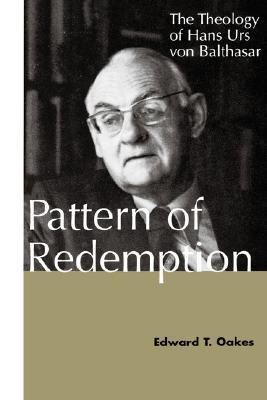
The Pattern of Redemption goes, against our expectations, from light into dark.
Something that happened a few days ago warmed my worried heart a bit. The University of Washington has highly visible smoking areas. The university puritanically reasons that the stigma of being on public display will discourage people from smoking on campus. It seems to have the opposite effect. Smokers congregate around these places as pariahs who exchange stories with their confreres.
The episode that unfolded before me is one such exchange. It occurred between a middle class white science geek in his 20’s and an older homeless African American man. The camaraderie of the whole smoking area setup led to a free flowing conversation. Somehow it turned to the physics of light. I only caught snippets of it, because the science geek wasn’t sparing his listener any of the technical jargon. It’s as if the rise of the tobacco incense had somehow erased all differences of scientific expertise and training between the two.
There was talk of photons, whether matter exists or not, or what it means to say either.
I felt a little like I did after starting Stratford Caldecott’s The Radiance of Being: Dimensions of Cosmic Christianity. He doesn’t spare his readers and launches into how contemporary discoveries in physics might be fruitful for Christian theology. Needless to say, I have some homework to do.
But back to the high octane conversation between the student and the homeless man. They turned to looking for examples in the real world as they continued to raise a smell probably not entirely pleasing to the LORD. One of them pointed at a car that was standing under a streetlight. The younger man said, “see, the shadow is a lack of light.” But the older man responded with, “yes, but the dark comes from the light.”
The conversation stopped shortly thereafter, they exchanged names, shook hands, and went their separate ways.
Thinking about this curious exchange reminded me of von Balthasar’s Advent piece “Into the Dark with God” that was published long ago with the now defunct (alas!) Godspy website (the piece originally appeared in the collection of HUvB sermons You Crown the Year with Your Goodness).
The sermon moves in the same direction, from light to dark, as what the homeless man said and a challenging von Balthasar inspired phenomenology of Christian life I’ve been reading recently. Here’s an excerpt:
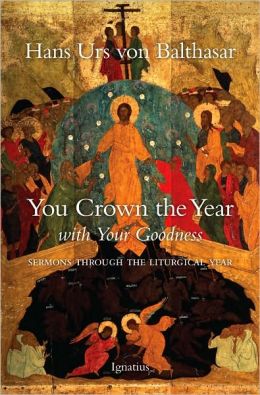
“This is the Word in action, and as yet the shepherds do not know, no one knows, how far down into the darkness this Word-in-action will lead. At all events it will descend much deeper than anyone else into what is worldly, apparently insignificant and profane; into what is bound, poor and powerless; so much so that we shall not be able to follow the last stage of his path,” says von Balthasar.
“So they set off, heaven behind them, and the earthly sign before them. But, Lord, what a sign! Not even the Child, but a child. Some child or other. No special child. Not a child radiating a light of glory, as the religious painters depicted, but on the contrary: a child that looks as ‘inglorious as possible. Wrapped in swaddling clothes. So that it cannot move. It lies there, imprisoned, as it were, in the clothes in which it has been wrapped through the solicitude of others. There is nothing elevating about the manger in which it lies, either, nothing even remotely corresponding to the heavenly glory of the singing angels. There is practically nothing even half worth seeing; the destination of the shepherds’ nightly journey is the most ordinary scene. Indeed, in its poverty it is decidedly disappointing. It is something entirely human and ordinary, something quite profane, in no way distinguished—except for the fact that this is the promised sign, and it fits.
The shepherds believe the word. The word sends them from heaven and to earth, and as they proceed along this path, from light to darkness, from the extraordinary to the ordinary, from the solitary experience of God to the realm of ordinary human intercourse, from the splendor above to the poverty below, they are given the confirmation they need: the sign fits. Only now does their fearful joy under heaven’s radiance turn into a completely uninhibited, human and Christian joy. Because it fits. And why does it fit? Because the Lord, the High God, has taken the same path as they have: he has left his glory behind him and gone into the dark world, into the child’s apparent insignificance, into the unfreedom of human restrictions and bonds, into the poverty of the crib. This is the Word in action, and as yet the shepherds do not know, no one knows, how far down into the darkness this Word-in-action will lead. At all events it will descend much deeper than anyone else into what is worldly, apparently insignificant and profane; into what is bound, poor and powerless; so much so that we shall not be able to follow the last stage of his path. A heavy stone will block the way, preventing the others from approaching, while, in utter night, in ultimate loneliness and forsakenness, he descends to his dead human brothers.”
This sermon is especially poignant to me, because I’ve reached a point where these words echo too much with my own depressing experience:
“From a worldly point of view everything may seem very dark; your dedication may seem unproductive and a failure. But do not be afraid: you are on God’s path. ‘Let not your hearts be troubled: believe in God; believe also in me.’ I am walking on ahead of you and blazing the trail of Christian love for you. It leads to your most inaccessible brother, the person most forsaken by God. But it is the path of divine love itself. You are on the right path. All who deny themselves in order to carry out love’s commission are on the right path.”
[Read the rest of this sermon here in the Godspy archives.]
I sometimes wonder how far away our family of five is from homelessness. The difference between a modicum of respectability and being an outcast is very thin these days, at least for me. I suppose that’s the reason why I don’t feel much compunction about giving whatever money I might have to the homeless without wondering what they’ll spend it on. I mean, even if they do purchase booze, maybe it’ll work itself out somehow in the plans of Providence? Who am I to judge the God who goes from light to dark?
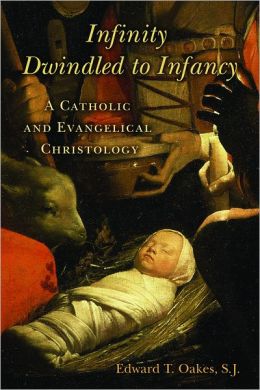
Sweet baby Jesus swaddled on the cover.
Finally, all of this brings me to the sad news that Fr. Edward T. Oakes has died. He was my favorite out of all the longtime contributors to First Things. Fr. Oakes frequently liked to write thorough, but nonetheless somehow entertaining, long-form articles. I best remember him for the essays about ignored or misunderstood personalities such as Pascal and Peirce. He is also the person who introduced me to the thought of von Balthasar with his classic Pattern of Redemption: The Theology of Hans Urs von Balthasar. I can’t think of a better one-volume guide into the Swiss theologian’s forest of publications than this one. Fairly recently he also published an Advent themed ecumenical work entitled Infinity Dwindled to Infancy: A Catholic and Evangelical Christology. He will be greatly missed.
Requiem aeternam dona eis, Domine: et lux perpetua luceat eis.
BOOKS MENTIONED IN THIS POST:


Previous Post

December 4, 2013
A Discomfiting Advent and the Comforts of Atheism
Next Post
December 7, 2013 The Genealogy of Jesus Quintana: An Alternative Advent
Browse Our Archives
Select a Category #WhyRemainCatholic Abortion Advent Anti-Catholicism Arts Atheism Beauty Benedict XVI Bible Book Review Catholic Cinema Comedy Cosmos: A Space-Time Odyssey Czesław Miłosz Dariusz Karłowicz Devil Easter Eastern Orthodoxy Economics Environment Family Famous Atheists Who Weren't Atheists Guest Post Hans Urs von Balthasar HHS Mandate History Imagination Interview Islam Jean-Luc Marion John Paul II Judaism Just War Lent Literature Little Sisters of the Poor Liturgy Martyrdom Music News Paganism Patristics Phenomenology Philosophy Pierre Hadot Poetry Poland Pop Culture Pope Francis Poverty Prayer Protestantism Rabelais Race Remi Brague Rene Girard Russia Sam Rocha Science & Religion SCOTUS Secularization Sexual Abuse Sexuality Silence Solidarity Stratford Caldecott Synod14 Terrorism Top 10 Uncategorized Walker Percy War Weakened Edition World War II World Youth Day WYD Krakow
Select a Month July 2017 June 2017 May 2017 April 2017 March 2017 February 2017 January 2017 December 2016 October 2016 September 2016 August 2016 July 2016 June 2016 May 2016 April 2016 March 2016 February 2016 January 2016 December 2015 November 2015 October 2015 September 2015 August 2015 July 2015 June 2015 May 2015 April 2015 March 2015 February 2015 January 2015 December 2014 November 2014 October 2014 September 2014 August 2014 July 2014 May 2014 April 2014 March 2014 February 2014 January 2014 December 2013 November 2013 October 2013 September 2013 August 2013 July 2013 June 2013 May 2013
Follow Us!
TAKE THE
Religious Wisdom Quiz
True or False: Peter preached the first sermon after Pentecost, leading to 3,000 conversions.
Select your answer to see how you score.
FALSE TRUE
Related posts from Cosmos The In Lost

The Surprising Anti-Capitalist Logic Behind the Catholic Church's...

Where Does the Body of Christ Go After...

How is Classical Philosophy is Like War?

Why Does the World's Leading Philosopher Remain a...
TRENDING AT PATHEOS Catholic

Rejecting Doom: Christian Hope And Human Action
Christianity is a religion of hope. We are to have hope and...

It’s What Comes From Within Which Matters
One of the most difficult things for us to understand is why...

Why I Choose the Eucharist Over the Sermon
Choose the Eucharist, Not the Sermon What are we supposed to get...

5 Design Elements Found in Spiritually Rooted Homes
Putting Spirituality Into Home Decor Our homes are more than our living...

Credo: A Story of God Told with the...
About 10 years ago, I began to imagine a personal "Credo" that...

The Anatomy of Divine Revelation in Catholic Thought
The claim that God has made Himself known to human beings is...
view all Catholic blogs
Ad-Free & Subscriber Log-In Subscription Support
- About Us
- 2026 Calendar
- Videos
- Podcasts
- Library of World Religions
- Faith In Media Tracker
- Advertise With Us
- Write for Us
- Privacy Policy
- Terms of Service
- Do Not Sell My Data
- Contact Us
- Radiant Digital
- Manage Newsletter Subscriptions
- Unsubscribe From Notifications
- Sitemap
Copyright 2008-2026, Patheos. All rights reserved.
Subscription Support Ad-Free & Subscriber Log-In
Follow Patheos