
BuddhistCatholicContemplativeEvangelicalGeneral ChristianHinduJewishLatter-day SaintMuslimNew VisionsProgressive Christian
Beliefs
- Buddhist
- Catholic
- Contemplative
- Evangelical
- General Christian
- Hindu
- Jewish
- Latter-day Saint
- More Voices
- Muslim
- New Visions
- Pagan
- Progressive Christian
Topics
- Religion News
- Food and Religion
- Sports and Religion
- Religious Art
- Religious Music and Entertainment
- Religious Events
- History and Religion
- Style and Religion
- Politics and Religion
- Women in Religion
- Recreation Outdoors and Religion
- Business Finance and Religion
- Careers Workplace and Religion
- Education and Religion
- Family Parenting and Religion
- Health Fitness and Religion
- Home and Religion
- Relationships and Religion
- Technology and Religion
- Travel and Religion
Columnists
- Buddhist Columnists
- Business Finance and Religion Columnists
- Careers Workplace and Religion Columnists
- Catholic Columnists
- Contemplative Columnists
- Education and Religion Columnists
- Evangelists Columnists
- Family Parenting and Religion Columnists
- General Christian Columnists
- Health Fitness and Religion Columnists
- Hindu Columnists
- History and Religion Columnists
- Home and Religion Columnists
- Jewish Columnists
- More Voices Columnists
- Latter Day Columnists
- Muslim Columnists
- New Visions Columnists
- Nonreligious Columnists
- Pagan Columnists
- Politics and Religion Columnists
- Progressive Columnists
- Recreation Outdoors and Religion Columnists
- Relationships and Religion Columnists
- Religion News Columnists
- Religious Art Columnists
- Religious Events Columnists
- Religious Music and Entertainment Columnists
- Sports and Religion Columnists
- Style and Religion Columnists
- Technology and Religion Columnists
- Travel and Religion Columnists
- Women in Religion Columnists
Resource Library
- 2026 Calendar
- Library of World Religions
- The 100 Most Holy Places on Earth
- Patheos Answers
- Podcasts
- Videos
- Faith Leaders Database
- Anglican Episcopalian
- Bahai
- Baptist
- Buddhism
- Christianity
- Confucianism
- Eastern Orthodoxy
- Hinduism
- Holiness and Pentecostal
- ISKCON
- Islam
- Judaism
- Lutheran
- Methodist
- The Church of Jesus Christ of Latter-day Saints
- New Age
- Paganism
- Presbytarian and Reformed
- Protestantism
- Religion Behind the Scenes
- Roman Catholic
- Scientology
- Shia Islam
- Sikhism
- Sufism
- Sunni Islam
- Taoism
- Zen
- See all religions
Research Tools
 Ad-Free & Subscriber Log-In Subscription Support
Ad-Free & Subscriber Log-In Subscription Support
Follow Patheos 

- Trending:
- Forgiveness
- |
- Marriage
- |
- Consciousness
- |
- Death Penalty
- |
- Election
- |
- Halloween
 Cosmos The In Lost
- Home
- Catholic
- Praying to a French God: Phenomenology as Catholic Philosophy
Praying to a French God: Phenomenology as Catholic Philosophy
Last updated on: December 3, 2013 at 9:37 am by Artur Rosman
Praying to a French God: Phenomenology as Catholic Philosophy 2013-12-03T09:37:33-07:00 Artur Rosman
Patheos Explore the world's faith through different perspectives on religion and spirituality! Patheos has the views of the prevalent religions and spiritualities of the world.
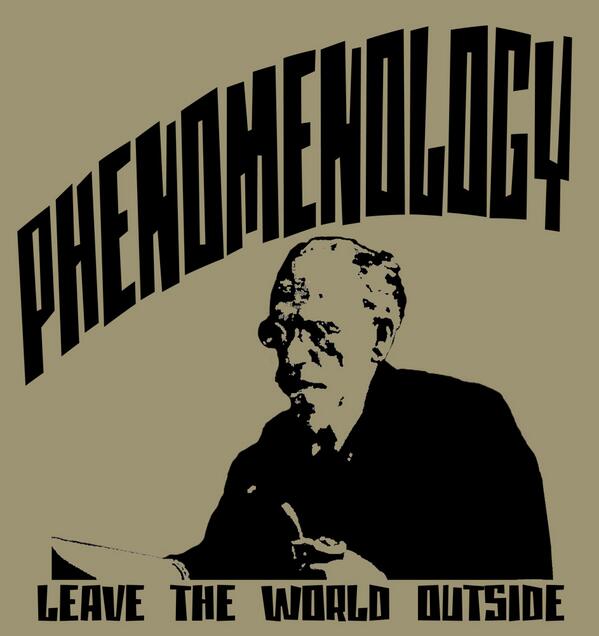
This is a continuation of yesterday’s post on Catholicism and contemporary French philosophy. If you’re curious about how continental philosophy is faring in American universities take a look at the following link from Philosophy News.
The debate whether theology has a place in phenomenology has preoccupied the minds of France’s best thinkers for the better part of the last two, maybe three, decades. The books I list below are a testament to the sort of hearty debate that’s taking place there. The God debate does not seem to be dead for the French, not even for thinkers who are atheists. The repressed has come back with a vengeance.
Dominique Janicaud typifies the objections in the debate by stressing the methodological atheism of phenomenology (really, any kind of philosophy), at least since Heidegger and Sartre, because it allows for a clean, unpolluted, approach to philosophy as separated from theology. It’s fascinating how someone from a culturally Catholic country would want to go the Reformation route of keeping grace separated from nature. I believe Janicaud is sincere, or at least attempts to look sincere, when he to gives a partial nod to theology in his concluding report on the theological turn:
“We have not had any other design than to draw out these several traits and to recall an insurmountable difference: phenomenology and theology make two. To see as much and to understand it better, certainly it is not out of place here to draw attention, finally, to two thoughts equally worthy of being meditated upon in their very divergence. On the theological side, Luther ‘Faith consists in giving oneself over to the hold of things we do not see.’ On the phenomenological side, Goethe, ‘There is nothing to look for behind the phenomena; they are themselves the doctrine.'”
What he doesn’t seem to realize is that he’s reproducing “Two Kingdoms” Lutheran/Calvinist reading of nature and grace that doesn’t square with much of the Christian tradition. I’ve written several pieces on the work Dariusz Karlowicz has done on philosophy as a way of life as it was taken up by the Church Fathers here. Before the nominalists and the Reformation philosophy was never divorced from theology. In fact, the Greek tradition of philosophy under Plato, Aristotle, and the Stoics consisted of spiritual exercises in quasi monastic communities–again, see my posts on Karlowicz.
What’s more, the French phenomenological school owes some of its roots to the engagement of Jean-Luc Marion with Hans Urs von Balthasar. Marion’s use of von Balthasar’s work is most up front in his early work The Idol and Distance where he frequently directly cites von Balthasar. Marion was the co-founder of the French edition of Communio along with Remi Brague (whose work is a frequent topic of discussion on Cosmos) and Henri de Lubac at the behest of von Balthasar.
Henri de Lubac is significant to this debate, because in books such as A Primer on Nature and Grace andThe Mystery of the Supernatural he worked to recover this earlier pre-modern perspective of polluting philosophy with theology and vice-versa. As evidenced in John Milbank’s book, The Suspended Middle, de Lubac also influenced the work of Radical Orthodoxy.
Given how much the narrative of Catholic intellectual decline is in fashion of late (there’s the Elie verison, the Boyagoda version, and Gioia’s most recent version) there’s no sign of a Catholic letup in phenomenology.
If we are after setting up first things first, then Catholics are in a pretty darn good position by setting the pace in philosophy. If you’ve read my commentaries on Elie’s and Boyagoda’s articles then you know I don’t buy the crisis narrative at all. One of these days I’ll tackle Gioia’s article in First Things. In the meantime you can look at the embarrassment of riches in contemporary Christian writing here and here.
Before I go off on too many tangents, here’s what the French experiment in stretching out phenomenology into theology has produced from both Catholics and those non-believers who’ve been pulled into the convergence between the two:

The Ark of Speech is only available in hardback without artwork, so I thought I’d introduce you to the artwork on the cover of Chretien’s phenomenology of art, Hand to Hand (a Delacroix fresco).
The Ark of Speech investigates the interplay of speech and silence in the dialogue between God and human beings, and human beings and the world. Ranging from the Old Testament and its depiction of God’s creative word to the New Testament and its focus on the life and words of Jesus as the Word of the Father, the book shows how important it is for the believer to listen to God and to others in silence and devotion.
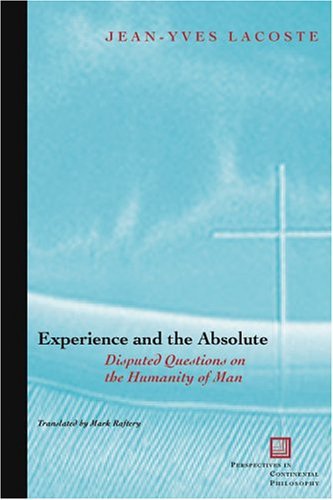
According to Lacoste liturgy is where we ought to be.
Does the philosophy of Martin Heidegger represent the emergence of a secular anthropology that requires religious thought to redefine the religious dimension in human existence? In this critical response, Experience and the Absolute, Lacoste confronts the ultimate definition of human nature, the humanity of the human. He explores that definition through an analysis of the absoluteas a phenomenological datum.Lacoste establishes a conception of human nature that opens possibilities for religious experience and religious identity in view of Heidegger’s profound challenge. He develops a phenomenology of the liturgy, and subjects the categories of experience,place,and human existenceto careful examination. Making a strong case for the affective nature of religious experience, he sides with Schleiermacher against Hegel in associating religion with affectivity rather than logic. Such affectivity, he claims, can be more rational than reason as framed in Hegelian logic.
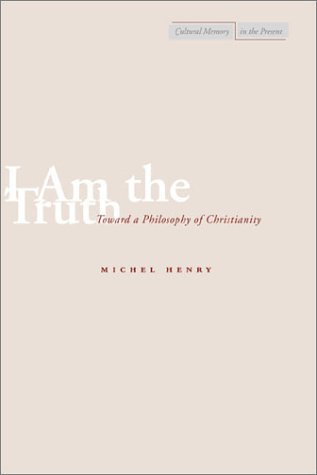
Henry work is a philosophy of immanence and life.
Defiant, moving, and vastly challenging, I Am the Truth: Toward a Philosophy of Christianity contains intellectual drama of the highest order. . . The magnificence and great strangeness of the book, a sweeping blast at the modern history of Western civilization leveled from the perspective of the lost world of a Christian critique of representation, will jolt English-language readers.
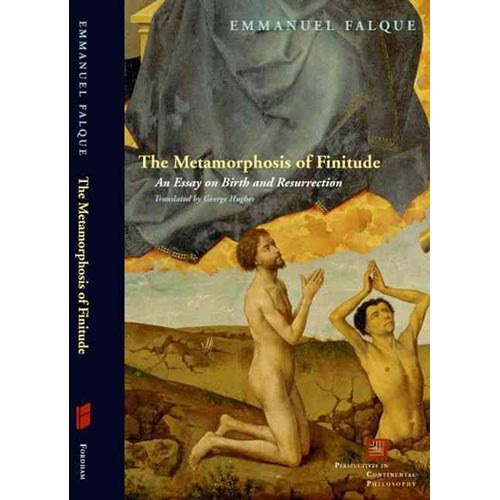
Falque brings phenomenology to its knees.
The Metamorphosis of Finitude starts off from a philosophical premise: nobody can be in the world unless they are born into the world. It examines this premise in the light of the theological belief that birth serves, or ought to serve, as a model for understanding what resurrection could signify for us today. After all, the modern Christian needs to find some way of understanding resurrection, and the dogma of the resurrection of the body is vacuous unless we can relate it philosophically to our own world of experience.
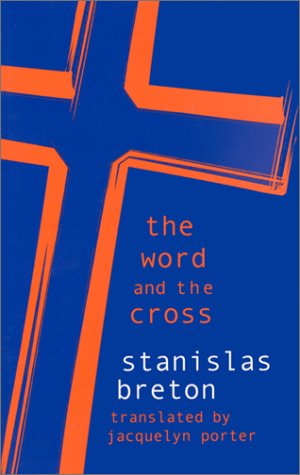
The Word and the Cross is as basic as it gets.
Stanislas Breton presents the nothingness of the cross in its infirmity and paradoxical power. Blending the poetic with the philosophical, faith with interrogation, mystical and practical, ancient and new, he seeks to lift the cross from its imprisonment in ontologies of abundance and in a history of compromise. The Word and the Cross distills the meditation of a thinker in his prime on the possibility of the Christian and Christianity to find within a principle of a critique and source of renewal.Breton draws first upon Scripture, examining the way in which the cross has been present in our world, beginning with Paul’s preaching of it as Logos, folly (moria), and power (dunamis). In a startlingly original interpretation, Breton first interrogates the emergence of the cross as Sign of Contradiction in the world of Greek and Jew and then traces its destiny in politics, in theology and in the poignant theater of the fools of Christ.
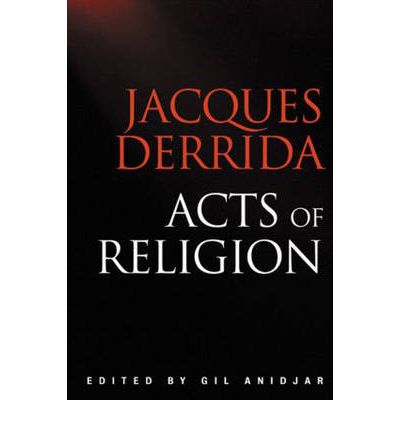
Derrida knew that inaction is futile.
Acts of Religion, compiled in close association with Jacques Derrida, brings together for the first time a number of Derrida’s writings on religion and questions of faith and their relation to philosophy and political culture. The essays discuss religious texts from Jewish, Christian, and Muslim traditions, as well as religious thinkers such as Kant, Levinas, and Gershom Scholem, and comprise pieces spanning Derrida’s career. The collection includes two new essays by Derrida that appear here for the first time in any language, as well as a substantial introduction by Gil Anidjar that explores Derrida’s return to his own “religious” origins and his attempts to bring to light hidden religious dimensions of the social, cultural, historical, and political.

What’s not to like about an atheist writing about the philosophical implications of the Christian practice of adoration?
Adoration is the second volume of the Deconstruction of Christianity, following Dis-Enclosure. The first volume attempted to demonstrate why it is necessary to open reason up not to a religious dimension but to one transcending reason as we have been accustomed to understanding it; the term “adoration” attempts to name the gesture of this dis-enclosed reason. In this book, Jean-Luc Nancy goes beyond his earlier historical and philosophical thought and tries to think-or at least crack open a little to thinking-a stance or bearing that might be suitable to the retreat of God that results from the self-deconstruction of Christianity. Adoration may be a manner, a style of spirit for our time, a time when the “spiritual” seems to have become so absent, so dry, so adulterated.
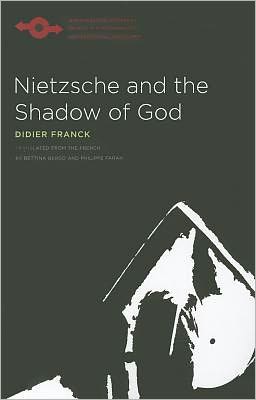
God has cast a long shadow on French phenomenology as well.
In Nietzsche and the Shadow of God (Nietzsche et l’ombre de Dieu), his study of Nietzsche’s integral philosophical corpus, Franck revisits the fundamental concepts of Nietzsche’s thought, from the death of God and the will to power, to the body as the seat of thinking and valuing, and finally to his conception of a post-Christian justice. The work engages Heidegger’s interpretation of Nietzsche’s destruction of the Platonic-Christian worldview, showing how Heidegger’s hermeneutic overlooked Nietzsche’s powerful confrontation with revelation and justice by working through the Christian body, as set forth in the Epistles of Saint Paul and reread both by Martin Luther and by German Idealism.
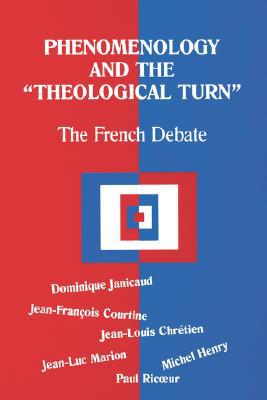
Essays by the main protagonists of the theological turn and an introduction by a hater (Janicaud).
Phenomenology and the “Theological Turn” brings together the debate over Janicaud’s critique of the “theological turn” represented by the works of Emmanuel Levinas, Paul Ricœur, Jean-Luc Marion, Jean-François Courtine, Jean-Louis Chrétien, and Michel Henry.
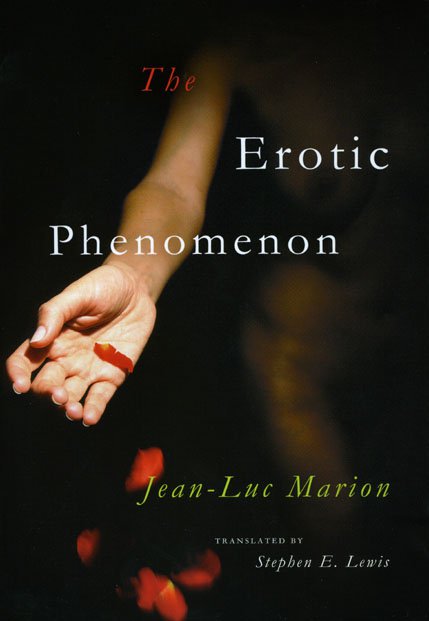
Last, but not least: The Erotic Phenomenon has one of the most alluring covers of any philosophy book.
While humanists have pondered the subject of love to the point of obsessiveness, philosophers have steadfastly ignored it. The word philosophy means “love of wisdom,” but the absence of love from philosophical discourse is curiously glaring. In The Erotic Phenomenon, Jean-Luc Marion attends to this dearth with an inquiry into the concept of love itself. Marion begins with a critique of Descartes’ equation of the ego’s ability to doubt with the certainty that one exists. We encounter love, he says, when we first step forward as a lover: I love therefore I am, and my love is the reason I care whether I exist or not. This philosophical base allows Marion to probe several manifestations of love and its variations, including carnal excitement, self-hate, lying and perversion, fidelity, the generation of children, and the love of God. Throughout, Marion stresses that all erotic phenomena stem not from the ego as popularly understood but instead from love.
If all of this hasn’t been enough for you, one of my friends has a forthcoming book entitled Praying to a French God.
Don’t forget to read through yesterday’s detailed and essential introduction to this series here. Finally, here are the other Cosmos TOP10s.
Next Post

December 4, 2013 A Discomfiting Advent and the Comforts of Atheism
Browse Our Archives
Select a Category #WhyRemainCatholic Abortion Advent Anti-Catholicism Arts Atheism Beauty Benedict XVI Bible Book Review Catholic Cinema Comedy Cosmos: A Space-Time Odyssey Czesław Miłosz Dariusz Karłowicz Devil Easter Eastern Orthodoxy Economics Environment Family Famous Atheists Who Weren't Atheists Guest Post Hans Urs von Balthasar HHS Mandate History Imagination Interview Islam Jean-Luc Marion John Paul II Judaism Just War Lent Literature Little Sisters of the Poor Liturgy Martyrdom Music News Paganism Patristics Phenomenology Philosophy Pierre Hadot Poetry Poland Pop Culture Pope Francis Poverty Prayer Protestantism Rabelais Race Remi Brague Rene Girard Russia Sam Rocha Science & Religion SCOTUS Secularization Sexual Abuse Sexuality Silence Solidarity Stratford Caldecott Synod14 Terrorism Top 10 Uncategorized Walker Percy War Weakened Edition World War II World Youth Day WYD Krakow
Select a Month July 2017 June 2017 May 2017 April 2017 March 2017 February 2017 January 2017 December 2016 October 2016 September 2016 August 2016 July 2016 June 2016 May 2016 April 2016 March 2016 February 2016 January 2016 December 2015 November 2015 October 2015 September 2015 August 2015 July 2015 June 2015 May 2015 April 2015 March 2015 February 2015 January 2015 December 2014 November 2014 October 2014 September 2014 August 2014 July 2014 May 2014 April 2014 March 2014 February 2014 January 2014 December 2013 November 2013 October 2013 September 2013 August 2013 July 2013 June 2013 May 2013
Follow Us!
TAKE THE
Religious Wisdom Quiz
Who was Saul's son?
Select your answer to see how you score.
Jonathan Absalom Samuel David
Related posts from Cosmos The In Lost

The Surprising Anti-Capitalist Logic Behind the Catholic Church's...

Where Does the Body of Christ Go After...

How is Classical Philosophy is Like War?

Why Does the World's Leading Philosopher Remain a...
TRENDING AT PATHEOS Catholic

Creation, Preservation, and Teleology in Catholic Theology
As I write this, it is very early Monday morning. Like millions...

The Parable Of The Sower And The Word...
One of Christ’s most famous parables is that of the sower who...

Rejecting Doom: Christian Hope And Human Action
Christianity is a religion of hope. We are to have hope and...

Why I Choose the Eucharist Over the Sermon
Choose the Eucharist, Not the Sermon What are we supposed to get...

5 Design Elements Found in Spiritually Rooted Homes
Putting Spirituality Into Home Decor Our homes are more than our living...

Credo: A Story of God Told with the...
About 10 years ago, I began to imagine a personal "Credo" that...
view all Catholic blogs
Ad-Free & Subscriber Log-In Subscription Support
- About Us
- 2026 Calendar
- Videos
- Podcasts
- Library of World Religions
- Faith In Media Tracker
- Advertise With Us
- Write for Us
- Privacy Policy
- Terms of Service
- Do Not Sell My Data
- Contact Us
- Radiant Digital
- Manage Newsletter Subscriptions
- Unsubscribe From Notifications
- Sitemap
Copyright 2008-2026, Patheos. All rights reserved.
Subscription Support Ad-Free & Subscriber Log-In
Follow Patheos