
BuddhistCatholicContemplativeEvangelicalGeneral ChristianHinduJewishLatter-day SaintMuslimNew VisionsProgressive Christian
Beliefs
- Buddhist
- Catholic
- Contemplative
- Evangelical
- General Christian
- Hindu
- Jewish
- Latter-day Saint
- More Voices
- Muslim
- New Visions
- Pagan
- Progressive Christian
Topics
- Religion News
- Food and Religion
- Sports and Religion
- Religious Art
- Religious Music and Entertainment
- Religious Events
- History and Religion
- Style and Religion
- Politics and Religion
- Women in Religion
- Recreation Outdoors and Religion
- Business Finance and Religion
- Careers Workplace and Religion
- Education and Religion
- Family Parenting and Religion
- Health Fitness and Religion
- Home and Religion
- Relationships and Religion
- Technology and Religion
- Travel and Religion
Columnists
- Buddhist Columnists
- Business Finance and Religion Columnists
- Careers Workplace and Religion Columnists
- Catholic Columnists
- Contemplative Columnists
- Education and Religion Columnists
- Evangelists Columnists
- Family Parenting and Religion Columnists
- General Christian Columnists
- Health Fitness and Religion Columnists
- Hindu Columnists
- History and Religion Columnists
- Home and Religion Columnists
- Jewish Columnists
- More Voices Columnists
- Latter Day Columnists
- Muslim Columnists
- New Visions Columnists
- Nonreligious Columnists
- Pagan Columnists
- Politics and Religion Columnists
- Progressive Columnists
- Recreation Outdoors and Religion Columnists
- Relationships and Religion Columnists
- Religion News Columnists
- Religious Art Columnists
- Religious Events Columnists
- Religious Music and Entertainment Columnists
- Sports and Religion Columnists
- Style and Religion Columnists
- Technology and Religion Columnists
- Travel and Religion Columnists
- Women in Religion Columnists
Resource Library
- 2026 Calendar
- Library of World Religions
- The 100 Most Holy Places on Earth
- Patheos Answers
- Podcasts
- Videos
- Faith Leaders Database
- Anglican Episcopalian
- Bahai
- Baptist
- Buddhism
- Christianity
- Confucianism
- Eastern Orthodoxy
- Hinduism
- Holiness and Pentecostal
- ISKCON
- Islam
- Judaism
- Lutheran
- Methodist
- The Church of Jesus Christ of Latter-day Saints
- New Age
- Paganism
- Presbytarian and Reformed
- Protestantism
- Religion Behind the Scenes
- Roman Catholic
- Scientology
- Shia Islam
- Sikhism
- Sufism
- Sunni Islam
- Taoism
- Zen
- See all religions
Research Tools
 Ad-Free & Subscriber Log-In Subscription Support
Ad-Free & Subscriber Log-In Subscription Support
Follow Patheos 

- Trending:
- Forgiveness
- |
- Marriage
- |
- Consciousness
- |
- Death Penalty
- |
- Election
- |
- Halloween
 Cosmos The In Lost
- Home
- Catholic
- Two La Farges and One Hidden Encyclical
Two La Farges and One Hidden Encyclical
Last updated on: November 25, 2013 at 12:29 pm by Artur Rosman
Two La Farges and One Hidden Encyclical 2013-11-25T12:29:07-07:00 Artur Rosman
Patheos Explore the world's faith through different perspectives on religion and spirituality! Patheos has the views of the prevalent religions and spiritualities of the world.
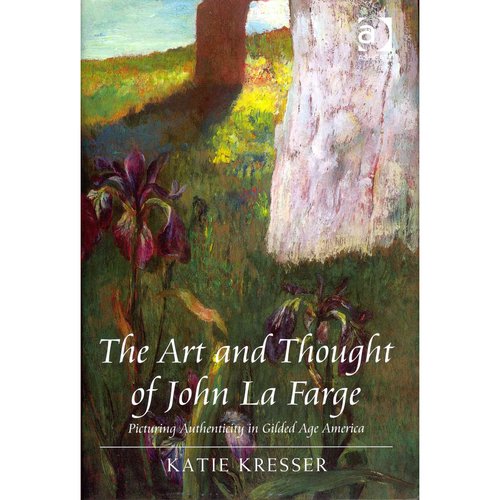
John La Farge: the real deal.
Today is the anniversary of the death of a long overlooked figure in American Catholicism whose underground influence touched many. But let’s forget that for a minute. We’ll take an artistic detour first.
Exactly one week ago I went to a lecture sponsored by IMAGE Journal on the work of long-forgotten American painter John La Farge (1835-1910). He was an American painter, whatever people call those who make stained-glass windows, and he decorated interiors–both private homes and churches such as the historical Trinity Church (22,000 square feet of interior murals!).
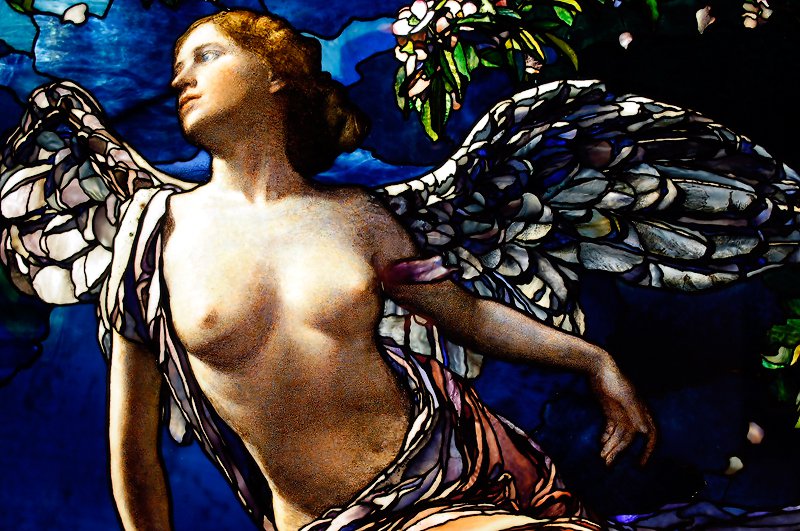
This is La Farge’s stained-glass version of Spring. I really miss Spring right now.
Katie Kresser of SPU, author of The Art and Thought of John La Farge, discussed the ubiquitous influence of La Farge during his own lifetime. His European exoticism appealed to both philosopher William James and Henry James (whose essays on culture surprisingly also include some interesting pieces about religion). The art critic Henry Adams was also part of the circle. Some of his essays on La Farge are compiled in another attractive collection about La Farge’s work. Kresser noted how La Farge’s Catholicism probably influenced his swimming against the stream of mainline artistic idealism of this time.
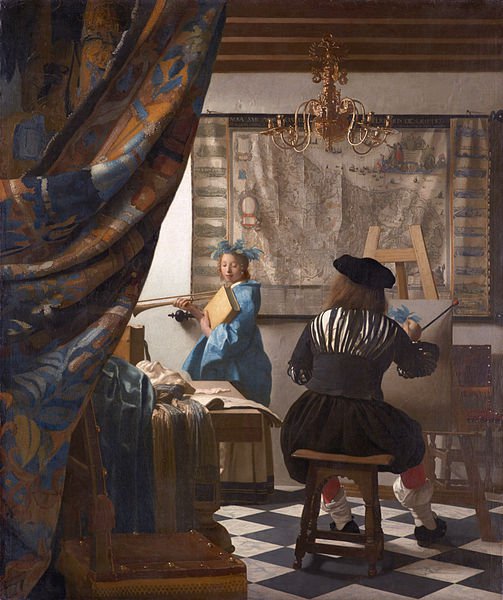
Was Vermeer , a Catholic, incarnational or sacramental?
She chalked up La Farge’s resistance to the subjectivism of his time (all of the above mentioned friends were idealists) to the incarnational theology La Farge absorbed, probably indirectly, through years of Catholic schooling. Kresser demonstrated this by showing an exemplary 18th century Allegory of Painting that featured the painter as the main figure projecting ideas onto a mirror shaped canvas.
La Farge’s variation on the theme was more in line with Vermeer’s version above. It has the painter looking beyond his canvas and in a realist gesture concentrating upon what the subject (nature, but I could not find a sample picture online) dictates. The difference between the two modes of approaching the subject has some interesting parallels between what Jean-Luc Marion understands as, especially in the works The Idol and Distance and God Without Being, the different ways in which we experience idols (roughly the same as idealism) and icons (realism, where one is called by what one encounters).
[Sidebar: One of the audience members resisted the label “incarnational” in favor of “sacramental” for a Catholic like La Farge. I can see how sacramentalism might be a Catholic way of speaking about what’s going on in his paintings, but is the “incarnational” vocabulary more Protestant? If so, why?]
All of this brings me back to the issue of Catholicism and America. I put a little crimp in the Kennedy Catholic moment in yesterday’s post about the implied meaning of the Houston speech. Now, much was made of the fact that C.S. Lewis, Kennedy, and Aldous Huxley all died on the same day, but Joseph Koczera of The City and the World blog told me it’s a shame that John La Farge’s eponymous son is almost all but forgotten in Catholic circles (just as his father has been mostly forgotten in art circles–until now).
La Farge, Jr. and Pius XI: Giving crusading a good name.
La Farge, SJ (1880-1963) is significant because of his unadulterated (no pun intended) commitment to civil rights when such causes were not on anyone’s radar. He wrote several books before World War II about racism. These came to the attention of Pius XI who asked La Farge, Jr. to pen an encyclical. The resulting document, Humani generis unitas, did not see the light of day, because it was completed a few weeks after Piux XI died. It is known as the hidden encyclical. I suppose the Vatican was too busy with the election of a new pope and World War II to take up the document. I’d like to do more research on this story.
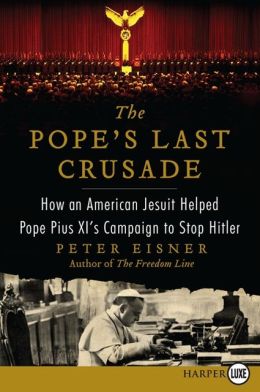
There’s also a new book Joe pointed out to me (out of Jesuit pride?), The Pope’s Last Crusade: How an American Jesuit Helped Pope Pius XI’s Campaign to Stop Hitler, that only makes me all the more curious about La Farge, SJ. If one can judge a book by its blurb, then The Pope’s Last Crusade looks like a ripping good read:
“Drawing on untapped resources, exclusive interviews, and new archival research, The Pope’s Last Crusade by Peter Eisner is a thrilling narrative that sheds new light on Pope Pius XI’s valiant effort to condemn Nazism and the policies of the Third Reich—a crusade that might have changed the course of World War II.
A shocking tale of intrigue and suspense, illustrated with sixteen pages of archival photos, The Pope’s Last Crusade: How an American Jesuit Helped Pope Pius XI’s Campaign to Stop Hitler illuminates this religious leader’s daring yet little-known campaign, a spiritual and political battle that would be derailed by Pius’s XIs death just a few months later. Peter Eisner reveals how Pius XI intended to unequivocally reject Nazism in one of the most unprecedented and progressive pronouncements ever issued by the Vatican, and how a group of conservative churchmen plotted to prevent it.
For years, only parts of this story have been known. Eisner offers a new interpretation of this historic event and the powerful figures at its center in an essential work that provides thoughtful insight and raises controversial questions impacting our own time.”
It seems like American Catholics should do a lot more to highlight the proud heritage of the La Farge dynasty. John Jr., SJ died today in 1963. Mark the date.
Previous Post

November 24, 2013
UW American Religion Class and the Kennedy Catholic Moment Myth
Next Post
November 26, 2013 Thanksgiving Special: Eating, Theology, Philosophy, and the Hungry Soul
Browse Our Archives
Select a Category #WhyRemainCatholic Abortion Advent Anti-Catholicism Arts Atheism Beauty Benedict XVI Bible Book Review Catholic Cinema Comedy Cosmos: A Space-Time Odyssey Czesław Miłosz Dariusz Karłowicz Devil Easter Eastern Orthodoxy Economics Environment Family Famous Atheists Who Weren't Atheists Guest Post Hans Urs von Balthasar HHS Mandate History Imagination Interview Islam Jean-Luc Marion John Paul II Judaism Just War Lent Literature Little Sisters of the Poor Liturgy Martyrdom Music News Paganism Patristics Phenomenology Philosophy Pierre Hadot Poetry Poland Pop Culture Pope Francis Poverty Prayer Protestantism Rabelais Race Remi Brague Rene Girard Russia Sam Rocha Science & Religion SCOTUS Secularization Sexual Abuse Sexuality Silence Solidarity Stratford Caldecott Synod14 Terrorism Top 10 Uncategorized Walker Percy War Weakened Edition World War II World Youth Day WYD Krakow
Select a Month July 2017 June 2017 May 2017 April 2017 March 2017 February 2017 January 2017 December 2016 October 2016 September 2016 August 2016 July 2016 June 2016 May 2016 April 2016 March 2016 February 2016 January 2016 December 2015 November 2015 October 2015 September 2015 August 2015 July 2015 June 2015 May 2015 April 2015 March 2015 February 2015 January 2015 December 2014 November 2014 October 2014 September 2014 August 2014 July 2014 May 2014 April 2014 March 2014 February 2014 January 2014 December 2013 November 2013 October 2013 September 2013 August 2013 July 2013 June 2013 May 2013
Follow Us!
TAKE THE
Religious Wisdom Quiz
Who said, "The stone the builders rejected has become the cornerstone"?
Select your answer to see how you score.
David Jesus Isaiah Paul
Related posts from Cosmos The In Lost

The Surprising Anti-Capitalist Logic Behind the Catholic Church's...

The Holy Family as an Icon of World...

Where Does the Body of Christ Go After...

How is Classical Philosophy is Like War?
TRENDING AT PATHEOS Catholic

The Parable Of The Sower And The Word...
One of Christ’s most famous parables is that of the sower who...

Rejecting Doom: Christian Hope And Human Action
Christianity is a religion of hope. We are to have hope and...

Why I Choose the Eucharist Over the Sermon
Choose the Eucharist, Not the Sermon What are we supposed to get...

5 Design Elements Found in Spiritually Rooted Homes
Putting Spirituality Into Home Decor Our homes are more than our living...

Credo: A Story of God Told with the...
About 10 years ago, I began to imagine a personal "Credo" that...

The Anatomy of Divine Revelation in Catholic Thought
The claim that God has made Himself known to human beings is...
view all Catholic blogs
Ad-Free & Subscriber Log-In Subscription Support
- About Us
- 2026 Calendar
- Videos
- Podcasts
- Library of World Religions
- Faith In Media Tracker
- Advertise With Us
- Write for Us
- Privacy Policy
- Terms of Service
- Do Not Sell My Data
- Contact Us
- Radiant Digital
- Manage Newsletter Subscriptions
- Unsubscribe From Notifications
- Sitemap
Copyright 2008-2026, Patheos. All rights reserved.
Subscription Support Ad-Free & Subscriber Log-In
Follow Patheos