
BuddhistCatholicContemplativeEvangelicalGeneral ChristianHinduJewishLatter-day SaintMuslimNew VisionsProgressive Christian
Beliefs
- Buddhist
- Catholic
- Contemplative
- Evangelical
- General Christian
- Hindu
- Jewish
- Latter-day Saint
- More Voices
- Muslim
- New Visions
- Pagan
- Progressive Christian
Topics
- Religion News
- Food and Religion
- Sports and Religion
- Religious Art
- Religious Music and Entertainment
- Religious Events
- History and Religion
- Style and Religion
- Politics and Religion
- Women in Religion
- Recreation Outdoors and Religion
- Business Finance and Religion
- Careers Workplace and Religion
- Education and Religion
- Family Parenting and Religion
- Health Fitness and Religion
- Home and Religion
- Relationships and Religion
- Technology and Religion
- Travel and Religion
Columnists
- Buddhist Columnists
- Business Finance and Religion Columnists
- Careers Workplace and Religion Columnists
- Catholic Columnists
- Contemplative Columnists
- Education and Religion Columnists
- Evangelists Columnists
- Family Parenting and Religion Columnists
- General Christian Columnists
- Health Fitness and Religion Columnists
- Hindu Columnists
- History and Religion Columnists
- Home and Religion Columnists
- Jewish Columnists
- More Voices Columnists
- Latter Day Columnists
- Muslim Columnists
- New Visions Columnists
- Nonreligious Columnists
- Pagan Columnists
- Politics and Religion Columnists
- Progressive Columnists
- Recreation Outdoors and Religion Columnists
- Relationships and Religion Columnists
- Religion News Columnists
- Religious Art Columnists
- Religious Events Columnists
- Religious Music and Entertainment Columnists
- Sports and Religion Columnists
- Style and Religion Columnists
- Technology and Religion Columnists
- Travel and Religion Columnists
- Women in Religion Columnists
Resource Library
- 2026 Calendar
- Library of World Religions
- The 100 Most Holy Places on Earth
- Patheos Answers
- Podcasts
- Videos
- Faith Leaders Database
- Anglican Episcopalian
- Bahai
- Baptist
- Buddhism
- Christianity
- Confucianism
- Eastern Orthodoxy
- Hinduism
- Holiness and Pentecostal
- ISKCON
- Islam
- Judaism
- Lutheran
- Methodist
- The Church of Jesus Christ of Latter-day Saints
- New Age
- Paganism
- Presbytarian and Reformed
- Protestantism
- Religion Behind the Scenes
- Roman Catholic
- Scientology
- Shia Islam
- Sikhism
- Sufism
- Sunni Islam
- Taoism
- Zen
- See all religions
Research Tools
 Ad-Free & Subscriber Log-In Subscription Support
Ad-Free & Subscriber Log-In Subscription Support
Follow Patheos 

- Trending:
- Forgiveness
- |
- Marriage
- |
- Consciousness
- |
- Death Penalty
- |
- Election
- |
- Halloween
 Cosmos The In Lost
- Home
- Catholic
- UW American Religion Class and the Kennedy Catholic Moment Myth
UW American Religion Class and the Kennedy Catholic Moment Myth
Last updated on: November 24, 2013 at 10:45 am by Artur Rosman
UW American Religion Class and the Kennedy Catholic Moment Myth 2013-11-24T10:45:54-07:00 Artur Rosman
Patheos Explore the world's faith through different perspectives on religion and spirituality! Patheos has the views of the prevalent religions and spiritualities of the world.
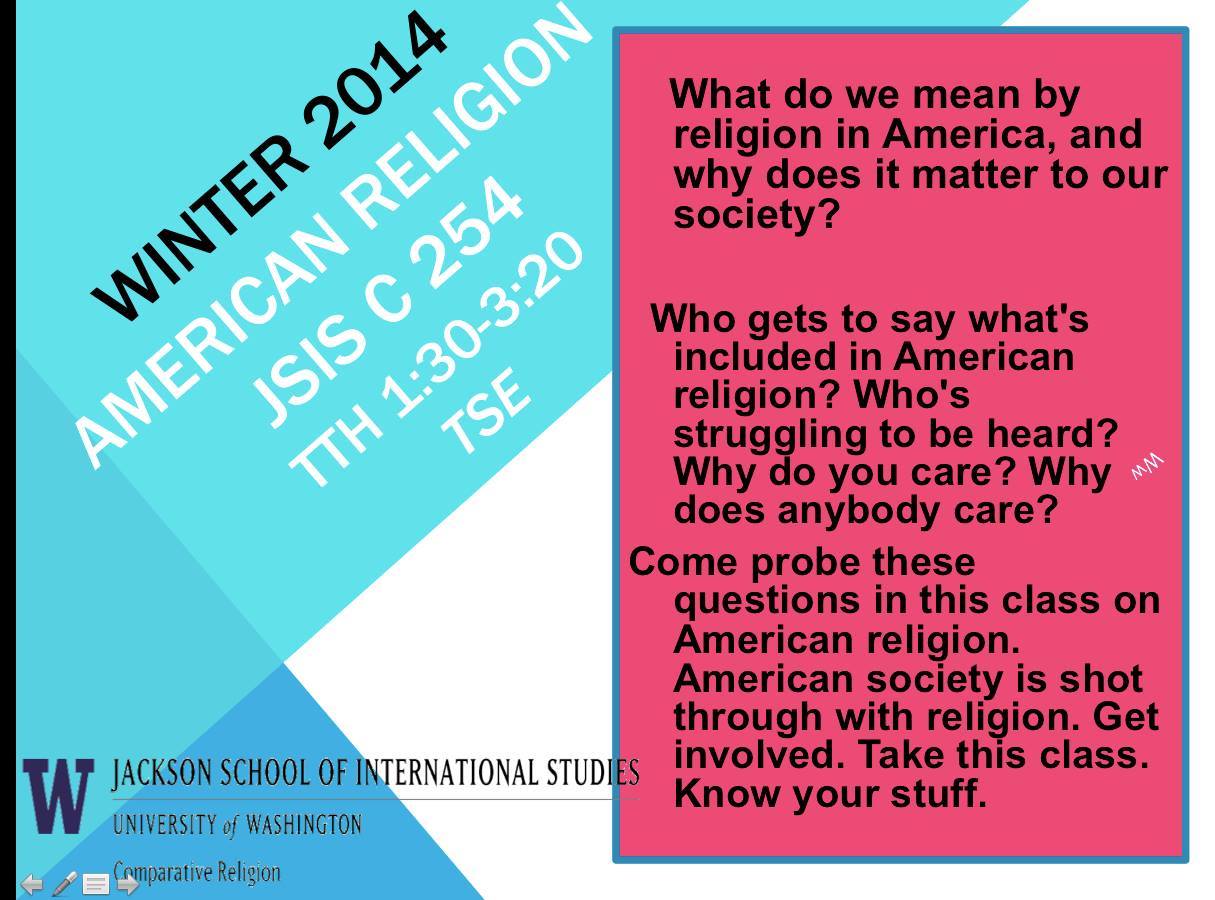
The University of Washington does religion too. See, secular university land isn’t all evil.
Those of you who are students at the University of Washington should consider enrolling in this class next quarter. If you know students, suggest that they register. This will be an eye-opening class. Here’s are some of the problems you will get to explore:
This course asks, “What do we mean by religion in America, and why does it matter to our society?” We will explore this question by looking at the different groups that have migrated to America and shaped its institutions and cultures. Beginning with American Protestantism, we will first examine why some strands of English Protestant theology shaped American culture. We will then turn to some groups that have been historically excluded from this consensus and how they have in turn contributed to newer understandings of American religion. Our course will conclude with an exploration of American Protestant fundamentalism. The goal of this course is to explore together how religion in America has shaped America as a whole, suggesting that we should care about American religion regardless of whatever religious background from which we come.
The main readings for the class are as follows:
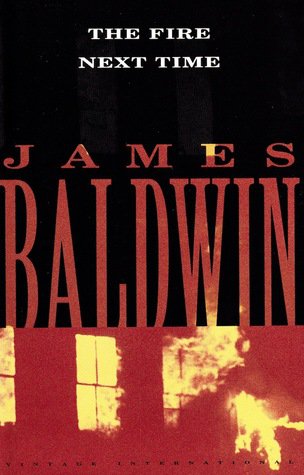
James Baldwin on still heated debates.
Baldwin, James. 1963/1992. The Fire Next Time.
A national bestseller when it first appeared in 1963, The Fire Next Time galvanized the nation and gave passionate voice to the emerging civil rights movement. At once a powerful evocation of James Baldwin’s early life in Harlem and a disturbing examination of the consequences of racial injustice, the book is an intensely personal and provocative document. It consists of two “letters,” written on the occasion of the centennial of the Emancipation Proclamation, that exhort Americans, both black and white, to attack the terrible legacy of racism. Described by The New York Times Book Review as “sermon, ultimatum, confession, deposition, testament, and chronicle…all presented in searing, brilliant prose,” The Fire Next Time stands as a classic of our literature.
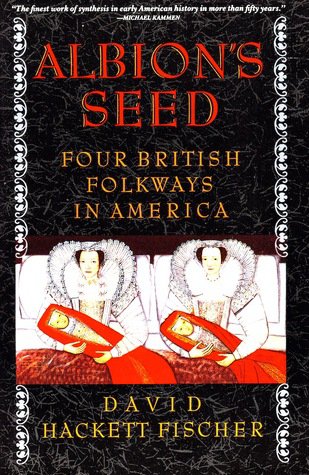
Albion’s Xerox machine?
Fischer, David Hackett. 1989. Albion’s Seed: Four British Folkways in America.
This fascinating book is the first volume in a projected cultural history of the United States, from the earliest English settlements to our own time. It is a history of American folkways as they have changed through time, and it argues a thesis about the importance for the United States of having been British in its cultural origins. While most people in the United States today have no British ancestors, they have assimilated regional cultures which were created by British colonists, even while preserving ethnic identities at the same time. In this sense, nearly all Americans are “Albion’s Seed,” no matter what their ethnicity may be. The concluding section of this remarkable book explores the ways that regional cultures have continued to dominate national politics from 1789 to 1988, and still help to shape attitudes toward education, government, gender, and violence, on which differences between American regions are greater than between European nations.
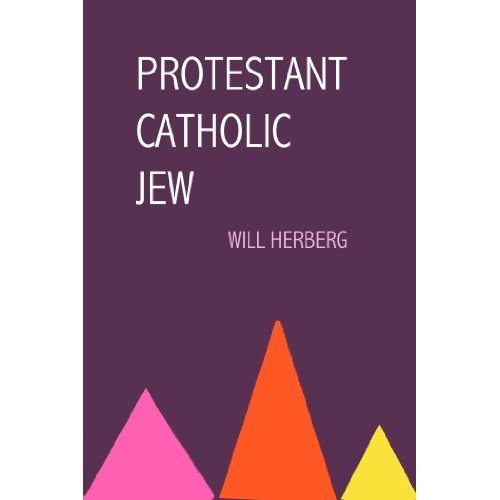
Will Herberg‘s melting pots as triangles… so much pots.
**Herberg, Will.**1983. Protestant-Catholic-Jew.
n Protestant-Catholic-Jew Will Herberg has written the most fascinating essay on the religious sociology of America that has appeared in decades. He has digested all the relevant historical, sociological and other analytical studies, but the product is no mere summary of previous findings. He has made these findings the basis of a new and creative approach to the American scene. It throws as much light on American society as a whole as it does on the peculiarly religious aspects of American life. Mr. Herberg. . . illumines many facets of the American reality, and each chapter presents surprising, and yet very compelling, theses about the religious life of this country. Of all these perhaps the most telling is his thesis that America is not so much a melting pot as three fairly separate melting pots.
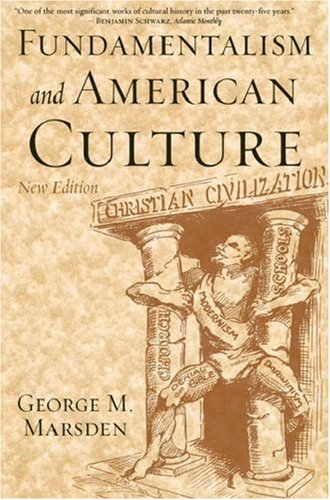
Mardsen on the influence of America’s complicated past in the present.
Marsden, George M. 2007. Fundamentalism and American Culture.
Many American’s today are taking note of the surprisingly strong political force that is the religious right. Controversial decisions by the government are met with hundreds of lobbyists, millions of dollars of advertising spending, and a powerful grassroots response. How has the fundamentalist movement managed to resist the pressures of the scientific community and the draw of modern popular culture to hold on to their ultra-conservative Christian views? Understanding the movement’s history is key to answering this question. Fundamentalism and American Culture has long been considered a classic in religious history, and to this day remains unsurpassed. Now available in a new edition, this highly regarded analysis takes us through the full history of the origin and direction of one of America’s most influential religious movements.
The common thread between all these books are problems surrounding race and fundamentalism. It will be interesting to see whether the Kennedy moment in Houston (1960) before fundamentalist preachers will become one topic of discussion.
The speech (listen to it here) is celebrated as the entrance of Catholics into the political mainstream. Stephen L. Carter in God’s Name in Vain: The Wrongs and Rights of Religion in Politics points to a more sinister side, with a side order of race relations and fundamentalism, of the whole episode:
“[While talking about elections when evangelical voters turned against the Republicans and ruined their Southern strategy] Or not since 1960, when candidate John F. Kennedy rushed to a convention of evangelical preachers in Houston to assure them that he, a Roman Catholic, would not do the Pope’s bidding if elected. In our celebration of the Kennedy moment, we tend to forget that the bidding that worried the evangelicals most was the Catholic Church’s forceful opposition to racial segregation.”
Previous Post

November 22, 2013
Something Fleshy and Earthly: A Phenomenology of Christian Life
Next Post
November 25, 2013 Two La Farges and One Hidden Encyclical
Browse Our Archives
Select a Category #WhyRemainCatholic Abortion Advent Anti-Catholicism Arts Atheism Beauty Benedict XVI Bible Book Review Catholic Cinema Comedy Cosmos: A Space-Time Odyssey Czesław Miłosz Dariusz Karłowicz Devil Easter Eastern Orthodoxy Economics Environment Family Famous Atheists Who Weren't Atheists Guest Post Hans Urs von Balthasar HHS Mandate History Imagination Interview Islam Jean-Luc Marion John Paul II Judaism Just War Lent Literature Little Sisters of the Poor Liturgy Martyrdom Music News Paganism Patristics Phenomenology Philosophy Pierre Hadot Poetry Poland Pop Culture Pope Francis Poverty Prayer Protestantism Rabelais Race Remi Brague Rene Girard Russia Sam Rocha Science & Religion SCOTUS Secularization Sexual Abuse Sexuality Silence Solidarity Stratford Caldecott Synod14 Terrorism Top 10 Uncategorized Walker Percy War Weakened Edition World War II World Youth Day WYD Krakow
Select a Month July 2017 June 2017 May 2017 April 2017 March 2017 February 2017 January 2017 December 2016 October 2016 September 2016 August 2016 July 2016 June 2016 May 2016 April 2016 March 2016 February 2016 January 2016 December 2015 November 2015 October 2015 September 2015 August 2015 July 2015 June 2015 May 2015 April 2015 March 2015 February 2015 January 2015 December 2014 November 2014 October 2014 September 2014 August 2014 July 2014 May 2014 April 2014 March 2014 February 2014 January 2014 December 2013 November 2013 October 2013 September 2013 August 2013 July 2013 June 2013 May 2013
Follow Us!
TAKE THE
Religious Wisdom Quiz
Who was made mute and only spoke God's word until Jerusalem fell?
Select your answer to see how you score.
Jonah Amos Daniel Ezekiel
Related posts from Cosmos The In Lost

The Surprising Anti-Capitalist Logic Behind the Catholic Church's...

How is Classical Philosophy is Like War?

Why Does the World's Leading Philosopher Remain a...

Biblical Authority After Babel Cannot Be Built Upon...
TRENDING AT PATHEOS Catholic

Rejecting Doom: Christian Hope And Human Action
Christianity is a religion of hope. We are to have hope and...

It’s What Comes From Within Which Matters
One of the most difficult things for us to understand is why...

Why I Choose the Eucharist Over the Sermon
Choose the Eucharist, Not the Sermon What are we supposed to get...

5 Design Elements Found in Spiritually Rooted Homes
Putting Spirituality Into Home Decor Our homes are more than our living...

Credo: A Story of God Told with the...
About 10 years ago, I began to imagine a personal "Credo" that...

The Anatomy of Divine Revelation in Catholic Thought
The claim that God has made Himself known to human beings is...
view all Catholic blogs
Ad-Free & Subscriber Log-In Subscription Support
- About Us
- 2026 Calendar
- Videos
- Podcasts
- Library of World Religions
- Faith In Media Tracker
- Advertise With Us
- Write for Us
- Privacy Policy
- Terms of Service
- Do Not Sell My Data
- Contact Us
- Radiant Digital
- Manage Newsletter Subscriptions
- Unsubscribe From Notifications
- Sitemap
Copyright 2008-2026, Patheos. All rights reserved.
Subscription Support Ad-Free & Subscriber Log-In
Follow Patheos