
BuddhistCatholicContemplativeEvangelicalGeneral ChristianHinduJewishLatter-day SaintMuslimNew VisionsProgressive Christian
Beliefs
- Buddhist
- Catholic
- Contemplative
- Evangelical
- General Christian
- Hindu
- Jewish
- Latter-day Saint
- More Voices
- Muslim
- New Visions
- Pagan
- Progressive Christian
Topics
- Religion News
- Food and Religion
- Sports and Religion
- Religious Art
- Religious Music and Entertainment
- Religious Events
- History and Religion
- Style and Religion
- Politics and Religion
- Women in Religion
- Recreation Outdoors and Religion
- Business Finance and Religion
- Careers Workplace and Religion
- Education and Religion
- Family Parenting and Religion
- Health Fitness and Religion
- Home and Religion
- Relationships and Religion
- Technology and Religion
- Travel and Religion
Columnists
- Buddhist Columnists
- Business Finance and Religion Columnists
- Careers Workplace and Religion Columnists
- Catholic Columnists
- Contemplative Columnists
- Education and Religion Columnists
- Evangelists Columnists
- Family Parenting and Religion Columnists
- General Christian Columnists
- Health Fitness and Religion Columnists
- Hindu Columnists
- History and Religion Columnists
- Home and Religion Columnists
- Jewish Columnists
- More Voices Columnists
- Latter Day Columnists
- Muslim Columnists
- New Visions Columnists
- Nonreligious Columnists
- Pagan Columnists
- Politics and Religion Columnists
- Progressive Columnists
- Recreation Outdoors and Religion Columnists
- Relationships and Religion Columnists
- Religion News Columnists
- Religious Art Columnists
- Religious Events Columnists
- Religious Music and Entertainment Columnists
- Sports and Religion Columnists
- Style and Religion Columnists
- Technology and Religion Columnists
- Travel and Religion Columnists
- Women in Religion Columnists
Resource Library
- 2026 Calendar
- Library of World Religions
- The 100 Most Holy Places on Earth
- Patheos Answers
- Podcasts
- Videos
- Faith Leaders Database
- Anglican Episcopalian
- Bahai
- Baptist
- Buddhism
- Christianity
- Confucianism
- Eastern Orthodoxy
- Hinduism
- Holiness and Pentecostal
- ISKCON
- Islam
- Judaism
- Lutheran
- Methodist
- The Church of Jesus Christ of Latter-day Saints
- New Age
- Paganism
- Presbytarian and Reformed
- Protestantism
- Religion Behind the Scenes
- Roman Catholic
- Scientology
- Shia Islam
- Sikhism
- Sufism
- Sunni Islam
- Taoism
- Zen
- See all religions
Research Tools
 Ad-Free & Subscriber Log-In Subscription Support
Ad-Free & Subscriber Log-In Subscription Support
Follow Patheos 

- Trending:
- Forgiveness
- |
- Marriage
- |
- Consciousness
- |
- Death Penalty
- |
- Election
- |
- Halloween
 Cosmos The In Lost
- Home
- Catholic
- Ingmar Bergman on the Apologetic Value of Human Holiness
Ingmar Bergman on the Apologetic Value of Human Holiness
Last updated on: October 11, 2013 at 12:52 pm by Artur Rosman
Ingmar Bergman on the Apologetic Value of Human Holiness 2013-10-11T12:52:50-07:00 Artur Rosman
Patheos Explore the world's faith through different perspectives on religion and spirituality! Patheos has the views of the prevalent religions and spiritualities of the world.
“Whatever happens then is hidden from us. Only poets, musicians and saints may depict that which we can but discern: the inconceivable.”
My wife and I are doing our best to revive our practice of watching films in the evening. This is not all that easy when you try to do it with a five, a three, and a one year old. We were forced to grab something that would be relatively adequate for the whole audience.
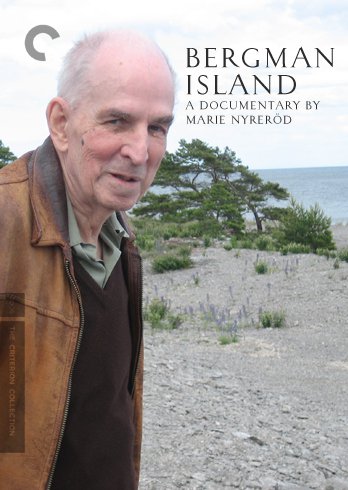
Our choice was the documentary film Bergman’s Island. We figured watching a film about an old lecherous Swedish man living out his last days on a lonely island with beautiful vistas would do minimal harm. We were right.
It took our five year old about twenty minutes to fall asleep while the three year old stuck around through the whole thing continually asking “Why?” (This is the perennial philosophical question. And people wonder why philosophers are frequently so annoying…).
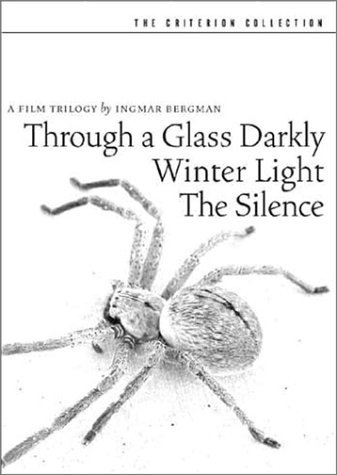
Given the level of arachnophobia in our household it might be a good idea to buy the Trilogy box set to keep everyone in line.
It was the same question Bergman was attempting to answer about his own beliefs throughout the film. It’s been said his trilogy was an attempt to murder the cruel Lutheran God of his father on the screen. But the issue of God wouldn’t stay dead, especially after the death of Ingmar’s last wife. She must have been a saintly woman because she survived with him for twenty-four years.
Her mysterious presence in his life after her death made Bergman doubt his own doubt. It is a testament to the possibility that even for irascible Scandinavian loners love is stronger than death. At one point in the documentary the filmmaker plays a clip from his film Private Confessions, which appears to be based upon this novel of his.
Here is the monologue in case you missed some part of it.
“Don’t use the word ‘God’. Say ‘holiness’. There’s holiness in everyone. Human holiness. Everything else is attributes, disguise – manifestation and trickery. You can never capture or figure out human holiness. At the same time, it’s something to cling to. Something tangible, lasting unto death. [Bach’s ‘Jesu, joy of man’s desiring’ is heard] Whatever happens then is hidden from us. Only poets, musicians and saints may depict that which we can but discern: the inconceivable. They’ve seen, known, understood – not fully, but in fragments. For me, it’s a comfort to think about human holiness.”
This is obviously not meant as a dogmatic statement, so relax and countenance the possibility that you might learn something about your own tradition by listening to those who are on its peripheries, or even outside of it. There’s a wonderful ambiguity about the denial the use of the word God in the first sentence (if you actually bother to read the rest of it and struggle with what he’s attempting to convey).
The interesting part for me is how Bergman points to something here that’s central to a Catholic way of approaching God: the mystery of human holiness.
I’ve written here how much the influence of my own teachers helped me grapple with the inconceivable. The encounter with holiness is also very much at the heart of Giussani’s writings (and possibly the pope’s interviews?). It’s also a thread that was very important to the writings of von Balthasar, especially in the second and third volumes of his Glory of the Lord, plus the Bernanos, Carmelite Sisters (Thérèse and Elizabeth), and Schneider biographies. These strands in his thought are developed by two great Anglican scholars, Mark McIntosh and Victoria S. Harrison, in the volumes Christology from Within and The Apologetic Value of Human Holiness respectively.
Several posts about the work of Dariusz Karlowicz in Cosmos the in Lost also demonstrate how much the tradition of Christian witness owes to an older tradition of philosophical witness. So I suppose this is a case of both/and. The witness of human holiness is a centrally Christian way of seeing things because it was taken over from other traditions after the appearance the mystery of God made man .
All in all, perhaps Nietzsche was right when he said he’d be more inclined toward returning to his own Lutheran Christian roots if Christ’s disciples “looked more saved”?
It seems even the Lutheran tradition, with its strong emphasis on the notion of Deus absconditus, recovered some of this tradition after it produced extraordinary witnesses during World War II.
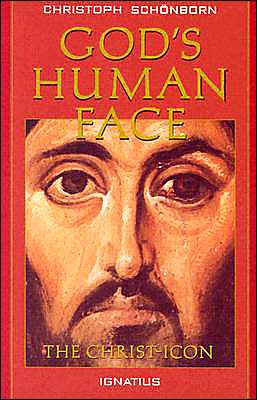
Schonborn’s God’s Human Face puts you face to face with the metaphysical and artistic revolution created by the Incarnation.
While you’re at it take a look at our TOP 10 book lists about the following topics: recent theology, poetry, novels, heaven and hell, religion and world politics, and, last but not least, science.
Previous Post

October 9, 2013
David Bentley Hart Makes a Productive Mess of the Concept of God
Next Post
October 29, 2013 The Catholic Imagination and the Age of Czeslaw Milosz
Browse Our Archives
Select a Category #WhyRemainCatholic Abortion Advent Anti-Catholicism Arts Atheism Beauty Benedict XVI Bible Book Review Catholic Cinema Comedy Cosmos: A Space-Time Odyssey Czesław Miłosz Dariusz Karłowicz Devil Easter Eastern Orthodoxy Economics Environment Family Famous Atheists Who Weren't Atheists Guest Post Hans Urs von Balthasar HHS Mandate History Imagination Interview Islam Jean-Luc Marion John Paul II Judaism Just War Lent Literature Little Sisters of the Poor Liturgy Martyrdom Music News Paganism Patristics Phenomenology Philosophy Pierre Hadot Poetry Poland Pop Culture Pope Francis Poverty Prayer Protestantism Rabelais Race Remi Brague Rene Girard Russia Sam Rocha Science & Religion SCOTUS Secularization Sexual Abuse Sexuality Silence Solidarity Stratford Caldecott Synod14 Terrorism Top 10 Uncategorized Walker Percy War Weakened Edition World War II World Youth Day WYD Krakow
Select a Month July 2017 June 2017 May 2017 April 2017 March 2017 February 2017 January 2017 December 2016 October 2016 September 2016 August 2016 July 2016 June 2016 May 2016 April 2016 March 2016 February 2016 January 2016 December 2015 November 2015 October 2015 September 2015 August 2015 July 2015 June 2015 May 2015 April 2015 March 2015 February 2015 January 2015 December 2014 November 2014 October 2014 September 2014 August 2014 July 2014 May 2014 April 2014 March 2014 February 2014 January 2014 December 2013 November 2013 October 2013 September 2013 August 2013 July 2013 June 2013 May 2013
Follow Us!
TAKE THE
Religious Wisdom Quiz
Which letter wraps up with the reminder, "Let everything be done decently and in order"?
Select your answer to see how you score.
1 Timothy James Hebrews 1 Corinthians
Related posts from Cosmos The In Lost

The Surprising Anti-Capitalist Logic Behind the Catholic Church's...

How is Classical Philosophy is Like War?

Why Does the World's Leading Philosopher Remain a...

It's a Good Friday to Leave Calypso's Island
TRENDING AT PATHEOS Catholic

Rejecting Doom: Christian Hope And Human Action
Christianity is a religion of hope. We are to have hope and...

It’s What Comes From Within Which Matters
One of the most difficult things for us to understand is why...

Why I Choose the Eucharist Over the Sermon
Choose the Eucharist, Not the Sermon What are we supposed to get...

5 Design Elements Found in Spiritually Rooted Homes
Putting Spirituality Into Home Decor Our homes are more than our living...

Credo: A Story of God Told with the...
About 10 years ago, I began to imagine a personal "Credo" that...

The Anatomy of Divine Revelation in Catholic Thought
The claim that God has made Himself known to human beings is...
view all Catholic blogs
Ad-Free & Subscriber Log-In Subscription Support
- About Us
- 2026 Calendar
- Videos
- Podcasts
- Library of World Religions
- Faith In Media Tracker
- Advertise With Us
- Write for Us
- Privacy Policy
- Terms of Service
- Do Not Sell My Data
- Contact Us
- Radiant Digital
- Manage Newsletter Subscriptions
- Unsubscribe From Notifications
- Sitemap
Copyright 2008-2026, Patheos. All rights reserved.
Subscription Support Ad-Free & Subscriber Log-In
Follow Patheos